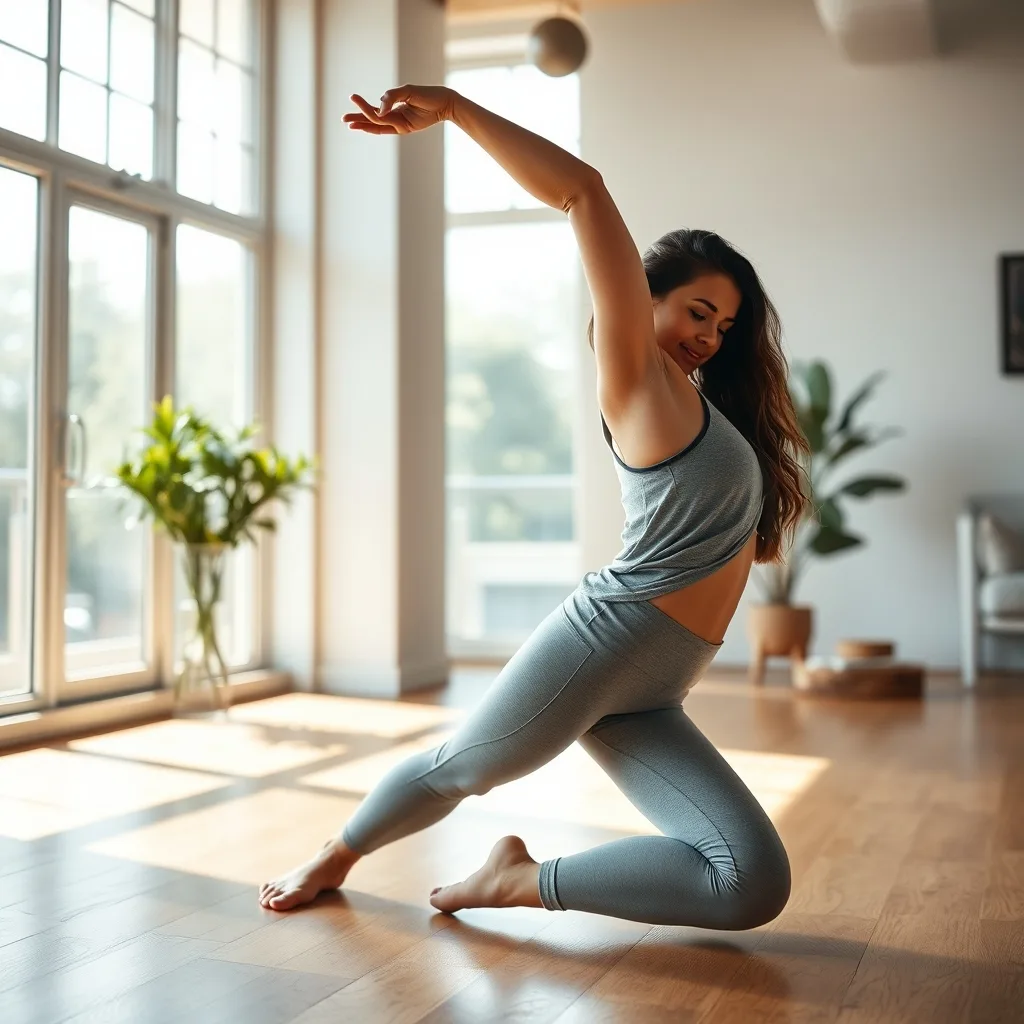
Waking up often feels like a transition from a state of complete stillness to the demands of a busy day. Many of us reach for caffeine before our bodies have truly signaled they are ready to move, often leading to a sluggish start or physical stiffness that lingers until noon. An energizing morning stretch routine serves as a bridge, helping to transition your nervous system from sleep to wakefulness while lubricating your joints and boosting circulation.
Key takeaways
- Perform gentle movements like Cat-Cow and neck releases to lubricate stiff joints and increase core body temperature.
- Use nasal breathing and rhythmic movements to hydrate fascia and improve oxygen delivery to your tissues.
- Incorporate balance exercises like tree pose to sharpen focus and activate your neuromuscular system.
- Customize your routine based on your sleeping position to specifically target areas of accumulated tension.
- Sync movement with natural light to regulate your circadian rhythm and improve sleep quality.
The Physiology of Morning Stiffness
When you sleep, your body undergoes a process of repair and restoration. During this time, your muscles remain relatively inactive for several hours, and the fluid that cushions your joints, known as synovial fluid, can become more viscous. This is why you may feel “creaky” or tight immediately upon waking. Furthermore, your core body temperature drops while you rest. Gentle movement and controlled stretching help to raise your core temperature, signal your heart to increase blood flow to your muscles, and stimulate the production of synovial fluid. This physiological reset is far more effective at waking up your brain than the spike of cortisol and adrenaline often triggered by early-morning coffee.
Preparing Your Space and Mindset
You do not need a dedicated home gym to reap the benefits of a morning stretch. A simple yoga mat or even a soft carpeted area is sufficient. The most important factor is consistency rather than intensity. Aim to create an environment that feels inviting; open the curtains to let in natural light, as this helps regulate your circadian rhythm. Before you begin, take three deep, intentional breaths. Focus on expanding your ribcage and relaxing your shoulders. Setting a mindful intention for your practice—such as “I am moving to honor my body” rather than “I am moving to burn calories”—can significantly shift your relationship with exercise and reduce early-morning stress.
The Neck and Shoulder Release
The upper body often bears the brunt of our sedentary habits, especially if you spend your day at a desk. Start in a comfortable seated position or standing with your feet hip-width apart. Gently drop your right ear toward your right shoulder, feeling a deep stretch along the left side of your neck. Hold for 30 seconds, then switch sides. Follow this by rolling your shoulders backward in large, slow circles. Imagine you are trying to squeeze a pencil between your shoulder blades at the back of the movement. This sequence relieves the tension accumulated from sleeping in awkward positions and prepares your posture for the day ahead.
Spinal Articulation and Core Engagement
Your spine is the central pillar of your physical well-being. The “Cat-Cow” sequence is a classic, highly effective movement for spinal health. Start on your hands and knees in a tabletop position. As you inhale, drop your belly toward the floor, lift your chin and chest, and gaze forward, arching your back (Cow). As you exhale, draw your belly button toward your spine, round your back toward the ceiling, and tuck your chin toward your chest (Cat). Repeat this flow ten times, moving in sync with your breath. This movement gently massages the spinal discs and activates the deep abdominal muscles, which are essential for core stability throughout the day.
Opening the Hips and Hamstrings
Tight hips are a common complaint for anyone who spends significant time sitting. To counteract this, perform a low lunge. Step your right foot forward between your hands and lower your left knee to the floor. Keep your torso upright and gently push your hips forward until you feel a stretch in the front of your left hip. Hold for 45 seconds, then transition to a half-split by shifting your weight backward and straightening your front leg, folding slightly over it to stretch the hamstring. Repeat on the other side. These movements open the hip flexors and lengthen the hamstrings, which can alleviate lower back pain and improve your gait.
Chest Opening and Lung Expansion
Many of us fall into a “hunched” posture, which restricts our breathing capacity. To counter this, stand tall and interlace your fingers behind your back. Straighten your arms and gently pull your hands away from your lower back while lifting your chest toward the ceiling. Keep your gaze neutral or slightly upward. This pose opens the pectoral muscles and encourages deep, diaphragmatic breathing. By expanding the chest, you increase oxygen intake, which is the most immediate way to signal to your brain that it is time to be alert and energized.
Full-Body Integration and Balance
Balance movements are excellent for waking up the neuromuscular system. Try a simple tree pose: stand on one leg, placing the sole of your other foot on your calf or inner thigh (avoiding the knee joint). Reach your arms overhead. Focus your gaze on a single, non-moving point in front of you. Hold for 30 seconds, then switch. This requires your core muscles to fire and your brain to coordinate multiple muscle groups simultaneously. It is a highly effective way to sharpen your focus and improve your proprioception, or your body’s ability to sense its position in space.
The Importance of Breath-to-Movement Sync
Throughout your routine, the quality of your breath is just as important as the position of your limbs. Use nasal breathing, where you inhale and exhale through your nose. Inhaling through the nose filters the air and helps to calm the nervous system, while the slight resistance of nasal breathing increases nitric oxide production, which helps dilate blood vessels and improve oxygen delivery to tissues. If you find your mind wandering to your to-do list, gently return your focus to the sensation of air entering and leaving your nostrils. This turns your stretch routine into a moving meditation.
Targeting the Fascial Web for Long-Term Mobility
Beyond the muscles and joints, your body is encased in a complex web of connective tissue known as fascia. During sleep, this tissue can become dehydrated and slightly adherent, contributing to that “glued-down” feeling upon waking. To address this, incorporate dynamic, rhythmic movements rather than just static holds. Try “fascial flossing” by gently pulsing in and out of your stretches. For example, in a forward fold, instead of pulling into a deep hold, gently bounce micro-inches, shifting your weight from your toes to your heels. This rhythmic input hydrates the fascia, improves the sliding surface between tissue layers, and prepares your body for the varied movement patterns of the day ahead.
Integrating Neurological Activation
Your morning routine is a prime opportunity to “wake up” your nervous system, specifically the vestibular and proprioceptive systems. Incorporate cross-lateral movements, such as standing and touching your right hand to your left knee, then switching. These movements require the left and right hemispheres of your brain to communicate, enhancing cognitive clarity and coordination. By challenging your balance and motor control before you even leave your bedroom, you stimulate the cerebellum, the part of the brain responsible for fine-tuning movement and focus. This neurological priming makes you sharper, more alert, and physically more capable during your morning commute or early meetings.
Managing the Morning Cortisol Spike
While many believe the morning cortisol spike is a negative, it is a natural part of your circadian rhythm. However, high-stress individuals often experience an excessive, jittery spike that leads to anxiety. You can modulate this response through “vagal toning.” During your stretches, add a soft, humming sound on your exhales. The vibration in your throat stimulates the vagus nerve, which runs from your brainstem to your abdomen. This creates a “brakes” effect on your sympathetic nervous system, ensuring you feel energized rather than anxious. By pairing your physical movement with vocal vibration, you create a physiological environment of alert calm.
Customizing for Different Sleep Positions
The way you sleep dictates where you will hold tension, and your routine should reflect that. If you are a side sleeper, you likely experience tightness in the outer hip and the obliques; incorporate “side-body openers” by reaching one arm overhead and leaning your torso to the opposite side while standing. If you are a stomach sleeper, your lower back may be chronically arched; prioritize “posterior chain” stretches like child’s pose or a gentle seated forward fold to counteract the lumbar compression. Recognizing your specific sleep-induced tension patterns allows you to turn a generic routine into a targeted therapy session that addresses your body’s unique needs.
Utilizing Micro-Movements for Joint Lubrication
Sometimes, full-range stretching is too much for an acutely stiff body. In these cases, focus on “joint circles” or articular rotations. Start with your ankles, moving them in slow, controlled circles, then move to your wrists, elbows, and shoulders. These movements, often called Controlled Articular Rotations (CARs), are designed to move a joint through its entire range of motion without the stress of a weighted stretch. By systematically rotating every joint from the toes up to the neck, you signal your body to produce more synovial fluid without placing undue strain on tight muscles. This is an excellent “entry-level” morning ritual for those who feel particularly fragile upon waking.
The Role of Temperature and Environment
The ambient temperature of your room influences how effectively your muscles respond to stretching. If you live in a cold climate, your muscles will naturally be more resistant to elongation. Consider “thermal priming” by wearing an extra layer of clothing during your first few minutes of movement to trap your body heat. Conversely, if you feel sluggish, consider the “cold water finish” strategy: after your stretch, splash cool water on your face. This triggers the mammalian dive reflex, which immediately slows the heart rate and redirects blood flow to the brain, providing a secondary layer of alertness that complements the physical warmth generated by your stretching.
Optimizing Your Morning Sequence for Circadian Alignment
Your morning routine acts as a powerful anchor for your internal biological clock. Beyond simple physical movement, the timing of your stretches relative to your first exposure to light can dictate your evening sleep quality. When you stretch while facing a window, you combine the mechanical stimulation of your muscles with the photic stimulation of your retinal receptors. This dual-input approach suppresses melatonin production more efficiently than light exposure alone. Aim to perform your routine within 30 minutes of waking; this helps shift your core body temperature upward, signaling to your endocrine system that the active phase of your day has officially begun, which in turn sets a timer for the release of melatonin approximately 14 to 16 hours later.
The Anatomy of “Decompression” Movements
Gravity acts upon our spinal column throughout the day, causing a slight compression of the intervertebral discs. By the time you wake up, you are technically at your tallest, but your spine is also stiff from the lack of movement. Incorporating “spinal decompression” poses, such as the Child’s Pose or a gentle hanging forward fold, allows the vertebrae to find their natural spacing. For a more advanced variation, try a “supported inversion” by placing your legs up the wall while lying on your back. This simple act reverses the pull of gravity on your venous system, encouraging blood flow back toward the heart and reducing fluid retention in the ankles and feet, which is a common occurrence after a long night of horizontal rest.
Tactile Stimulation and Proprioceptive Awakening
Your brain map—the sensory homunculus—requires constant updates to understand where your limbs are in space. To sharpen your focus for the day, integrate self-massage into your morning stretches. As you move into a hamstring stretch, use your palms to firmly knead the muscle belly of the quadriceps or calves. This tactile feedback provides the nervous system with “proprioceptive noise,” which helps dampen the sensation of pain or tightness. By stimulating the skin and underlying fascia through firm pressure, you increase blood flow to the surface of the muscles, essentially “waking up” the sensory nerves that have been dormant during sleep, leading to greater body awareness during your morning commute.
Integrating Rhythmic Breathing for Parasympathetic Balance
While many routines focus on deep, slow breaths, incorporating “breath holds” or “box breathing” can be a game-changer for those who wake up feeling anxious. After a gentle stretch, try inhaling for four seconds, holding for four, exhaling for four, and holding empty for four. This rhythmic pattern forces the autonomic nervous system to find a state of equilibrium. If you feel the morning jitters from an impending deadline, prioritize the “exhalation phase” of your stretch. By making your exhale twice as long as your inhale, you mechanically signal the heart to slow its rate, effectively overriding the sympathetic nervous system’s fight-or-flight response with a controlled, parasympathetic override.
Addressing the “Tech Neck” and Forward-Head Posture
If your daily workflow involves heavy screen time, your neck muscles often adapt to a shortened, forward-leaning position. To counter this, perform “chin retractions”—often called “double chin” exercises—during your routine. While sitting or standing tall, gently pull your chin straight back as if trying to make a double chin, without tilting your head up or down. This strengthens the deep neck flexors and stretches the suboccipital muscles at the base of your skull. Integrating this into your morning routine acts as a preventative measure, resetting your head alignment to neutral before you ever sit down at your desk, which can significantly reduce the incidence of tension headaches by midday.
Utilizing Isometric Holds for Muscle Activation
Stretching is not just about lengthening; it is also about activating the muscles that stabilize your joints. Incorporate isometric holds into your routine to fire up your stabilizing muscles. For example, when in a low lunge, actively squeeze your glute of the back leg and try to pull your front heel toward your back knee without actually moving your feet. This creates internal tension—known as irradiation—which stabilizes the pelvis. By holding this active contraction for 5 to 10 seconds before relaxing into a deeper, passive stretch, you prepare your muscles to act as functional supports rather than just passive tissues, resulting in a more “switched-on” feeling that lasts throughout your morning hours.
FAQ: Frequently Asked Questions
Q: How long should a morning stretch routine last?
A: A highly effective routine can be completed in as little as 10 to 15 minutes. The goal is to move every major joint and muscle group, not to exhaust yourself. Consistency is far more valuable than duration; 10 minutes every day is better than an hour once a week.
Q: Should I stretch before or after I drink water?
A: It is generally recommended to drink a glass of water before stretching. Your body becomes dehydrated during sleep, and hydrating first helps your muscles become more supple and resilient, while also jumpstarting your metabolism.
Q: Is it normal to feel “stuck” or limited in my range of motion in the morning?
A: Yes, it is completely normal. Your muscles and connective tissues are naturally tighter in the morning due to the lack of movement during sleep. Never force a stretch; ease into it gently and allow your body to open up naturally over the course of the routine.
Q: Can I do these stretches if I have chronic back pain?
A: If you have chronic pain or a history of injury, it is essential to consult with a physical therapist or physician before starting a new routine. Generally, slow, controlled movements like Cat-Cow are helpful for back health, but avoid any movement that causes sharp or shooting pain.
Q: Does stretching really provide energy, or is it just a placebo?
A: It is not a placebo. Stretching increases blood flow to the brain and muscles, stimulates the release of endorphins, and improves oxygen saturation in the blood. These biological changes provide a genuine, sustainable energy boost that does not come with the crash associated with stimulants.
Related posts:
 Desk Yoga for Back Pain Relief
 Anabolic Stretching Claims to Build Muscle While You Stretch
 How to Build a Habit of Daily Stretching
 Three Scientific Reasons to Become a Morning Person
 How to Stretch Safely Without Going Too Far
 Essential Bedtime Stretches
 Dangers of Over-Stretching
 Simple Stretches to Relieve Back Pain