Baking is a delightful culinary art that requires the right tools to achieve perfect results. Whether you are a novice baker or an experienced one, having the essential baking tools in your kitchen can make the process easier and more enjoyable. In this article, we will explore the essential baking tools that every kitchen should have.
1. Measuring Cups and Spoons
Accurate measurements are crucial in baking. Measuring cups and spoons ensure that you add the right amount of ingredients to your recipes. Invest in a good quality set of measuring cups and spoons, preferably stainless steel, for durability and precision.
2. Mixing Bowls
Mixing bowls are indispensable in any baker’s arsenal. They come in various sizes and materials such as glass, stainless steel, and plastic. A set of nesting bowls can save space and provide you with the right size for any recipe. Look for bowls with non-slip bases for added stability.
3. Electric Mixer
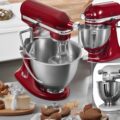
An electric mixer, whether a hand mixer or a stand mixer, can save you a lot of time and effort. It is essential for mixing batter, whipping cream, and kneading dough. A stand mixer is especially useful for more advanced baking tasks and larger batches of dough.
4. Baking Pans and Sheets
Baking pans and sheets come in various shapes and sizes, each designed for specific types of baked goods. Essential pans include cake pans, muffin tins, loaf pans, and baking sheets. Non-stick pans are convenient, but be sure to have parchment paper or silicone baking mats on hand to prevent sticking.
5. Rolling Pin
A rolling pin is essential for rolling out dough for cookies, pies, and pastries. Wooden rolling pins are traditional, but marble and silicone options are also available. Choose one that feels comfortable in your hands and provides smooth, even pressure.
6. Cooling Rack
After baking, it’s important to cool your baked goods properly. A cooling rack allows air to circulate around your treats, preventing them from becoming soggy. Look for a sturdy, rust-resistant rack that can hold even your heaviest cakes.
7. Pastry Brush
A pastry brush is useful for applying glazes, egg washes, and butter to your baked goods. Silicone brushes are easy to clean and can withstand high temperatures, making them a great choice for any kitchen.
8. Spatulas and Scrapers
Spatulas and scrapers are versatile tools used for folding batter, scraping bowls, and spreading icing. Silicone spatulas are heat-resistant and flexible, making them ideal for a variety of tasks. Have a few different sizes on hand to tackle any job.
Precision Weighing with Digital Kitchen Scales
While volumetric measuring cups are standard, they often lead to inconsistencies due to how flour or sugar is packed. A digital kitchen scale is the secret weapon for professional-grade results. By measuring by weight (grams or ounces) rather than volume, you eliminate the “heaping cup” variable. Look for a scale with a “tare” function, which allows you to reset the weight to zero after placing a bowl on the platform, enabling you to add ingredients sequentially without dirtying extra vessels. For high-hydration breads or delicate macarons, a scale that measures in 0.1-gram increments is invaluable for handling yeast, salt, and leavening agents where even a half-gram discrepancy can alter the final bake.
The Precision of Oven Thermometers
Many home ovens suffer from calibration drift, often running 10 to 25 degrees hotter or cooler than the dial suggests. An independent, hanging oven thermometer is the only way to verify the actual ambient temperature inside your baking chamber. Place it in the center of the middle rack to monitor the true environment. If you notice your cakes are consistently browning too quickly on the outside while remaining raw in the center, or if your cookies are spreading prematurely, your oven is likely running “hot.” Using this tool allows you to adjust your dial accordingly, ensuring that recipes requiring precise thermal energy—like choux pastry or soufflés—succeed every time.
Bench Scrapers for Dough Management
Often overlooked by novices, the bench scraper (or dough scraper) is a multi-functional powerhouse. It is designed to cleanly divide sticky yeast doughs, portion out cookie dough, or scrape stubborn flour and dried bits from your countertop after a kneading session. Beyond cleaning, it is an extension of your hands when folding bread dough or lifting delicate laminated pastries. Seek out a stainless steel model with a comfortable grip; it acts as a straightedge for leveling off dry ingredients when measuring and provides a clean, professional cut for biscuits or scones without compressing the layers of dough, which helps maintain a high rise.
Microplane Zesters and Fine Graters
Flavor depth in baking often comes from citrus oils and spices. A high-quality microplane zester allows you to remove the zest of lemons, limes, and oranges without hitting the bitter white pith. Beyond citrus, these tools are ideal for grating whole nutmeg, fresh ginger, or even frozen butter into dry ingredients for ultra-flaky pie crusts. The fine, sharp teeth create uniform shavings that incorporate evenly into batters and doughs, ensuring that you don’t end up with “hot spots” of intense flavor. When choosing one, prioritize a long, narrow frame with a non-slip rubber foot to stabilize it against the counter during use.
The Utility of Offset Spatulas
If your baking repertoire includes cakes, cupcakes, or intricate layered desserts, an offset spatula is non-negotiable. Unlike a flat knife or a standard spatula, the angled blade keeps your knuckles away from the surface of the cake, allowing for a perfectly smooth, level application of buttercream or ganache. They come in various sizes, with the smaller 4-inch versions being ideal for intricate cupcake swirls and the larger 8- to 10-inch versions necessary for smoothing the sides of a tiered cake. They are also excellent for lifting delicate cookies off a baking sheet without breaking them or spreading fillings into hard-to-reach corners of a square pan.
Sifters and Fine-Mesh Strainers
Sifting is often viewed as an optional step, but it serves two critical purposes: aeration and clump removal. For recipes involving cocoa powder, baking soda, or powdered sugar—all of which are prone to forming stubborn lumps—a fine-mesh strainer or a classic crank-handle sifter is essential. Aerating your flour before folding it into a batter helps ensure a lighter crumb and prevents streaks of dry flour from marring the finished product. A fine-mesh sieve is also versatile enough to dust finished desserts with confectioners’ sugar or strain seeds from fruit purees used in glazes and fillings, resulting in a silkier, more refined texture.
Temperature Control with Instant-Read Thermometers
Baking is chemistry, and temperature is the primary catalyst. An instant-read digital thermometer is essential for tasks beyond checking if a loaf of bread is done. Use it to ensure your milk or water is at the correct temperature for activating yeast (typically between 105°F and 115°F); if it is too cold, the yeast won’t wake up, and if it is too hot, you risk killing it. Furthermore, a thermometer is critical for candy making, such as checking if your caramel or meringue syrup has reached the “soft ball” or “hard crack” stage. Look for a probe-style thermometer with a fast response time and a wide temperature range to handle everything from temperate liquids to high-heat sugar work.
FAQ
What are the most essential baking tools for beginners?
For beginners, the most essential baking tools include measuring cups and spoons, mixing bowls, an electric mixer, baking pans and sheets, a rolling pin, cooling racks, and spatulas.
Can I use a hand mixer instead of a stand mixer?
Yes, a hand mixer can be used instead of a stand mixer for most tasks. However, a stand mixer is more powerful and can handle larger batches and heavier doughs more efficiently.
What type of rolling pin is best for baking?
The best type of rolling pin depends on personal preference. Wooden rolling pins are traditional and versatile, while marble rolling pins are heavier and stay cooler, which can be beneficial for pastry dough.
How should I clean my baking tools?
Most baking tools can be cleaned with warm, soapy water. Silicone tools and non-stick pans are typically dishwasher safe. Always check the manufacturer’s instructions for specific cleaning guidelines.
Is it worth investing in high-quality baking tools?
Investing in high-quality baking tools can make a significant difference in your baking experience. Durable and well-made tools can provide better results and last longer, making them worth the investment.