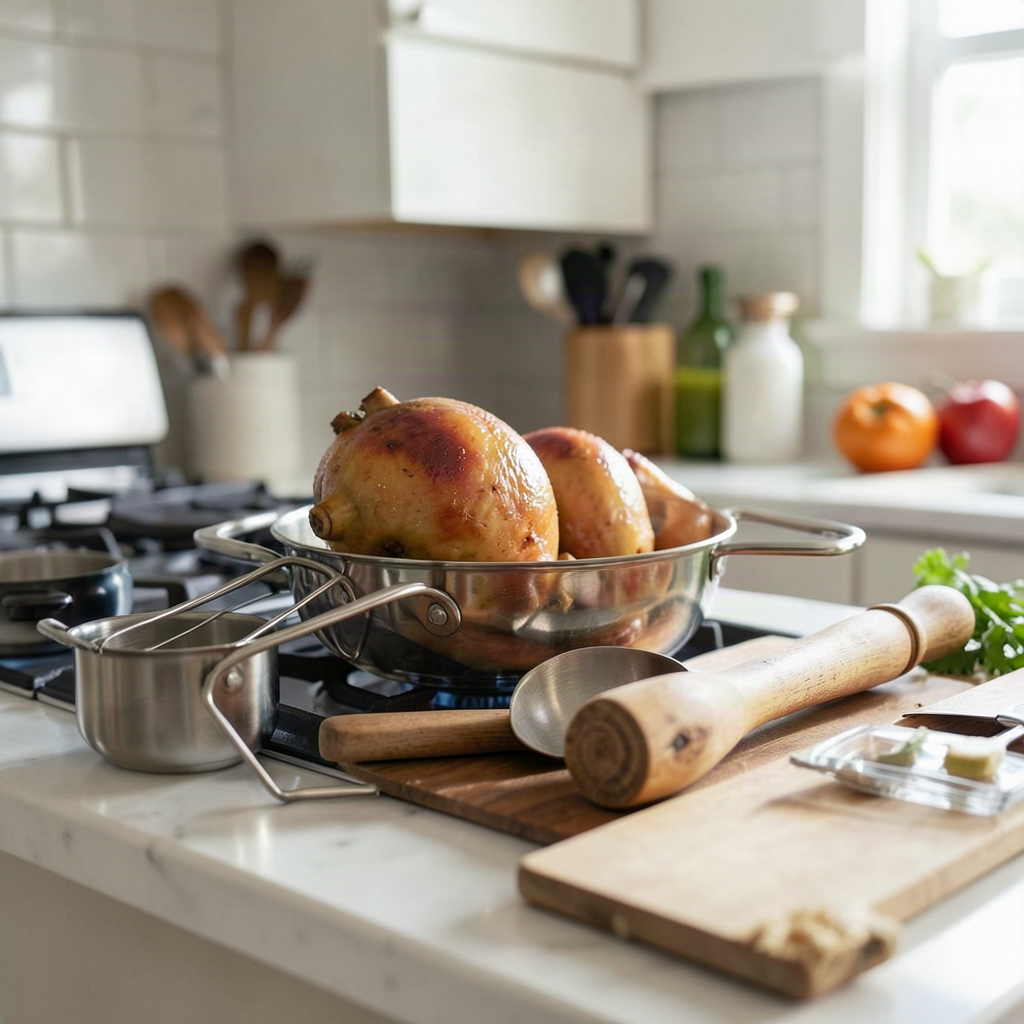
Whether you’re setting up your first apartment, upgrading your culinary space, or simply trying to cook more at home, having the right kitchen essentials makes all the difference. A well-equipped kitchen doesn’t require every gadget on the market—just the foundational pieces that enable you to prepare meals efficiently and enjoyably. This guide covers the essential kitchen items that deliver the most value, from basic cookware to small appliances, helping you build a functional kitchen without unnecessary clutter or expense.
Key takeaways
- Invest in an 8-inch chef's knife and two cutting boards to prevent cross-contamination between raw meat and fresh produce.
- A 12-inch stainless steel skillet and a 5-7 quart Dutch oven are versatile pieces for most daily cooking tasks.
- Use an immersion blender for soups and a kitchen scale for precise baking results and consistent meal preparation.
- Keep a kitchen-rated fire extinguisher and an instant-read thermometer accessible to ensure both home and food safety.
- Maintain tools by hand-washing knives and periodically oiling wooden cutting boards to prevent cracking and extend their lifespan.
Quality Chef’s Knife and Cutting Boards
A good chef’s knife is the single most important tool in any kitchen. An 8-inch chef’s knife handles the majority of prep work, from chopping vegetables to slicing meat, and investing in a quality blade makes cooking safer and more enjoyable. Look for a knife that feels balanced and comfortable in your hand, whether you choose a German-style knife with a thicker, more durable blade or a Japanese-style knife with a thinner, sharper edge. A paring knife for detailed work and a serrated bread knife round out the essential knife collection.
Cutting boards protect your knives and countertops while providing a stable surface for prep work. Wooden boards are gentle on knife edges and develop character over time, but require hand washing and occasional oiling. Plastic boards are dishwasher-safe and affordable, making them practical for everyday use, especially when working with raw proteins. Having at least two boards allows you to dedicate one to raw meat and another to produce, preventing cross-contamination. Consider size carefully—a board that’s too small frustrates prep work, while an oversized board may not fit in your sink for cleaning.
Core Cookware Pieces
Building a versatile cookware collection starts with a few well-chosen pieces. A 12-inch stainless steel skillet handles everything from searing steaks to making pasta sauces, while its durability ensures it lasts for years. Stainless steel is non-reactive, meaning you can cook acidic foods like tomato sauce without worrying about metallic flavors or damage to the pan’s surface. A 10-inch non-stick skillet complements the stainless steel pan, perfect for eggs, pancakes, and delicate foods that might stick to other surfaces.
A Dutch oven is perhaps the most versatile pot you can own. This heavy, lidded pot braises meats, simmers soups, bakes bread, and even fries foods. Enameled cast iron doesn’t require seasoning and is easy to clean, though raw cast iron costs less and develops natural non-stick properties over time. A 5-7 quart capacity serves most households well. Add a medium saucepan (2-3 quarts) for boiling grains, making sauces, and heating soups, and a large stockpot (8-12 quarts) for pasta, batch cooking, and homemade stocks. This core collection covers nearly every cooking technique without overcrowding your cabinets.
Bakeware and Sheet Pans
Half-sheet pans, measuring roughly 18 by 13 inches, are workhorses in the kitchen. Use them for roasting vegetables, baking cookies, toasting nuts, or catching drips under other dishes. Having three to four sheets ensures you always have a clean one ready, and commercial-grade aluminum conducts heat evenly for consistent results. Quarter-sheet pans fit in toaster ovens and are perfect for smaller tasks like roasting garlic or toasting spices.
A 9-by-13-inch baking dish handles casseroles, lasagna, brownies, and sheet cakes. Glass or ceramic options go from oven to table, while metal pans heat quickly and produce crisp edges. A 9-inch round cake pan and a standard muffin tin expand your baking options without requiring specialty equipment. An 8-by-8-inch square pan works for smaller batches of bars, brownies, and savory dishes like cornbread. These basic pieces cover most baking recipes without requiring specialty pans you’ll rarely use.
Measuring Tools and Mixing Bowls
Accurate measuring is crucial for baking and helps achieve consistent results in everyday cooking. Dry measuring cups in standard sizes (1/4, 1/3, 1/2, and 1 cup) allow you to scoop and level ingredients like flour and sugar. Liquid measuring cups, typically in 1-cup, 2-cup, and 4-cup sizes, have spouts and measurement markings at eye level for accurate pours. A set of measuring spoons completes the collection, and having a second set prevents cross-contamination when measuring both dry and wet ingredients.
A nested set of mixing bowls in various sizes serves multiple purposes in the kitchen. Stainless steel bowls are lightweight, durable, and often dishwasher-safe. Glass bowls work well for microwaving and serve double duty as prep bowls. A small bowl holds a single egg or a handful of prepped ingredients, while a large bowl accommodates bread dough or salad for a crowd. Having at least four sizes ensures you’re never without the right bowl for the task, and the nesting design saves cabinet space when not in use.
Essential Utensils and Tools
Wooden spoons are indispensable for stirring, scraping, and mixing. Their gentle surface won’t scratch non-stick cookware, and they’re comfortable to hold during long cooking sessions. Silicone spatulas scrape bowls clean and fold ingredients without deflating delicate mixtures. A slotted spoon drains foods from liquids, while a ladle serves soups and sauces neatly. Tongs function as an extension of your hands, flipping meats, tossing salads, and reaching into hot pans safely.
A vegetable peeler makes quick work of potatoes, carrots, and other produce. A box grater handles cheese, vegetables, and citrus zest, though a microplane offers finer results for zest and spices. A can opener is non-negotiable, and manual versions are often more reliable than electric ones. A kitchen timer prevents overcooking, whether built into your oven or a separate device. A colander drains pasta and washes produce, and a fine-mesh strainer sifts dry ingredients or strains sauces. These modest tools streamline daily cooking tasks without requiring significant investment.
Small Appliances Worth the Space
Not every small appliance deserves precious counter space, but a few earn their keep. An immersion blender purees soups directly in the pot, whips up smoothies, and emulsifies dressings without transferring hot liquids to a traditional blender. It stores easily in a drawer and costs far less than a full-sized blender. A food processor makes quick work of chopping, shredding, and dough-making, especially valuable if you cook frequently or have physical limitations that make manual prep difficult.
An electric kettle boils water faster than a stovetop pot, whether you’re making tea, coffee, or preparing pasta water. Variable-temperature models offer precision for different tea types, though a basic model serves most needs. A stand mixer is a significant investment but worthwhile for avid bakers who make bread, cookies, or cakes regularly. If counter space is limited, a hand mixer handles most baking tasks at a fraction of the cost and storage space. Consider your actual cooking habits before investing in specialty appliances like rice cookers, air fryers, or slow cookers—they’re useful only if you’ll use them regularly.
Storage Containers and Organization
Proper food storage reduces waste and keeps ingredients fresh longer. A set of glass containers with airtight lids stores leftovers, meal prep, and pantry staples. Glass doesn’t absorb odors or stains, goes from refrigerator to microwave, and lasts indefinitely. Square or rectangular shapes maximize fridge space compared to round containers. Having containers in various sizes accommodates everything from a single serving to a batch of soup.
For dry goods, clear containers let you see contents at a glance and keep pests out. Decanting flour, rice, pasta, and other staples into uniform containers creates an organized pantry and extends shelf life. Label containers with contents and purchase dates to track freshness. Drawer dividers keep utensils organized, while shelf risers double cabinet space. A lazy Susan in the corner cabinet makes items accessible without rummaging. Organization systems don’t need to be expensive—simple solutions often work best.
Basic Prep and Safety Items
A kitchen scale provides accuracy that volume measuring cannot match, particularly for baking. Weighing ingredients in grams eliminates variables like how densely flour is packed into a cup, leading to more consistent results. Many scales also have a tare function that subtracts the container weight, streamlining the measuring process. An instant-read thermometer ensures meat reaches safe temperatures without overcooking, and it’s essential for dishes where precision matters.
Safety items often get overlooked until they’re needed. A fire extinguisher rated for kitchen fires should be easily accessible, not buried in a distant cabinet. Pot holders or oven mitts protect hands from hot dishes—silicone versions resist heat better than cloth and are often waterproof. A first aid kit designed for kitchen use addresses minor cuts and burns. Good ventilation, whether from a range hood or open window, removes cooking fumes and reduces moisture that can lead to mold. These practical items protect you and your home, making them as essential as any cooking tool.
Frequently Asked Questions
What should I buy first when stocking an empty kitchen?
Start with an 8-inch chef’s knife, a large cutting board, a 12-inch stainless steel skillet, a Dutch oven, and a half-sheet pan. These five items handle the majority of cooking tasks and allow you to prepare complete meals. Add measuring cups, a few utensils, and a saucepan as your budget allows. You can cook surprisingly diverse meals with just these basics while you build your collection over time.
Is expensive cookware worth the investment?
Quality cookware often lasts decades, making it cheaper per use than replacing cheap pans every few years. However, you don’t need the most expensive brands to cook well. Mid-range stainless steel and cast iron from reputable manufacturers offer excellent performance at reasonable prices. Spend more on pieces you’ll use daily, like your main skillet and Dutch oven, and save on items used occasionally. The best cookware is what you’ll actually use.
How do I maintain my kitchen tools?
Hand wash knives immediately after use and store them in a block, on a magnetic strip, or with blade guards to protect the edges. Season cast iron pans by applying thin oil layers after each use, and avoid soap unless reseasoning. Most stainless steel and non-stick pans are dishwasher-safe, though hand washing extends non-stick coatings. Dry wooden boards and utensils thoroughly after washing and apply food-safe mineral oil periodically to prevent cracking. Regular maintenance significantly extends the life of your kitchen investments.
What’s the difference between stainless steel and non-stick cookware?
Stainless steel is durable, non-reactive, and excellent for searing, browning, and making pan sauces. It requires some fat to prevent sticking and can go in the dishwasher. Non-stick pans release food easily with minimal oil, making them ideal for eggs, pancakes, and other delicate items. However, non-stick coatings eventually wear out and require replacement, and most shouldn’t be used with high heat or metal utensils. Most kitchens benefit from having both types for different purposes.
How can I maximize space in a small kitchen?
Prioritize multi-purpose items over single-task gadgets. A Dutch oven replaces separate braising pans and soup pots. Sheet pans work for roasting, baking, and even serving. Choose stackable, nesting items whenever possible. Install hooks for hanging pots, pans, and utensils. Use vertical space with shelf risers and cabinet-door organizers. Store rarely used items in less accessible spaces, keeping daily tools within easy reach. Regularly declutter by donating tools you haven’t used in a year. A small, organized kitchen often functions better than a large, cluttered one.
Related posts:
 Japanese Knives: State of the Art Blades for the Aspiring Home Chef
 Inside a Power Couple’s Dream Kitchen
 Essential Baking Tools for Your Kitchen
 High Heat and Nonstick Pans
 Understanding Cookware Materials
 HexClad: Gordon Ramsay’s Choice
 Understanding Cookware Materials
 Nordstrom Fall Sale: Upgrade Your Kitchen with These Cookware Deals