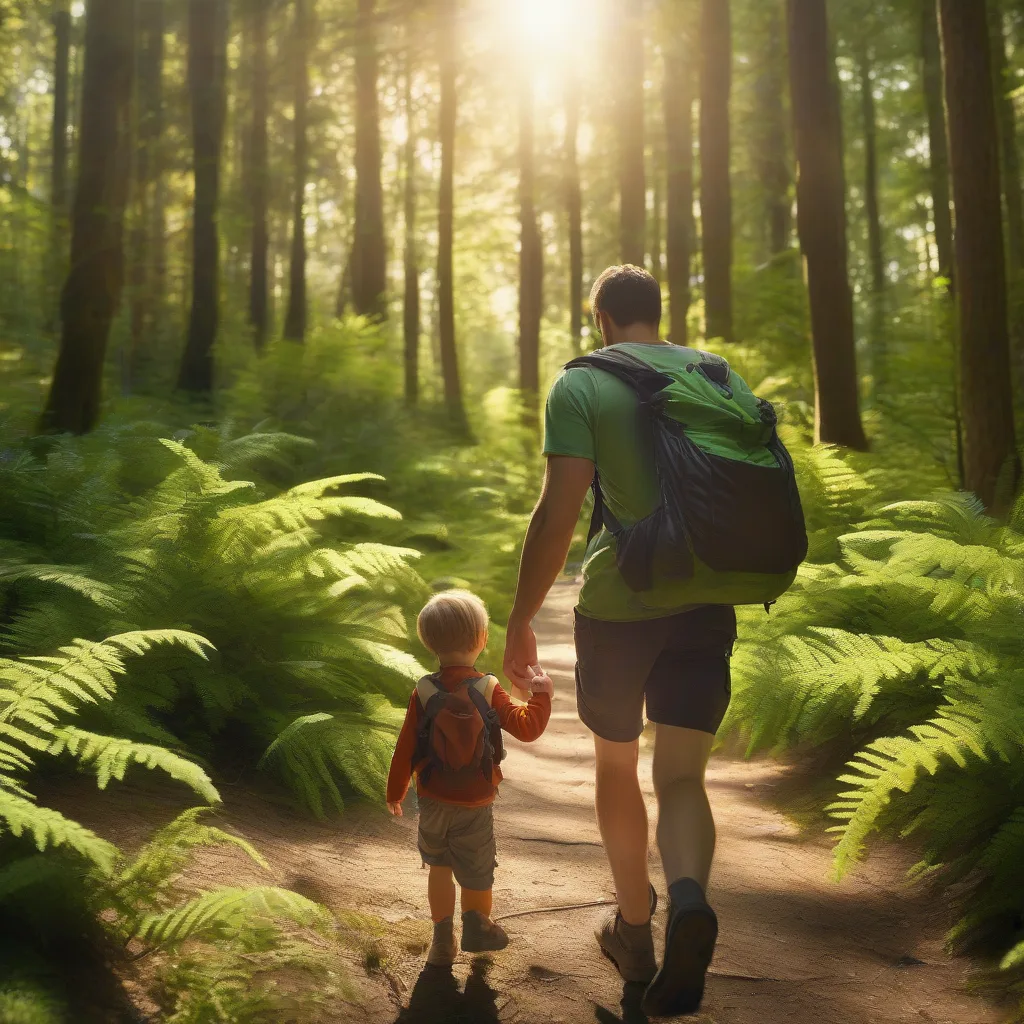
Introducing a toddler to the great outdoors is one of the most rewarding experiences a parent can have. There is a profound magic in watching a two-year-old discover the texture of moss, the sound of a bubbling creek, or the sight of a squirrel darting up a pine tree. However, anyone who has attempted to move a toddler in a linear direction for more than ten minutes knows that “hiking” with a small child is vastly different from hiking as an adult. While an experienced trekker might focus on mileage and elevation gain, hiking with a toddler is less about the destination and more about the sensory journey.
Key takeaways
- Prioritize flat, wide trails with natural features like streams or meadows to keep toddlers motivated.
- Use a layered clothing system and pack high-energy snacks to prevent overheating and energy crashes.
- Adopt the toddler pace by setting experience-based goals rather than focusing on specific mileage.
- Bring a framed child carrier to proactively manage fatigue before your toddler becomes overtired or irritable.
- Utilize games like nature scavenger hunts to keep children engaged and foster a love for the outdoors.
The transition from baby carrier to independent walking is an exciting phase, but it requires a shift in strategy. The goal shifts from simply transporting a passenger to facilitating an exploration. To make these outings successful, parents need a blend of meticulous preparation, flexible expectations, and a healthy dose of patience. By focusing on the toddler’s perspective, you can transform a potentially stressful outing into a foundational memory that fosters a lifelong love of nature.
Choosing the Right Trail for Little Legs
The biggest mistake parents make is choosing a trail based on their own fitness level rather than their child’s capabilities. For a toddler, a one-mile loop can feel like an epic expedition. When selecting a trail, prioritize accessibility and engagement over distance. Look for paths that are wide, relatively flat, and free of significant obstacles like large boulders or steep scrambles that would require constant lifting.
Loop trails are generally preferable to “out-and-back” trails. Toddlers often struggle with the concept of returning the way they came, and the changing scenery of a loop keeps them more engaged. Additionally, look for trails with “natural playgrounds”—areas with shallow streams, interesting rock formations, or wildflower meadows. These act as natural rewards that motivate them to keep moving.
Consider the amenities available at the trailhead. A parking lot with a restroom and a picnic table makes the transition from car to trail much smoother. If you are venturing further into a wilderness area, be mindful of the distance to the nearest exit. If a meltdown occurs or a diaper emergency arises, you want to know that you aren’t three miles away from the safety of your vehicle.
Essential Gear for Little Explorers
Proper gear is the difference between a joyful hike and a miserable one. The primary goal for toddler clothing is layering. Children lose body heat faster than adults and can overheat quickly during exertion. Start with a moisture-wicking base layer (avoid cotton, which stays wet and cold), add a fleece or wool mid-layer, and top it off with a wind- and water-resistant outer shell.
Footwear is another critical consideration. While some toddlers are happy in sneakers, sturdy hiking boots or waterproof trail shoes provide essential ankle support and protection from damp ground. Ensure their shoes are broken in before the big hike to avoid blisters. Pair these with wool or synthetic socks to keep feet dry and comfortable.
Even if your toddler is walking, you still need a reliable carrying system. A high-quality framed hiking backpack is indispensable. It allows you to carry the child when they tire (which will happen sooner than you expect) while distributing the weight across your hips rather than your shoulders. For younger toddlers or shorter walks, a structured soft carrier may suffice, but for true trail work, the support of a framed pack is superior for the adult’s long-term spinal health.
The Art of Packing: Snacks, Supplies, and Safety
In the world of toddler hiking, snacks are not just food; they are a primary motivational tool. The key is to provide a variety of high-energy, easy-to-eat options. Think of “trail tapas”—small portions of cheese cubes, dried fruit, apple slices, and whole-grain crackers. Avoid overly sugary snacks that lead to a glucose crash and subsequent tantrums. Offer small snacks frequently rather than one large meal, as this keeps their energy levels stable.
Hydration is equally important. Toddlers often forget to drink until they are already dehydrated. Use a spill-proof sippy cup or a small hydration bladder with a straw that they can operate. Offer water every 20 to 30 minutes, regardless of whether they ask for it.
Your pack should also include a comprehensive “toddler first aid kit.” Beyond standard bandages and antiseptic wipes, include a small bottle of tweezers for splinters, a soothing salve for insect bites, and a small amount of child-safe sunscreen and insect repellent. Don’t forget the essentials: plenty of diapers, biodegradable wipes, and a few spare sets of clothes. A wet outfit in a cool forest can turn a hike into a disaster very quickly.
Managing the Pace and Expectations
The most important mental shift for a parent is accepting the “Toddler Pace.” An adult might cover a mile in 20 minutes; a toddler might take two hours to cover that same distance because they found a particularly interesting pebble or a colony of ants. If you fight this pace, you create tension. If you embrace it, you enter the child’s world of discovery.
Set your goals based on experience, not distance. Instead of saying, “We are going to hike three miles today,” try saying, “We are going to walk until we find the big bridge.” This gives the child a tangible goal and removes the pressure of a numeric milestone. If they reach their limit before the goal, be prepared to pivot. It is better to turn back early and leave them wanting more than to push them to the point of a total breakdown.
Remember that toddlers are driven by curiosity. When they stop to investigate a leaf, join them. Ask questions like, “I wonder why that leaf is red?” or “Do you think a bug lives under here?” By validating their interests, you make the act of walking a secondary activity to the act of exploring, which ironically often keeps them moving for longer.
Keeping Your Toddler Engaged and Motivated
When the initial excitement of the trail wears off, you may need a few strategies to keep your little one moving. One of the most effective methods is the “Nature Scavenger Hunt.” You don’t need a printed list; simply call out items for them to find. “Can you find something yellow?” “Can you find a smooth stone?” “Can you find a pinecone?” This turns the hike into a game and encourages them to observe their surroundings closely.
Another technique is giving them a “job.” Toddlers love to feel helpful and capable. Give them a small, lightweight backpack of their own with a few of their favorite toys or a water bottle. Tell them they are the “Official Gear Manager” or the “Lead Scout.” You can also give them a magnifying glass or a small pair of binoculars, which empowers them to lead the way in searching for wildlife.
Storytelling is also a powerful tool. Create a narrative about the forest. Perhaps you are searching for a hidden fairy village or tracking the path of a friendly bear. By weaving a story into the landscape, the physical effort of hiking becomes part of a larger, imaginative adventure.
Safety First: Managing Risks on the Trail
While nature is a wonderful classroom, it does have inherent risks. The first rule of safety is establishing boundaries. Teach your toddler the concept of “staying in sight.” Use a simple phrase like, “Stay where you can see my blue shirt.” Practice this in the parking lot before hitting the trail so they understand the expectation.
Be mindful of water sources. Even a shallow creek can be dangerous for a toddler who loses their balance. Always maintain a firm grip or keep them within arm’s reach when near water. Similarly, educate them (in simple terms) about wildlife. Explain that we “look with our eyes, not our hands,” especially when it comes to berries, mushrooms, or animals.
Weather can change rapidly, especially in mountainous or coastal regions. Always check the forecast, but prepare for the worst. A sudden rain shower can lead to hypothermia in small children if they are damp and the temperature drops. This is why the waterproof outer shell and spare clothes mentioned earlier are non-negotiable. If the weather turns severe, do not hesitate to end the hike early.
Transitioning Between Walking and Carrying
The transition from walking to being carried is a delicate dance. If you wait until the toddler is completely exhausted and sobbing, the transition will be a struggle. Instead, look for early signs of fatigue: slowing pace, increased irritability, or leaning against your leg. Proactively offer the “magic chair” (the hiking pack) before the meltdown begins.
To make the carrier more appealing, keep a few “carrier-only” toys inside the pack—items they only get to play with when they are being carried. This creates a positive association with the transition. Ensure the carrier is adjusted properly for their current weight and height to avoid chafing or discomfort, which can lead to restlessness.
Encourage bursts of walking. Let them walk to the next big tree, then offer the carrier for a rest. This interval training helps build their stamina over time without overwhelming them. Over several trips, you will notice the intervals of walking getting longer and the time spent in the carrier getting shorter.
Post-Hike Recovery and Reflection
The experience doesn’t end when you reach the car. The post-hike routine is essential for cementing the positive association with the outdoors. Start with a transition ritual: a refreshing drink of water and a final, high-value snack. This helps stabilize their blood sugar after the exertion.
Once home, a warm bath is the perfect way to wash off the trail dust and relax tired muscles. This is also a great time to reflect on the day. Ask them, “What was your favorite thing we saw?” or “Did you like the big rock or the little stream better?” For older toddlers, you can help them create a “nature journal” by gluing in a fallen leaf or drawing a picture of a bird they saw.
Finally, prioritize rest. Hiking is physically and mentally taxing for a toddler. A long nap or an early bedtime is usually necessary. By ensuring they recover fully, you prevent the “overtired” phase that can lead to behavioral issues the next day, making them more likely to be excited for the next adventure.
Navigating Diverse Terrains and Ecosystems
While a flat forest path is the gold standard for beginner toddler hikes, diversifying the environments you explore helps develop a child’s proprioception and balance. Each ecosystem presents unique challenges and rewards that require specific tactical adjustments. When moving from a wooded trail to a beach, desert, or urban park, your approach to safety and gear must shift accordingly.
Beach hiking is an excellent way to introduce toddlers to the concept of “trekking” because the soft sand provides a natural cushion for falls. However, sand creates significant drag, which exhausts small muscles much faster than packed dirt. To manage this, encourage “sand-hopping” or allow them to walk along the wet, firm sand of the shoreline where movement is easier. Be mindful of the “temperature trap”; while the air may feel cool, the sand can reach temperatures that blister tender feet. Always carry a pair of lightweight, breathable water shoes to protect against hot sand and sharp shells. An edge case to consider is the tide; toddlers have no concept of rising water, so always keep a close eye on the tide charts to avoid getting pinned against a cliff or trapped in a tidal pool area.
In desert or arid environments, the primary challenge is thermal regulation and skin protection. The reflective nature of sandy or rocky soil increases UV exposure. In addition to sunscreen, consider a wide-brimmed hat with a chin strap to prevent it from blowing away. In these regions, the “toddler pace” is often dictated by the need for shade. Plan your route to include “shade stops” under scrub brush or rock overhangs. Be particularly cautious of “hidden” hazards like cacti or thorny brush; in these terrains, long pants are a necessity regardless of the heat to prevent scratches and punctures that can lead to infection.
Urban parks and “green-ways” offer a different set of complexities, primarily centered around human-made hazards. While the paths are often paved and accessible, the presence of cyclists, electric scooters, and traffic requires a higher level of vigilance. Establish a “hand-holding zone” for paved sections, explaining that the sidewalk is for “walking together” while the grass is for “exploring.” Use these environments to teach the difference between wild nature and managed nature, pointing out how humans plant specific flowers or build bridges to help us cross water.
For those venturing into mountainous or high-altitude regions, be aware of the physiological impact on toddlers. Children may not be able to articulate the feeling of altitude sickness, but it often manifests as extreme irritability, loss of appetite, or unusual lethargy. Increase hydration significantly and keep the ascent gradual. If you notice your toddler becoming unusually clingy or refusing to eat their favorite snacks, it may be a sign that the altitude is too high for their current acclimation level, and it is time to descend.
Advanced Nature Education for Little Minds
Once a toddler is comfortable with the physical act of hiking, you can transition from simple exploration to intentional nature education. At this age, learning is entirely sensory and experiential. Rather than focusing on the names of species—which can be overwhelming—focus on the attributes of the natural world. This builds a cognitive framework for scientific observation that will serve them as they grow.
Implement a “Sensory Mapping” technique. Instead of just seeing a tree, encourage the child to interact with it using all five senses. Ask them, “Does the bark feel scratchy or smooth?” “Does the leaf smell like a lemon or like rain?” “Can you hear the wind whistling through the needles?” By categorizing nature through textures, sounds, and smells, you are helping them develop a sophisticated descriptive vocabulary. You can enhance this by bringing a “Texture Board”—a simple piece of cardboard with a few glued-on samples (a piece of sandpaper, a bit of velvet, a smooth pebble) that they can use to compare the forest’s textures to known objects.
Introduce the concept of “Micro-Hikes.” This involves picking a very small area—perhaps a single square foot of moss or a fallen log—and treating it as a vast landscape. Use a magnifying glass to explore this micro-world. Point out the “canyons” in the bark or the “forests” of moss. This teaches toddlers the concept of scale and encourages them to slow down and appreciate the intricate details of the environment. It also serves as a brilliant strategy for when the child is too tired to walk further but still wants to “explore.”
Teaching the cycle of life can be done gently through the observation of decay. Find a rotting log or a pile of autumn leaves and discuss how they are “turning into food for the soil.” This introduces the concept of decomposition without being morbid. You can look for fungi and explain that mushrooms are like the “cleanup crew” of the forest. This transforms a random encounter with a mushroom into a lesson in ecology, fostering a sense of wonder about the invisible processes that keep the forest healthy.
To encourage long-term engagement, start a “Nature Collection” (with a strict “only fallen items” rule). Provide a small egg carton or a dedicated pouch where they can collect a brown leaf, a grey stone, a yellow petal, and a piece of dry twig. This turns the hike into a quest for specific attributes, moving beyond the scavenger hunt into the realm of classification and sorting. Back at home, these items can be used to create a collage, linking the physical memory of the hike to a tangible piece of art.
Managing Sibling Dynamics and Group Outings
Hiking with a single toddler is a challenge, but adding a sibling or a group of other children introduces a complex social layer. The primary conflict usually arises from the discrepancy in physical ability. An older sibling may feel held back by the toddler’s pace, while the toddler may feel envious of the older child’s freedom.
The most effective way to manage this is by assigning the older child a “Mentor Role.” Instead of framing the toddler’s slowness as a hindrance, frame it as a leadership opportunity. Tell the older child, “You are the Guide today. Your job is to show your sibling the coolest rocks and make sure they stay on the path.” When a child feels responsible for another’s success, they are more likely to be patient and supportive. Give them a “Guide’s Tool,” such as a map (even a hand-drawn one) or a compass, to make the role feel official and rewarding.
To prevent the “carrier resentment”—where the toddler is carried and the older child is forced to walk—incorporate “Equity Breaks.” Every thirty minutes, allow the older child a period of “luxury rest” where they get to sit on a rock and eat the premium snacks while the toddler continues to walk (under close supervision). Alternatively, if you have a larger carrier or a wagon for flatter terrains, ensure everyone gets a turn in the “ride.” If the age gap is significant, allow the older child periods of “scouting,” where they can run ahead to a designated landmark (like a specific large oak tree) and then return to report their findings to the group.
When hiking with other families, communication is key to avoiding collective stress. Establish a “Lead Pace” based on the slowest child in the group. If one child is having a meltdown, the entire group should pivot to a stop. This prevents the parents of the struggling child from feeling pressured to push their toddler, which often exacerbates the behavior. Coordinate snack sharing to create a “community picnic” feel, which encourages the toddlers to socialize and mimic each other’s positive behaviors. If one toddler is excitedly exploring a bug, others are more likely to join in than if they are being urged to keep moving by their parents.
An edge case occurs when siblings have conflicting energy levels—one is a “high-energy sprinter” and the other is a “slow observer.” In these instances, use the “Anchor and Tether” method. The parent acts as the anchor, staying with the slower child, while the older child is the tether, moving back and forth between the parent and a safe distance ahead. This allows the older child to burn off energy while ensuring the toddler remains the center of the experience.
The Psychology of the “Trail Wall” and Motivation Hacks
Every parent eventually hits the “Trail Wall”—that moment when the toddler suddenly decides that their legs no longer function and they simply collapse into a heap of defiance. While the hiking carrier is the ultimate solution, relying on it too early can stunt a child’s stamina and confidence. To push through the wall, you need psychological tools that bypass the toddler’s resistance.
One effective technique is the “Invisible Bridge” game. When a toddler refuses to move, tell them that the path ahead has turned into a river of lava or a bridge of clouds, and the only way to cross it is by doing something silly, like hopping like a frog or walking backward. By changing the physical nature of the movement, you distract them from the fatigue and engage the imaginative part of their brain. The goal is no longer “walking to the car,” but “crossing the lava river,” which is a much more compelling objective.
Use “Micro-Rewards” instead of a single large prize. A toddler’s concept of time is very short; promising a treat at the end of the hike is ineffective. Instead, use “The Snack Ladder.” Tell them, “When we get to that red sign, we get one grape. When we reach the big rock, we get a cracker.” These frequent, small wins provide a constant stream of dopamine that motivates them to keep taking steps. Ensure the rewards are high-value but small in quantity to avoid spoiling their appetite for the main meal.
The “One More Big Tree” method is a classic for a reason. It breaks a daunting distance into manageable, visual chunks. However, to make it more effective, let the toddler choose the “Big Tree.” By giving them agency in the goal-setting process, they are more likely to commit to the effort. “Which tree should be our next stop? That skinny one or that fat one?” Once they’ve made the choice, they have a psychological investment in reaching that specific destination.
In cases of extreme resistance, try the “Reverse Psychology Walk.” Start walking away from the destination and pretend you’ve forgotten something. “Oh no! I think I left my favorite rock back there! I wonder if we can find it?” Often, the desire to “help” or the curiosity about what you’ve “lost” will prompt them to start walking again. Once they are in motion, it is much easier to gently steer them back toward the actual trail exit.
Teaching Environmental Stewardship (Leave No Trace)
Hiking is the perfect opportunity to instill a sense of environmental ethics. Toddlers are naturally inclined to pick up everything they see, which can lead to the accidental removal of seeds, insects, or fragile plants. Teaching “Leave No Trace” (LNT) principles at this age isn’t about rules; it’s about building a relationship of respect with the earth.
Transform the concept of “not littering” into the “Trash Hero” game. Carry a small, dedicated bag for trash and tell your toddler that you are on a mission to “clean the forest for the animals.” When you find a piece of plastic or a wrapper, make a big deal about rescuing the forest from it. This shifts the narrative from a restrictive rule (“Don’t throw trash”) to a positive, heroic action (“I am saving the forest”). This empowers the child and makes them mindful of the impact humans have on nature.
To teach them to stay on the trail, use the “Animal Home” explanation. Instead of saying, “Stay on the path because I said so,” explain that the areas off the trail are “tiny houses for bugs and mice.” Tell them that if we walk through the grass, we might accidentally step on a beetle’s living room. This appeals to their empathy and gives them a concrete reason to follow the trail markers. When they do wander off, instead of a reprimand, use a gentle reminder: “Let’s move back to the path so we don’t wake up the sleeping ants.”
Manage the urge to collect nature by introducing the “Photo Collection” concept. If a toddler finds a beautiful flower or a unique rock that should stay in place, use a phone or a small camera to take a “treasure picture.” Tell them, “We can’t take the flower home because the bees need it for their lunch, but we can take a picture of it so we can remember it forever.” This teaches them that the value of nature lies in its existence in the wild, not in its possession.
Finally, model the behavior of “quiet observation.” Toddlers can be loud, but you can teach them the “Forest Whisper.” Explain that animals have very sensitive ears and that if we whisper, we are more likely to see a deer or a bird. This not only helps in wildlife spotting but also helps calm the child’s energy level, making the hike more peaceful for everyone involved.
Seasonal Mastery: Deep Dives into Weather Challenges
While basic layering is mentioned in gear lists, the actual application of seasonal management requires a nuanced approach to prevent the “comfort crash”—where a minor weather shift leads to a total behavioral meltdown.
In the depths of winter, the biggest enemy is not the cold, but dampness. For toddlers, a single wet sock can end a hike instantly. The “Double-Sock System” is essential: a thin merino wool liner sock followed by a thicker wool outer sock. If the outer sock gets damp from snow or a puddle, you can swap it out while the liner keeps the foot warm. Additionally, incorporate “Hand-Warmer Rotations.” Place chemical hand warmers in their gloves, but be mindful of their skin’s sensitivity; always place the warmer against the glove fabric, never directly on the skin. To prevent the “frozen face” effect, use a fleece neck gaiter that can be pulled up over the nose and mouth, avoiding the struggle of a traditional scarf that might come undone or become a tripping hazard.
Summer hiking requires a strategy for “peak heat avoidance.” The window for toddler hiking in the summer is narrow—typically between 7:00 AM and 10:00 AM. Beyond this, the risk of heat exhaustion increases. Use “Cooling Stations” throughout the hike. A damp, cool cloth wrapped around the toddler’s neck or wrists can rapidly lower their core temperature. When packing water, freeze half of the water bottle the night before; as it melts, it provides ice-cold water and can be used as a cold compress against the skin if the child is overheating.
Spring and autumn bring the challenge of “The Mud Zone.” To keep toddlers from becoming miserable in wet boots, utilize “Gaiters”—small waterproof sleeves that cover the gap between the boot and the pant leg. This prevents mud and water from seeping in from the top. In the spring, be hyper-vigilant about “The Tick Check.” Because toddlers often crawl through tall grass, perform a “three-point check” (behind the ears, under the arms, and in the groin area) immediately upon returning to the car. Use a fine-toothed comb for this process, as toddler skin is too sensitive for aggressive scrubbing.
Autumn brings the risk of rapid temperature drops as soon as the sun dips below the treeline. Always carry a “Emergency Warmth Kit” in your pack—a lightweight, reflective emergency blanket and a spare fleece jacket, even if the morning started warm. The transition from a sunny ridge to a shaded valley can drop the temperature by ten degrees in minutes, and a shivering toddler is a toddler who will refuse to walk another inch.
Frequently Asked Questions
A: You can take a child into nature from birth, but “hiking” in the sense of them walking the trail usually begins between 18 months and 3 years, depending on their motor skills. For infants and young toddlers, a high-quality ergonomic carrier is the best way to introduce them to the outdoors. The key is to match the activity to the child’s developmental stage rather than a specific age.
Q: How do I handle a full-blown toddler tantrum in the middle of the trail?
A: First, ensure you are in a safe spot away from edges or traffic. Remain calm; your energy dictates theirs. Often, a tantrum on the trail is caused by a “HALT” factor: Hungry, Angry, Lonely, or Tired. Address these needs immediately with a snack, a hug, or a transition to the carrier. If the tantrum persists, give them a few minutes to express their frustration, then offer a distraction or a change of scenery to reset their mood.
Q: What should I do about bathroom breaks for toddlers who are potty training?
A: If your child is mid-training, carry a portable potty or a “travel kit” consisting of a leak-proof bag, wipes, and a designated spot away from the trail. Be aware that the excitement of the outdoors can sometimes cause toddlers to “forget” their training. It is often safer and less stressful to use diapers or pull-ups during hikes to avoid accidents that could lead to discomfort or skin irritation.
Q: How long should a typical toddler-friendly hike be?
A: There is no one-size-fits-all answer, but for most toddlers, a distance of 0.5 to 1.5 miles is a sweet spot. The time spent is more important than the distance. A two-hour outing that includes stopping to look at bugs and splashing in a puddle is more beneficial than a forced three-mile march. Always prioritize the child’s engagement level over the map’s distance markers.
Q: Are there specific safety precautions for hiking in different seasons?
A: Yes. In summer, prioritize sun protection and hydration to prevent heatstroke. In winter, focus on layering and keeping extremities (hands and feet) dry. In spring and autumn, be particularly mindful of ticks and poison ivy; dress them in long pants and long sleeves, and perform a thorough tick check immediately after returning home.
Related posts:
 Ways to Support Emotional Growth in Toddlers
 Hitting the Trails This Summer: Hiking Tips for the Whole Family
 Forest-Inspired Skincare That Connects You to Nature
 Practical Strategies for Managing Toddler Screen Time
 How Forest Bathing Can Improve Your Mental Health
 The Complete Hiking Packing List You’ll Actually Want to Use
 Lea Michele’s Hiking Workout Routine
 How to Help Children Grieve and Deal with Loss