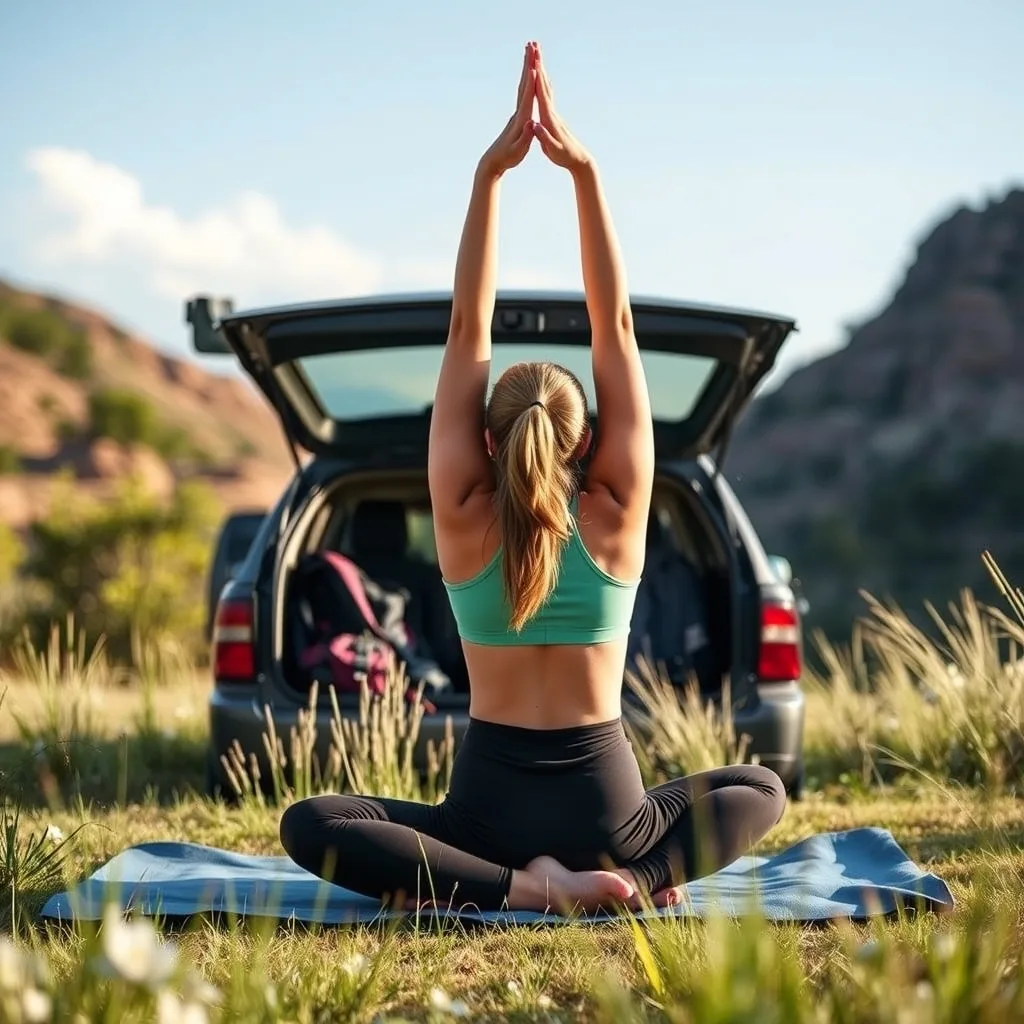
Long drives can feel endless, especially when your body is confined to a seat for hours on end. A few well‑chosen yoga poses can keep muscles supple, reduce stiffness, and boost mental clarity without needing a full studio. The following routine is designed for the back‑seat, the rest stop, or a small hotel room, and it focuses on the most common aches that surface during road trips – tight hips, cramped shoulders, and a restless mind. Each pose includes step‑by‑step instructions, safety cues, and simple variations so you can adapt it to any space or fitness level.
Preparing Your Space on the Road
Before you roll out your mat (or a towel), create a calm micro‑environment. Choose a well‑ventilated spot, ideally near a window for fresh air. If you’re at a rest area, lay a yoga mat, a folded blanket, or even a sturdy travel pillow on the ground. Turn off the car radio, set a gentle playlist, and consider a short meditation or breathing exercise to signal to your nervous system that it’s time to move. A few deep breaths will also help you transition from the driver’s mindset to a more mindful posture.
Sun Salutation (Surya Namaskar) – Warm‑up for the Journey
The Sun Salutation is a dynamic sequence that awakens the whole body, increases circulation, and prepares muscles for deeper stretches. Perform the flow 3–5 times, moving with your breath.
- Mountain Pose (Tadasana): Stand tall with feet hip‑width apart, shoulders relaxed, and palms resting by your sides. Inhale, reach arms overhead, gaze upward.
- Forward Fold (Uttanasana): Exhale, hinge at the hips, and let the torso drape over the legs. Keep a soft bend in the knees if hamstrings feel tight.
- Halfway Lift (Ardha Uttanasana): Inhale, place hands on shins or a block, lengthen the spine, and look forward.
- Plank to Low‑Crawl: Exhale, step back into a plank, then lower knees, chest, and chin to the mat.
- Cobra (Bhujangasana): Inhale, slide forward, press the tops of the feet, and lift the chest while keeping elbows close.
- Downward‑Facing Dog (Adho Mukha Svanasana): Exhale, lift hips high, forming an inverted V. Press the heels toward the ground without forcing.
- Step Forward: Inhale, step the right foot between the hands, rise into a low lunge, then repeat the forward fold.
- Return to Mountain: Inhale, sweep arms overhead, and stand tall.
Focus on smooth transitions; this flow will increase blood flow to the lower back and legs, which are often the first to feel cramped during a drive.
Seated Forward Fold – Relieving Hip Tightness
Many travelers experience tight hip flexors from prolonged sitting. The seated forward fold (Paschimottanasana) can lengthen the hamstrings and gently stretch the hips without requiring a full mat.
- Sit on the floor or a sturdy travel bench with legs extended straight ahead.
- Flex the feet, engage the thighs, and inhale to lengthen the spine.
- Exhale, hinge at the hips, and reach toward the shins, ankles, or a strap. Keep the back long; avoid rounding.
- Hold for 30–45 seconds, breathing deeply.
- To modify, bend the knees slightly or place a pillow under the hips for support.
This pose reduces tension in the glutes and lower back, making it easier to sit upright when you get back in the car.
Chair Twist – Counteracting Sitting Fatigue
A seated spinal twist can detoxify the spine, improve digestion, and break the monotony of forward‑leaning posture. You can perform it directly on a car seat, a portable chair, or a bench.
- Sit tall, feet flat on the floor, and engage the core.
- Place the right hand on the back of the seat or a sturdy surface.
- Inhale, lengthen the spine, then exhale and gently rotate the torso to the right, looking over the shoulder.
- Place the left hand on the right thigh for added leverage.
- Hold for 20–30 seconds, breathing into the twist, then repeat on the opposite side.
Keep the movement smooth; avoid forcing the rotation. This twist helps release the thoracic spine, which often hunches forward while driving.
Warrior II (Virabhadrasana II) – Building Strength for Long Drives
Warrior II strengthens the legs, opens the hips, and cultivates focus—useful for staying alert behind the wheel.
- From a standing position, step the left foot back about 4 feet, turning the left heel slightly outward.
- Align the right heel forward, bend the right knee so it stacks over the ankle, and keep the left leg straight.
- Raise the arms parallel to the floor, palms down, and gaze over the right fingertips.
- Maintain the pose for 45 seconds, breathing evenly. To adapt, place the back hand on a wall or a sturdy suitcase for balance.
- Switch sides and repeat.
Warrior II builds endurance in the quadriceps and glutes, reducing the likelihood of leg fatigue during extended periods of sitting.
Tree Pose (Vrksasana) – Balance in Confined Spaces
Even a brief balance practice can sharpen proprioception and calm the nervous system. Tree Pose requires minimal space and can be done beside a vehicle or in a small hotel bathroom.
- Stand tall, shift weight onto the left foot.
- Bring the sole of the right foot to the inner left calf or ankle—avoid the knee joint.
- Press the foot gently into the leg and the leg into the foot, creating an upward lift.
- Bring hands to prayer position at the heart or extend them overhead for an added challenge.
- Hold for 30 seconds, then switch sides.
If balance is shaky, lightly rest the heel against a wall or a sturdy suitcase for support.
Legs‑Up‑the‑Wall (Viparita Karani) – Restorative Recovery
After a day of driving, this gentle inversion eases lower‑back strain, reduces swelling in the feet, and promotes a calm mind.
- Find a wall or a firm vertical surface at a rest stop.
- Sit sideways with one hip against the wall, then swing the legs up so the calves rest against it.
- Allow the lower back to relax; you can place a folded blanket under the sacrum for extra support.
- Close the eyes, breathe deeply, and stay for 5–7 minutes.
- To enhance relaxation, incorporate a soft mantra or a short body scan.
This pose is safe for most travelers, but anyone with glaucoma or severe hypertension should consult a health professional before practicing inversions.
Closing Breathwork – Grounding Before You Go
Finishing your road‑trip yoga session with a brief breath practice helps integrate the benefits and prepares you for the next leg of the journey.
- Sit comfortably with a straight spine.
- Inhale through the nose for a count of four, expanding the belly.
- Hold the breath gently for a count of two.
- Exhale slowly through the nose for a count of six, drawing the navel toward the spine.
- Repeat for five cycles, noticing any shift in tension.
Consistent practice of this simple box breathing technique can lower stress hormones and improve focus, which is especially valuable when you resume driving.
Designing a Portable Yoga Kit for the Road
When you’re traveling long distances, the weight and bulk of a traditional yoga setup can quickly become a liability. A well‑thought‑out kit balances comfort, functionality, and space‑efficiency, allowing you to practice anywhere from a rest‑area concrete slab to a cramped hotel bathroom. Below is a checklist that can be folded into a single carry‑on bag, plus suggestions for budget‑friendly alternatives.
- Travel‑size mat or foldable yoga blanket – Look for a 3‑mm‑thick mat that rolls up to a diameter of under 12 inches. If you prefer a softer surface, a compact microfiber blanket (often sold as a travel pillow cover) works well on carpeted floors.
- Resistance band set – A light (5‑10 lb) and a medium (15‑20 lb) band can double as a strap for seated stretches, a prop for assisted balance, or a tool for gentle strength work.
- Reusable strap or yoga belt – A 6‑foot cotton strap replaces a yoga strap and can also be used to secure a blanket to a car seat for added stability.
- Portable block – Foam blocks are bulky; instead, fold a small pillow or a rolled‑up towel into a makeshift block. The key is a firm, stable surface that can be placed under hands or hips.
- Essential oils or scent pad (optional) – A dab of peppermint or lavender on a cotton pad can signal the brain that it’s time to unwind, especially useful in noisy rest stops.
- Mini‑first‑aid kit – Include blister pads, kinesiology tape, and an instant cold pack. Road‑trip yoga can sometimes reveal hidden tight spots that need immediate attention.
Edge case tip: If you’re traveling with a pet, a small, chew‑proof mat can double as a pet resting pad, keeping both you and your animal comfortable during stretch breaks.
By keeping each item under 1 lb, the entire kit stays well below the airline’s personal item limit and fits neatly in the trunk or under the seat without obstructing luggage.
Integrating Yoga with Vehicle Ergonomics: In‑Seat Movements and Micro‑Stretches
Even while the car is in motion, you can incorporate subtle yoga‑inspired adjustments that improve circulation and reduce tension without compromising safety. These micro‑stretches are designed to be performed while the vehicle is moving at a steady speed, with the driver keeping both hands on the wheel.
- Neck Release (Seated Uttanasana) – Sit upright, shoulders relaxed. Gently drop the right ear toward the right shoulder, hold for three breaths, then repeat on the left. This relieves the trapezius and upper‑trapezius muscles that tighten during long steering.
- Seated Cat‑Cow (Marjaryasana‑Bitilasana) for the Spine – While seated, place hands on thighs. Inhale, arch the back, lift the chest (cow); exhale, round the spine, tuck the chin (cat). Perform 5‑8 cycles to keep the intervertebral discs lubricated.
- Hip Flexor Pulse (Seated Anjaneyasana Variation) – Keep feet flat, engage core, and gently press the right knee toward the floor while sliding the left foot slightly back, feeling a stretch in the left hip flexor. Pulse for 10 seconds, then switch sides.
- Calf Activation (Standing Tadasana with Heel Lift) – When stopped at a traffic light, stand with feet hip‑width apart, rise onto the balls of the feet for three counts, then lower. Repeat 5 times to stimulate the gastrocnemius and prevent swelling.
- Shoulder Opener (Gomukhasana Arms Variation) – Reach the right arm overhead, bend the elbow, and let the hand rest on the upper back. Bring the left hand behind the back, attempting to clasp the fingers. Hold for two breaths, then reverse.
These movements can be performed every 30–45 minutes of continuous driving. The goal is to keep blood flowing without distracting the driver from the road.
Edge case tip: For drivers with limited mobility (e.g., due to a recent knee surgery), replace the standing calf activation with a seated ankle pump: rotate the ankles clockwise for five rotations, then counter‑clockwise.
Mindful Navigation: Using Breath and Meditation to Combat Motion Sickness and Road‑Fatigue
Beyond physical stretches, the nervous system benefits enormously from intentional breath work and brief meditative pauses. When combined with visual focus techniques, these practices can reduce nausea, improve alertness, and prevent the dreaded “highway hypnosis.”
1. Alternate Nostril Breathing (Nadi Shodhana) – Sit upright, close the right nostril with the thumb, inhale through the left for a count of four, close the left nostril with the ring finger, exhale through the right for a count of six. Continue for 5 cycles. This balances the autonomic nervous system and can calm queasy stomach sensations.
2. 4‑7‑8 Relaxation Breath – Inhale quietly through the nose for 4 seconds, hold for 7 seconds, exhale audibly through the mouth for 8 seconds. Perform three rounds before a steep climb or after a long straight‑away to reset heart rate.
3. Visual Anchor Meditation – Choose a fixed point on the horizon (e.g., a mountain peak, a billboard). Every minute, bring your gaze to that point, breathe in for three counts, and exhale for three counts. This practice anchors the vestibular system, reducing dizziness.
4. Body Scan on the Go – While the car is stopped, close the eyes and mentally scan from the toes to the crown, noticing any areas of tension. Spend a brief moment (10–15 seconds) on each region, consciously releasing the muscle. This quick scan can be repeated multiple times throughout the day.
Edge case tip: For travelers prone to anxiety, pairing the breath practice with a scented inhaler (eucalyptus or chamomile) can amplify the calming effect without requiring visual focus.
Yoga for Specialized Travelers: Seniors, Pregnant Riders, and Adventure‑Seekers
Road trips are not one‑size‑fits‑all. Adjusting the routine to accommodate specific physiological needs ensures safety and maximizes benefit.
Seniors
- Joint‑Friendly Warm‑Up: Use a seated “Seated Sun Salutation” where each movement is performed while seated, focusing on shoulder rolls, gentle side bends, and ankle circles.
- Balance Support: When attempting Tree Pose, place the heel of the raised foot against a low wall or a sturdy suitcase for extra stability.
- Low‑Impact Strength: Incorporate a resistance band row while seated – anchor the band to the car door handle, pull elbows back, squeeze shoulder blades.
Pregnant Travelers (Second and Third Trimester)
- Modified Warrior: Shorten the stance to avoid deep knee bends, keep the back leg slightly bent, and place a folded blanket under the front knee for support.
- Pelvic Tilt Sit‑Ups: While seated, engage the core and gently tilt the pelvis forward, feeling a stretch in the lower back. Perform 8‑10 repetitions to alleviate lumbar strain.
- Open‑Heart Chest Expansion: Stand with hands on a wall at shoulder height, step back slightly, and gently press the chest forward, opening the ribcage without compressing the abdomen.
Adventure‑Seekers (Hikers, Cyclists, Kayakers)
- Dynamic Hip Opener: Perform a standing “Lizard Pose” variation at a scenic overlook—step the right foot outside the left hand, lower hips, and keep the back leg straight. Hold 30 seconds, then switch.
- Forearm Strengthening: Use a compact hand‑grip exerciser (or a rolled‑up towel) for 30 seconds to keep grip strength sharp for climbing or paddling.
- Recovery Flow: After a day of high‑intensity activity, a short sequence of supine twists, gentle bridge pose, and legs‑up‑the‑wall can accelerate muscle recovery before the next leg of the road trip.
Edge case tip: If any traveler experiences dizziness while standing, transition to a seated version of the pose first, then gently rise using a stable support such as a suitcase or a car door frame.
Transitioning from the Road to the Campsite: Evening Yoga Routines for Better Sleep
Arriving at a campsite often means a shift in lighting, temperature, and sleeping arrangements. An evening yoga routine can smooth this transition, lower cortisol, and prepare the body for restful sleep on a sleeping bag or a hammock.
- Sunset Seated Forward Fold (Modified Paschimottanasana) – Sit on a folded blanket, legs extended, and gently fold forward, resting the forehead on a pillow. Hold for 1 minute while visualizing the day’s journey winding down.
- Supine Figure‑Four (Supta Kapotasana Variation) – Lying on the back, cross the right ankle over the left knee, thread the right hand through the gap, and gently pull the left thigh toward the chest. This opens the hips and releases any residual tension from long periods of sitting.
- Reclining Twist with a Pillow – Place a small pillow under the knees, let the knees fall to the right, and turn the head to the left. Hold for 45 seconds, then repeat on the opposite side.
- Supported Bridge (Setu Bandhasana) with a Block – Place a folded blanket under the sacrum for a gentle inversion that encourages lymphatic drainage without the intensity of a full bridge.
- Guided Body Scan Meditation – While lying still, mentally scan each body part, releasing any remaining tightness. Pair this with a soft nature soundtrack (crickets, wind) for an immersive experience.
Finish with a few rounds of 4‑7‑8 breathing to lower heart rate. The entire sequence can be completed in 10‑12 minutes, even on a small campsite clearing.
Edge case tip: In colder climates, keep the blanket or a sleeping bag underneath the spine during supine poses to maintain core temperature and prevent stiffness.
Leveraging Scenic Stops: Outdoor Yoga Practices Tailored to Different Environments
Every rest stop offers a unique backdrop—mountain vistas, desert dunes, forest clearings. Aligning your yoga practice with the environment not only enriches the experience but also taps into the therapeutic benefits of nature (forest bathing, grounding).
Mountain View Flow
- Begin with a standing mountain pose, feeling the firm ground beneath your feet.
- Transition into a wide‑legged forward fold (Prasarita Padottanasana) to stretch the inner thighs while gazing at the peaks.
- Incorporate a “Peak Pose” (Parvatasana) where you place palms on a sturdy rock, gently pressing upward to mimic the mountain’s ascent.
Desert Dune Flow
- Use the sand’s resistance for a deeper squat (Malasana), feeling the grains support the hips.
- Practice “Sand‑Supported Warrior” by placing the back foot on a small dune, allowing the incline to naturally open the hip flexors.
- End with a grounding pose—sit cross‑legged, place palms on the sand, and visualize the heat radiating away tension.
Forest Clearing Flow
- Start with a tree pose, using a nearby tree for tactile feedback—lightly rest the heel against the trunk for balance.
- Move into a “Leaf‑Inspired Side Bend” (Parighasana), reaching one arm over the head while the other hand rests on the ground, feeling the stretch mimic a leaf unfurling.
- Conclude with a seated meditation, listening to bird calls, and practicing “Ear‑to‑Earth” grounding by placing the soles of the feet on the forest floor.
Edge case tip: If the weather turns windy or rainy, shift to a sheltered spot (under a pavilion or inside a vehicle) and adapt the sequence to a seated or lying position while still maintaining the visual focus on the surrounding nature.
Digital Tools and Community Support: Apps, Podcasts, and Remote Classes for On‑the‑Go Practice
Technology can bridge the gap when you’re away from a studio. Curated digital resources keep your practice consistent, provide accountability, and introduce variety without the need for extra equipment.
- Offline‑Ready Yoga Apps – Look for apps that allow you to download 10‑15 minute “road‑trip” playlists. Features to prioritize: adjustable timer, voice‑guided cues, and a “no‑internet” mode.
- Podcast‑Based Sessions – Audio‑only formats are perfect for the driver’s seat. Search for podcasts that blend gentle instruction with ambient road sounds, ensuring you stay aware of traffic while still receiving guidance.
- Live Virtual Classes – Schedule a short Zoom or Google Meet session during a planned rest stop. Invite fellow travelers or friends to join; the shared experience can boost motivation.
- Community Challenges – Join online road‑trip yoga challenges on platforms like Instagram or Strava. Posting a daily photo or a short video of your pose can create a sense of accountability and community.
- Progress Tracking – Use a simple spreadsheet or a habit‑tracking app to log the time, location, and pose performed. Over weeks, you’ll notice patterns (e.g., more hip stretches after mountain passes) that can inform future itineraries.
When selecting digital tools, prioritize those with low battery consumption and the ability to run on a phone’s power‑saving mode, as charging opportunities may be limited on long stretches.
Edge case tip: If you’re traveling internationally and face limited data, download all content before crossing borders, and consider a portable solar charger to keep devices powered without relying on car outlets.
FAQ
Q: How often should I practice these poses on a road trip?
A: Aim for a short session (10‑15 minutes) every 2–3 hours of driving. Even a single pose held for a minute can reset muscle tension and improve circulation.
Q: Can I do these stretches if I have a back injury?
A: Most of the poses are low‑impact, but modify or skip any movement that causes pain. Consulting a physical therapist before travel is advisable for existing injuries.
Q: Do I need a yoga mat?
A: A mat provides cushioning, but a clean towel, blanket, or even a carpeted floor works well. The key is a non‑slippery surface.
Q: What if I’m traveling with kids? Can they join?
A: Absolutely. Turn the routine into a family “stretch break.” Simplify the poses, use playful language, and let children copy your movements; it encourages mindfulness for the whole family.
Q: How can I stay motivated to stretch when I’m tired?
A: Pair each pose with a specific benefit—e.g., “Warrior II for alertness” or “Legs‑Up‑the‑Wall for fresh feet.” Setting a timer or using a travel‑friendly yoga app can also remind you to move.
Related posts:
 Lindsay Ellingson’s Stress-Relieving Yoga Move
 Managing Hip Pain from Sitting
 Stretches to Relieve Foot Pain
 Master Chair Pose Without Falling Over: A Yoga Guide for Real People
 Run Better, Feel Better: The Essential Yoga Moves Every Runner Needs
 Hip Flexor-Free Ab Workouts
 Yoga Poses for Lower Back Pain
 Desk Yoga for Back Pain Relief