Introduction
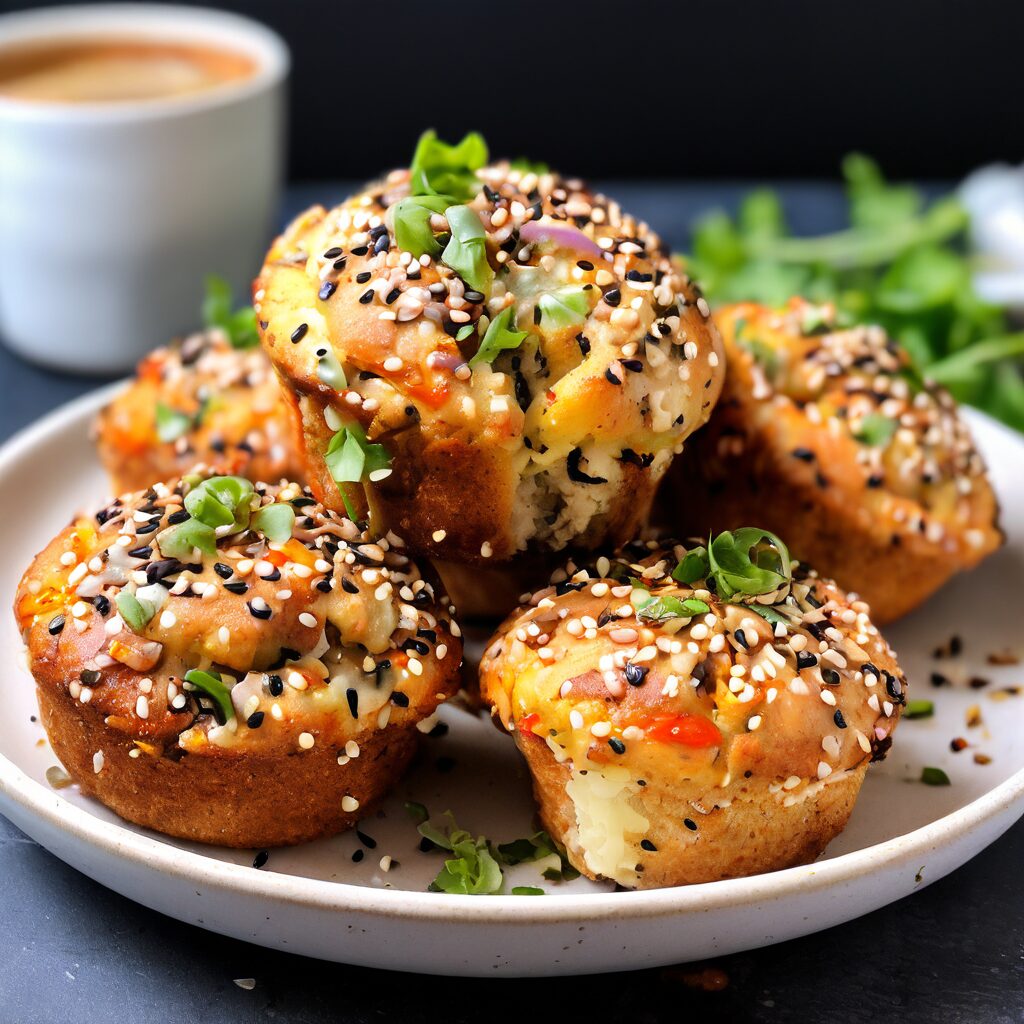
If you love everything bagels, you’ll adore these everything bagel muffins. They’re a perfect savory twist on the classic muffin, packed with flavor and ideal for breakfast or a snack. Let’s dive into this delicious recipe that will surely become a new favorite.
Ingredients
- 1 1/2 cups all-purpose flour
- 1 tablespoon baking powder
- 1/2 teaspoon salt
- 1 tablespoon sugar
- 1/2 cup whole milk
- 1/2 cup sour cream
- 1/4 cup vegetable oil
- 1 large egg
- 2 tablespoons everything bagel seasoning
- 1/2 cup shredded cheddar cheese
- 1/4 cup chopped green onions
Instructions
- Preheat your oven to 375°F (190°C). Grease a 12-cup muffin tin or line with paper liners.
- In a large bowl, whisk together the flour, baking powder, salt, and sugar.
- In another bowl, combine the milk, sour cream, vegetable oil, and egg. Mix well.
- Pour the wet ingredients into the dry ingredients and stir until just combined.
- Fold in the everything bagel seasoning, shredded cheddar cheese, and chopped green onions.
- Divide the batter evenly among the muffin cups, filling each about 2/3 full.
- Bake for 18-20 minutes, or until a toothpick inserted into the center of a muffin comes out clean.
- Allow the muffins to cool in the tin for 5 minutes before transferring to a wire rack to cool completely.
Serving Suggestions
These savory muffins are incredibly versatile. Enjoy them warm with a pat of butter, or serve them alongside your favorite breakfast dishes like scrambled eggs or avocado toast. They also make a great on-the-go snack or a tasty addition to your lunchbox.
Variations
You can customize these muffins to suit your taste preferences. Here are a few ideas:
- Cheese: Try using different types of cheese such as mozzarella, feta, or pepper jack.
- Veggies: Add finely chopped vegetables like bell peppers, spinach, or zucchini.
- Spices: Enhance the flavor with additional spices like garlic powder, onion powder, or paprika.
Storage
Store any leftover muffins in an airtight container at room temperature for up to 3 days. For longer storage, you can freeze the muffins. Place them in a single layer on a baking sheet and freeze until solid, then transfer to a freezer-safe bag. Thaw at room temperature or warm in the microwave before serving.
Mastering the Crumb: Balancing Muffin Fluffiness with Bagel Density
When creating a savory muffin inspired by a bagel, the most critical element to master is the internal structure. Unlike a blueberry muffin, which aims for a light, cake-like crumb, an everything bagel muffin benefits from a slightly more substantial, almost chewy texture that can stand up to the robust flavors of garlic, onion, and seeds. To achieve this, understanding the role of gluten development is essential. While traditional muffin recipes warn against overmixing to prevent toughness, a savory version can handle a few extra strokes of the spatula. This slight increase in agitation develops a bit more gluten, providing the structural integrity needed to support heavy inclusions like shredded cheddar and wet green onions.
The choice of fat also plays a pivotal role in the final mouthfeel. While the base recipe calls for vegetable oil to ensure a moist crumb that stays soft at room temperature, you can experiment with melted butter for a richer, more traditional “bread-like” flavor. If you choose to use butter, be aware that the muffins will firm up significantly when cooled; a quick 10-second zap in the microwave will restore that freshly-baked suppleness. For those seeking the ultimate bagel-adjacent experience, consider replacing a portion of the all-purpose flour with bread flour. Bread flour has a higher protein content, which naturally creates a sturdier, chewier bite that mimics the boiled-and-baked texture of a New York-style bagel without requiring the actual boiling process.
Another technique to manipulate the crumb involves the temperature of your ingredients. Using room-temperature eggs and milk allows the fats to emulsify more effectively, resulting in a more uniform rise. However, if you prefer a craggy, rustic top with large air pockets (reminiscent of an English muffin), use colder liquids. This creates small steam pockets during the initial blast of heat in the oven, leading to a more irregular and interesting internal geometry. Regardless of your preference, always ensure your baking powder is fresh; savory batters are often heavier than sweet ones due to the weight of the cheese and seasonings, requiring a potent chemical leavener to achieve the necessary lift.
The Cream Cheese Center: Mastering the Stuffed Muffin Technique
An everything bagel is rarely complete without a thick schmear of cream cheese, and you can replicate this experience by incorporating a hidden cream cheese core directly into your muffins. This transforms the muffin from a simple bread substitute into a self-contained meal. The challenge with a stuffed muffin is preventing the filling from sinking to the bottom or leaking out the sides during the baking process. To prevent this, the most effective method is the “par-freeze” technique. Scoop teaspoon-sized dollops of softened cream cheese onto a parchment-lined tray and freeze them for about 30 minutes until they are firm but not rock-solid. This allows you to handle the cheese easily and ensures it stays centered in the batter.
When assembling, place a small amount of batter in the bottom of each muffin cup—just enough to cover the base. Drop the chilled cream cheese ball into the center, then cover it with the remaining batter. Avoid the temptation to use too much cream cheese; a standard teaspoon is usually the limit for a standard-sized muffin. If the filling is too large, it will displace too much batter, causing the muffin to lose its structural integrity and potentially collapse as it cools. For an extra layer of flavor, whip the cream cheese with a bit of lemon zest, cracked black pepper, or even a dash of hot sauce before freezing. This adds a bright acidity that cuts through the richness of the cheddar and the savory intensity of the everything seasoning.
Edge cases often arise when using low-fat or whipped cream cheese. These varieties have higher air or water content and do not hold up as well under high heat. For the best results, always use full-fat brick cream cheese. If you find your cream cheese is disappearing into the batter, it may be because the batter is too thin. You can thicken the batter slightly by increasing the flour by two tablespoons or reducing the milk by the same amount. This creates a more viscous environment that holds the “surprise” center in place throughout the 18-20 minute bake time.
Advanced Topping Strategies for Maximum Crunch and Visual Appeal
While folding the everything bagel seasoning into the batter ensures flavor in every bite, the aesthetic and textural hallmark of a great bagel is the dense, crunchy coating on top. To achieve a professional finish, you must consider seed adhesion. Simply sprinkling the seasoning on top of raw batter often results in the seeds falling off as soon as the muffin is picked up. To solve this, create a “glue” using a simple egg wash (one egg beaten with a teaspoon of water). Brush the tops of the muffins generously with the egg wash just before they go into the oven, then heavily coat them with the seasoning. The proteins in the egg will set during baking, locking the seeds, garlic, and onion flakes firmly in place.
For a more gourmet approach, consider a “double-dip” method. Once the muffins are baked and slightly cooled, dip the tops into melted butter and then immediately into a bowl of fresh everything seasoning. This creates a much thicker, more flavorful crust that mimics the density of a “blackout” bagel. However, keep in mind that the dried garlic and onion in the seasoning can burn if exposed to direct heat for too long. If your oven has strong top-down heat, you may want to tent the muffins with foil for the last five minutes of baking to prevent the topping from becoming bitter.
Beyond the standard seasoning, you can enhance the topping with additional textures. A sprinkle of coarse Maldon sea salt or a few flakes of red pepper can add a sophisticated finish. If you want a sweet-and-savory profile, a very light drizzle of honey or hot honey over the hot muffins immediately after they come out of the oven creates a sticky, glossy glaze that complements the salty seeds beautifully. This contrast is particularly effective if you have used a sharper cheese like aged white cheddar or smoked gouda inside the batter, as the honey balances the pungent, earthy notes of the cheese.
Gourmet Flavor Profiles and Ingredient Substitutions
The base recipe is highly adaptable, allowing for a range of sophisticated flavor profiles that go beyond the standard cheddar and green onion. For a Mediterranean twist, replace the cheddar with crumbled feta and the green onions with chopped sun-dried tomatoes and Kalamata olives. In this version, you might also swap the vegetable oil for a high-quality extra virgin olive oil to add a peppery depth to the batter. When using wet ingredients like olives or sun-dried tomatoes, be sure to pat them dry thoroughly with paper towels. Excess moisture can create soggy pockets in the muffin, which may lead to uneven baking or a shorter shelf life.
For a “Lox and Bagel” inspired muffin, you can fold in small bits of smoked salmon and fresh dill. Because smoked salmon is quite salty, you should reduce the added salt in the dry ingredients to a quarter teaspoon to maintain balance. This variation pairs exceptionally well with the cream cheese stuffing mentioned earlier. If you are looking for a meatier option, crispy pancetta or chorizo crumbles provide a smoky, fatty element that pairs perfectly with the garlic and onion notes of the everything seasoning. When adding meats, ensure they are fully cooked and drained of excess fat before being folded into the batter to prevent the muffins from becoming greasy.
Nutritional boosts are also easy to incorporate. You can replace up to half a cup of the all-purpose flour with whole wheat flour or oat flour for a nuttier flavor and increased fiber. If using whole wheat flour, add an extra tablespoon of milk, as whole grains tend to absorb more liquid. For those looking to add a bit of heat, finely diced jalapeños or a teaspoon of smoked paprika can be whisked into the dry ingredients. The heat of the jalapeño is beautifully tempered by the sour cream and cheese, creating a well-rounded flavor profile that isn’t overwhelmingly spicy but offers a pleasant back-of-the-throat warmth.
Dietary Adaptations: Vegan and Keto Variations
Adapting savory muffins for specific dietary needs requires a few careful adjustments to maintain the correct moisture-to-protein ratio. For a vegan version of these everything bagel muffins, the egg can be replaced with a “flax egg” (one tablespoon of ground flaxseed meal mixed with three tablespoons of water, left to sit for 10 minutes). Instead of sour cream and milk, use a thick, unsweetened cashew yogurt or a combination of almond milk and a teaspoon of apple cider vinegar to mimic the acidity of buttermilk. For the cheese, choose a high-quality vegan shred that is designed for melting; many potato-starch based vegan cheeses perform well in baked goods, providing the necessary gooeyness without separating.
Keto and low-carb versions require a more significant overhaul, as the flour must be replaced entirely. A blend of almond flour and coconut flour (typically a 3:1 ratio) works best to replicate the structure of a muffin. Because these nut flours lack gluten, you will need to add an extra egg or a teaspoon of xanthan gum to provide the “stretch” and prevent the muffins from crumbling. In a keto version, the sour cream is your best friend, as it provides the fat necessary for a moist crumb. You can also lean heavily into the cheese content, as it acts as a binder in the absence of traditional grain flours. Be sure to check your everything bagel seasoning for added sugars, as some commercial blends include a small amount of brown sugar or honey powder.
When working with alternative flours, the baking time often increases. Nut flours don’t brown as quickly as wheat flour, so you may need to rely more on the toothpick test than on visual cues. If the muffins are browning too fast but the centers are still soft, lower the oven temperature by 25 degrees and extend the bake time by 5-7 minutes. This “low and slow” approach ensures the interior is fully set without scorching the delicate fats in the almond flour or the seeds on top.
Strategic Pairing: Beyond the Breakfast Plate
While these muffins are a natural fit for breakfast, their savory profile makes them an excellent companion for a variety of other meals. One of the best ways to serve them is as a sophisticated side for soups and stews. Instead of a standard dinner roll, an everything bagel muffin provides a punch of flavor that can stand up to a hearty tomato bisque, a creamy potato leek soup, or even a spicy chili. The garlic and onion notes in the muffin enhance the aromatics of the soup, while the cheese adds a layer of richness. For a particularly impressive presentation, serve the muffins warm and sliced in half, toasted slightly under the broiler with a thin layer of parmesan cheese on top.
These muffins also function beautifully as a base for a savory “Eggs Benedict” twist. Slice a muffin in half horizontally, toast it, and top each half with a slice of Canadian bacon or smoked salmon, a poached egg, and a drizzle of hollandaise sauce. The sturdy structure of the muffin holds up much better under the weight of the egg and sauce than a traditional English muffin might. For a lunch application, use the muffins as the bread for mini-sandwiches. They are particularly good when filled with a simple chicken salad or a tuna melt mixture. The seeds and seasoning provide a built-in flavor boost to the sandwich that eliminates the need for extra condiments.
In a brunch setting, consider serving these alongside a DIY “schmear board.” Arrange the muffins on a platter with various flavored cream cheeses (honey walnut, scallion, or sun-dried tomato), sliced cucumbers, capers, red onion slivers, and fresh herbs. This interactive serving style allows guests to customize their muffins according to their own tastes. Because the muffins are portable and don’t require utensils, they are also an ideal choice for outdoor gatherings, picnics, or tailgates where traditional bagels might be too cumbersome to slice and spread on the spot.
Troubleshooting and Shelf-Life Optimization
Even seasoned bakers can encounter issues with savory muffins, often related to the weight of the inclusions. If your muffins are consistently flat or sunken in the middle, it is likely due to one of three things: expired leavening agents, over-incorporation of wet ingredients (like very watery green onions), or opening the oven door too early. To ensure a high dome, start the oven at 400°F (205°C) for the first five minutes of baking, then drop it to 375°F for the remainder of the time. This initial burst of high heat creates a rapid expansion of steam, forcing the batter upward before the crust sets.
Another common issue is a “soggy bottom.” This often happens if the muffins are left to cool entirely in the tin. The residual heat creates steam between the muffin and the metal, which then condenses and soaks back into the bread. To prevent this, always move the muffins to a wire cooling rack after exactly five minutes. If you find the muffins are sticking to the liners, it may be because of the melted cheese. Using high-quality greaseproof liners or silicone muffin molds can alleviate this. Alternatively, skip the liners entirely and generously grease the tin with a mixture of melted butter and a dusting of flour or cornmeal for a crispier exterior crust.
FAQ
1. Can I make these muffins gluten-free?
Yes, you can substitute the all-purpose flour with a gluten-free flour blend. Make sure to use a 1:1 ratio gluten-free flour for best results.
2. Can I use Greek yogurt instead of sour cream?
Absolutely! Greek yogurt is a great substitute for sour cream and will give the muffins a slight tanginess and extra moisture.
3. How do I make my own everything bagel seasoning?
You can easily make your own everything bagel seasoning by combining equal parts of sesame seeds, poppy seeds, dried minced garlic, dried minced onion, and coarse salt.
4. Can I add protein to these muffins?
Yes, you can add cooked and crumbled bacon, sausage, or even a handful of chopped nuts to boost the protein content of these muffins.
5. Are these muffins suitable for vegetarians?
These muffins are suitable for vegetarians as long as you stick to the basic recipe and avoid adding any meat-based ingredients.
Related posts:
 Perfect Hard-Boiled Eggs: A Simple Guide
 Everything Bagel Muffins: A Savory Recipe
 Everything Bagel Fries: The Mashup Recipe You Never Knew You Needed
 Keto Mexican Night: Cauliflower Enchiladas That Actually Taste Amazing
 Guilt-Free Cinnamon Roll Recipe
 Matcha Banana Bread Recipe That’s Actually Healthy
 Creative Ways to Use Everything Bagel Seasoning
 Beyond Breakfast: The Plant-Based Sausage That’s Changing the Morning Game