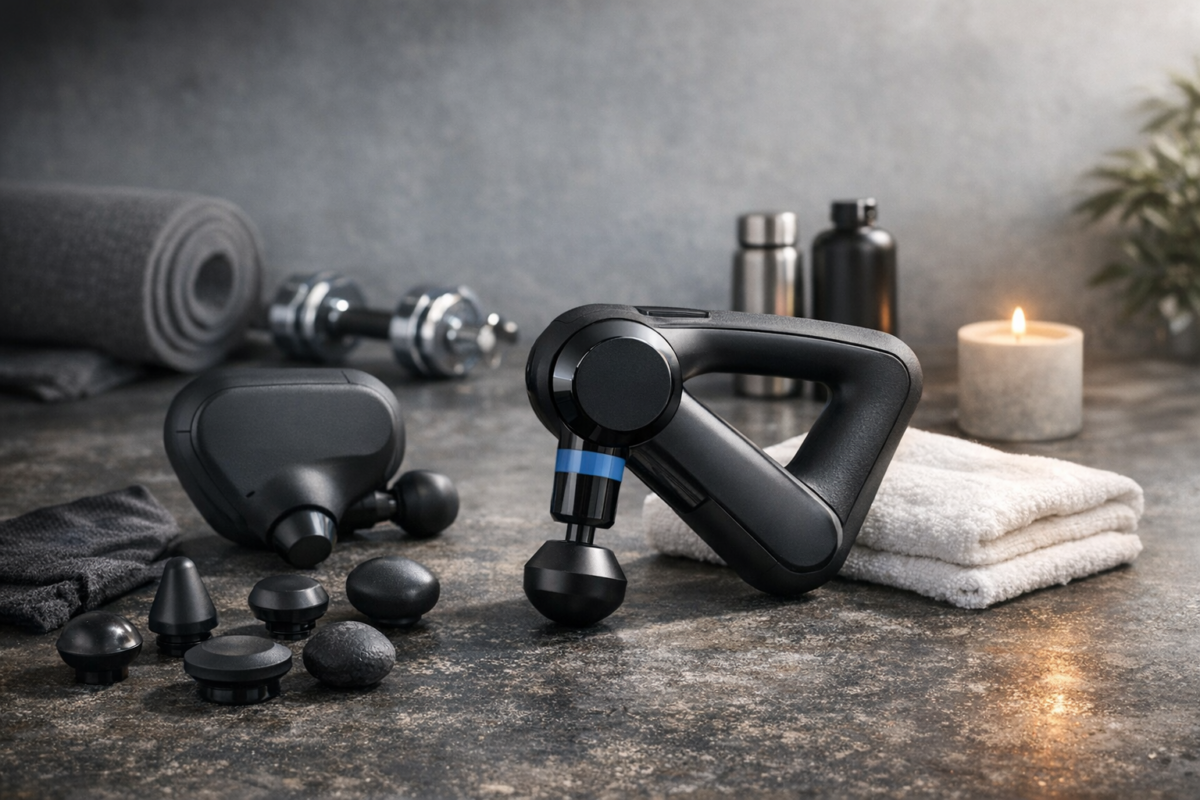
For many of us, the feeling of tight muscles after a long day at the office or an intense workout is all too familiar. Whether it is the dull ache in your lower back, the stiffness in your calves, or the tension held in your shoulders, the quest for relief often leads us to foam rollers, heating pads, or expensive professional massages. In recent years, however, a new tool has dominated the wellness and athletic landscape: the percussive therapy device, most notably popularized by the brand Theragun.
While they may look like oversized power tools, these devices are designed with a specific physiological purpose. Percussive therapy is not just about “massaging” the muscle; it is a targeted approach to muscle recovery and pain management that leverages the science of rapid pressure. But is it right for everyone? How does it actually work, and how do you use it without causing injury? In this comprehensive guide, we will dive deep into the mechanics of percussive therapy, the nuances of the Theragun lineup, and how to integrate this technology into your daily self-care routine for maximum benefit.
What is Percussive Therapy? Understanding the Science
At its core, percussive therapy is a method of delivering short, rapid, concentrated pulses of pressure into the muscle tissue. Unlike a traditional massage, which typically involves gliding the hands or a tool across the skin (effleurage) or kneading the tissue (petrissage), percussive therapy uses a piston-like motion to drive the force deeper into the muscle fibers.
The primary goal of this movement is to create a “distraction” for the nervous system. This is based on the Gate Control Theory of Pain, which suggests that non-painful input (the percussion) closes the “gates” to painful input, preventing pain signals from reaching the central nervous system. By stimulating the sensory nerves, percussive therapy can effectively reduce the perception of soreness and tension.
Beyond the nervous system, the rapid pulses increase local blood flow. When a muscle is tight or recovering from a workout, blood flow can be restricted, and metabolic waste products—often associated with Delayed Onset Muscle Soreness (DOMS)—can accumulate. The percussive action encourages vasodilation, bringing oxygen-rich blood into the area and helping the tissue return to its optimal state more quickly. This process also helps in breaking up adhesions or “knots” in the fascia, the connective tissue that surrounds our muscles, allowing for better glide and movement.
How Theragun Differs from Traditional Massage and Vibration
It is common to confuse percussive therapy with vibration therapy, but the two are fundamentally different in their application and effect. Vibration devices, such as some handheld massagers or vibrating foam rollers, typically move at a very high frequency but with a very shallow depth. They oscillate the surface of the skin, which can be relaxing and helpful for lymphatic drainage, but they rarely penetrate deep into the muscle belly.
Theragun devices are designed with a higher amplitude. In the context of percussive therapy, amplitude refers to how far the head of the device travels into the muscle. While a vibration tool might move only a few millimeters, a high-end Theragun can reach significantly deeper (up to 16mm in some models). This allows the device to reach the deep-tissue layers that a standard vibrating tool simply cannot touch.
When compared to manual massage, the primary advantage of percussive therapy is consistency and accessibility. A massage therapist can provide a level of intuition and customization that a machine cannot, but they cannot be with you at 11:00 PM after a grueling leg day. Theragun allows the user to target specific trigger points with a level of force and frequency that would be exhausting for a human therapist to maintain for an entire session. It transforms a passive recovery experience into an active one, giving the user control over the pressure and duration of the treatment.
The Core Benefits of Using a Percussive Device
Integrating percussive therapy into your wellness routine can offer a variety of physical and mental benefits. While results vary based on individual physiology, the following are the most commonly reported advantages:
- Accelerated Muscle Recovery: By increasing blood circulation and reducing the sensation of soreness, percussive therapy helps athletes and active individuals bounce back faster between workouts. This makes it an essential tool for those engaging in high-intensity interval training (HIIT), weightlifting, or endurance sports.
- Improved Range of Motion (ROM): Tight muscles and restricted fascia can limit how far a joint can move. By “loosening” the muscle fibers and reducing tension, percussive therapy can temporarily increase flexibility and joint mobility, making it an excellent addition to a dynamic warm-up.
- Reduction in Muscle Tension and Stress: Physical tension is often a manifestation of mental stress. Using a percussive device on the trapezius muscles (shoulders) or the lower back can trigger a relaxation response in the body, helping to lower cortisol levels and promote a sense of calm.
- Targeted Trigger Point Release: Everyone has those stubborn “knots” that seem impossible to reach. The concentrated head of a percussive device allows you to pin-point a specific trigger point and apply deep pressure to encourage the muscle to release and lengthen.
- Enhanced Warm-up Efficiency: Using a device for a few minutes before exercise “wakes up” the muscles by increasing blood flow and stimulating the neuromuscular system, potentially reducing the risk of strains and sprains.
Choosing the Right Theragun Model for Your Needs
The Theragun ecosystem can be overwhelming because there are several models tailored to different user profiles. To choose the right one, you must balance your need for power (amplitude) with your need for portability and budget.
The Theragun PRO: This is the gold standard for professional athletes and physical therapists. It offers the highest amplitude and the most powerful motor. It is designed for those who need deep-tissue penetration and have the tolerance for a more intense sensation. It usually includes the most comprehensive set of attachments and advanced features like integrated app control.
The Theragun Elite: The Elite is the “sweet spot” for the serious fitness enthusiast. It provides a significant amount of power but is generally quieter than the PRO. It is designed for daily use and offers a balance of deep tissue work and comfort, making it ideal for those who want professional-grade recovery without the extreme intensity of the PRO.
The Theragun Prime: This is the perfect entry-level device. It is more affordable and slightly less powerful, but it still delivers the core benefits of percussive therapy. If you are new to massage guns and aren’t sure if you’ll use one daily, the Prime is an excellent starting point.
The Theragun Mini: Designed for portability, the Mini is a game-changer for travelers, commuters, or those who want a device they can keep in their gym bag. While it has a lower amplitude than the PRO or Elite, it is highly effective for general tension relief and quick warm-ups. It is less about deep-tissue overhaul and more about maintenance and convenience.
Understanding the Attachments: Which One to Use and When
One of the most important aspects of percussive therapy is using the correct attachment. Using the wrong head on a sensitive area can be uncomfortable or even counterproductive. Here is a guide to the most common attachments:
- Standard Ball: This is the most versatile attachment. It is designed for general use on large muscle groups like the quads, glutes, and hamstrings. It provides a balanced pressure that is safe for most users.
- Dampener: This head is designed for “bony” areas or sensitive tissues. It has a softer, more compliant material that absorbs some of the impact, making it ideal for the shoulder blades, the ribs, or the shins.
- Cone: The cone is for deep-tissue work. It concentrates the force into a small point, making it perfect for trigger point therapy and reaching deep into the center of a muscle (like the gluteus medius). Use this with caution and start with light pressure.
- Thumb: Designed to mimic the pressure of a therapist’s thumb, this attachment is great for precise work along the spine (on the muscles, not the bone) or in the arches of the feet.
- Flat Head: This attachment is often used for denser muscle groups or for those who prefer a more “blunt” feeling. It is excellent for the chest or the calves where you want a broader distribution of force.
A Step-by-Step Guide to Using Your Device Safely
To get the most out of your Theragun without risking injury, it is important to follow a systematic approach. Percussive therapy is not about “smashing” the muscle; it is about controlled stimulation.
1. Start Slow and Light: Never begin with the highest speed or the most intense pressure. Start on a low setting and let the device “float” over the muscle. This allows your nervous system to acclimate to the sensation.
2. Follow the Muscle Fiber: Most muscles run in a specific direction. Glide the device along the length of the muscle rather than moving in random circles. For example, when working on your quads, move from the knee upward toward the hip.
3. Spend 30-60 Seconds Per Area: You do not need to spend ten minutes on a single spot. The goal is to increase blood flow and signal the muscle to relax. Usually, 30 to 60 seconds per muscle group is sufficient to achieve the desired effect.
4. Use “Floating” Pressure: Avoid pressing the device hard into your skin. The motor is designed to do the work for you. Let the head of the device bounce off the muscle. If you press too hard, you may stall the motor or cause bruising.
5. Listen to Your Body: There is a difference between “good pain” (the feeling of a knot releasing) and “bad pain” (sharp, electric, or stabbing sensations). If you feel the latter, stop immediately and move the device to a different area.
Safety Precautions and Contraindications
While percussive therapy is safe for most people, there are critical areas where it should never be used. Applying high-frequency percussion to the wrong spot can lead to nerve damage, bruising, or other injuries.
Avoid Bony Prominences: Never use a percussive device directly on a bone. This includes the spine, the kneecap, the elbow, or the hip bone. The force is intended for soft tissue; hitting a bone can be extremely painful and may cause inflammation of the periosteum (the membrane covering the bone).
Avoid the Neck and Throat: The front and sides of the neck contain major arteries (carotid) and sensitive nerves. Percussive therapy in these areas is dangerous and should be avoided entirely. If you have neck tension, focus on the trapezius muscles at the base of the neck and the tops of the shoulders.
Avoid Bruised or Inflamed Areas: If you have a fresh injury, a hematoma, or a severe bruise, avoid using the device on that specific spot. Increasing blood flow to an acutely inflamed area can sometimes worsen the swelling.
Medical Contraindications: People with certain medical conditions should consult a doctor before using percussive therapy. These include individuals with deep vein thrombosis (DVT), those on blood-thinning medications (due to the risk of bruising), people with pacemakers, or those with severe osteoporosis.
Integrating Percussive Therapy into Your Wellness Routine
To see long-term results, percussive therapy should be a part of a holistic approach to health, not a standalone cure. Here is how to schedule your sessions based on your goals:
The Pre-Workout Activation: Use the device for 2-5 minutes before your session. Focus on the muscles you are about to train. Use a faster speed and light pressure to “wake up” the tissue and increase blood flow. This is essentially a dynamic stretch that prepares the muscles for load.
The Post-Workout Recovery: After your workout, use the device on a slower speed with moderate pressure. This helps to calm the nervous system and encourage the removal of metabolic waste. Focus on the largest muscles used during the session, spending about a minute on each.
The Daily Maintenance (The “Desk Worker” Routine): If you spend 8 hours a day at a computer, your chest muscles likely tighten and your upper back rounds. Every few hours, take 2 minutes to use the device on your pectorals (to open the chest) and your rhomboids (between the shoulder blades) to alleviate tension and improve posture.
The Sleep Prep: Using a device on a low setting on your calves or lower back before bed can help lower overall body tension, making it easier to drift into a deep, restorative sleep.
Advanced Application Techniques for Maximum Tissue Release
Once you have mastered the basic “float” technique, you can begin integrating advanced modalities to unlock deeper tension and improve functional mobility. Percussive therapy is most effective when it is used not just as a passive massage, but as an active tool for neuromuscular re-education. One of the most powerful advanced methods is the Pin and Stretch technique.
The Pin and Stretch method involves using the device to “pin” a specific trigger point or adhesion while simultaneously moving the joint through its range of motion. For example, if you are targeting a tight spot in your hamstring, place the Theragun (using the Standard Ball or Cone attachment) directly on the knot. While maintaining steady pressure, slowly extend your leg or flex your ankle. This creates a dynamic shearing force that helps separate adhered layers of fascia and muscle fibers more effectively than static percussion alone. This technique is particularly useful for athletes dealing with chronic tightness that doesn’t respond to traditional stretching.
Another sophisticated approach is Scanning and Mapping. Instead of blindly applying the device to a general area, use a light, fast speed to “scan” the muscle. As you move the device, you will notice “hot spots”—areas where the device feels like it is jumping or where the vibration creates a distinct, localized sensation of tension. Once a hot spot is mapped, switch to a slower speed and a more targeted attachment, like the Thumb or Cone, to perform a concentrated release. This methodical approach ensures that you are treating the actual source of the tension rather than just the surrounding tissue.
For those working with highly dense muscle groups, such as the quadriceps or glutes, Contrast Percussion can be employed. This involves alternating between the high-amplitude, deep-reaching PRO settings and the softer, more compliant Dampener attachment. By oscillating between deep penetration and surface-level soothing, you prevent the nervous system from “guarding” or tensing up in response to the intensity, allowing you to reach deeper tissues without triggering a pain response.
Sport-Specific Recovery Protocols
Different athletic disciplines place unique demands on the musculoskeletal system, requiring tailored percussive strategies. A marathon runner’s needs differ fundamentally from those of a powerlifter or a yoga practitioner. By applying sport-specific protocols, you can optimize your recovery window and reduce the risk of overuse injuries.
For Endurance Runners and Cyclists: The primary focus should be on the posterior chain and the lower extremities. Runners often struggle with tightness in the calves (gastrocnemius and soleus) and the IT band. While you should avoid the bone of the femur, using the Standard Ball on the vastus lateralis (the outer quad) can alleviate the tension that often pulls on the IT band. For the calves, start just above the Achilles tendon and glide upward toward the knee. If you encounter a particularly stubborn knot in the soleus, use the Cone attachment and perform a slow, rhythmic pulse while gently flexing and extending the ankle to facilitate a deeper release.
For Strength Athletes and Powerlifters: Heavy lifting often leads to significant compression in the thoracic spine and tightness in the hip flexors. To combat “lifter’s slouch,” focus on the pectoralis major and minor. Use the Flat Head attachment to open the chest, gliding from the sternum outward toward the shoulder. For the hips, target the psoas and TFL (tensor fasciae latae) using the Standard Ball. Because these muscles are often under extreme tension after squats or deadlifts, use a slower speed to allow the muscle to relax into the percussion rather than fighting against it.
For Yoga and Flexibility Practitioners: Percussive therapy can be used as a “primer” for deep stretching. Instead of static stretching on “cold” muscles, use the Theragun for 30 seconds on the target muscle group to increase local temperature and blood flow. For example, before attempting a pigeon pose, use the device on the gluteus medius and piriformis. This reduces the perceived stiffness and allows for a safer, deeper entry into the stretch, effectively increasing the active range of motion without forcing the joint.
Percussive Therapy vs. Other Recovery Modalities
To build a truly comprehensive recovery plan, it is helpful to understand where percussive therapy fits in relation to other popular tools like pneumatic compression, foam rolling, and cryotherapy. Each modality targets a different physiological mechanism.
Theragun vs. Foam Rolling: Foam rolling relies on static pressure and the user’s body weight to compress the tissue. While effective, it is often a “blunt” instrument that can be painful and difficult to use on certain areas (like the upper back). Percussive therapy provides a dynamic, high-frequency input that targets the nervous system’s pain gates. While foam rolling is excellent for general myofascial release, the Theragun is superior for pinpointing specific trigger points and providing targeted blood flow to deep-tissue layers without requiring the user to support their own body weight.
Theragun vs. Pneumatic Compression: Compression boots (like those from Normatec) focus on lymphatic drainage and the movement of interstitial fluid. They are passive systems designed to reduce edema and “flush” the limbs. In contrast, percussive therapy is an active intervention that focuses on muscle fiber manipulation and neuromuscular activation. For optimal results, many athletes use percussive therapy immediately after a workout to break up tension, followed by a session in compression boots to assist with systemic fluid recovery.
Theragun vs. Cryotherapy/Cold Plunges: Cold therapy is primarily used to reduce acute inflammation and numb pain by constricting blood vessels (vasoconstriction). Percussive therapy does the opposite; it promotes vasodilation, bringing warm, oxygenated blood into the muscle. Using a Theragun immediately after a cold plunge can help “re-awaken” the muscles and transition the body from a state of systemic inflammation reduction to a state of active tissue repair.
Managing Chronic Tension and Specialized Conditions
While primarily marketed to athletes, percussive therapy can be a powerful tool for managing chronic, non-athletic tension. However, treating chronic conditions requires a more nuanced approach to avoid aggravating sensitive tissues.
Addressing “Tech Neck” and Upper Trap Tension: Most modern professionals suffer from a forward-head posture that puts immense strain on the upper trapezius and levator scapulae. When treating this area, avoid the sides of the neck. Instead, focus on the “shelf” of the shoulder. Use the Dampener attachment on a low speed, starting at the base of the neck and moving outward toward the acromion (the top of the shoulder). To enhance the effect, gently tilt your head away from the side being treated, creating a natural stretch in the muscle while the device works on the tissue.
Relieving Plantar Fasciitis: The fascia on the bottom of the foot is incredibly dense and often prone to inflammation. For those suffering from plantar fasciitis, the Thumb attachment is the most effective tool. Apply light to moderate pressure to the arch of the foot, moving from the heel toward the ball of the foot. Avoid applying direct, heavy pressure to the center of the heel bone. Instead, focus on the surrounding soft tissue to reduce the tension pulling on the heel attachment, which can help alleviate the morning stiffness associated with this condition.
Handling Hypersensitivity: Some users find the intensity of a Theragun overwhelming, particularly those with fibromyalgia or high sensory sensitivity. In these cases, the “buffer method” is recommended. Instead of applying the device directly to the skin, use it over a thick layer of clothing or a folded towel. This diffuses the percussive force and softens the impact, allowing the user to reap the benefits of increased blood flow without triggering a defensive muscle contraction.
The Digital Ecosystem: Optimizing the Therabody App Experience
The hardware of a Theragun is only half of the equation; the accompanying software transforms the device from a simple massager into a guided recovery system. For users who are unsure of where to start, the Therabody app provides a structured framework that removes the guesswork from percussive therapy.
Guided Routines and Visual Mapping: The app offers a library of routines tailored to specific goals, such as “Better Sleep,” “Lower Back Relief,” or “Post-Run Recovery.” These routines are not merely lists of muscles; they provide visual guides that show the exact placement of the device and the recommended duration for each area. This is critical for beginners who may be tempted to spend too much time on one spot or use the device in unsafe areas. By following these protocols, users ensure they are achieving a balanced systemic release rather than an uneven treatment.
Customization and Integration: Advanced users can create custom routines based on their specific training blocks. For instance, during a heavy lifting phase, you can program a “Leg Day Recovery” sequence that prioritizes the quads and glutes. Some models also integrate with the app to automatically adjust the speed of the device as you move through the routine, ensuring that you transition from “activation” (fast speed) to “recovery” (slow speed) without having to manually toggle the buttons.
Tracking Progress and Wellness Data: The digital ecosystem allows users to track their recovery habits over time. By logging sessions, you can begin to identify patterns—such as noticing that your lower back tension spikes every Tuesday after a specific type of workout. This data-driven approach allows you to proactively adjust your percussive therapy schedule to prevent injuries before they manifest as acute pain.
Device Longevity: Maintenance, Care, and Troubleshooting
A Theragun is a precision instrument with a high-torque motor. To ensure the device maintains its amplitude and battery life over several years, a consistent maintenance routine is necessary.
Cleaning and Hygiene: Because the attachments come into direct contact with skin, sweat, and sometimes massage oils, they can accumulate bacteria and debris. The attachments should be cleaned after every few uses. Use a damp cloth with mild soap or a 70% isopropyl alcohol wipe to sanitize the heads. Avoid submerging the main device in water or using harsh chemical solvents on the plastic casing, as this can degrade the material and compromise the seal of the motor housing.
Battery Health and Storage: The lithium-ion batteries in Theragun devices are designed for longevity, but they can be degraded by extreme temperatures or deep discharge. To maximize battery life, avoid leaving the device in a hot car or a freezing gym locker. Additionally, try to avoid letting the battery drop to 0% consistently; charging the device when it reaches 20% helps maintain the chemical stability of the cells and ensures the motor doesn’t lose power during a high-intensity session.
Troubleshooting Motor Stall: One of the most common issues users encounter is the motor “stalling” or slowing down significantly during use. This usually happens when the user is applying too much downward pressure. Remember that the device is designed to provide the force; you only need to guide it. If the motor stalls, immediately release the pressure. Consistently forcing the motor to stall can cause overheating and put undue stress on the internal drive mechanism, potentially shortening the lifespan of the device. If the device feels excessively hot, give it a 10-minute break to cool down before resuming your session.
Frequently Asked Questions
Q: Can I use a Theragun every day?
A: Yes, in most cases, percussive therapy can be used daily. However, it is important to avoid overworking a single muscle group. Just as you wouldn’t perform a deep-tissue massage every single day on the same spot, give your muscles time to recover. Using it for 15-20 minutes total across your whole body daily is generally safe and effective.
Q: Does percussive therapy actually get rid of lactic acid?
A: This is a common misconception. Lactic acid (lactate) is actually cleared from the muscles relatively quickly after exercise. Percussive therapy doesn’t “flush” it out in a literal sense, but it does increase blood circulation and oxygenation, which helps the muscle recover from the metabolic stress and reduces the perception of soreness associated with DOMS.
Q: Is it normal for it to hurt while I’m using it?
A: A certain amount of intensity is expected, especially when hitting a trigger point. It should feel like a “productive” discomfort—similar to a deep-tissue massage. However, it should never feel sharp or excruciating. If it hurts to the point where you are tensing up your body to resist the device, you are using too much pressure or the wrong attachment.
Q: Can I use a massage gun on my face or head?
A: Absolutely not. Percussive therapy devices are designed for skeletal muscle. The skin and tissue on the face and head are far too thin, and the underlying structures (sinuses, nerves, and skull) cannot handle the force of a percussive motor. For facial tension, stick to manual massage or a dedicated facial roller.
Q: How do I know if I’m using the device correctly?
A: The biggest sign of correct use is the “bounce.” If the device is stalling or you have to push your entire body weight into the muscle to feel it, you are likely pressing too hard. The device should glide across the muscle, and you should feel the vibration penetrating deep into the tissue without having to force it. If you are unsure, many Theragun models come with guided routines in their app that show exactly where and how to apply the device.
Related posts:
 Gabi Butler’s Recovery Routine
 The Four Infant Attachment Styles – Straight to the Point
 Therabody Recovery Tools
 Attachment Theory: Understanding Your Relationship Patterns
 Theragun Sale Guide
 Understanding Insecure Attachment: Strengthening Emotional Bonds
 How Teeth Grinding Changes Your Face
 47. Best Deals in the Theragun Sale