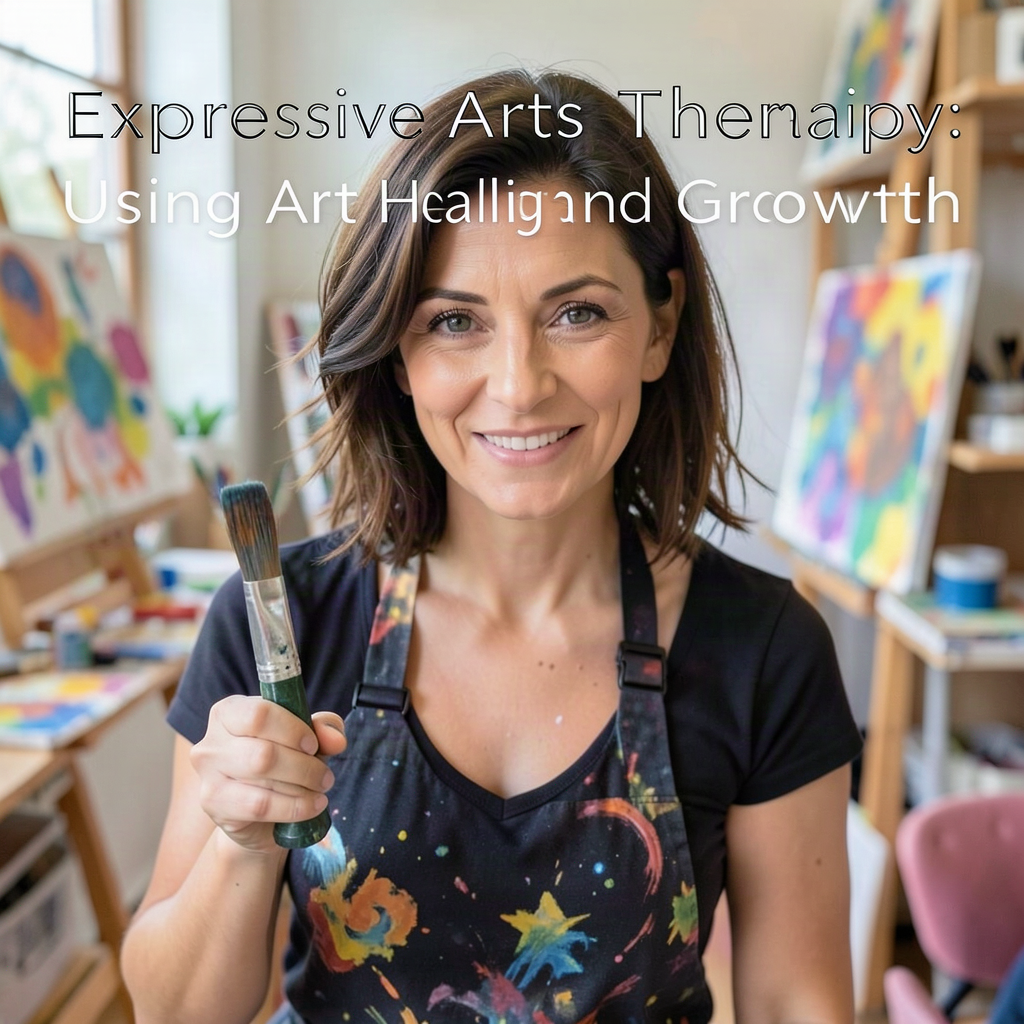
Healing is rarely a linear process, and for many of us, the most profound wounds are those that defy description. There are moments in our lives where words feel insufficient—where the weight of grief, the complexity of trauma, or the fog of anxiety exists in a space beyond the reach of traditional conversation. This is where Expressive Arts Therapy (EXA) enters the picture. By bridging the gap between the conscious mind and the subconscious, this holistic approach allows individuals to externalize their internal landscapes through a variety of creative mediums.
p>
Unlike traditional talk therapy, which relies heavily on the cognitive ability to name and analyze emotions, expressive arts therapy prioritizes the experience of creation. It is not about producing a masterpiece or possessing innate talent; rather, it is about using the creative process as a vehicle for discovery, release, and integration. When we paint a feeling, dance a memory, or write a poem to a lost version of ourselves, we are not just making art—we are engaging in a dialogue with our soul.
p>
What is Expressive Arts Therapy?
p>
Expressive Arts Therapy is an intermodal approach to healing that integrates multiple forms of art—such as visual arts, music, dance, drama, and creative writing—into a single therapeutic process. The “intermodal” aspect is the cornerstone of this practice. While a person might start a session by sketching an image of their current mood, they might then be encouraged to write a poem based on that image, or perhaps move their body in a way that reflects the lines and shapes of the drawing.
p>
This shifting between mediums is intentional. Each art form accesses a different part of the brain and a different layer of the psyche. For instance, visual arts often tap into symbolic and spatial thinking, while movement engages the somatic (body-based) memory, and writing provides a structure for reflection. By weaving these modalities together, EXA helps clients bypass the internal censors and defenses that often arise in talk therapy, allowing deeper truths to surface organically.
p>
The primary goal of Expressive Arts Therapy is not the final product, but the process. In a clinical setting, the therapist does not judge the aesthetic quality of the work. Instead, they act as a witness and a guide, helping the client explore the meanings, metaphors, and emotions that emerge during the creative act. The art becomes a “third party” in the room—a tangible object that the client and therapist can look at together, making the emotional work feel less overwhelming and more manageable.
p>
The Psychology and Science of Creative Healing
p>
To understand why art is so effective for healing, we must look at how the brain processes emotion and trauma. Many traumatic experiences are stored in the limbic system—the emotional center of the brain—and the brainstem, rather than in the prefrontal cortex, where language is processed. This is why people often find themselves “speechless” when recalling a traumatic event; the part of the brain responsible for words is effectively offline, while the part responsible for survival and emotion is hyper-active.
p>
Expressive arts engage the sensory and motor systems, providing a “back door” into these stored memories. When we use color, sound, or movement, we are communicating in the native language of the limbic system. This allows the individual to process emotions without needing to immediately translate them into linear, logical sentences. This process is known as bottom-up processing—starting with the body and the senses and moving toward cognitive understanding.
p>
Furthermore, engaging in creative work often induces a state of “flow,” a psychological phenomenon characterized by complete immersion in an activity. Flow states are associated with decreased activity in the amygdala (the brain’s fear center) and increased dopamine release. This creates a safe physiological environment where the mind feels secure enough to explore painful memories or complex emotions without becoming completely overwhelmed or dissociated.
p>
Core Modalities in Expressive Arts Therapy
p>
Because EXA is intermodal, it draws from a wide palette of tools. Depending on the client’s needs and the goals of the session, different modalities may be prioritized:
p>
- p>
- Visual Arts: This includes painting, drawing, sculpting, collage, and photography. Visual arts are particularly powerful for externalizing internal conflicts. Creating a “safe place” collage or sculpting a representation of anxiety allows the client to see the problem as separate from themselves, which reduces the feeling of being consumed by the emotion.
- Creative Writing and Poetry: Journaling, blackout poetry, and letter writing (even if the letter is never sent) help translate abstract feelings into concrete language. Writing allows for a sense of narrative control, helping individuals rewrite their stories from a place of empowerment rather than victimhood.
- Movement and Dance: Somatic expression involves using the body to release tension and express emotion. This might involve intuitive dancing, shaking, or using specific gestures to represent a feeling. Since the body often holds the “score” of our trauma, movement is essential for physical and emotional release.
- Music and Sound: Listening to music, drumming, chanting, or playing an instrument can shift a person’s emotional state rapidly. Sound therapy can be used to ground a client who is anxious or to awaken a client who is feeling numb or depressed.
- Drama and Role-Play: Using puppets, masks, or improvisational acting allows clients to experiment with different versions of themselves. Role-playing a difficult conversation or acting out a scene from their past can provide a sense of closure and a way to practice new, healthier boundaries.
p>
p>
p>
p>
p>
p>
Expressive Arts Therapy vs. Traditional Art Therapy
p>
While the terms are often used interchangeably, there is a distinct difference between Art Therapy and Expressive Arts Therapy. Traditional Art Therapy typically focuses on the visual arts as the primary medium. An art therapist is specifically trained in the psychology of visual expression and uses art-making as the central tool for diagnosis and treatment.
p>
Expressive Arts Therapy, by contrast, is inherently multi-modal. An EXA practitioner believes that the healing happens in the transition between the arts. For example, if a client feels stuck while painting, the therapist might suggest they hum the “color” of the painting or dance the “shape” of the brushstroke. The focus is on the fluid movement between different creative languages, believing that the synthesis of these arts provides a more comprehensive path to wholeness than any single medium could alone.
p>
In essence, while Art Therapy is a deep dive into one powerful tool, Expressive Arts Therapy is a toolkit designed to adapt to the client’s shifting emotional needs in real-time.
p>
Benefits for Mental Health and Emotional Growth
p>
The application of EXA spans a wide range of mental health challenges, offering benefits that complement traditional psychotherapy:
p>
- p>
- Processing Trauma and PTSD: Because trauma is often non-verbal, EXA allows survivors to express the “unspeakable.” By creating a visual or physical representation of their experience, survivors can begin to integrate the fragmented memories of trauma into a cohesive life story.
- Anxiety and Stress Reduction: The act of creating—the tactile feel of clay, the rhythm of a drum, the flow of ink on paper—acts as a powerful grounding technique. It pulls the individual out of the spiraling thoughts of the future and anchors them in the present moment.
- Depression and Emotional Numbness: For those struggling with anhedonia (the inability to feel pleasure) or deep depression, the sensory stimulation of art can act as a spark. The process of choosing a color or feeling a beat can gently reawaken the emotional system.
- Identity Exploration: In transitions such as adolescence, mid-life crises, or coming out, EXA provides a safe laboratory to explore “Who am I?” through masks, self-portraits, and narrative writing.
- Emotional Regulation: Learning to express anger through a powerful dance or sadness through a slow melody teaches individuals how to move through their emotions without being overwhelmed by them.
p>
p>
p>
p>
p>
p>
Practical Ways to Incorporate Expressive Arts into Your Life
p>
You do not need to be in a clinical setting to benefit from the principles of expressive arts. While these exercises are not a replacement for professional therapy, they can be powerful tools for self-care and emotional maintenance. Here are some actionable ways to integrate these practices into your daily routine:
p>
1. Intuitive Painting/Doodling
p>
Set aside 15 minutes a day for “process painting.” Instead of trying to draw something recognizable, focus on colors and shapes. If you feel angry, use jagged lines and bold reds. If you feel exhausted, use soft washes of blue and grey. The goal is to move the feeling from your chest onto the paper.
p>
2. Morning Pages and Stream-of-Consciousness Writing
p>
Popularized by Julia Cameron, morning pages involve writing three pages of long-hand, stream-of-consciousness thoughts first thing in the morning. Do not edit, do not judge, and do not worry about grammar. This “brain dump” clears the mental clutter and often reveals subconscious preoccupations that need your attention.
p>
3. Mindful Movement and Somatic Shaking
p>
When you feel a surge of stress or anxiety, try “somatic shaking.” Stand with your feet shoulder-width apart and gently begin to shake your hands, then your arms, then your whole body. This mimics the way animals release tension after a stressful event and helps discharge excess adrenaline from the nervous system.
p>
4. Creating a “Mood Playlist”
p>
Music can be used as a tool for emotional shifting. Create playlists for different needs: one for “Processing Sadness,” one for “Building Confidence,” and one for “Grounding.” Use these lists intentionally to help you move from one emotional state to another.
p>
5. The “Letter to the Unspoken”
p>
Write a letter to someone you can no longer speak to, or perhaps to a version of yourself from ten years ago. Be honest, raw, and unfiltered. Once finished, you can choose to keep the letter, burn it as a symbol of release, or bury it in the earth.
p>
Overcoming the “I’m Not an Artist” Barrier
p>
The most common objection to expressive arts is the belief that one lacks the necessary skill. “I can’t draw a straight line,” or “I’m not musical,” are frequent refrains. However, in the context of healing, technical skill is irrelevant. In fact, being “too good” at art can sometimes be a hindrance, as the desire for perfectionism can block the raw, honest expression needed for healing.
p>
To overcome this barrier, it is helpful to shift your mindset from Product to Process. A product is something you show to others for approval; a process is something you do for yourself for discovery. When you focus on the process, a “bad” drawing is not a failure—it is a successful expression of a messy feeling. If the drawing looks chaotic and ugly, and you feel chaotic and ugly, then the art is actually a perfect representation of your truth.
p>
Remember that the goal is not to create art that is beautiful, but art that is honest. The more you let go of the need for the work to look “good,” the more room you create for the work to be transformative.
p>
Finding a Qualified Expressive Arts Therapist
p>
If you feel that your emotional needs require professional support, seeking a certified Expressive Arts Therapist can be a game-changer. When looking for a practitioner, consider the following:
p>
- p>
- Credentials: Look for therapists who have specific training in expressive arts or art therapy. Check for certifications from recognized boards or degrees in creative arts therapies.
- Approach: Ask them how they integrate different modalities. Do they use a variety of arts, or do they stick primarily to one? A true EXA therapist should be comfortable guiding you across multiple mediums.
- The Therapeutic Alliance: Because this work involves vulnerability and the creation of personal art, the relationship with the therapist is paramount. You should feel safe, seen, and non-judged in their presence.
- Setting: Ensure the therapist has a space equipped with a variety of materials—paints, clays, instruments, and enough room for movement.
p>
p>
p>
p>
p>
Integrating Creative Practices with Other Therapies
p>
Expressive arts therapy does not have to exist in a vacuum. In fact, it is often most effective when integrated with other evidence-based practices. For example, someone practicing Cognitive Behavioral Therapy (CBT) might use art to visualize the “cognitive distortions” they are working to challenge. A person in Dialectical Behavior Therapy (DBT) might use movement and sound as a way to practice distress tolerance and mindfulness.
p>
By combining the analytical strength of talk therapy with the visceral power of the arts, individuals can achieve a more holistic form of healing. While the talk therapy provides the map and the understanding, the expressive arts provide the experience and the release. Together, they allow for a comprehensive journey toward emotional wellness, ensuring that both the mind and the body are participating in the healing process.
p>
The Concept of Aesthetic Distance and the Triangular Relationship
p>
One of the most critical, yet often misunderstood, mechanisms of Expressive Arts Therapy is the creation of “aesthetic distance.” In traditional talk therapy, the focus is a direct line between the client and the therapist. While this intimacy is valuable, it can sometimes lead to “flooding,” where a client is so overwhelmed by the intensity of a memory or emotion that they dissociate or shut down. EXA introduces a third element into the room: the artwork. This creates a triangular relationship consisting of the client, the therapist, and the creative product.
p>
This third point of the triangle provides a psychological buffer. When a client paints their grief, they are no longer just feeling the grief; they are looking at the grief. By externalizing the internal experience onto a canvas or into a piece of clay, the emotion is transformed from an all-consuming internal state into a tangible object that exists outside the body. This shift allows the client to observe their pain with a degree of detachment, making it possible to analyze and process the emotion without being consumed by it.
p>
For example, a client struggling with a deep sense of betrayal might find it too painful to speak directly about the person who hurt them. However, they might be able to create a sculpture of a “broken bridge.” By discussing the bridge—its materials, where it broke, and how it might be repaired—the client is actually discussing their relationship and their trauma, but the aesthetic distance provided by the sculpture makes the conversation safe. The art acts as a container, holding the intensity of the emotion so the client doesn’t have to carry the full weight alone during the session.
p>
The therapist’s role in this triangle is not to interpret the art as a psychic would, but to help the client navigate this distance. If the distance is too great (the client is too detached), the therapist might encourage more visceral, sensory engagement. If the distance is too small (the client is overwhelmed), the therapist might suggest stepping back from the work, describing it in the third person, or shifting to a more structured medium to regain a sense of control.
p>
Materiality: How the Choice of Medium Shapes the Healing
p>
In Expressive Arts Therapy, the materials themselves are not neutral; they possess inherent psychological properties that can either facilitate release or provide necessary containment. A skilled practitioner considers the “materiality” of the medium to match the client’s current emotional state and therapeutic needs. Understanding the spectrum between fluid and resistive materials is key to tailoring the experience.
p>
Fluid materials, such as watercolors, wet clay, or finger paints, are often used to encourage emotional release and the surfacing of subconscious material. Because these mediums are difficult to control—paint drips, colors bleed, and wet clay shifts—they naturally lower the client’s defenses and discourage perfectionism. For someone who is emotionally constricted, overly controlled, or struggling with rigidity, working with fluid materials can be a liberating experience, allowing them to “let go” and experience the raw flow of emotion.
p>
Conversely, resistive materials—such as colored pencils, graphite, collage, or woodworking—provide a sense of structure, boundary, and containment. These mediums require more precision and offer more control over the final outcome. For a client experiencing a manic episode, severe anxiety, or the fragmentation that follows a traumatic event, fluid materials might feel chaotic or threatening. In these cases, the resistance of a pencil on paper or the act of cutting and pasting a collage provides a grounding effect, helping the client feel a sense of mastery and stability.
p>
An edge case occurs when a client is stuck in a cycle of hyper-control. They may insist on using only pencils to ensure the work looks “correct.” In this scenario, the therapist might gently introduce a “disruptive” material, such as asking the client to add a single splash of ink or a smudge of charcoal to the drawing. This small act of introducing chaos into a controlled environment can be a powerful catalyst for emotional breakthrough, challenging the client’s need for perfection and opening the door to more authentic expression.
p>
The Collective Canvas: Group Expressive Arts Therapy
p>
While individual therapy focuses on the internal landscape, Group Expressive Arts Therapy leverages the power of the “social mirror” to facilitate healing. In a group setting, the creative process evolves from a private dialogue into a communal experience. The presence of others transforms the art-making process, as clients witness the externalized struggles of their peers, which often leads to a profound sense of universalization—the realization that “I am not alone in this.”
p>
One powerful group technique is the creation of a shared mural or a collaborative sculpture. In these exercises, participants must negotiate space, blend their visual languages, and respond to the marks made by others. This process mirrors the challenges of real-world relationships. For individuals struggling with social anxiety or trust issues, the act of contributing to a shared piece of art allows them to practice vulnerability and cooperation in a low-stakes, symbolic environment. The mural becomes a living map of the group’s collective emotional journey.
p>
Furthermore, the role of the “witness” is central to group EXA. When a member shares their work and the group responds not with critique, but with reflective witnessing (e.g., “I see a lot of tension in those red lines,” rather than “That looks like anger”), it provides a powerful corrective emotional experience. For those who have spent their lives feeling unseen or misunderstood, having their internal world witnessed and validated by a group can be more healing than the act of creation itself.
p>
Group EXA is particularly effective for marginalized communities or survivors of systemic trauma. By creating collective art, these groups can move from individual narratives of victimhood to a shared narrative of resilience. The process of weaving individual stories into a larger, communal tapestry helps participants reclaim their identity not just as survivors, but as integral parts of a supportive community.
p>
Advanced Intermodal Sequences: The Journey of Transformation
p>
The true power of Expressive Arts Therapy lies in the intermodal transfer—the act of taking the essence of a discovery in one medium and translating it into another. This is not merely changing the tool, but deepening the insight. An advanced intermodal sequence is designed to move a client through a cycle of discovery, embodiment, and integration.
p>
Consider a sequence titled “The Shadow Map,” designed for someone dealing with repressed emotions or “shadow” aspects of their personality: p>
- p>
- Step 1: Visual Mapping (Discovery). The client begins with a blind contour drawing (drawing without looking at the paper) of their hand or a mirror image of their face. This removes the ego’s desire for beauty and creates a raw, distorted image. The therapist asks the client to identify a “dark spot” or a “tension point” in the drawing.
- Step 2: Somatic Translation (Embodiment). The client is asked to find where that “dark spot” lives in their physical body. If the spot in the drawing feels “heavy,” they might find a corresponding heaviness in their chest. They are then encouraged to move that heaviness—perhaps through a slow, weighted dance or a repetitive shaking motion—giving the emotion a physical voice.
- Step 3: Poetic Distillation (Refinement). After the movement, the client writes a short, three-line poem (a haiku or a free-verse fragment) that captures the feeling of the movement. This moves the experience from the body back into the cognitive realm, but in a condensed, symbolic form.
- Step 4: Sculptural Integration (Resolution). Finally, the client uses clay to create a small object that represents the “transformed” version of that shadow. If the shadow was “heavy grief,” the sculpture might become a “stone of strength.”
p>
p>
p>
p>
p>
This sequence ensures that the emotion is processed through every layer of the human experience: the visual, the physical, the linguistic, and the tactile. By the time the client reaches the final sculptural stage, the emotion has been viewed from four different angles, making the integration of that experience into their conscious life far more likely than if they had simply talked about the feeling for an hour.
p>
Cultural Dimensions and Inclusive Creative Practice
p>
To be truly effective, Expressive Arts Therapy must move beyond Western-centric definitions of “art” and “healing.” Many traditional psychological frameworks are rooted in individualistic cultures, but for many people, creativity is an ancestral, communal, or spiritual act. An inclusive EXA practice recognizes that the tools of healing vary across cultures and adapts the modalities accordingly.
p>
For instance, in many indigenous cultures, weaving, pottery, and storytelling are not just “arts” but are the primary vehicles for preserving history and maintaining community health. A therapist working with clients from these backgrounds might incorporate traditional crafts—such as beadwork or textile arts—as a way to connect the client to their cultural roots and ancestral strength. In these cases, the act of weaving becomes a metaphor for integrating the fragmented pieces of a displaced identity.
p>
Moreover, the concept of “silence” and “space” in art varies. In some cultures, the empty space in a painting (such as the concept of Ma in Japanese aesthetics) is as meaningful as the marks themselves. A culturally sensitive therapist avoids the urge to “fill the void” or push for a verbal explanation of every symbol. Instead, they honor the cultural context of the client’s expression, understanding that for some, the most profound healing happens in the unspoken spaces between the art and the word.
p>
Inclusive practice also means addressing the power dynamic between the therapist and the client. By positioning the therapist as a “co-explorer” rather than an “expert interpreter,” EXA empowers the client to be the primary authority on their own symbols. This is especially vital for clients from historically oppressed backgrounds, for whom the act of defining their own reality is a revolutionary act of healing.
p>
Navigating the Creative Crisis: Managing Emotional Flooding
p>
While EXA is designed to be safe, the process of bypassing the conscious mind can sometimes trigger a “creative crisis,” where a client becomes unexpectedly overwhelmed by the emotions their art has unearthed. This is often referred to as “flooding,” where the limbic system is over-stimulated, and the client may experience a panic attack, intense sobbing, or dissociation.
p>
Managing these edge cases requires a set of specific grounding techniques integrated directly into the art process. When a therapist notices a client beginning to flood—indicated by rapid breathing, glazed eyes, or a sudden freeze in movement—they may implement “containment exercises.” One such technique is the “Border Drawing,” where the client is asked to draw a thick, strong border around their artwork. This physical act of creating a boundary on the paper helps the mind create a psychological boundary around the emotion, signaling to the brain that the feeling is contained and manageable.
p>
Another strategy is the “Sensory Pivot.” If a client is overwhelmed by a visual image they have created, the therapist might shift the modality abruptly to something highly tactile and grounding. Asking the client to feel the coldness of a stone, smell a strong scent like peppermint, or push their feet firmly into the floor shifts the brain’s focus from the emotional limbic system back to the sensory present. This “bottom-up” grounding prevents the client from spiraling deeper into the trauma and brings them back within their “window of tolerance.”
Frequently Asked Questions
p>
Do I need to have any prior experience with art, music, or dance to start?
p>
Absolutely not. Expressive Arts Therapy is designed for everyone, regardless of skill level. The focus is entirely on the process of expression rather than the quality of the output. In many cases, beginners find it easier to access deep emotions because they aren’t preoccupied with technical rules or aesthetic standards. Your only requirement is a willingness to explore and experiment.
p>
How is this different from just having a creative hobby?
p>
While hobbies like painting or playing an instrument are wonderful for relaxation and joy, therapy differs in its intentionality and the presence of a trained professional. In a therapeutic setting, the art is used as a tool to uncover subconscious patterns, process trauma, and achieve specific psychological goals. A therapist helps you interpret the symbols in your work and guides you through the emotional breakthroughs that the art triggers, providing a layer of safety and insight that a solo hobby does not.
p>
Can expressive arts therapy really help with deep trauma or PTSD?
p>
Yes, it can be an incredibly powerful tool for trauma recovery. Because trauma is often stored non-verbally in the body and the limbic system, traditional talk therapy can sometimes feel limiting or even re-traumatizing if the person is forced to speak before they are ready. EXA allows survivors to externalize their experience safely. By creating a physical representation of the trauma, the survivor can observe it from a distance (externalization), which makes the processing feel safer and more controlled.
p>
How long does it take to see results using these methods?
p>
The timeline for healing varies for everyone, but many people experience an immediate sense of relief or “lightness” after a single session of expressive art, simply through the act of release. Long-term growth and the integration of trauma typically take more time and consistent practice. However, because EXA engages multiple pathways in the brain, some find that they reach emotional breakthroughs faster than they did with talk therapy alone.
p>
Is this approach suitable for children, adults, and seniors alike?
p>
Yes, Expressive Arts Therapy is highly adaptable across the lifespan. For children, who may lack the vocabulary to express complex emotions, art is often their primary language. For adults, it provides a way to reconnect with their intuitive selves amidst the pressures of adult life. For seniors, it can be a vital tool for processing grief, dealing with cognitive decline, or finding a sense of legacy and meaning in the later stages of life.
Related posts:
 The Body-Positive Art Movement Turning Stretch Marks Into Glittery Masterpieces
 Radical Self-Love with Taryn Strong
 Trauma Dumping in Therapy
 Exa Color Corrector Review
 Art and Emotional Connection
 Trauma-Informing the Twelve Steps
 The Emotion Wheel: What Is It and How to Use It?
 What is Creative Arts Therapy and How Does It Work? (+ Activities)