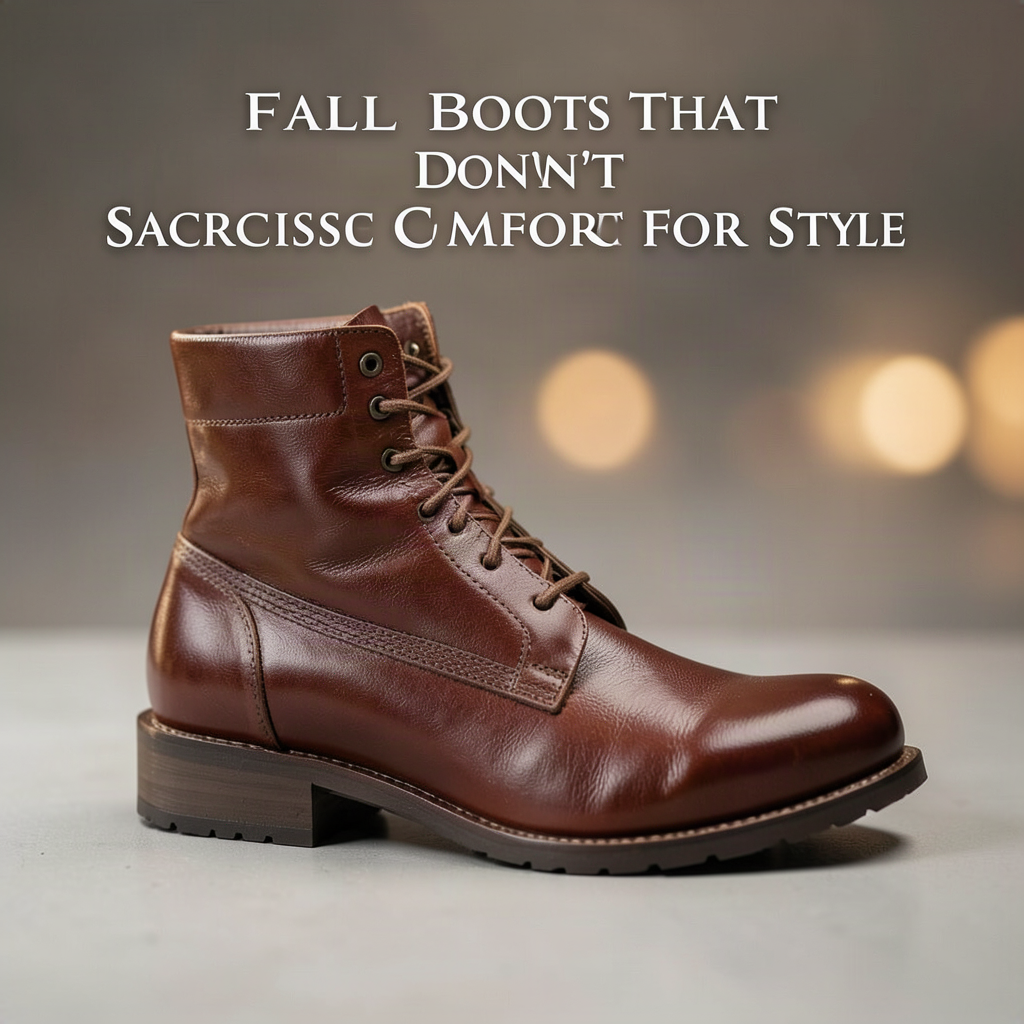
As the air turns crisp and the first amber leaves begin to carpet the sidewalks, the annual fashion transition begins. For many, this shift is synonymous with the return of boot season. However, for the modern woman who balances a demanding career, a bustling social life, and perhaps the physical rigors of parenthood or urban commuting, the traditional trade-off between aesthetic appeal and physical comfort is no longer acceptable. We have all been there: standing in a stunning pair of pointed-toe stiletto boots at a fall wedding or a gallery opening, only to find ourselves counting the minutes until we can retreat to the sanctuary of our slippers. The good news is that the footwear industry has undergone a quiet revolution. Engineering that was once reserved for high-performance athletic gear is now being integrated into high-fashion silhouettes, allowing us to embrace the autumn aesthetic without compromising our musculoskeletal health.
Choosing the right fall boots is an investment in your daily well-being. When our feet are in pain, it affects our posture, our mood, and our energy levels. A poorly constructed boot can lead to issues ranging from simple blisters to chronic conditions like plantar fasciitis or metatarsalgia. This guide is designed to help you navigate the sea of seasonal trends to find those rare gems: boots that look like they belong on a Parisian runway but feel like they were custom-molded to your feet. We will explore the biomechanics of a good boot, the materials that offer the best longevity, and the specific styles that provide the most support for various foot types.
The Biomechanics of a Comfortable Boot
To understand what makes a boot comfortable, we must first look beneath the surface. The comfort of a shoe is determined by its internal architecture. The most critical component is the midsole. In high-quality comfort boots, the midsole is often crafted from materials like EVA (ethylene-vinyl acetate) or polyurethane, which provide shock absorption. Every time your heel hits the pavement, a force of up to three times your body weight travels up your leg. A well-cushioned boot acts as a buffer, protecting your joints from this repetitive impact.
Another essential element is the shank. This is a thin, rigid piece of material (often steel, fiberglass, or hardened plastic) inserted between the insole and the outsole. It provides structure to the boot and supports the arch of your foot. Without a proper shank, a boot can be too flexible in the wrong places, forcing your foot muscles to work overtime to maintain stability. When shopping, perform the “twist test”: hold the boot at the heel and the toe and try to twist it. A good boot should have some resistance in the midfoot while remaining flexible at the ball of the foot where your toes naturally bend.
Lastly, consider the toe box. The trend toward extremely narrow, pointed toes often squeezes the metatarsals together, which can lead to the development of bunions or Morton’s neuroma. A comfortable fall boot should allow your toes to splay naturally. Look for almond-shaped or square-toe designs that offer more volume in the forefoot. If you have a wider foot, seeking out brands that offer multiple width fittings is a game-changer for long-term comfort.
The Versatile Chelsea Boot: A Masterclass in Ergonomics
The Chelsea boot has remained a staple since the Victorian era for a reason. Its defining feature—the elastic side gusset—allows for a snug fit that moves with the ankle. From a comfort perspective, the Chelsea boot is superior because it eliminates the pressure points often caused by laces or stiff zippers. Because it sits relatively low on the ankle, it provides a sense of freedom while still offering more protection than a standard shoe.
When selecting a Chelsea boot for comfort, pay close attention to the quality of the elastic. It should be firm enough to hold the foot in place but flexible enough to prevent chafing. Many modern comfort-focused brands have updated this classic by adding pull-tabs at both the front and back, making them exceptionally easy to put on and take off—a small but significant detail for those with limited mobility or busy mornings.
For those who spend hours on their feet, look for a Chelsea boot with a slightly elevated heel. A completely flat boot can actually put more strain on the Achilles tendon. A subtle 1-inch to 1.5-inch block heel shifts the weight slightly forward, which can be more comfortable for many foot types. Brands like Blundstone or Ecco have mastered this balance, offering Chelsea boots that are rugged enough for a hike but sleek enough to wear with a tailored trouser or a floral midi dress.
Lug Soles and Combat Boots: Stability Meets Modern Edge
One of the most fortunate trends in recent years is the rise of the lug sole. These thick, rubberized outsoles with deep indentations were originally designed for utility and grip, but they have become a high-fashion statement. From a comfort standpoint, lug soles are a revelation. The sheer volume of material between your foot and the ground provides unparalleled insulation and cushioning. If you walk on cobblestones or uneven city streets, a lug sole acts as a stabilizer, preventing the foot from feeling every pebble and crack.
Combat boots, often featuring these substantial soles, offer the added benefit of ankle support. Because they lace up the leg, you can customize the tightness. This is particularly beneficial for individuals with narrow ankles or those who require extra stability to prevent rolling their ankles. To ensure a combat boot doesn’t feel heavy or clunky, look for those made with “lightweight lug” technology. Many manufacturers are now using blown-rubber outsoles that provide the chunky look without the weight of traditional solid rubber.
To style these without looking like you’re heading to a construction site, pair them with feminine textures. A chunky combat boot looks incredibly sophisticated when paired with a silk slip skirt and an oversized cashmere sweater. This juxtaposition of “tough” and “soft” is a hallmark of modern fall styling, and it allows you to stay comfortable during a full day of autumn activities.
Material Matters: Leather, Suede, and Breathability
The material of your boot dictates not only how it looks but how it breathes and conforms to your foot. Natural leather is still the gold standard for comfort. Leather is porous, meaning it allows moisture to escape, preventing the “swampy” feeling that can occur in synthetic boots. More importantly, leather has a “memory.” Over time, it will stretch and mold to the unique contours of your feet, creating a custom fit that no synthetic material can replicate.
Suede is another excellent option for fall, offering a softer, more pliable feel right out of the box. However, suede requires more maintenance. If you live in a climate with frequent autumn rain, ensure your suede boots are pre-treated with a high-quality water repellent. For those seeking vegan alternatives, the market has seen a surge in high-quality synthetic leathers made from recycled plastics or bio-based materials like apple or pineapple leather. When choosing synthetic, ensure the boot has a moisture-wicking lining to compensate for the material’s lower natural breathability.
Don’t forget the lining. A boot lined with leather or a technical shearling will regulate temperature much better than a polyester lining. For those cold November days, a wool-lined boot provides warmth without the bulk, ensuring your feet stay cozy without overheating when you step into a heated office or cafe.
Addressing Specific Foot Concerns: Plantar Fasciitis and Beyond
For many women, the search for fall boots is complicated by pre-existing foot conditions. Plantar fasciitis, characterized by sharp heel pain, requires a boot with significant arch support and a cushioned heel strike. If you suffer from this, look for boots with removable footbeds. This allows you to swap out the factory insole for a custom orthotic or a high-quality over-the-counter insert without making the boot feel too tight.
If you struggle with bunions, the “break-in” period of a new boot can be excruciating. In this case, seek out boots made from unlined leather or those with strategic stretch panels. Some brands now design boots specifically with a wider “toe box” but a standard-width heel, which prevents the foot from slipping while giving the forefoot the room it needs. Additionally, avoid boots with seams that run directly over the bunion area, as these will not stretch and will cause localized pressure.
For those with high arches, a boot with a lace-up closure is often better than a zip-up, as it allows you to adjust the volume over the instep. Conversely, if you have flat feet, look for a boot with a rigid midfoot and a firm heel counter (the part of the boot that wraps around the back of your heel). A firm heel counter keeps your foot in a neutral position, preventing the overpronation that often leads to knee and hip pain.
How to Style Your Comfort Boots for the Office and Beyond
The greatest hurdle to wearing comfort boots is often the fear that they look “sensible” in a way that detracts from a professional or polished outfit. However, the current trend toward “quiet luxury” and minimalism favors the clean lines of high-quality comfort footwear. To wear comfort boots to the office, look for streamlined silhouettes in monochrome palettes. A sleek, pointed-toe (but wide-fitting) ankle boot in chocolate brown or deep burgundy pairs beautifully with wide-leg wool trousers.
For weekend outings, such as apple picking or visiting a pumpkin patch, the “utilitarian chic” look is your best friend. Pair your lug-sole boots with straight-leg denim and a quilted vest. The key to making this look intentional rather than purely functional is in the color coordination. Matching the color of your boots to your coat or your knitwear creates a cohesive, elongated silhouette that looks curated.
Evening wear can also accommodate comfortable boots. A heeled bootie with a stable block heel and a cushioned forefoot can easily replace a pump. Look for details like metallic hardware, patent leather finishes, or velvet textures to elevate the boot for a dinner date or a theater outing. By choosing a boot with a discreetly padded sole, you can enjoy your evening without the nagging distraction of foot fatigue.
Maintenance and Care: Protecting Your Investment
A high-quality pair of fall boots is an investment, and like any investment, it requires care to ensure it lasts for years. The first step is weatherproofing. Before you wear your boots for the first time, apply a protector spray appropriate for the material. This creates an invisible barrier against water, salt, and oil. For leather boots, regular conditioning is essential. Leather is a skin; it can dry out and crack if not moisturized. Use a high-quality leather cream every few months to keep the material supple.
Storage is also crucial. When you take your boots off at the end of the day, don’t just toss them in the closet. Use boot trees or even rolled-up magazines to help them maintain their shape, especially for taller styles that tend to slouch at the ankle. Slouching can cause permanent creases in the leather that eventually lead to cracks. If your boots get wet, never dry them near a direct heat source like a radiator, as this will cause the leather to become brittle. Instead, stuff them with newspaper and let them air dry slowly at room temperature.
Finally, keep an eye on the outsoles. Many comfort boots are designed to be resoled. If you find that the heel is wearing down unevenly, take them to a cobbler. Replacing a heel cap or adding a thin rubber half-sole is a fraction of the cost of a new pair of boots and can extend the life of your favorite footwear by several seasons. Taking care of your boots is not just about aesthetics; it’s about maintaining the structural integrity that provides the comfort you rely on.
The Importance of the Correct Fit: A Buying Guide
Many people wear the wrong shoe size without realizing it. Our feet change shape over time due to age, pregnancy, and weight fluctuations. When shopping for fall boots, always measure your feet in the afternoon or evening, as feet naturally swell throughout the day. You want to ensure the boot fits your foot at its largest.
When you try on a boot, wear the type of socks you plan to wear during the fall. A boot that feels perfect with a thin nylon sock might be painfully tight with a thick wool hiking sock. There should be about a thumb’s width of space between your longest toe and the end of the boot. Your heel should feel secure and should not lift significantly when you walk. If your heel is slipping, it will cause friction and blisters.
Lastly, don’t ignore the “break-in” period. While a boot should be comfortable from the start, some high-quality leathers will feel a bit stiff initially. Wear them around the house with thick socks for 30 minutes at a time for a few days before committing to a full day of wear. If a boot is truly painful in the store, do not buy it with the hope that it will “stretch out.” Modern construction techniques mean that if it hurts now, it will likely always hurt. Trust your intuition and prioritize how your feet feel over how the boots look on the shelf.
The Engineering of Tall Boots: Balancing Coverage and Circulation
While ankle boots are a seasonal staple, knee-high and over-the-knee boots offer a level of warmth and sartorial drama that shorter silhouettes cannot match. However, the comfort challenges of a tall boot are unique, primarily involving the fit of the shaft and the flexibility of the ankle hinge. A common mistake is selecting a tall boot that is too tight around the calf, which can impede circulation and lead to swelling by the end of the day. When shopping for tall boots, look for brands that offer variegated calf widths or incorporate “stretch gores”—discreet elastic panels running the length of the zipper. These panels allow the boot to expand and contract as your leg muscles move, ensuring a snug but non-restrictive fit.
The flexibility of the ankle is another critical comfort factor in taller styles. Because the material extends up the leg, a stiff boot can create a “ski boot” effect, forcing you to walk with a rigid, unnatural gait. This puts undue stress on the knees and hips. To avoid this, seek out boots crafted from supple leathers like nappa or glove-soft suede, which naturally crease and move with your ankle’s range of motion. Some high-performance tall boots even feature a “hinged” construction at the ankle, where the foot and the shaft are joined in a way that allows for forward and backward movement without compromising the boot’s structural integrity. This is particularly important for women who spend their days navigating stairs or walking long distances.
Finally, consider the weight of the shaft. A heavy, leather-lined tall boot can become fatiguing over several hours. Modern engineering has introduced lightweight reinforcements and microfiber linings that provide the necessary structure to prevent the boot from sagging without adding unnecessary bulk. If you opt for an over-the-knee style, ensure the back of the knee has a “cut-out” or a soft jersey insert. This prevents the material from pinching the sensitive skin behind the knee when you sit down, a small detail that makes a monumental difference in all-day wearability.
Elevated Comfort: The Mechanics of Wedges and Flatforms
For those who desire the height of a heel but cannot tolerate the pressure it places on the forefoot, the wedge and the “flatform” are the ultimate solutions. The genius of a wedge lies in its continuous contact with the ground. Unlike a stiletto, which concentrates your entire body weight onto two small points—the heel and the ball of the foot—a wedge distributes that weight across the entire plantar surface. This significantly reduces the pressure on the metatarsal heads, which is where most high-heel pain originates. When selecting a wedge boot, look for a “sculpted” wedge that features a slight indentation at the arch, which provides better lateral stability and prevents the foot from rolling outward.
The flatform—a thick, level sole that provides height without any “pitch” (the angle between the heel and the toe)—is another excellent option for fall. Because the foot remains parallel to the ground, you get the aesthetic benefit of extra height without the biomechanical strain of a traditional heel. However, not all flatforms are created equal. A completely rigid flatform can cause your heel to slip out of the boot because the sole doesn’t bend when you step. To combat this, look for flatform boots with a “rocker bottom.” This is a subtle curve at the toe and heel of the sole that mimics the foot’s natural rolling motion during a stride. This allows you to walk smoothly and naturally, even with a two-inch thick sole.
When evaluating these styles, the material of the sole is paramount. Avoid hard, heavy plastics that offer no shock absorption. Instead, look for expanded rubber or cork-infused midsoles. Cork is particularly beneficial because it is naturally antimicrobial, moisture-wicking, and possesses a “memory” that allows it to mold to your foot’s unique shape over time. A cork-soled wedge boot provides a custom-orthotic feel that only improves with every wear, making it a perfect choice for long days at the office or weekend gallery hopping.
Advanced Traction and Outsole Geometry for Autumn Terrain
Autumn brings its own set of environmental hazards, from slick, wet leaves to the first unpredictable patches of black ice. A boot’s comfort is inextricably linked to the confidence you feel while walking, and that confidence comes from traction. While the existing article touched on lug soles, the science of traction goes much deeper into rubber compounds and outsole geometry. High-quality comfort boots often utilize a “dual-density” outsole. This involves a softer, stickier rubber on the outer edges for grip and a harder, more durable rubber in the center for longevity. This combination ensures that the boot grabs the ground even on slippery surfaces without wearing down prematurely.
Another technical feature to look for is “siping.” Originally developed for car tires, siping involves cutting thin, wavy slits into the rubber of the outsole. These slits expand as you step, creating a vacuum effect that channels water away from the contact point and increases grip on wet pavement. This is a game-changer for urban commuters who frequently navigate subway grates and polished marble lobby floors, which become notoriously treacherous when wet. Additionally, pay attention to the “tread depth.” For fall, a medium tread depth is ideal; it’s deep enough to provide stability on uneven park paths but shallow enough that it won’t track excessive mud and debris into your home or office.
The “heel strike” zone of the outsole also deserves scrutiny. Look for a beveled or rounded heel. A sharp, 90-degree angle at the back of the heel can cause the foot to slap down abruptly, increasing the impact force on the shin and knee. A rounded heel allows for a smoother transition from heel-strike to mid-stance, reducing the jarring sensation that often leads to joint fatigue. This subtle geometric adjustment is a hallmark of boots designed with ergonomic principles in mind, ensuring that your last step of the day feels as stable as your first.
Internal Climate Control: Managing Temperature Fluctuations
Fall weather is famously fickle, with frosty mornings often giving way to mild, sunny afternoons. This creates a challenge for foot comfort: how to stay warm without overheating. The solution lies in advanced internal climate control. Beyond the leather and suede mentioned previously, many modern comfort boots incorporate Phase Change Materials (PCM). These are technical fabrics that contain micro-capsules designed to absorb, store, and release heat. When your feet get too warm, the material absorbs the excess heat; when they cool down, it releases it back to your skin. This keeps your feet at a consistent, comfortable temperature regardless of the external environment.
Moisture management is the second half of the climate control equation. Even in cool weather, feet can sweat, and trapped moisture is a leading cause of blisters and fungal issues. Look for boots with “moisture-wicking” linings made from silver-infused textiles or bamboo charcoal. Silver is naturally antimicrobial and helps eliminate odors, while bamboo fibers are exceptionally good at pulling sweat away from the skin and allowing it to evaporate. This is particularly useful in waterproof boots, which, despite having breathable membranes like Gore-Tex, can still feel slightly more humid than non-waterproof styles.
For those who live in northern climates where fall can feel like a precursor to winter, the type of insulation matters. Traditional foam insulation can be bulky and non-breathable. Instead, look for synthetic down or wool-blend felt. These materials provide high thermal efficiency with minimal thickness, allowing for a sleek boot silhouette that doesn’t compromise on warmth. A well-insulated boot should also feature a “thermal barrier” in the insole—often a thin layer of aluminum or specialized foam—to prevent the cold from the pavement from seeping up through the sole of the boot, a common but overlooked source of discomfort during late autumn.
The Evolution of the “Dress Boot”: Professionalism Without the Pain
The transition from summer pumps to fall boots in a professional setting often feels like a choice between style and foot health. However, the “dress boot” has evolved significantly. The modern comfortable dress boot often utilizes a “hidden platform.” This is a small, internal lift (usually half an inch) built into the toe of the boot. It allows for a taller external heel height while keeping the actual “pitch” of the foot at a manageable angle. For example, a 3-inch heel with a 0.5-inch hidden platform feels like a 2.5-inch heel to your tendons and joints. This allows you to maintain a formal aesthetic during board meetings or client presentations without the typical metatarsal burning associated with high heels.
Another innovation in dress boots is the use of “anatomical last” design. A “last” is the foot-shaped mold around which a shoe is built. Historically, fashion boots were built on symmetrical lasts that didn’t account for the natural asymmetry of the human foot. Modern comfort brands use 3D-scanned anatomical lasts that provide a deeper heel cup and a more pronounced arch support. This ensures that the boot supports the foot in its natural, neutral position, preventing the “sliding forward” motion that often causes toes to jam into the front of the boot. Look for almond-shaped toes rather than extreme points; they offer a sophisticated, elongated look while providing the necessary volume for the toes to sit flat.
Padding in dress boots has also become more sophisticated. Look for “zoned cushioning,” which places high-rebound foam under the ball of the foot and a shock-absorbing gel pod under the heel. This targeted approach provides support exactly where it’s needed most without making the boot feel tight or bulky. When paired with a stable block heel—ideally one with a slightly flared base for a larger surface area—these dress boots offer a level of stability that allows you to walk with confidence and grace, even on the most demanding workdays.
Travel-Ready Boots: Lightweight Construction for the Modern Commuter
For the woman whose fall schedule involves frequent travel or a multi-modal commute, the weight of a boot is a primary comfort factor. Traditional boot construction involves heavy steel shanks and solid rubber outsoles, which can make each foot feel like it’s dragging an extra pound of weight. Over the course of a 10,000-step day, this adds up to significant muscle fatigue in the calves and hip flexors. To address this, many manufacturers are now using injection-molded EVA soles and fiberglass shanks. These materials provide the same support and durability as their traditional counterparts but at a fraction of the weight, resulting in a boot that feels more like a high-end sneaker than a heavy work boot.
Packability is another consideration for the traveler. A stiff, structured boot takes up a vast amount of luggage space and can be difficult to get through airport security. Look for “deconstructed” styles—boots made from unlined, high-quality leather that can be flattened or rolled without damaging the material. These boots often feature a “speed-lace” system or a high-quality side zipper, making them easy to slip off and on during travel. Despite their soft structure, they can still provide excellent support if they are built on a well-contoured footbed. This “soft on the outside, supportive on the inside” approach is the holy grail for travel footwear.
Security and durability are also key for the commuter. Look for boots with reinforced toe caps and heel counters. These areas are the most prone to scuffing and wear during public transit commutes. A discreet rubber wrap-around at the toe can protect the leather from the inevitable kicks and bumps of a crowded train. Additionally, consider boots with “security-friendly” components. Some brands have replaced traditional steel shanks with high-density plastic or carbon fiber, which won’t set off metal detectors, allowing you to breeze through security without the hassle of removing your boots—a small but appreciated luxury for the frequent flyer.
Ethical Longevity: Sustainable Materials and Foot Health
In the modern market, comfort is increasingly being tied to sustainability. The philosophy of “buy better, buy less” is particularly relevant to fall boots, where the quality of the materials directly impacts the health of your feet. Sustainable materials like natural latex, recycled cork, and vegetable-tanned leathers are not just better for the environment; they are often superior for comfort. Natural latex, for instance, has a higher level of elasticity and shock absorption than petroleum-based rubbers. It provides a “bouncy” feel that reduces the impact on your joints with every step. Vegetable-tanned leather, which uses plant-based tannins instead of harsh chemicals like chromium, is more breathable and develops a unique patina that softens and conforms to your foot more effectively over time.
The rise of “circular” footwear also benefits the consumer’s wallet and foot health. Boots designed to be resoled and refurbished are built with higher-quality internal components—like genuine cork filler and leather welts—than their disposable counterparts. These internal materials are more adept at managing moisture and providing long-term arch support. When you invest in a boot that can be repaired by a cobbler, you are ensuring that the “broken-in” comfort you’ve worked so hard to achieve can be maintained for a decade or more. This is the ultimate form of comfort: knowing that your favorite pair of boots will only get better with age.
Finally, consider the ethical implications of the production process. Brands that prioritize fair labor and transparent supply chains often invest more in the craftsmanship of their products. A boot that is hand-finished by skilled artisans is more likely to have smooth, non-chafing seams and a perfectly balanced heel than one that is mass-produced in a high-speed factory. This attention to detail is what prevents the small irritations—like a rough stitch or a slightly misaligned zipper—that can turn a beautiful boot into a painful one. By choosing ethically made, sustainable footwear, you are supporting a system that values quality and longevity, ensuring that your feet are supported by the best possible craftsmanship autumn after autumn.
Frequently Asked Questions
Q: Can I really find stylish boots that are good for my back?
A: Absolutely. Back pain is often exacerbated by shoes that lack shock absorption or those that alter your natural gait (like high stilettos). Boots with a wide block heel, a supportive shank, and a cushioned midsole help align your pelvis and reduce the strain on your lower back. Look for brands that carry the American Podiatric Medical Association (APMA) Seal of Acceptance, which indicates the product is beneficial to foot health.
Q: Are waterproof boots less comfortable than regular ones?
A: Not necessarily. In the past, waterproof boots were made with stiff, non-breathable rubber. Today, many boots use internal membranes like Gore-Tex or proprietary waterproof linings that allow sweat vapor to escape while keeping water out. This keeps your feet dry and comfortable. The only downside is that these membranes can sometimes make the boot feel slightly warmer, which is usually a benefit in the fall and winter.
Q: How do I know if a boot has good arch support without wearing it for a day?
A: You can check for arch support by feeling the inside of the boot with your hand. You should feel a distinct contour that matches the curve of an arch. Additionally, look at the construction: if the boot is completely flat inside like a ballet flat, it likely has zero arch support. You can also look for “contoured footbeds” in the product description, which are designed to mimic the shape of a healthy foot.
Q: What is the best heel height for all-day comfort?
A: Podiatrists generally recommend a heel height between 0.5 inches and 1.5 inches. This slight elevation takes the pressure off the heel and the Achilles tendon without shifting too much weight onto the balls of the feet. If you prefer a taller look, opt for a wedge or a platform boot, which provides height while maintaining a more level foot position and increasing the surface area for weight distribution.
Q: Should I buy boots a half-size larger for winter socks?
A: It depends on the brand and the boot’s intended use. If the boot is unlined and you plan to wear very thick thermal socks, going up a half size is often a good idea to prevent the foot from being compressed. However, many fall and winter boots are designed with extra volume to accommodate thicker socks. The best practice is to bring your favorite fall socks with you when you go shopping to ensure a perfect fit.
Related posts:
 Sorel’s Best-Selling Boots Are on Sale Right Now
 You *Need* to Spend at Least an Hour Getting Professionally Fitted for Hiking Boots—Here’s Why It Matters
 Preparing Feet for Boot Season
 White Sneaker Cleaning Hack
 Kacey Musgraves’ Boot Choice
 Minimalist Women’s Boots
 Must-Have Fall Boots from Madewell
 Smart Shoe Shopping Tips Everyone Should Know