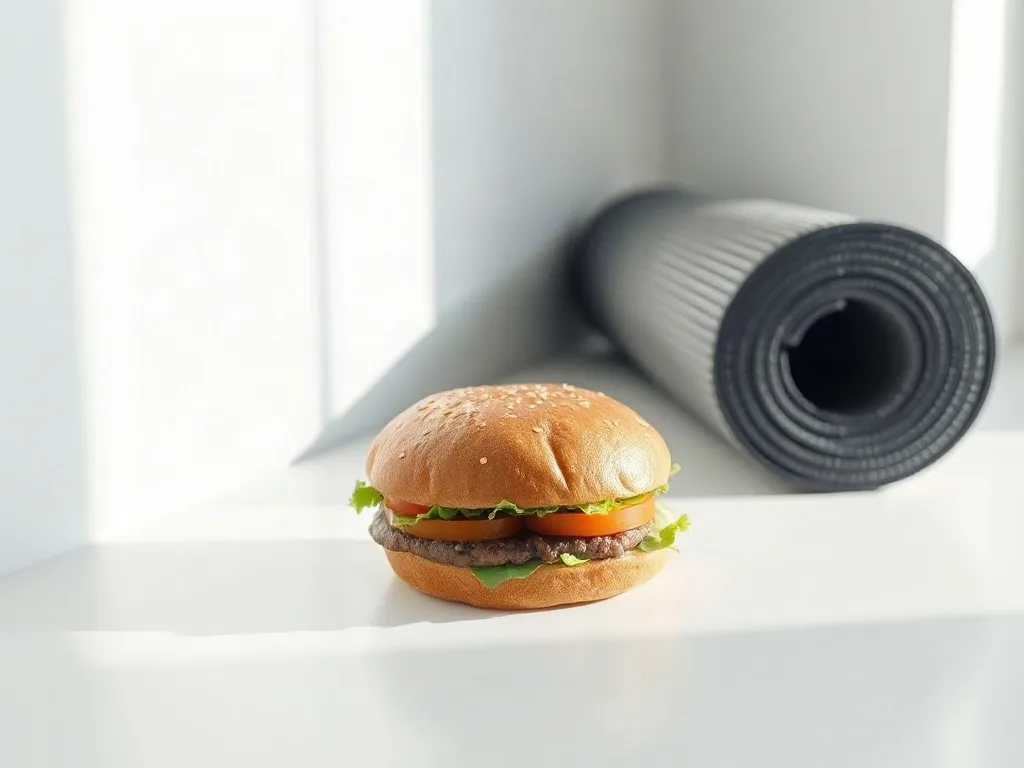
When we pull into a drive-thru or grab a quick sandwich during a busy workday, we generally expect our food to be made of, well, food. We understand that fast food is often high in sodium, fats, and sugars, but we rarely stop to consider the industrial chemicals that might be lingering in the dough of our favorite buns or wraps. One particular additive, azodicarbonamide (ADA), gained international notoriety as the “yoga mat chemical.” This moniker stems from the fact that the same substance used to make sandwich bread soft and pillowy is also used to give yoga mats, flip-flops, and foam insulation their elastic, spongy texture.
Key takeaways
- Check labels for azodicarbonamide, often found in fast food buns, flour tortillas, frozen pizzas, and breaded coatings.
- Choose organic breads, as organic standards generally prohibit the use of synthetic dough conditioners like ADA.
- Opt for local bakeries or homemade bread to avoid industrial additives and ensure a simpler, cleaner ingredient list.
- Use consumer apps like Yuka or EWG’s Food Scores to quickly identify concerning additives while grocery shopping.
- Be aware that ADA is banned in the EU and Australia due to potential health risks from its byproducts.
The discovery of ADA in mainstream food products sparked a wave of consumer advocacy and a significant shift in how major food chains approach ingredient transparency. However, the story of the yoga mat chemical is about more than just one additive; it is a window into the complex world of industrial food processing, international regulatory differences, and the ongoing struggle for consumers to understand exactly what they are putting into their bodies. This article explores the science behind ADA, why it is used, the potential health risks associated with it, and how you can navigate a world where industrial chemistry and culinary convenience often collide.
What Exactly Is Azodicarbonamide (ADA)?
Azodicarbonamide is a synthetic chemical compound with the molecular formula C2H4N4O2. In its pure form, it is an odorless, yellow-to-orange-red crystalline powder. While it sounds like something straight out of a high school chemistry lab, it has been a staple of the commercial baking industry for decades. ADA is primarily used as a dough conditioner and a bleaching agent. When added to flour, it helps to strengthen the dough, allowing it to withstand the rigorous mechanical processing required in high-volume industrial bakeries.
Beyond the kitchen, ADA serves a very different purpose. In the plastics industry, it is known as a “blowing agent.” When heated, it decomposes into gases (mostly nitrogen, carbon monoxide, carbon dioxide, and ammonia), which create tiny bubbles. These bubbles are what make materials like plastic, synthetic leather, and rubber light, flexible, and spongy. This is why it is a key ingredient in the manufacturing of yoga mats, sneaker soles, and gym floor tiles. The dual nature of this chemical—serving as both a bread improver and a plastic foamer—is what initially shocked the public and led to the “yoga mat” label that continues to haunt the fast food industry today.
The Industrial Logic: Why Fast Food Chains Use ADA
To understand why a chemical used in rubber would end up in a hamburger bun, one must look at the economics of modern food production. Fast food chains and commercial bakeries operate on massive scales, producing millions of units of bread every day. These businesses require consistency, speed, and a long shelf life. Traditional bread making—which involves flour, water, yeast, and salt—is a slow process. The dough needs time to rise naturally, and the resulting bread can vary in texture and go stale within a day or two.
ADA solves several problems for industrial bakers. First, it acts as an oxidizing agent that bleaches the flour, giving the bread a bright, white appearance that consumers have historically associated with freshness. Second, it improves the “machinability” of the dough. In a factory setting, dough is stretched, pulled, and cut by heavy machinery. ADA strengthens the gluten proteins, ensuring the dough doesn’t tear or collapse under pressure. Finally, it creates a very specific, uniform crumb structure—that soft, airy texture that allows a bun to hold a heavy burger patty without falling apart. For corporations, ADA is a cost-effective way to ensure that a bun in New York tastes and feels exactly like a bun in Los Angeles.
The Health Concerns: What the Science Says
The primary concern regarding ADA isn’t necessarily the chemical itself, but what happens to it when it is heated. During the baking process, azodicarbonamide breaks down into several byproducts, the most notable being semicarbazide (SEM) and urethane (ethyl carbamate). Semicarbazide has been linked to an increased risk of tumors in lab animals, particularly in the lungs and blood vessels. While the levels found in a single slice of bread are relatively low, health advocates argue that the cumulative effect of consuming these byproducts over a lifetime is not well understood.
Furthermore, the World Health Organization (WHO) has identified ADA as a potential respiratory sensitizer. In industrial settings where workers handle the raw powder, exposure has been linked to asthma, skin sensitization, and other respiratory issues. While the risk to the average consumer eating a finished sandwich is significantly lower than that of a factory worker, the fact that the chemical is a known irritant raises questions about its necessity in the food supply. The Center for Science in the Public Interest (CSPI) has long advocated for the removal of ADA, citing that the benefits (mostly aesthetic and logistical) do not outweigh the potential long-term health risks, however small they may seem on an individual basis.
The Global Regulatory Divide: Why Is It Legal in the U.S.?
One of the most confusing aspects of the ADA controversy is the difference in how it is regulated around the world. In the European Union, Australia, and several other countries, azodicarbonamide is banned for use in food. European regulators have taken a “precautionary principle” approach, meaning that if there is a reasonable doubt about a chemical’s safety, it should not be allowed in the food supply. In these regions, bakers use alternative methods or different additives to achieve similar results, proving that ADA is not a strictly necessary ingredient.
In contrast, the United States Food and Drug Administration (FDA) classifies ADA as “Generally Recognized as Safe” (GRAS) when used within specific limits (no more than 45 parts per million in flour). the FDA maintains that the levels of SEM and urethane produced during baking are too low to pose a significant threat to human health. This regulatory gap creates a strange reality where a global fast food chain might serve a “clean” bun in London but a bun containing ADA in Chicago. This discrepancy has fueled consumer frustration and led many to question why American food standards seem to lag behind those of other developed nations.
The 2014 Turning Point: The Subway Controversy
The conversation around ADA reached a fever pitch in 2014, largely due to a high-profile campaign led by food activist Vani Hari, also known as the “Food Babe.” She launched a petition calling on the sandwich giant Subway to remove the chemical from its bread. The petition went viral, garnering hundreds of thousands of signatures in a matter of days. The public was captivated by the visceral image of eating the same material found in a yoga mat.
Subway, which had built its brand on the “Eat Fresh” slogan, found itself in a PR nightmare. Although the company maintained that the chemical was safe and FDA-approved, they quickly announced that they would phase out ADA from all their bread products. This move triggered a domino effect. Shortly after, other major players like Starbucks, Panera Bread, and Dunkin’ Donuts announced they would also remove ADA from their menus. This moment marked a shift in the power dynamic between consumers and food corporations, proving that public pressure could force changes that regulators had not yet mandated.
Identifying ADA: How to Read the Fine Print
While many major chains have removed ADA, it hasn’t completely vanished from the American food landscape. It can still be found in some supermarket breads, frozen pizzas, pre-made pastries, and smaller fast food regional chains. To protect yourself and your family, it is essential to become a savvy label reader. Look for the word “azodicarbonamide” in the ingredients list, usually toward the end, near other dough conditioners like DATEM or monoglycerides.
Beyond looking for the specific name, you can also look for “clean label” certifications or brands that explicitly state they do not use artificial dough conditioners. Artisan breads, organic options, and breads found in the refrigerated or frozen sections of health food stores are less likely to contain industrial additives. Remember that the shorter the ingredient list, the better. Traditional bread only needs flour, water, salt, and yeast (or a sourdough starter). If an ingredient list looks like a chemistry textbook, it’s a sign that the product has been highly processed for industrial efficiency rather than nutritional value.
Practical Strategies for a Cleaner Diet
Transitioning away from industrial additives doesn’t have to happen overnight. It is about making more informed choices over time. Here are several practical steps you can take to reduce your exposure to chemicals like ADA:
- Support Local Bakeries: Small, local bakeries are much more likely to use traditional baking methods and avoid industrial dough conditioners. Ask your local baker what they use to strengthen their dough.
- Choose Whole, Unprocessed Grains: Instead of white bread or wraps, try using whole grains like quinoa, brown rice, or farro as the base for your meals. These foods don’t require bleaching agents or conditioners.
- Cook at Home: When you bake your own bread or pizza dough, you have total control over the ingredients. Homemade bread is surprisingly simple and far more flavorful than the store-bought variety.
- Use Apps and Databases: Use resources like the Environmental Working Group’s (EWG) Food Scores or the “Yuka” app to scan products at the grocery store. These tools can quickly flag concerning additives.
- Prioritize Organic: Organic standards generally prohibit the use of synthetic dough conditioners like ADA. Choosing organic bread is one of the easiest ways to ensure your food is free from the “yoga mat chemical.”
The Psychological Impact of Food Processing
The “yoga mat” controversy highlights a deeper issue: the growing disconnect between people and their food. When we eat something that contains industrial chemicals, it reinforces the idea that food is merely “fuel” or a “product” rather than a source of nourishment and connection to the earth. This industrialization of our diet has psychological consequences, leading to a sense of distrust and anxiety regarding what is safe to eat. This phenomenon, sometimes called “chemophobia,” is often dismissed by the industry, but it is a rational response to a food system that prioritizes shelf life over human health.
Compassion for oneself is vital in this journey. We live in a world designed for convenience, and fast food is often the only accessible or affordable option for many people. Instead of feeling guilty about past choices, focus on the empowerment that comes with knowledge. By understanding why these chemicals are used, you can make choices that align with your values without feeling overwhelmed. The goal is progress, not perfection. Choosing a slightly better option today is a win for your long-term health and well-being.
Conclusion: Toward a More Transparent Future
The story of azodicarbonamide serves as a powerful reminder that our food system is constantly evolving. While the “yoga mat chemical” may have been a standard tool for industrial bakers for decades, the collective voice of informed consumers has proven that we can demand better. Transparency is no longer an optional luxury for food companies; it is a requirement for maintaining public trust. As we move forward, the focus will likely shift to other additives and the broader category of ultra-processed foods.
By staying informed, reading labels, and supporting companies that prioritize clean ingredients, we can continue to push for a food system that is safer, healthier, and more honest. The next time you see a soft, white bun, you’ll know the science that went into making it that way—and you’ll have the power to decide if it’s something you want on your plate. Healthy living isn’t just about the calories we count; it’s about the quality of the ingredients that sustain us.
The Toxicological Profile of Semicarbazide (SEM)
While the existing discussion focuses on the optics of the “yoga mat” label, the underlying scientific concern that led to international bans centers on a specific breakdown product: semicarbazide (SEM). When azodicarbonamide is heated during the baking process, it does not remain ADA; it undergoes a chemical transformation. In 2003, the European Food Safety Authority (EFSA) raised alarms when SEM was detected not just in bread, but also in glass jars of baby food where ADA was used in the plastic gaskets of the lids. This discovery prompted a deeper look into the mutagenic and carcinogenic potential of the compound.
Toxicological studies on laboratory mice and rats have shown that high doses of SEM can lead to an increased incidence of benign tumors, particularly in the lungs and liver. Critics of the FDA’s stance point out that while the amount of SEM in a single bun is minuscule, the “threshold of toxicological concern” is a moving target. The chemical interacts with the bodyu2019s endocrine system in ways that are still being mapped. For instance, some research suggests that SEM may interfere with the metabolism of vitamin B6 or affect the connective tissue in developing organisms. This is why the precautionary principle in Europe led to a total ban; regulators argued that since bread is a staple food consumed daily by children and pregnant women, no level of a potential carcinogen should be considered acceptable if a safer alternative exists.
Hidden Sources: ADA in Wraps, Croutons, and Fried Coatings
Many consumers believe that by simply swapping a hamburger bun for a tortilla or a salad, they are successfully avoiding industrial dough conditioners. However, the reach of ADA extends far beyond the traditional sandwich roll. In the world of fast food and industrial catering, “bread” is a broad category. Flour tortillas, particularly those used in large-scale burrito chains, often require ADA to maintain the extreme flexibility needed for rolling without tearing. Without these conditioners, a mass-produced tortilla stored in a refrigerated distribution center would become brittle and crack during assembly.
Furthermore, consider the croutons found in pre-packaged salads or the breading on your favorite fast-food chicken nuggets. These products are often overlooked because they are components of a larger dish. Industrial croutons are essentially twice-baked bread, and to achieve that perfectly uniform, shatter-proof crunch, manufacturers often utilize ADA in the initial baking phase. Similarly, the flour-based coatings on fried foods may contain ADA to help the batter adhere to the meat and provide a light, airy texture once it hits the deep fryer. Even some frozen breakfast pastries and “toaster” snacks rely on the chemical to ensure that they can survive the transition from a frozen state to a high-heat toaster without losing their structural integrity. To truly avoid the chemical, one must look at the ingredient decks of every flour-based component, not just the obvious loaf of bread.
The Science of “Clean Label” Alternatives
As consumer pressure mounts, the food science industry has been forced to innovate, moving away from synthetic oxidants like ADA toward what is known as “enzyme technology.” This shift is the backbone of the “clean label” movement. Instead of using a harsh synthetic chemical to strengthen dough, modern industrial bakeries now use specialized enzymes such as amylases, xylanases, and lipases. These enzymes are biological catalysts that perform the same function as ADAu2014breaking down complex starches and strengthening gluten networksu2014but with a crucial difference: they are usually destroyed by the heat of the oven.
Because these enzymes are considered “processing aids” rather than additives, they often do not even have to be listed on the final ingredient label. This creates a paradox for the transparent consumer. While the bread is technically “cleaner” because it lacks synthetic chemicals like ADA or potassium bromate, it is still a highly engineered product. Other alternatives include ascorbic acid (Vitamin C), which acts as a natural oxidizing agent, and lecithin, a fat-like substance derived from soy or sunflowers that improves dough handling. While these alternatives are significantly safer from a toxicological perspective, they often increase the cost of production. Enzymes are more expensive than ADA and require more precise temperature and pH controls in the factory, which is why some budget-tier bread manufacturers are hesitant to make the switch.
Occupational Hazards: The Factory Worker Perspective
The safety of azodicarbonamide isn’t just a concern for the person eating the sandwich; it is a significant occupational health issue for the people making it. The World Health Organization (WHO) and various international labor groups have long recognized ADA as a potent respiratory sensitizer. In the concentrated, powdered form used in industrial bakeries and plastic factories, ADA can become airborne. When workers inhale this dust, it can trigger “bakers’ asthma,” a chronic condition characterized by wheezing, shortness of breath, and long-term lung sensitivity.
Case studies from the UK and the US have documented factory workers developing severe skin rashes and respiratory distress after repeated exposure to raw ADA. This raises an ethical question that often gets lost in the debate over food safety: if a chemical is deemed too hazardous for a worker to breathe even in small amounts, should we be comfortable incorporating it into our food supply? While the FDA argues that the chemical changes form once baked, the risk to the laborers in the supply chain remains. This industrial health gap is one of the primary reasons that labor unions in many countries have lobbied for the removal of ADA, viewing it as an unnecessary risk to the workforce when mechanical or enzymatic alternatives are readily available.
The “GRAS” Loophole and Regulatory Inertia
To understand why the US is an outlier in its regulation of ADA, one must look at the “Generally Recognized as Safe” (GRAS) designation. Established by the 1958 Food Additives Amendment, the GRAS list was intended to cover common ingredients like salt, sugar, and vinegar. However, over the decades, the system has expanded to include thousands of synthetic chemicals. Under the current framework, companies can sometimes self-certify that a new substance is GRAS without a rigorous, independent review by the FDA, provided they have a consensus of “scientific experts.u201d
Once a chemical like ADA is on the GRAS list, it is incredibly difficult to remove. The FDA operates on a reactive rather than proactive model. Unless there is overwhelming evidence of immediate human harm, the agency is slow to rescind an approval that has been in place for decades. This regulatory inertia is compounded by the fact that the US food system prioritizes “functional equivalence.” If a chemical performs a task efficiently and hasn’t caused an acute health crisis, the burden of proof for banning it is exceptionally high. This stands in stark contrast to the European “Hazard-Based” approach, which looks at the inherent properties of a chemical (like its ability to cause respiratory sensitization) and restricts its use regardless of the dosage in the final product.
The Economic Ripple Effect of Removing ADA
When a major chain like Subway or McDonald’s removes ADA, the impact is felt throughout the entire global supply chain. Removing a cheap, effective dough conditioner isn’t as simple as just leaving it out of the recipe. Because ADA allows for faster “throughput”u2014meaning the machines can run faster without the dough sticking or tearingu2014removing it often necessitates a slowdown in production or an investment in more sophisticated machinery. This is the “price of clean label” that often gets passed down to the consumer.
For smaller, regional fast-food chains, the transition is even more difficult. These companies often buy their dough from third-party industrial bakeries that serve dozens of different clients. If a bakery has to create a special ADA-free line for one client while keeping the chemical for others, the logistical complexity and cost skyrocket. This is why you will still find ADA in the ingredients list of smaller pizza franchises or regional sub shops; they simply don’t have the market power to force their suppliers to change their entire manufacturing process. As consumers, recognizing this economic reality helps us understand why progress is uneven. The “cleanest” bread is often found at either the very high end (artisan bakeries) or at the very large chains that have the capital to overhaul their supply chains, leaving the middle-market regional players as the final holdouts for the “yoga mat chemical.u201d
Beyond ADA: Identifying Other Synthetic Dough Improvers
While ADA has captured the headlines, it is only one member of a larger family of synthetic dough improvers that consumers should be aware of. One of the most controversial is potassium bromate. Like ADA, it is a powerful oxidizing agent that strengthens dough and promotes a high rise. It is also a known carcinogen that has been banned in the EU, Canada, Brazil, and even China, yet it remains legal in the US (though California requires a warning label). Many commercial bakers have voluntarily moved away from it, but it still appears in various flour brands and fast-food products.
Another common additive is DATEM (Diacetyl Tartaric Acid Esters of Monoglycerides). While not linked to the same “yoga mat” controversy, DATEM is a synthetic emulsifier used to give bread a larger volume and a more uniform crumb. Then there is L-cysteine, an amino acid used as a reducing agent to make dough easier to process. While L-cysteine can be synthesized, it is traditionally derived from natural sources like duck feathers or, in some cases, human hair. While these additives are generally considered safe by the FDA, they represent the same industrial philosophy as ADA: using chemistry to bypass the natural, slow processes of traditional baking. For those seeking a truly “clean” diet, the goal isn’t just to avoid the specific “yoga mat” chemical, but to move toward products that rely on time, fermentation, and simple ingredients rather than a cocktail of industrial conditioners.
Frequently Asked Questions
Is azodicarbonamide still in Subway bread?
No, Subway officially completed the removal of azodicarbonamide from all its bread products in the United States by mid-2014. The company made this change following a massive public petition and a broader shift in the industry toward “cleaner” ingredient lists. Today, Subway uses alternative dough conditioners and has removed many other artificial colors and flavors as well.
Does eating ADA-containing bread cause immediate health problems?
There is no evidence that eating a single serving of bread containing ADA will cause immediate or acute health problems. The concerns raised by health advocates focus on long-term, chronic exposure and the potential carcinogenic effects of its breakdown products, such as semicarbazide. The FDA maintains that the small amounts allowed in food are safe for consumption, though many other countries disagree and have banned it entirely.
Why is ADA used in yoga mats if it’s also in food?
In yoga mats and other foam products, ADA acts as a “blowing agent.” When it is heated during the manufacturing process, it releases gases that create tiny air bubbles, making the plastic or rubber soft and spongy. In food, it acts as a dough conditioner and bleaching agent. The fact that it has two very different uses—one industrial and one culinary—is what led to the public controversy, as consumers generally prefer their food to be free of industrial chemicals.
Which fast food chains still use the yoga mat chemical?
Since the 2014 controversy, most major national fast food chains in the U.S., including McDonald’s, Wendy’s, Burger King, and Chick-fil-A, have removed ADA from their primary bread products. However, it can sometimes still be found in specialty items, seasonal offerings, or in smaller, regional chains that have not yet updated their recipes. Always check the official nutrition and ingredient PDFs on a company’s website for the most up-to-date information.
Are there any natural alternatives to ADA in baking?
Yes, there are many natural ways to condition dough. Traditional bakeries use longer fermentation times (such as in sourdough) to naturally strengthen gluten and improve texture. Ascorbic acid (Vitamin C) can also be used as a natural oxidizing agent to strengthen dough. Enzymatic conditioners derived from plants or microbes are another common alternative that provides the necessary texture without the use of synthetic chemicals like azodicarbonamide.
Related posts:
 Does Flour Go Bad? Shelf Life and Storage Tips
 Mat Goals: The Cutest Yoga Mats That Will Make You Actually Want to Namaste
 NYC’s Healthiest Bakeries
 Almond Flour or Meal: How to Use It and Where to Get It
 Perfect Gluten-Free Bread
 Essential Baking Tools for Your Kitchen
 Matcha Banana Bread Recipe That’s Actually Healthy
 Guilt-Free Cinnamon Roll Recipe