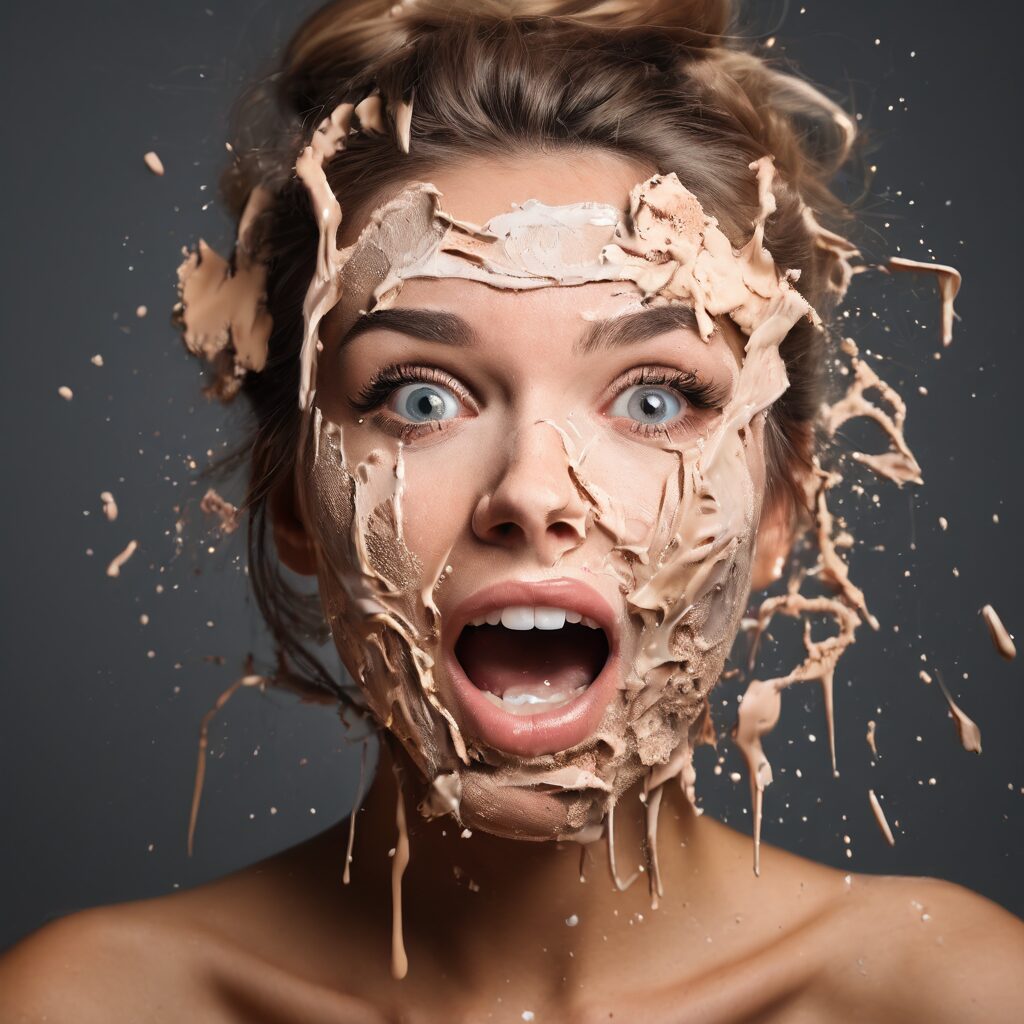
Understanding the Cause of Cakey Foundation
Applying foundation can sometimes result in a cakey, uneven texture that detracts from your overall makeup look. Understanding the root cause of cakey foundation is the first step in solving the issue. Often, cakey foundation occurs because of improper skin preparation, incorrect foundation application, and using the wrong type of foundation for your skin type.
Proper Skin Preparation
The key to a flawless foundation application starts with skin preparation. Here are steps to ensure your skin is ready for foundation:
- Exfoliate: Use a gentle exfoliator to remove dead skin cells. This helps in creating a smooth base for your foundation.
- Moisturize: Hydrated skin ensures that the foundation blends seamlessly. Choose a moisturizer suitable for your skin type.
- Prime: A good primer fills in fine lines and pores, providing a smooth canvas for your foundation.
Choosing the Right Foundation
Selecting the right foundation is crucial. Foundations come in various formulations like liquid, powder, and cream. Your choice should depend on your skin type and desired finish.
- For Oily Skin: Opt for a mattifying, oil-free foundation to control shine.
- For Dry Skin: Use a hydrating or dewy finish foundation to add moisture and glow.
- For Combination Skin: A balanced foundation that provides both hydration and oil control is ideal.
Application Techniques
The way you apply your foundation can significantly impact the final look. Consider these techniques for a flawless finish:
- Use a Damp Sponge: A beauty sponge can help blend the foundation seamlessly into the skin. Dampen the sponge for a more natural finish.
- Stippling Brush: A stippling brush can provide an airbrushed effect. Use light, circular motions to apply the foundation.
- Layering: Apply foundation in thin layers, building up coverage as needed. This prevents the foundation from looking heavy or cakey.
Setting Your Foundation
Setting your foundation is important to ensure longevity and prevent cakiness. Here are some tips:
- Setting Powder: Use a translucent setting powder to lock in the foundation. Apply it lightly with a fluffy brush.
- Setting Spray: A setting spray can add a natural finish and increase the staying power of your makeup.
Common Mistakes to Avoid
Avoid these common foundation mistakes to prevent a cakey look:
- Over-Applying: Less is more when it comes to foundation. Start with a small amount and build coverage if necessary.
- Skipping Primer: Primer is essential for a smooth application and long-lasting foundation.
- Using the Wrong Tools: Using the right tools, like a beauty sponge or appropriate brush, is crucial for an even application.
Navigating Product Chemistry: Silicone vs. Water-Based Formulas
One of the most frequent yet overlooked reasons for foundation separation and cakiness is a chemical mismatch between your primer and your foundation. Makeup products are generally formulated with either a water base or a silicone base. When you layer a water-based foundation over a silicone-based primer, the two formulas often repel each other, much like oil and water. This results in the foundation sitting on top of the skin in patches, sliding into fine lines, or pilling into small, rolled-up balls of product.
To identify the base of your products, look at the first three to five ingredients on the label. Silicone-based products typically contain ingredients ending in -cone, -methicone, or -siloxane, such as dimethicone or cyclopentasiloxane. If these appear high on the list, the product is silicone-based. Water-based products will list water (aqua) first and will generally be free of heavy silicones, though they may contain small amounts for texture. For a seamless, non-cakey finish, ensure your primer and foundation share the same base. A silicone primer works best with a silicone foundation, providing a smooth, blurred surface. Conversely, a water-based primer should be paired with a water-based foundation to maintain a lightweight, skin-like hydration level that won’t separate during the day.
An edge case to consider is the use of oil-based foundations, which are rarer but popular for extremely dry or mature skin. These require an oil-based or highly emollient primer. Mixing an oil-based foundation with a water-based primer will almost certainly lead to immediate breakdown, as the water in the primer prevents the oils in the foundation from adhering to the skin’s surface. If you find your makeup looks perfect for twenty minutes and then begins to ‘disintegrate,’ chemistry conflict is likely the culprit.
The Critical Role of Skincare Absorption and Timing
While moisturizing is essential, the timing of your application is just as vital as the product itself. Applying foundation immediately after moisturizer or sunscreen is a recipe for a cakey disaster. When the skin hasn’t had time to fully absorb your skincare, the foundation mixes with the unabsorbed oils and humectants, creating a thick, unstable slurry that never quite ‘sets.’ This leads to a heavy, mask-like appearance that shifts every time you touch your face or change your facial expression.
To prevent this, implement the ‘five-minute rule.’ After applying your last layer of skincare—usually your SPF—wait at least five to ten minutes before touching your face with makeup. This allows the volatile components of the skincare to evaporate and the active ingredients to settle into the stratum corneum. If you are in a rush, a professional tip is to take a single ply of a clean tissue and gently press it against your face. This absorbs excess surface oils and unabsorbed product without stripping the hydration away. This creates a dry, yet supple, ‘tack’ that foundation can grip onto without becoming slippery.
Furthermore, be wary of using too many serums in the morning. Products containing high concentrations of hyaluronic acid or certain polymers can create a film on the skin. If this film is disturbed by the friction of a foundation brush, it will roll up into tiny flakes, mimicking the look of dry, cakey skin. If you notice pilling, try simplifying your morning routine to just a light antioxidant serum, a moisturizer, and SPF, saving your more complex, film-forming treatments for your evening regimen.
Strategic Mapping: Varying Coverage by Facial Zone
Cakiness often occurs because we treat the entire face as a uniform canvas, applying the same amount of foundation to every square inch. However, different areas of the face have different needs and movement levels. The ‘mapping’ technique involves concentrating coverage only where it is needed and using the absolute minimum amount of product on high-movement areas like the forehead, the smile lines around the mouth, and the bridge of the nose.
Start by applying foundation to the center of the cheeks and the chin, where redness and blemishes are most common. Use a damp sponge to blend the product outward. By the time you reach your forehead and the area around your nose, there should be very little product left on your tool. This ‘tapered coverage’ ensures that the areas prone to creasing aren’t overloaded. For example, the skin around the nostrils is naturally oilier and more prone to product buildup; applying a heavy layer here almost guarantees a cakey, separated look within hours. Instead, use only the ‘ghost’ of the foundation left on your brush to even out the tone in this area.
For the under-eye area, avoid bringing your foundation all the way up to the lower lash line. Foundation is generally thicker than concealer and not designed for the thin, delicate skin around the eyes. Layering foundation and then concealer in this zone creates a heavy stack of pigment that will inevitably crack. Instead, stop your foundation at the orbital bone and let your concealer handle the inner corners and dark circles. This reduces the total volume of product in a high-crease zone, maintaining a fresh, youthful texture.
Managing Peach Fuzz and Surface Texture
Even the most expensive foundation can look cakey if it gets trapped in vellus hair, commonly known as ‘peach fuzz.’ These fine hairs can catch powder and pigment particles, causing the foundation to stand away from the skin and creating a fuzzy, textured appearance that is especially visible in natural sunlight or harsh overhead lighting. While many choose dermaplaning to remove this hair, you can also manage it through specific application directions.
Always apply your foundation in downward strokes. The vellus hairs on the face naturally grow in a downward direction. If you use upward or circular motions with a brush, you are effectively ‘teasing’ the hair, pushing the foundation underneath it and lifting the hair away from the skin. This creates air pockets and highlights the texture you are trying to hide. By smoothing the product downward, you lay the hairs flat against the skin, allowing the foundation to glide over them seamlessly.
If you find that your foundation still looks heavy over textured areas like acne scarring or enlarged pores, avoid the temptation to ‘fill’ them with more product. Instead, use a ‘pressing’ motion rather than a ‘swiping’ motion. Swiping moves the product over the peaks of the skin’s texture, leaving the valleys empty or unevenly filled. Pressing with a damp sponge or a flat-top kabuki brush pushes the pigment into the skin’s irregularities for a more level surface without the need for a thick layer of makeup.
The Impact of Lighting and Pigment Load
A common mistake is applying foundation in a bathroom with poor or yellow-toned lighting. This often leads to over-application because you cannot see the true opacity of the product. When you step into natural daylight, the ‘mask’ becomes apparent. To fix this, always try to apply your makeup near a window or under a neutral LED light that mimics daylight. This allows you to see exactly where the pigment is bunching up before you leave the house.
Additionally, consider the pigment load of your chosen foundation. High-coverage foundations have a higher ratio of solids (pigment) to liquids. These formulas are inherently more prone to cakiness because there is less ‘fluid’ to help the product move with your skin. If you own a high-coverage foundation that consistently looks cakey, try ‘sheering it out’ on the back of your hand with a drop of facial oil or a hydrating primer before application. This transforms a heavy, stiff formula into a more flexible tint that still offers significant coverage but behaves more like a second skin. This is particularly effective for those with combination skin who need coverage for redness but find that full-coverage formulas emphasize dry patches on the cheeks.
Mid-Day Revival: Fixing Cakiness Without a Full Reset
When foundation begins to look cakey three or four hours into the day, the instinct is often to add more powder to ‘fix’ the shine or texture. However, adding dry powder to a surface where the foundation has already begun to separate or dry out will only exacerbate the problem, creating a thick, crusty layer. Instead of reaching for the powder compact, use the warmth of your own hands to ‘melt’ the product back into the skin.
First, use a clean blotting paper or a tissue to lift away excess oil. Then, take your clean ring fingers and gently press (do not rub) the areas where the foundation is caking, such as the smile lines or the bridge of the nose. The natural heat from your fingertips softens the waxes and oils in the foundation, allowing you to smooth out the ridges and redistribute the pigment. This is often enough to reset the makeup without adding any new material.
If the skin feels tight and dry, a hydrating facial mist is your best tool. Look for a mist that contains glycerin or rosewater rather than just plain water, as plain water can actually dehydrate the skin further as it evaporates. Spray the mist over your face and, while the skin is still slightly damp, use a beauty sponge to lightly bounce over the cakey areas. This reintroduces moisture into the foundation layer, ‘re-emulsifying’ it so it can sit flat against the skin again. This technique is a favorite among professional makeup artists for refreshing a look between long hours of filming or events.
Tool Maintenance and Product Buildup
The state of your application tools has a direct impact on the finish of your foundation. A brush or sponge that has been used multiple times without cleaning will have a buildup of dried, oxidized foundation trapped in the bristles or pores. When you use these ‘dirty’ tools, the old, hardened product mixes with the fresh, liquid foundation. This creates an uneven, clumpy texture right from the start, making even a high-quality foundation look cakey and streaky.
For a truly flawless, non-cakey application, you should ideally clean your beauty sponge after every single use. Sponges are porous and hold onto moisture, making them a breeding ground for bacteria which can change the pH of your foundation and cause it to break down faster on the skin. Brushes should be deep-cleaned at least once a week. If you notice your brush feels stiff or the bristles are sticking together, it is already long overdue for a wash.
When cleaning, use a dedicated brush cleanser or a gentle degreasing soap like dish soap mixed with a little olive oil to break down the heavy silicones and oils found in modern foundations. Ensure you rinse until the water runs completely clear; any leftover soap residue in the bristles will react with your foundation the next morning, causing it to foam slightly or separate on your face, leading to the very cakiness you are trying to avoid. Properly maintained tools ensure that only fresh, fluid product is being applied to your skin, allowing for the thin, even layers that are the hallmark of a professional finish.
FAQ
Why does my foundation look cakey?
Cakey foundation often results from improper skin preparation, over-applying foundation, or using the wrong formula for your skin type.
How can I make my foundation look smooth?
Ensure your skin is well-prepped with exfoliation, moisturizing, and priming. Use the right application tools and techniques, and set your foundation properly.
What type of foundation is best for oily skin?
For oily skin, a mattifying, oil-free foundation is ideal as it helps control shine and provides a long-lasting matte finish.
Can I prevent my foundation from looking cakey without a primer?
While primer helps a lot, you can also prevent cakiness by properly moisturizing your skin and using a damp sponge for application.
Is setting spray necessary?
Setting spray is not strictly necessary but it can help your makeup last longer and give a more natural finish.
Related posts:
 Natural Face Sunscreens Guide
 Best Whipped Foundations
 Zoe Kravitz’s Coconut Oil Hair Care Secret
 Foundation’s Impact on Skin
 Merit Foundation Concealer Review
 Brush Stroke Genius: The Nail Art Technique Anyone Can Master
 Proper Order of Skincare Application
 The Makeup Tricks That Will Change Your Entire Face