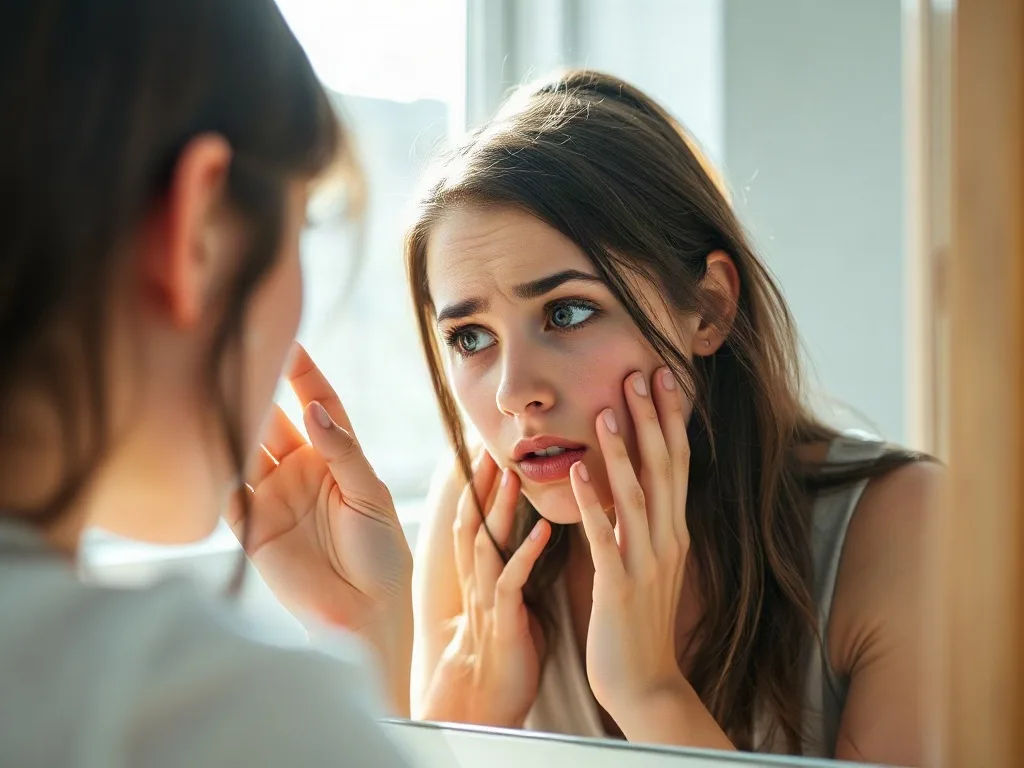
That persistent red bump right in the center of your forehead. The cluster of pimples along your hairline. The deep, painful cyst that keeps returning to the exact same spot between your brows. If you feel like your forehead has developed its own agenda, you’re not imagining things. Forehead acne is one of the most common and frustrating skin concerns, affecting people of all ages and skin types.
Key takeaways
- Switch to non-comedogenic hair products and keep them off your face during application to prevent pore-clogging.
- Cleanse your skin immediately after exercise to remove sweat and prevent acne mechanica caused by friction.
- Change your pillowcase every two to three days to avoid the buildup of oil, bacteria, and hair product residue.
- Manage stress levels to reduce cortisol, which can trigger excess oil production and worsen inflammation.
- Use targeted ingredients like salicylic acid or retinoids, but introduce them slowly to avoid damaging your skin barrier.
The location of breakouts on your face isn’t random. Your forehead responds to specific triggers that differ from other areas of your face, which is why you might have clear cheeks and chin but constant congestion above your eyebrows. Understanding why your forehead keeps breaking out in the same spots requires looking at your hair products, your habits, your stress levels, and your hormones.
The good news is that once you identify what’s causing your forehead acne, you can take targeted steps to address it. This guide breaks down the science behind forehead breakouts, explores the most common culprits, and offers practical strategies to help you achieve clearer skin.
The Science Behind Forehead Acne
Your forehead is part of your T-zone, the T-shaped area of your face that includes your forehead, nose, and chin. This region has a higher concentration of sebaceous glands than other parts of your face. These glands produce sebum, an oily substance that helps protect and moisturize your skin. When sebum production increases, it can mix with dead skin cells and become trapped in your pores, creating an ideal environment for Cutibacterium acnes (formerly Propionibacterium acnes) bacteria to multiply.
The result is inflammation, redness, and the various types of acne lesions you see on your skin. Your forehead’s high density of oil glands makes it particularly susceptible to this process. But sebum alone doesn’t explain why breakouts occur in specific patterns or why they keep returning to the same spots.
Your skin’s microbiome, the community of bacteria, fungi, and other microorganisms living on your skin’s surface, also plays a role. When this microbiome becomes unbalanced, certain bacteria can overgrow and contribute to acne. Your forehead is constantly exposed to the environment, touching from your hands, and transfer from hair and headwear, all of which can disrupt its microbiome.
Hair Products and Pomade Acne
One of the most overlooked causes of forehead breakouts is right in your bathroom cabinet. Hair products including shampoos, conditioners, styling gels, waxes, pomades, hairsprays, and hair oils can all contribute to forehead acne through a process dermatologists call pomade acne or acne cosmetica.
When you apply products to your hair, they don’t stay there. Throughout the day and especially while you sleep, these products migrate onto your forehead and along your hairline. Heavy, oil-based products are particularly problematic because they can directly clog pores. But even water-based products can trap dirt, sweat, and sebum against your skin.
The solution isn’t necessarily to stop using hair products, but to become more strategic about them. Consider these approaches:
- Apply styling products with your head tilted forward so excess product falls away from your face rather than onto your forehead
- Use a headband or hair clips to keep your hair off your forehead during product application and while the products set
- Wash your face after applying hair products to remove any residue that may have transferred to your skin
- Switch to non-comedogenic hair products labeled as oil-free or water-based
- Change your pillowcase every two to three days to prevent product buildup from transferring back to your face while you sleep
Pay special attention if you notice breakouts concentrated along your hairline, as this pattern strongly suggests hair products are a contributing factor.
Sweat, Hats, and Physical Irritation
Physical friction and trapped moisture create another common pathway to forehead breakouts. If you exercise regularly, wear hats or headbands, or work in environments where you sweat, you may be inadvertently creating conditions that promote acne.
Sweat itself doesn’t cause acne. In fact, sweating can help clear pores by flushing out debris. The problem occurs when sweat sits on your skin and mixes with bacteria, yeast, and dead skin cells. A warm, moist environment is perfect for microorganisms to thrive, and the friction from hats, helmets, or headbands can trap this mixture against your skin while simultaneously irritating your pores.
This type of acne, sometimes called acne mechanica, often appears as small, rough bumps rather than the larger inflamed lesions seen with other types of acne. It commonly affects athletes, people who wear helmets for work, and anyone who regularly wears tight headwear.
To minimize sweat and friction-related breakouts:
- Remove hats and headbands as soon as you don’t need to wear them
- Wash your face or at least rinse with water as soon as possible after sweating
- Choose breathable, natural-fiber hats when possible, or look for athletic headwear with moisture-wicking properties
- Wash your hats and headbands regularly to remove accumulated bacteria and product buildup
- Consider applying a thin layer of petroleum jelly or barrier cream to your forehead under helmet straps to reduce friction
If you work out at the end of the day, make cleansing your forehead a non-negotiable part of your post-exercise routine. Even a quick splash of water is better than leaving sweat to dry on your skin overnight.
Stress and Your Skin Connection
Have you ever noticed that your skin seems to break out right before a big presentation, during exam periods, or when you’re going through a difficult time? This isn’t coincidence. Stress and acne have a well-documented relationship that’s rooted in your body’s hormonal response to pressure.
When you experience stress, your body releases cortisol, often called the stress hormone. Cortisol triggers a cascade of effects throughout your body, including signaling your sebaceous glands to produce more oil. Higher oil production means more material to clog pores and more food for acne-causing bacteria.
Stress also affects your immune system’s ability to regulate inflammation and control bacteria on your skin. When you’re stressed, your body is slower to heal existing breakouts and more prone to developing new ones. This creates a frustrating cycle: stress causes breakouts, which cause more stress about your appearance, which worsens the breakouts.
Breaking this cycle requires addressing both your stress and your skin simultaneously. Stress management techniques like meditation, regular exercise, adequate sleep, and therapy can help reduce your cortisol levels. While you work on the root cause, stick to a consistent, gentle skincare routine that doesn’t add more stress to your day. Avoid the temptation to try harsh treatments or multiple new products at once when you’re already feeling overwhelmed.
Digestive Health and the Traditional Chinese Medicine Perspective
In traditional Chinese medicine (TCM), different zones of the face are thought to correspond to different internal organs. The forehead is associated with the digestive system, and practitioners often interpret forehead breakouts as a sign of digestive imbalance, poor diet, or food sensitivities.
While this framework isn’t supported by Western medical research in a direct cause-and-effect way, there is emerging science exploring the connection between gut health and skin health. The gut-skin axis refers to the bidirectional communication between your digestive system and your skin. When your gut microbiome is disrupted by a diet high in processed foods, sugar, or foods you’re sensitive to, it can trigger systemic inflammation that may manifest as skin problems.
Some people do notice that their forehead breaks out after eating specific foods, particularly dairy products or high-glycemic foods that cause rapid blood sugar spikes. If you suspect diet might be contributing to your forehead acne, consider keeping a food and skin diary for a few weeks. Note what you eat and the condition of your skin each day. Look for patterns rather than trying to eliminate entire food groups without evidence.
Working with a dermatologist or registered dietitian can help you determine whether food sensitivities play a role in your skin concerns. They can guide you through an elimination diet or recommend appropriate testing rather than relying on trial and error.
Skincare Habits That Might Be Making It Worse
Sometimes the products and practices meant to help your skin can actually contribute to forehead breakouts. Over-cleansing, using harsh exfoliants, and applying too many active ingredients can damage your skin barrier and trigger more oil production as your skin tries to compensate.
Your skin barrier is the outermost layer of your skin, and its job is to keep moisture in and irritants out. When you use harsh cleansers, scrub too vigorously, or overuse drying ingredients like benzoyl peroxide or salicylic acid, you can damage this protective barrier. A compromised barrier is more susceptible to bacteria and inflammation, which can worsen acne rather than improve it.
Signs that you might be overdoing your skincare routine include tight, dry skin after cleansing, increased sensitivity, redness, peeling, or breakouts that seem to spread or worsen despite treatment.
A better approach for most people is a simple, consistent routine:
- Cleanse morning and night with a gentle, pH-balanced cleanser
- Apply a lightweight, non-comedogenic moisturizer while your skin is still damp
- Use sunscreen during the day
- Introduce one active ingredient at a time, starting slowly (perhaps every other day or every third day) and building up as your skin tolerates it
- Let products absorb for a few minutes before applying the next layer
Resist the urge to pick at or pop pimples on your forehead. The skin here is thicker than on other parts of your face, which means inflammation can go deeper and cause more damage. Picking can also introduce more bacteria from your hands and lead to scarring.
Hormonal Fluctuations and Forehead Breakouts
Hormones influence every aspect of acne development, from sebum production to inflammation to skin cell turnover. While hormonal acne is often associated with the lower face (chin and jawline), hormonal fluctuations can absolutely affect the forehead as well.
During puberty, increased androgen hormones stimulate oil production throughout the T-zone, which is why forehead acne is so common in teenagers. But hormones continue to affect adult skin too. Menstrual cycles, pregnancy, menopause, starting or stopping hormonal birth control, and conditions like polycystic ovary syndrome (PCOS) can all trigger forehead breakouts.
If your forehead breakouts follow a cyclical pattern, appearing at the same time each month, hormones are likely involved. You might also notice other signs of hormonal fluctuation like mood changes, breast tenderness, or changes in energy levels around the same time.
Hormonal acne can be frustrating because topical treatments alone often aren’t enough to address the root cause. If you suspect hormones are contributing to your forehead breakouts, consider consulting with a dermatologist or endocrinologist. They can evaluate your hormone levels and discuss treatment options that might include hormonal birth control, spironolactone, or other hormone-regulating medications.
Effective Treatment Approaches for Forehead Acne
Now that you understand why your forehead keeps breaking out, let’s look at what you can actually do about it. The most effective approach combines targeted skincare with lifestyle modifications.
For active breakouts, look for products containing these proven ingredients:
Salicylic acid: A beta hydroxy acid (BHA) that penetrates oil-filled pores and exfoliates from within. It’s particularly effective for blackheads and whiteheads. Start with a 0.5% to 2% concentration used once daily.
Benzoyl peroxide: Kills acne-causing bacteria and reduces inflammation. Available in strengths from 2.5% to 10%, but research shows lower concentrations are just as effective with less irritation. Start with 2.5% or 5% applied once daily.
Retinoids: Vitamin A derivatives that increase cell turnover and prevent pores from becoming clogged. Over-the-counter options include retinol and adapalene. Prescription retinoids like tretinoin are stronger. All retinoids require patience and consistent use, with results typically visible after 12 weeks or more.
Niacinamide: A form of vitamin B3 that helps regulate oil production, reduces inflammation, and supports the skin barrier. It’s gentle enough to use alongside other active ingredients.
When choosing products, remember that your forehead skin may be more or less sensitive than the rest of your face. If you’re using a treatment meant for your entire face, monitor how your forehead responds. You might need to apply certain products less frequently to this area.
For deep, painful cystic acne that keeps returning to the same spot on your forehead, see a dermatologist. These lesions can cause scarring and often require professional treatment such as cortisone injections, oral antibiotics, or isotretinoin.
The Hidden Impact of Sleep Position and Pillowcase Hygiene
While you sleep, your forehead presses against your pillow for six to eight hours, creating a microenvironment where bacteria, yeast, oil, and product residue accumulate. Most people don’t realize that their pillowcase becomes increasingly contaminated with each passing night. Your skin produces oil throughout the night, you sweat in your sleep even if you don’t notice it, and hair products transfer from your hair to the fabric. All of this then presses directly against your forehead.
Studies on pillowcase contamination have found significant bacterial growth after just two to three nights of use, including Staphylococcus aureus and other microorganisms that can contribute to skin infections and acne. This doesn’t mean your pillowcase is a biohazard, but it does mean that extending the time between washes gives bacteria more opportunity to multiply and transfer back to your skin.
The material of your pillowcase matters as much as how often you wash it. Cotton, while breathable, absorbs moisture and creates friction against your skin. This friction can cause microscopic irritation that makes your skin more vulnerable to breakouts. Silk and satin pillowcases create less friction and don’t absorb moisture as readily, which can help reduce both irritation and bacterial transfer. However, any pillowcase material needs regular washing to remain hygienic.
Beyond the pillowcase itself, consider how you position your face during sleep. Side sleepers and stomach sleepers have direct face-to-pillow contact throughout the night, while back sleepers minimize this exposure. If changing your sleep position feels unrealistic, you can still reduce the impact by using a clean towel over your pillow each night, washing your pillowcases every two days at minimum, and ensuring your hair is free of styling products before bed.
Your nighttime face-washing routine also plays a critical role here. Going to sleep without cleansing your forehead means everything that accumulated on your skin during the day—pollution, sweat, bacteria from touching your face, and yes, hair product residue—gets pressed into your pores overnight. This doesn’t mean you need an elaborate skincare routine, but a thorough cleanse before bed is non-negotiable for preventing forehead breakouts.
Environmental Factors You’re Probably Overlooking
Your environment constantly interacts with your forehead in ways you might not consider. Air quality, humidity levels, water hardness, and even your commute can influence whether your forehead stays clear or breaks out. Understanding these environmental factors helps you identify triggers that have nothing to do with your diet, stress, or skincare routine.
Urban pollution poses a particular challenge for forehead skin. Particulate matter from vehicle exhaust, industrial emissions, and general city grime settles on your skin throughout the day. These particles are often small enough to penetrate pores, where they trigger oxidative stress and inflammation. Your forehead, being the highest point of your face and often uncovered, catches more than its share of this invisible debris. People living in areas with poor air quality frequently report higher rates of acne and other skin conditions.
Humidity levels affect your skin in opposite directions depending on where they fall. High humidity increases sweating and creates conditions where bacteria and yeast thrive on your skin’s surface. Low humidity, on the other hand, can dehydrate your skin and trigger compensatory oil production as your skin tries to protect itself. Both extremes can contribute to forehead breakouts, though through different mechanisms. If you live in a climate with dramatic humidity shifts, your skin may struggle to adapt.
Water hardness is an environmental factor few people connect to their skin concerns. Hard water contains high levels of dissolved minerals, particularly calcium and magnesium. When you wash your face with hard water, these minerals can leave a residue on your skin that interferes with your skin barrier function and makes it harder to rinse cleansers completely. Some people find that their skin clears up when they travel to areas with softer water, only to break out again when they return home. Installing a shower filter or using distilled water for your final face rinse can help mitigate this issue.
Your daily commute might also contribute to forehead acne without your realizing it. Time spent in cars, buses, or trains exposes your skin to recycled air, UV radiation through windows, and particulate matter from other passengers or traffic. If you touch your forehead while commuting, you’re also transferring whatever was on your hands—railings, door handles, steering wheels—directly to your face. Making a habit of washing your face or at least using a gentle micellar water when you arrive at your destination can reduce this environmental load.
The Cell Phone and Accessories Connection
If you’ve ever noticed breakouts concentrated on one side of your forehead or temple area, your cell phone might be the culprit. Mobile phones accumulate bacteria, oil, and debris from every surface they touch—which, for most people, includes countertops, tables, car seats, and countless other locations throughout the day. Then you press that same phone against your face during calls, transferring everything directly to your skin.
Research on phone hygiene has consistently found that mobile devices harbor more bacteria than many household surfaces, including toilet seats in some studies. This isn’t meant to alarm you, but to highlight an often-overlooked source of contamination. Your phone touches your face during calls, but you also probably touch your phone and then touch your forehead throughout the day without thinking about it.
Headphones and earbuds present similar concerns. Over-ear headphones with headbands that cross your forehead can trap sweat and bacteria against your skin. Earbuds themselves don’t touch your forehead, but adjusting them and then touching your face transfers bacteria from your ears to your hands to your forehead. If you wear headphones during workouts or for extended periods, the combination of trapped heat, sweat, and bacterial transfer creates ideal conditions for breakouts.
Glasses and sunglasses deserve attention too. The bridge of your glasses sits on your forehead when pushed up, and the frames collect oil, sweat, and bacteria throughout the day. Cleaning your glasses regularly with an alcohol wipe or lens cleaner helps reduce this transfer. If you notice breakouts where your glasses rest, pay attention to how often you push them up onto your forehead and consider breaking that habit.
Simple habits can significantly reduce the impact of these accessories: clean your phone screen daily with an alcohol-based wipe, avoid pressing your phone directly against your skin during calls when possible, wash your hands after handling shared devices, and clean headphones and glasses regularly. These small changes often produce noticeable improvements in forehead skin within a few weeks.
Understanding Different Types of Forehead Breakouts
Not all forehead acne is created equal. Different types of lesions indicate different underlying processes, and recognizing what you’re dealing with helps you choose the most effective treatment approach. What works for surface blackheads won’t necessarily help with deep cystic bumps, and treating the wrong type of acne can waste time or even worsen your skin.
Comedonal acne appears as blackheads and whiteheads without significant inflammation. Blackheads are open comedones where the pore remains open and the contents oxidize, turning dark. Whiteheads are closed comedones covered by a thin layer of skin. On the forehead, these often result from pore congestion from hair products, inadequate cleansing, or heavy skincare products. Salicylic acid and retinoids work particularly well for comedonal acne because they help unclog pores and normalize skin cell turnover.
Inflammatory acne includes papules and pustules—red, tender bumps with or without visible pus. This type indicates that bacteria have multiplied within the clogged pore and triggered an immune response. Your forehead might feel tender to the touch, and picking at these lesions often spreads the inflammation. Benzoyl peroxide is particularly effective for inflammatory acne because it kills bacteria, though it can be drying and may bleach fabrics.
Cystic acne represents the most severe form, with deep, painful nodules that form beneath the skin’s surface. These lesions often don’t come to a head and can persist for weeks or months. On the forehead, cystic acne commonly appears between the eyebrows or along the hairline. This type of acne frequently requires professional treatment, as over-the-counter topical products often can’t penetrate deeply enough to resolve the inflammation. Dermatologists can inject cortisone directly into cysts to reduce inflammation quickly and prevent scarring.
Fungal acne, technically called pityrosporum folliculitis or malassezia folliculitis, is often mistaken for traditional acne but has a different cause. An overgrowth of yeast that naturally lives on your skin leads to small, itchy bumps that don’t respond to traditional acne treatments. Fungal acne often appears as uniform small bumps across the forehead and upper back. If your forehead breakouts itch or haven’t responded to typical acne treatments, this might be the issue. Antifungal treatments, including ketoconazole shampoo used as a face wash, often help when traditional acne products don’t.
Identifying which type of acne you’re experiencing allows you to target your treatment more effectively. Many people have a combination of several types simultaneously, which is why a multi-pronged approach often works best. If you’re unsure what you’re dealing with or if treatments aren’t working, a dermatologist can examine your skin and provide a more precise diagnosis.
Age-Related Changes in Forehead Acne Patterns
The forehead breakouts you experience in your teens differ significantly from those in your twenties, thirties, and beyond. Understanding how acne patterns shift with age helps explain why treatments that worked in one life stage stop working in another, and why your forehead might suddenly start breaking out when it’s been clear for years.
During adolescence, hormonal surges drive increased oil production across the entire T-zone. Teenage forehead acne typically involves multiple inflammatory lesions, often accompanied by blackheads and whiteheads. This pattern reflects the dramatic hormonal shifts of puberty and usually responds reasonably well to standard acne treatments like benzoyl peroxide, salicylic acid, and retinoids. The skin’s healing capacity is also at its peak during these years, which means post-inflammatory hyperpigmentation and scarring are less likely than in older adults.
In your twenties, forehead acne often becomes more localized and related to specific triggers rather than widespread hormonal chaos. You might notice breakouts concentrated along your hairline from styling products, or in the center of your forehead from stress during particularly demanding periods. Adult acne in this age range frequently includes more comedonal lesions and fewer deep inflammatory cysts, though individual experiences vary widely. This is also when many people first notice connections between specific foods, products, or situations and their breakouts.
The thirties and forties bring additional considerations. Hormonal changes related to pregnancy, postpartum shifts, perimenopause, or changing birth control methods can trigger forehead breakouts in patterns you haven’t experienced before. Skin cell turnover slows during these decades, meaning clogged pores take longer to clear and post-inflammatory marks last longer. You might also notice that your forehead skin is drier than it used to be, which requires adjusting your skincare approach to avoid further damaging your barrier with harsh acne treatments.
For women approaching menopause, declining estrogen levels while testosterone remains relatively stable can lead to increased oil production and acne in areas that were previously clear. The forehead may become a new problem area even if you’ve never struggled with acne before. Hormone replacement therapy can help some women, while others find success with anti-androgen medications like spironolactone. Men experience different age-related patterns, with some seeing acne improve after their mid-twenties while others deal with persistent breakouts well into adulthood.
Age-appropriate skincare means recognizing that the aggressive, drying treatments that worked in your teens might damage your skin in your thirties. As skin becomes thinner and less resilient with age, gentler approaches become more appropriate. Focus shifts from simply eliminating acne to preventing scarring, maintaining skin barrier health, and addressing concurrent concerns like early signs of aging that require different treatment approaches than active breakouts.
When Professional Treatment Becomes Necessary
Over-the-counter products work well for mild to moderate forehead acne, but some situations warrant professional intervention. Recognizing when to seek dermatological help prevents years of frustration, wasted money on ineffective products, and potential scarring from inadequately treated inflammatory acne.
Cystic acne on the forehead almost always benefits from professional treatment. These deep, painful lesions can persist for months and often leave indented scars if left to resolve on their own. Dermatologists can perform intralesional corticosteroid injections that reduce inflammation within 24 to 48 hours, providing dramatic relief and preventing scarring. They can also prescribe oral medications like antibiotics, isotretinoin, or hormonal treatments that address acne from the inside out.
Acne that doesn’t respond to consistent over-the-counter treatment after three months should be evaluated professionally. This timeline matters because some improvement should be visible by the 12-week mark with appropriate treatment. Complete clearing takes longer, but you should see some reduction in lesion count, redness, or tenderness. If nothing has changed despite consistent product use, you might be treating the wrong type of acne or need a prescription-strength alternative.
Scarring and hyperpigmentation indicate that your current approach isn’t preventing damage. Post-inflammatory hyperpigmentation—those dark spots that linger after a pimple heals—fades eventually but can persist for months or years. Early intervention with prescription retinoids, chemical peels, or laser treatments can address both active acne and its aftermath. Indented scars from cystic lesions require professional treatments like microneedling, laser resurfacing, or fillers to improve skin texture.
When acne significantly impacts your mental health, professional help becomes essential regardless of severity. Skin conditions affect self-esteem, social confidence, and quality of life. A dermatologist can provide effective treatment, while a mental health professional can help you process the emotional impact of chronic skin issues. There’s no threshold of physical severity that makes this support appropriate—if your forehead breakouts are affecting your wellbeing, you deserve comprehensive care.
Systemic symptoms accompanying your forehead acne also warrant medical evaluation. If you’re experiencing irregular periods, weight changes, hair growth in new patterns, or other symptoms alongside your breakouts, an underlying hormonal condition like polycystic ovary syndrome might be involved. Blood tests and hormonal panels can identify these issues, and treating the root cause often resolves the skin symptoms more effectively than topical treatments alone.
FAQ: Your Forehead Acne Questions Answered
Why do I keep getting pimples in the exact same spot on my forehead?
When a pimple seems to return to the same location repeatedly, it’s usually because the pore in that spot has been damaged or stretched from previous inflammation. This makes it more prone to becoming clogged again. Additionally, if the original blemish wasn’t fully resolved, inflammation can remain beneath the surface and periodically flare up. Deep cystic acne often behaves this way. A dermatologist can help treat these persistent spots with professional extraction, cortisone injections, or prescription medications to break the cycle.
Is forehead acne different from acne on other parts of my face?
While all acne shares the same basic mechanism (clogged pores, bacteria, and inflammation), the causes and best treatments can vary by location. Forehead acne is more likely to be influenced by hair products, sweat, and friction than chin or cheek acne, which may be more hormonally driven. The skin on your forehead is also thicker than the skin around your eyes, which affects how it responds to treatments. What works for your forehead might be too harsh for other areas, and vice versa.
How long does it take for forehead acne treatments to work?
Most acne treatments require patience. Over-the-counter products with salicylic acid or benzoyl peroxide may show initial improvement within 4 to 6 weeks, with more significant results after 8 to 12 weeks. Retinoids take even longer, often 3 to 6 months to show their full effect. During the first few weeks of treatment, you might experience purging, where breakouts temporarily worsen as clogged material comes to the surface. This is normal and should subside. If you see no improvement after 12 weeks of consistent use, it’s time to try a different approach or consult a dermatologist.
Can my bangs or hairstyle cause forehead acne?
Yes, hair that touches your forehead can contribute to breakouts in several ways. The hair itself can trap sweat, oil, and bacteria against your skin. Hair products can transfer from your hair to your forehead throughout the day. And the physical friction of hair moving across your skin can cause irritation. If you have bangs or wear your hair in styles that touch your forehead, try pinning your hair back while at home, washing your hair more frequently, and being extra diligent about cleansing your forehead at night.
Should I see a doctor about my forehead acne?
Consider making an appointment with a dermatologist if your forehead acne is severe (deep, painful cysts or widespread breakouts), doesn’t respond to over-the-counter treatments after 12 weeks, is causing scarring or dark spots, or is affecting your self-esteem or mental health. Also seek professional help if you suspect your acne might be related to an underlying condition like PCOS or if you’re experiencing other symptoms alongside your breakouts. A dermatologist can provide stronger treatments, identify underlying causes, and help you develop a personalized plan for clearer skin.
Related posts:
 Ancient Beauty Secrets: The Ayurvedic Hair Mask Recipe That Delivers Results
 Hair Accessory Hygiene: The Gross Truth About Dirty Hair Ties
 Zoe Kravitz’s Coconut Oil Hair Care Secret
 Should You Wash Your Hair After Every Gym Session?
 Foundation’s Impact on Skin
 DIY Natural Acne Treatment
 The Best Toners for Acne-Prone Skin That Won’t Strip Your Face
 Ariana Grande’s Hair Savior: Why Lavender Coconut Oil Is Her Secret Weapon