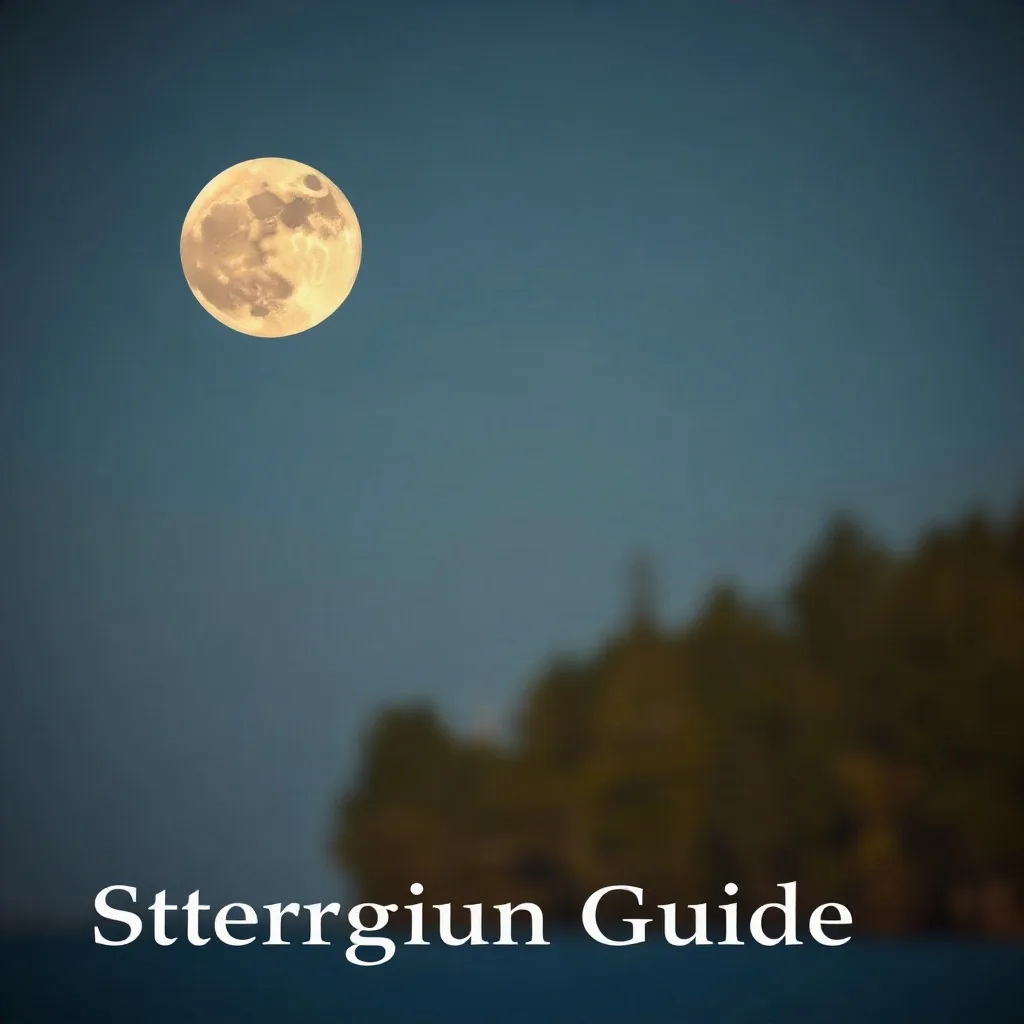
The Full Sturgeon Moon rises in late summer, traditionally marking the full moon of August in the Northern Hemisphere. It carries a name rooted in freshwater fishing traditions and seasonal change, and it offers a reliable opportunity to step outside, observe the night sky, and connect with a natural rhythm that predates modern calendars. This guide explains what the Sturgeon Moon is, where its name comes from, when to look for it, and how to observe it practically and respectfully.
What Is the Full Sturgeon Moon?
The Sturgeon Moon is the traditional name given to the full moon that occurs in August. Astronomically, a full moon happens when the Moon is positioned opposite the Sun as viewed from Earth, with Earth in the middle. The side of the Moon facing our planet is fully illuminated, so the lunar disk appears round and bright. Around the time of the full moon, the Moon generally rises near sunset and sets near sunrise, meaning it is visible for much of the night.
Calling it the Sturgeon Moon does not describe a different type of moon or a rare celestial alignment. It is simply a traditional, seasonally based label. Like other full moon names, it ties a specific lunar phase to a time of year and to observations of the natural world.
Origins and Traditional Names
The name Sturgeon Moon is commonly associated with Algonquin-speaking peoples who lived around the Great Lakes and other large inland waterways in North America. According to traditional seasonal reckoning, August was when lake sturgeon were most readily caught in these waters, making the fish a dependable food source late in the summer. Because of that association, the August full moon became known as the Sturgeon Moon.
It is important to recognize that Indigenous nations across North America used many different names for the same moon, depending on local ecology, language, and cultural practice. Other traditional names for the August full moon include the Green Corn Moon, the Grain Moon, the Black Cherries Moon, and the Ricing Moon. These names reflect ripening crops, harvest preparations, and regional plants rather than a single universal calendar.
Lake sturgeon are ancient fish that can live for decades and grow to considerable size. Historically, they were abundant in the Great Lakes, the Mississippi River basin, and other large river systems. Today, many sturgeon populations are much smaller than they once were because of habitat loss, overfishing in previous centuries, and dams that block migration routes. Observing the Sturgeon Moon can therefore also be a reminder to learn about local watershed conservation and to respect freshwater habitats.
When Does the Sturgeon Moon Occur?
The Sturgeon Moon typically appears in August, but the exact date shifts from year to year. A lunar cycle averages about 29.5 days, while calendar months are longer, so the date of any named full moon drifts by roughly eleven days annually relative to the Gregorian calendar. In some years, the August full moon may fall in late July or early September.
Because the timing depends on your time zone and location, the most reliable way to find the Sturgeon Moon is to consult a local astronomical almanac, a reputable moon-phase website, or a weather service that lists moonrise and moonset times. The full moon itself occurs at a specific instant, but to the naked eye the Moon appears full for roughly a night on either side of that moment.
Astronomical Context
During the Sturgeon Moon, the Moon is in opposition to the Sun. This alignment means sunlight strikes the face of the Moon that is turned toward Earth, creating the bright, round appearance associated with a full moon. The Moon does not produce its own light; it reflects sunlight.
Occasionally, the Sturgeon Moon may coincide with a supermoon, which occurs when a full moon takes place near perigee, the point in the Moon’s elliptical orbit where it is closest to Earth. When this happens, the Moon can appear slightly larger and brighter than average. However, the difference is often subtle to the unaided eye, and not every Sturgeon Moon is a supermoon. If you hear claims that the Sturgeon Moon will look dramatically larger, it is worth checking whether perigee is actually involved.
Atmospheric conditions can also affect how the Moon looks. When the Moon is low on the horizon, its light passes through more of Earth’s atmosphere, which can scatter shorter blue wavelengths and leave the Moon looking orange or reddish. This is the same scattering effect that creates sunrise and sunset colors. The so-called Moon illusion—where the Moon appears larger near the horizon than high in the sky—is a perceptual phenomenon rather than a physical change in size.
How to Observe the Sturgeon Moon
You do not need special equipment to enjoy the Sturgeon Moon. A clear view of the eastern or southeastern horizon around moonrise is usually enough. Because a full moon rises close to sunset, plan to be outside shortly before the Sun goes down. Check your local moonrise time so you know where and when to look.
Choose a location away from bright streetlights if possible. A hilltop, a lakeshore, a field, or even a quiet residential street with unobstructed sky can work well. Bring a blanket or chair, water, and appropriate clothing for evening temperatures. A flashlight with a red filter or red-light mode can help you move around without ruining your night vision.
Binoculars are optional but can reveal details such as the darker lunar maria and the rims of craters. If you want to photograph the Moon, a tripod and a camera with manual controls will help you avoid blur. Including a foreground element—a tree, a building, or a ridgeline—can give a sense of scale and make the image more interesting.
Safety matters after dark. Let someone know where you are going, watch your footing on uneven ground, and be aware of local wildlife. If you are near water, stay a safe distance from the edge unless you are familiar with the area.
The Sturgeon Moon in the Lunar Cycle
The Sturgeon Moon sits at the midpoint of the lunar cycle. Before it, the Moon waxes from new to crescent to first quarter to gibbous. After the full moon, it wanes through gibbous, last quarter, crescent, and back to new. In the traditional sequence of full moons, the Sturgeon Moon generally follows the Buck Moon of July and precedes the Harvest Moon or Hunter’s Moon in autumn, depending on how close those moons fall to the September equinox.
The full moon also marks a time of spring tides. When the Sun, Earth, and Moon are aligned at new and full moon, their gravitational pulls combine to produce higher high tides and lower low tides. This does not mean flooding will occur, but coastal areas may experience a larger-than-average tidal range around the Sturgeon Moon. If you plan to walk on a beach or
Related posts:
 Spring New Moon Reset Ritual: Connecting with Earth’s Energy
 Moon-Inspired Spa Treatments
 Understanding the Wolf Moon
 Lunar Love: How Moon Phases Can Guide Your Dating Life
 The Full Pink Moon Is Coming and It’s Going to Transform Your Energy
 February 2018 Shamanic Predictions
 Your Weekly Horoscope for New Moon Energy
 Understanding Lunar Returns