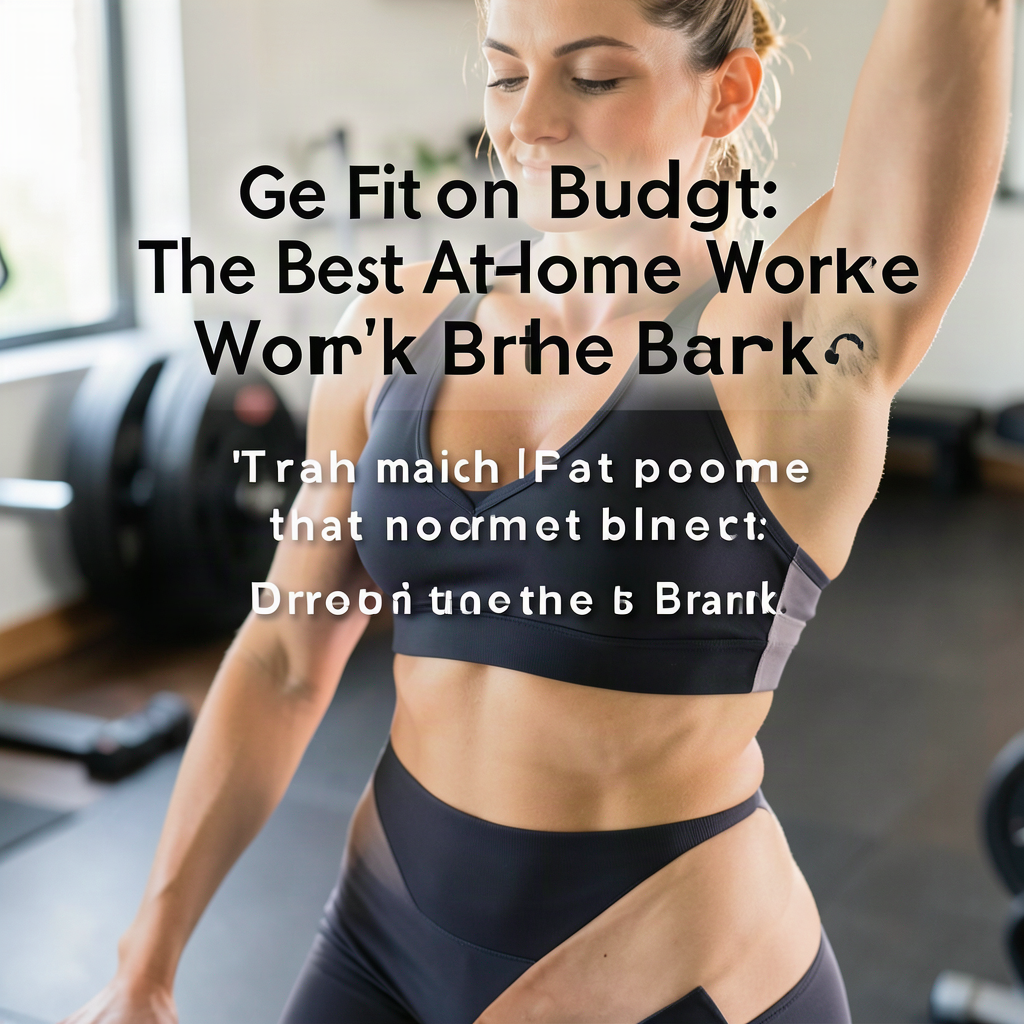
Getting fit does not require a pricey gym membership or a closet full of equipment. With a little planning and the right free resources you can build strength, improve cardiovascular health, and boost mood from the comfort of your living room. This guide walks you through the most effective at‑home workout programs that keep costs low while delivering real results.
Why At‑Home Workouts Make Financial Sense
Gym fees, commuting costs, and class packages add up quickly. A typical monthly membership can range from thirty to one hundred dollars, and specialty classes often cost extra. By training at home you eliminate travel time, avoid peak‑hour crowds, and gain the flexibility to exercise whenever your schedule allows. The money you save can be redirected toward quality nutrition, recovery tools, or a modest equipment upgrade.
Setting Realistic Goals Without a Gym Membership
Before you press play on any video, define what success looks like for you. Are you aiming to lose a few pounds, increase muscular endurance, or simply move more each day? Write down two to three specific, measurable targets such as completing three 30‑minute sessions per week or holding a plank for sixty seconds. Clear goals keep you accountable and make it easier to choose programs that match your current fitness level.
Free and Low‑Cost Video Platforms You Can Trust
Several reputable channels offer full‑length workouts at no charge. YouTube hosts certified trainers who publish structured series for beginners, intermediate, and advanced users. Look for creators who provide progressions, modifications, and clear cueing. Apps like Nike Training Club and FitOn also deliver guided sessions with minimal ads. Many public libraries now stream fitness content through platforms such as Kanopy, giving you access to professional programs without a subscription.
Building a Minimal Equipment Kit for Under Fifty Dollars
You do not need a rack of dumbbells to see progress. A versatile starter kit can include a resistance band set, a pair of adjustable dumbbells (or two water bottles), a yoga mat, and a jump rope. These items typically cost less than fifty dollars combined and cover strength, mobility, and cardio needs. If budget is tighter, bodyweight movements such as squats, push‑ups, and lunges require zero equipment and can be scaled infinitely.
Sample Weekly Schedule for Beginners
Consistency beats intensity when you are starting out. A balanced week might look like this: Monday – full‑body strength circuit (30 minutes), Tuesday – low‑impact cardio such as brisk walking or a dance video (20 minutes), Wednesday – active recovery with yoga or stretching (15 minutes), Thursday – upper‑body focus using bands (25 minutes), Friday – lower‑body focus with bodyweight moves (25 minutes), Saturday – optional fun activity like a hike or bike ride, Sunday – rest. Adjust session length as you grow stronger, but keep the frequency at least three days per week.
Progress Tracking on a Spreadsheet or App
Recording workouts turns effort into data you can review. Create a simple spreadsheet with columns for date, workout type, duration, sets, reps, and perceived exertion. Many free apps such as Strong or JEFIT let you log exercises and visualize trends over weeks. Seeing numbers improve — whether it is more push‑ups, longer planks, or faster mile times — reinforces the habit and highlights areas for adjustment.
Staying Motivated When the Couch Calls
Motivation fluctuates, so build systems that reduce reliance on willpower alone. Schedule workouts like appointments, lay out clothes the night before, and pair exercise with an enjoyable podcast or audiobook. Join an online community or accountability partner who shares similar goals; a quick check‑in can reignite drive on low‑energy days. Celebrate non‑scale victories such as better sleep, increased energy, or clothes fitting differently.
Nutrition on a Budget: Fueling Home Workouts Without Overspending
Eating well does not have to drain your wallet. Start by planning meals around inexpensive protein sources such as eggs, canned tuna, lentils, and bulk chicken thighs. A single dozen eggs provides roughly twelve grams of protein per serving and costs a fraction of a pre‑packaged shake. Canned beans and lentils deliver fiber, iron, and plant‑based protein for under a dollar per pound when bought dry. Buying frozen vegetables in large bags reduces waste and keeps micronutrient intake high without the premium of fresh produce out of season.
Batch cooking on a weekend saves both time and money. Prepare a large pot of chili, a tray of roasted root vegetables, and a pot of brown rice or quinoa. Portion them into reusable containers for grab‑and‑go lunches and post‑workout dinners. This approach eliminates the temptation to order takeout after a late session and ensures you hit a consistent macronutrient split each day.
Hydration is another low‑cost performance lever. Tap water filtered through a pitcher costs pennies per gallon and supports joint lubrication, temperature regulation, and nutrient transport. If you crave flavor, add a slice of lemon, cucumber, or a splash of unsweetened herbal tea instead of pricey electrolyte drinks. For longer sessions exceeding ninety minutes, a homemade electrolyte mix of water, a pinch of sea salt, a teaspoon of honey, and a squeeze of orange provides sodium, potassium, and carbohydrate at a fraction of commercial powders.
Track food costs alongside workout logs to see the real impact. A simple spreadsheet column for grocery receipts paired with your training data reveals patterns — perhaps you notice a dip in strength on weeks when protein intake falls below a target. Adjust shopping lists accordingly, and you’ll close the loop between nutrition and performance without a nutritionist’s fee.
Progressive Overload Strategies Without a Gym: Scaling Bodyweight and Band Training
Progressive overload is the engine of adaptation, and it can be achieved entirely with bodyweight and a single resistance band set. The first lever is volume: add one or two repetitions to each set every week until you hit a ceiling, then add an extra set. For example, if you start with three sets of twelve push‑ups, move to three sets of fourteen, then four sets of twelve, and so on.
The second lever is tempo. Slowing the eccentric phase to three seconds and pausing one second at the bottom increases time under tension without any added load. A tempo push‑up of 3‑1‑1‑0 (three seconds down, one second pause, one second up, no pause at top) can make a set of ten feel like a set of fifteen at normal speed.
Third, manipulate leverage. Elevating feet on a sturdy chair turns a standard push‑up into a decline variation that shifts more load onto the upper chest and shoulders. Conversely, performing push‑ups with hands on an elevated surface reduces difficulty for beginners. The same principle applies to rows: anchor a band at door height, step back to increase tension, or step forward to decrease it.
Fourth, incorporate unilateral work. Single‑leg Romanian deadlifts with a band, pistol‑style squats to a box, and one‑arm band rows expose asymmetries and force each limb to handle a greater share of the load. Start with assisted versions — hold a doorframe for balance during pistol squats — and gradually reduce assistance.
Finally, use density training. Set a timer for ten minutes and perform as many quality rounds of a circuit (e.g., ten band rows, fifteen air squats, ten push‑ups) as possible. Next week aim to beat the round count. This method builds work capacity and metabolic conditioning while still respecting the overload principle.
Designing a Periodized Home Program: From Beginner to Advanced
Periodization structures training into distinct phases so that progress continues long after the novice gains fade. A simple three‑month macrocycle can be broken into four‑week mesocycles: accumulation, intensification, realization, and deload. During accumulation, focus on higher volume, moderate intensity, and movement mastery — think three full‑body sessions per week with twelve to fifteen reps per set.
In the intensification mesocycle, shift to lower volume but higher intensity. Reduce reps to six to eight, increase band tension or leverage difficulty, and add a fourth session if recovery permits. This phase builds maximal strength and neural efficiency. The realization mesocycle tests the gains: perform a benchmark workout — such as max‑rep push‑ups in two minutes, a timed 500‑meter row on a budget rowing machine, or a max‑hold plank — and record the numbers.
The deload week is essential. Cut volume by fifty percent, keep intensity light, and prioritize mobility work, foam rolling, and sleep hygiene. This prevents overuse injuries and resets the nervous system for the next macrocycle. After the deload, start a new accumulation block with slightly more challenging exercise variations — e.g., progress from knee push‑ups to standard push‑ups, or from band rows to assisted pull‑ups using a doorway bar.
Tracking each mesocycle’s key performance indicators (KPIs) — total weekly volume, average RPE, benchmark scores — creates a data trail that informs future programming decisions. If strength stalls, consider adding a fifth session focused on weak points, or insert a specialized block (e.g., six weeks of posterior‑chain emphasis) before returning to the standard cycle.
Injury Prevention and Mobility Routines for Small Spaces
Limited floor space should not limit joint health. A daily five‑minute mobility flow can be performed in a hallway or beside a bed. Begin with cat‑cow on all fours to mobilize the thoracic spine, then transition to thread‑the‑needle for rotational range. Follow with a standing hip‑circle series: lift one knee, open the hip outward, draw a circle, and reverse. Perform ten circles each direction per side.
Incorporate band pull‑aparts and face pulls to counteract the forward‑shoulder posture common in desk workers. Anchor a light band at chest height, pull apart with straight arms, squeeze the shoulder blades together, and hold two seconds. Three sets of fifteen reps take less than two minutes and dramatically improve scapular stability.
For the lower body, the world‑renowned “couch stretch” targets the hip flexors and quads. Kneel with the back foot against a wall or couch, torso upright, and sink forward until a stretch is felt in the front of the hip. Hold thirty seconds each side. Pair this with a standing calf stretch against a wall to maintain ankle dorsiflexion, crucial for squat depth.
Foam rolling or a lacrosse ball can be used on the thoracic spine, glutes, and plantar fascia. Spend thirty seconds per tender spot, breathing deeply. If a foam roller is unavailable, a rolled‑up towel or a frozen water bottle works for the feet. Consistency — daily or at least every training day — yields cumulative resilience that keeps you training uninterrupted.
Leveraging Technology and Community for Accountability
Free apps can replace a personal trainer’s check‑in. Habit‑tracker apps let you set a recurring workout reminder, log completion with a single tap, and visualize streaks. Pair this with a shared spreadsheet in a cloud drive where a friend or family member logs their sessions; the mutual visibility creates a gentle social pressure that outperforms willpower alone.
Video‑call workouts add a live element. Schedule a weekly thirty‑minute session with a partner where you both follow the same routine, offering form cues in real time. Use a laptop or phone propped on a stable surface; no special equipment needed. This also solves the “form uncertainty” problem that solo trainees often face.
Online communities — such as subreddits dedicated to bodyweight fitness, Discord servers for home‑gym enthusiasts, or Facebook groups for budget‑friendly programs — provide program reviews, form checks, and moral support. Post a weekly progress photo or a short video of a challenging set; constructive feedback from peers can spot technique flaws before they become injuries.
Wearable data, even from a basic step counter, adds objective feedback. Set a daily step target (e.g., eight thousand) that complements your structured sessions. If the watch shows a consistent shortfall, add a ten‑minute walk after dinner. Over months, the aggregate data reveals trends — perhaps you’re more active on weeks with a scheduled group call — allowing you to replicate successful patterns.
Adapting Workouts for Special Populations: Seniors, Postpartum, Limited Mobility
Older adults benefit from a focus on balance, power, and bone‑loading movements. Chair‑assisted squats, wall push‑ups, and standing band rows preserve strength while minimizing fall risk. Incorporate a “sit‑to‑stand” test every month: count how many repetitions can be completed in thirty seconds. Progressing this metric correlates strongly with functional independence.
Postpartum individuals should prioritize core re‑education before high‑impact work. Begin with diaphragmatic breathing, pelvic‑floor contractions, and gentle dead‑bug variations. Progress to bird‑dog, side‑plank on knees, and glute bridges with a band. Avoid traditional crunches or heavy loading until a qualified physiotherapist clears diastasis recti.
For those with limited mobility — whether due to injury, arthritis, or neurological conditions — seated or supine circuits maintain cardiovascular stimulus. Seated band chest presses, seated rows, and marching in place while holding a sturdy chair provide a full‑body effect. Use a timer for interval work: thirty seconds work, thirty seconds rest, repeated for ten minutes. Adjust band tension to a level that allows twelve to fifteen controlled reps.
Across all groups, the principle of “minimum effective dose” applies. Start with the smallest volume that elicits a measurable response — perhaps two sessions per week of fifteen minutes — and only add complexity when the current dose feels comfortable for two consecutive weeks. This cautious progression respects tissue healing timelines and builds confidence, turning a daunting fitness journey into a series of achievable milestones.
Frequently Asked Questions
Can I really build muscle with only bodyweight exercises?
Yes. Progressive overload — increasing reps, decreasing rest, or advancing to harder variations — stimulates muscle growth without external weights. Movements like pistol squats, archer push‑ups, and single‑leg glute bridges provide ample resistance for most people.
How do I know if a free video program is safe?
Check the instructor’s credentials, look for clear progression cues, and ensure the video includes warm‑up and cool‑down segments. Avoid channels that promise extreme results in days or encourage painful joint positions.
What if I have limited space at home?
Many effective routines need only a yoga‑mat footprint. Focus on vertical movements (push‑ups, planks) and stationary cardio (high knees, mountain climbers). A doorway pull‑up bar adds pulling strength without consuming floor area.
Is it necessary to buy a heart‑rate monitor?
Not required. The talk test — being able to speak in short sentences but not sing — is a reliable gauge of moderate intensity. If you prefer data, a basic wrist‑based monitor costs under thirty dollars and can be useful for tracking trends.
How long before I see noticeable changes?
Most beginners notice improved energy and mood within two weeks. Visible strength or composition changes typically appear after six to eight weeks of consistent training combined with balanced nutrition.
Related posts:
 Resistance Band Glute Workouts
 Master the Move: Perfect Push-Up Form From Beginner to Boss
 How to Improve Your Push-Up Form for Better Upper Body Strength
 This Full-Body Resistance Band Workout Will Transform Your Home Gym
 Morning Exercise Routine
 Understanding Gym Equipment
 15-Minute No-Equipment HIIT
 Quick Cardio Fix: Tracy Anderson’s 7-Minute Heart-Pumping Workout Video