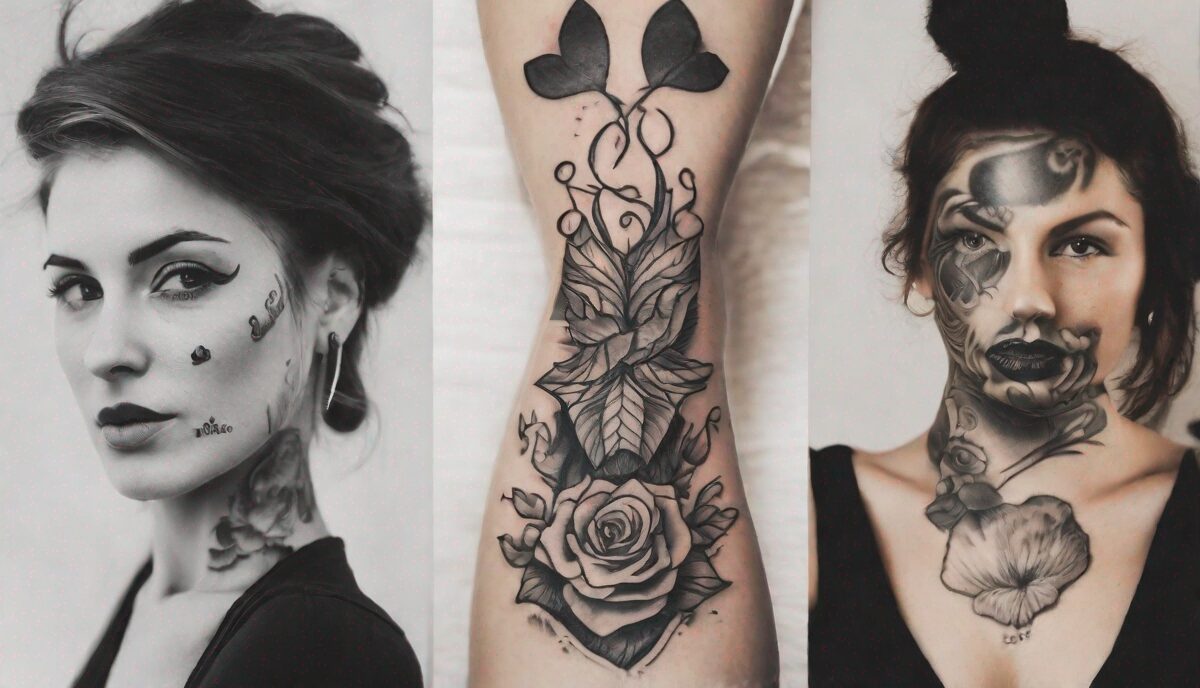
Getting a tattoo can be an incredibly meaningful experience. Tattoos allow us to honor loved ones, celebrate milestones, and express our individuality. When choosing a tattoo artist, take your time and select someone you really connect with.
Do Your Research
Look at portfolios online and visit shops in person. Pay attention to an artist’s style and areas of expertise. Make sure they specialize in the type of tattoo you want.
Ask for Referrals
Friends with great ink are the best source for tattoo artist recommendations. Online reviews can provide insight too.
Schedule a Consultation
Meet with the artist to discuss your vision. Make sure your personalities mesh and you feel comfortable with them. This is key for such a personal experience.
Verify Licensing and Safety Standards
Reputable shops adhere to state health regulations and industry best practices around sanitation and sterilization. Don’t hesitate to ask questions.
Be Clear on Cost
Pricing is usually hourly and depends on factors like size, detail, and color. Get an estimate upfront and ask about deposits or minimums.
Decoding Artistic Specializations and Technical Techniques
Beyond general style, tattoo artists often master specific technical executions that dictate the longevity and aesthetic quality of your piece. When reviewing a portfolio, look past the subject matter and zoom in on the technical “execution.” For instance, if you are looking for Black and Gray Realism, look for smooth transitions between tones (gradients) rather than harsh, scratchy lines. If the shading looks blotchy or “peppered,” that is a sign of poor needle depth or inconsistent shading techniques. Conversely, if you are pursuing Traditional or Neo-Traditional tattoos, examine the line weight. Clean, bold, solid lines that do not blow out (where the ink spreads under the skin) are the hallmark of an artist who understands needle grouping and voltage control.
It is also vital to distinguish between “illustrative” and “photorealistic” styles. Illustrative artists often incorporate elements of graphic design, utilizing negative space and varying line thicknesses to create a stylized image. Photorealistic artists, however, rely on high-contrast lighting and micro-detail to replicate an image. If an artist’s portfolio shows they struggle with perfect circles, straight lines, or consistent lettering, avoid them for geometric or script-heavy work, regardless of how good their portraiture is. Always ask the artist: “Do you prefer working with heavy contrast or soft, ethereal shading?” Their answer will tell you if their natural artistic inclination matches your desired outcome.
Understanding the Anatomy of a Consultation
A consultation is not just a meet-and-greet; it is a professional vetting process. Arrive prepared with a “mood board” that includes three to five images of what you like, and crucially, one or two images of what you do not like. This helps the artist triangulate your aesthetic preferences. During this meeting, observe how the artist handles your feedback. A true professional will be honest about what will translate well onto skin and what will not. For example, if you want a highly detailed piece on a small area (like the inner wrist or ankle), a skilled artist will warn you that fine lines tend to blur over time. If an artist agrees to do a hyper-detailed micro-tattoo that you know will age poorly, they may be prioritizing a quick sale over the long-term integrity of your tattoo.
Ask about their “design process.” Do they draw the stencil directly on your skin with a marker (freehand), or do they use digital software like Procreate to map out the placement? Digital mapping is excellent for ensuring the tattoo flows with your body’s natural musculature. If you are getting a large scale piece, ask the artist to place the stencil and then walk around in front of a mirror for several minutes. Do not rush this step. A tattoo that looks great while you are standing still might look distorted when you move your arm or bend your back. Ensure the placement accounts for your body’s unique topography.
Evaluating Shop Culture and Professional Etiquette
The environment of the studio says as much about the artist as their portfolio does. A professional studio should feel like a medical office, not a clubhouse. While music and conversation are part of the vibe, the tattoo station itself should be pristine. Look for “barrier protection”—plastic covers on spray bottles, cords, armrests, and even the artist’s chair. If you see an artist handling their phone, touching their face, or leaving their station without changing their gloves, this is a major red flag. Sterilization is non-negotiable; if they are not using an autoclave or single-use pre-sterilized needles, leave immediately.
Beyond cleanliness, pay attention to the “studio energy.” Is the shop quiet and focused, or is it chaotic with people walking in and out of the work area? For a long session, you want a space that is relatively calm. Furthermore, notice how the staff treats one another. A shop where artists support and critique each other’s work is usually a sign of a high-growth, high-standard environment. If you feel intimidated, rushed, or condescended to during your initial visit, trust your gut. You will be spending hours in a vulnerable position with this person; you need to feel respected and empowered to speak up if you need a break or feel uncomfortable.
The Reality of Pain, Placement, and Physical Tolerance
Before committing to a specific artist, discuss your pain threshold. Some artists have a “heavy hand,” meaning they work with higher voltage or deeper needle penetration, which can result in a more saturated tattoo but also more trauma to the skin. Other artists have a lighter, faster touch. If you know you have low pain tolerance, be upfront. A good artist will have strategies to help you, such as working in smaller sessions or suggesting placement areas that are less sensitive (like the outer thigh or upper arm) rather than high-nerve areas like the ribs, sternum, or feet.
If you are planning a multi-session project, discuss the “stamina factor.” Can you realistically sit for a six-hour session? If not, ask the artist if they are willing to break the project into smaller, two-hour chunks. While this may increase the overall cost due to setup fees, it ensures the quality of the tattoo remains high because the artist isn’t rushing to finish before you hit your physical limit. Never be afraid to ask for a break to stretch, drink water, or eat a snack. A professional artist expects this and will prefer that you take five minutes to reset rather than fainting or twitching, which can ruin a line.
Navigating Artist Policies and “The Waiting List”
The best artists are often booked months in advance. This is not necessarily a marketing tactic; it is a sign of high demand. However, do not be swayed by a long waiting list alone. A long waiting list combined with a mediocre portfolio is not a sign of quality—it is just a sign of effective social media marketing. When you do find an artist you love, understand their booking policy. Most require a non-refundable deposit to secure your date. This protects the artist’s time in the event of a last-minute cancellation. Read the cancellation policy carefully: how much notice do they require? What happens if you get sick? A reasonable policy allows for one reschedule with notice, while a rigid one might forfeit your deposit for any change.
Additionally, be wary of artists who refuse to show you the final design until the day of the appointment. While many artists prefer to finalize the design closer to the date to keep their creative process fresh, you should have already seen sketches or a general layout. If you show up on the day of your appointment and the design is completely different from what you discussed, you have the right to ask for changes. Never feel pressured to “just get it done” if the design isn’t 100% what you envisioned. A tattoo is a permanent alteration; a week of back-and-forth communication is a small price to pay for a lifetime of satisfaction.
Longevity: How Your Tattoo Will Age
A frequent mistake clients make is focusing only on how the tattoo looks the day it is finished. Ask your artist to show you examples of their work that is “healed and settled”—meaning at least six months to a year old. High-contrast tattoos, like bold traditional work, tend to hold their shape and readability for decades. Intricate, fine-line micro-tattoos with very light shading or “white ink highlights” can disappear or blur significantly within just a few years. An honest, experienced artist will give you a realistic expectation of how your specific design will evolve over time.
Discuss the impact of your lifestyle on the ink. If you are an avid surfer, gardener, or someone who spends significant time in the sun, let your artist know. They may suggest placement in an area that is easier to cover with clothing or recommend specific ink densities that stand up better to environmental factors. They might also advise against certain color palettes (like neon yellows or light pastels) that fade quickly in high-UV environments. By discussing the long-term “life cycle” of the tattoo, you move from being a passive client to a partner in the artistic process, ensuring that your ink remains a point of pride rather than a source of regret a decade down the line.
FAQ
What should I bring to my consultation?
Bring reference images, ideas, and any sketches or drafts to show the artist. This will help you communicate what you want.
How much does a small tattoo usually cost?
Small simple tattoos are usually around $50-150 per hour. Typical small tattoos take 1-2 hours.
Should I tip my tattoo artist?
Tipping 15-25% is customary if you are happy with your tattoo. Tips directly support the artist.
How long do I need to wait between sessions?
For large multi-session tattoos, wait at least 2 weeks between appointments. This allows your skin to heal properly.
How can I best take care of my new tattoo?
Your artist will provide aftercare instructions for cleaning and moisturizing. Avoid sun exposure, soaking in water, and abrasion while healing.
Related posts:
 Understanding Tattoo Pain Levels
 Target Just Dropped Society6 Art Prints and We’re Obsessed
 The Rise of At-Home Stick and Poke Tattoos
 The Ultimate Guide to Using Highlighter Like a Pro Makeup Artist
 Tattly’s Essential Oil-Scented Temporary Tattoos
 Intuitive Tattoos with Justine Serebrin
 Understanding Made-to-Fade Tattoos
 Top yogis show off their yoga-inspired ink