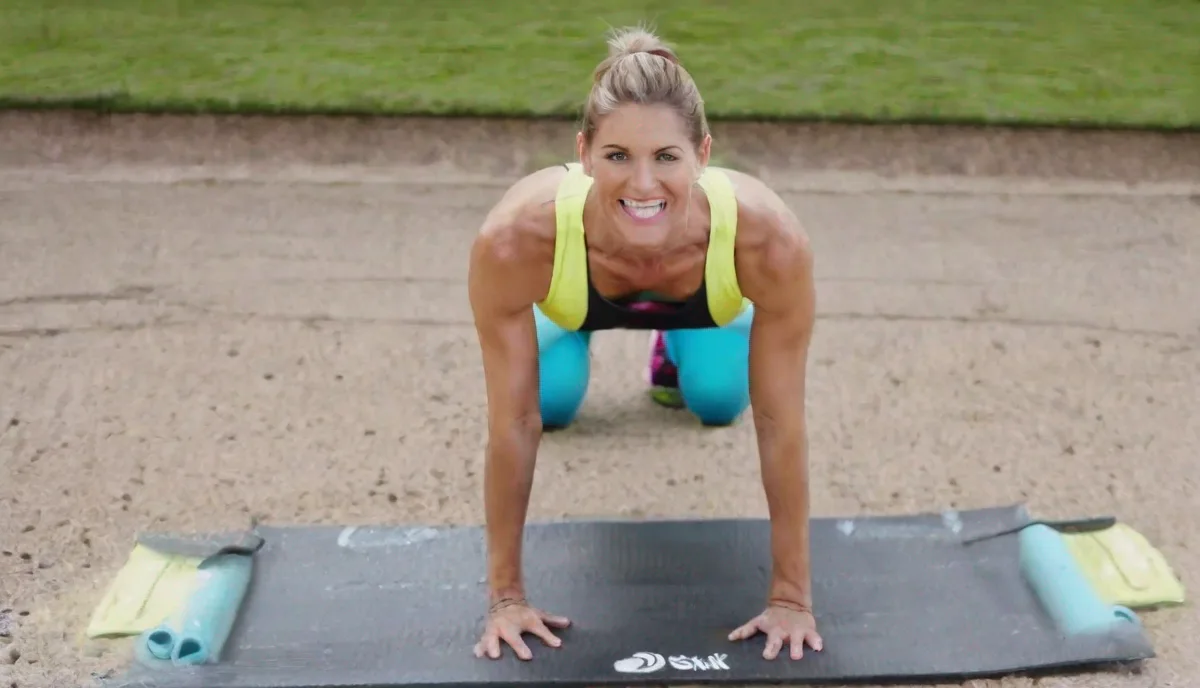
The Benefits of Sandbell Training
Sandbells provide a unique form of strength training using the natural instability of sand to challenge your muscles in new ways. Working out with sandbells tones your core, improves coordination, and builds functional fitness.
Key takeaways
- Prioritize proper form by keeping your core tight and using your legs for lifts to prevent injury.
- Begin with lighter weights between 10 and 20 pounds to allow stabilizing muscles to adapt to the shifting sand.
- Perform controlled movements to safely build functional strength, coordination, and muscular endurance.
- Adapt the intensity by adjusting weights and repetition ranges to suit your specific fitness goals.
Proper Sandbell Training Technique
When starting sandbell training, focus first on learning proper form to avoid injury. Keep your core tight, move slowly, and use your legs to lift the bells up, not your back. Start with lighter weights to allow your stabilizing muscles to adapt.
Sample Sandbell Workout
- Goblet squats – 3 sets of 10
- Single arm swing – 3 sets of 12 each side
- Overhead press – 3 sets of 8
- Bent over row – 3 sets of 10
- Front raise – 3 sets of 12
Making Sandbell Training Accessible
The instability of sandbells allows people with injuries or mobility limitations to still build strength safely. Focus on slow, controlled motions and lighter weights to start. Sandbell training can benefit people of all ages and abilities when done properly.
Advanced Grip Strength and Forearm Conditioning
One of the most overlooked advantages of the Sandbell is its ability to serve as an elite tool for grip development. Unlike a rigid barbell or kettlebell, the Sandbell requires a ‘crush’ and ‘pinch’ grip simultaneously. Because the weight shifts, your fingers and forearms must constantly adjust to the changing center of gravity. To maximize this, practice the Sandbell Pinch Carry: place two Sandbells stacked on top of each other and squeeze them together using only your fingers and thumb, then walk for distance. This forces the intrinsic muscles of the hand to fire in ways that a standard dumbbell cannot replicate, leading to significant improvements in forearm vascularity and grip endurance useful for rock climbing, combat sports, or heavy deadlifting.
Rotational Power and Dynamic Core Loading
While standard crunches isolate the rectus abdominis, Sandbells excel at training the obliques and transverse abdominis through rotational force. The Sandbell Rotational Slam is the gold standard here. Stand with feet hip-width apart, holding the Sandbell at chest height. Pivot on your back foot as you rotate your torso and slam the bell diagonally across your body to the floor. The key is to catch the bell on the rebound or reset quickly. This ‘anti-rotation’ and ‘rotational’ interplay is vital for athletic performance, as it teaches your core to transfer force from the lower body to the upper body, mimicking movements like swinging a bat, throwing a punch, or clearing a heavy object from a workspace.
Metabolic Conditioning Through Sandbell Complexes
If you are looking to elevate your heart rate while simultaneously building lean muscle, incorporate Sandbell complexes. A complex involves performing a series of exercises back-to-back without putting the Sandbell down. For example, transition immediately from a Sandbell Clean to a Front Squat, then into a Push Press, followed by a Reverse Lunge. By keeping the bell in motion for 60 to 90 seconds, you create a massive metabolic demand. This style of training increases Excess Post-exercise Oxygen Consumption (EPOC), meaning your body continues to burn calories at an accelerated rate long after you have finished your final set. Keep your transitions fluid; the goal is to maintain tension throughout the entire chain of movement.
Stability Training for Joint Longevity
The shifting sand inside the bag acts as a ‘live’ weight. When you perform a Sandbell Overhead Carry—holding the bell high above your head while walking—the sand constantly ripples, forcing your rotator cuff and scapular stabilizers to work overtime to keep the weight centered. This is an excellent corrective exercise for those who spend hours at a desk. By challenging your joints to stabilize an unpredictable load, you strengthen the small, supporting tissues that often get neglected in traditional bodybuilding. Always ensure your ribs are tucked and your core is braced during these carries to prevent excessive arching of the lower back.
Integrating Sandbells into HIIT Intervals
Sandbells are safer for high-intensity interval training (HIIT) than iron plates because they won’t damage the floor and are significantly more forgiving if dropped on the foot. Design an interval circuit using a 40/20 split: 40 seconds of explosive movement followed by 20 seconds of rest. A highly effective protocol is to alternate between a Sandbell Burpee (placing your hands on the bell, jumping back, then performing a row before jumping up) and a Sandbell Russian Twist. This combination targets the posterior chain, the anterior core, and the cardiovascular system. Because the Sandbell is soft, it allows for a more natural “cushion” during push-up variations, which can reduce wrist strain for athletes who find standard floor push-ups painful.
Mobility and Flow Transitions
Beyond strength, Sandbells serve as excellent implements for dynamic mobility. Because they are soft, they can be used to assist in deep stretching. Perform a Sandbell-Assisted Deep Squat: hold the bell in a goblet position and use the weight to help pull your torso upright while you sink into a deep squat. Use the bell to guide your range of motion during Lateral Lunges by sliding the bell along the floor between your feet. This ‘sliding’ friction adds a layer of resistance to your mobility work, turning a simple stretch into a strength-building movement. Focus on the eccentric (lowering) phase of these movements to increase flexibility while reinforcing structural integrity in the hips and ankles.
FAQ
What are the benefits of sandbell training?
Sandbell training works your core muscles harder for better balance and coordination. The instability challenges you unlike regular dumbbells, leading to functional fitness gains.
How heavy should I go when starting with sandbells?
Start very light, even just 10-20 lbs to learn proper lifting form. Add weight slowly as your muscles adapt to stabilize the swinging sand inside the bells during each movement.
Can I build muscle mass effectively with sandbells?
Yes, but you’ll need to use heavier weights over time and focus on hypertrophy and strength building sets. High rep sets with sandbells are great for muscular endurance.
Is sandbell training safe if I have injuries or mobility issues?
Sandbells are very joint-friendly due to the instability working your stabilizer muscles more. Go slowly and focus on form. The swinging weight of sand provides a gentle workout you can modify to your comfort level.
What muscles do sandbell workouts target most?
Your core stabilizer muscles have to work hard during sandbell training. But they also allow a full body functional workout depending on the exercises you choose to perform.
Related posts:
 Get Stronger with Charlee Atkins
 PHA Bodyweight Workout: Efficient Fitness Anywhere, Anytime
 Understanding Gym Equipment
 How to Change Your Fitness Routine to Avoid Plateau
 The Volcanic Sand Bath Experience That’s Worth Traveling For
 Chelsea Handler’s Ab Workout
 This Full-Body Resistance Band Workout Will Transform Your Home Gym
 Savannah Guthrie’s Olympic Tennis Workout