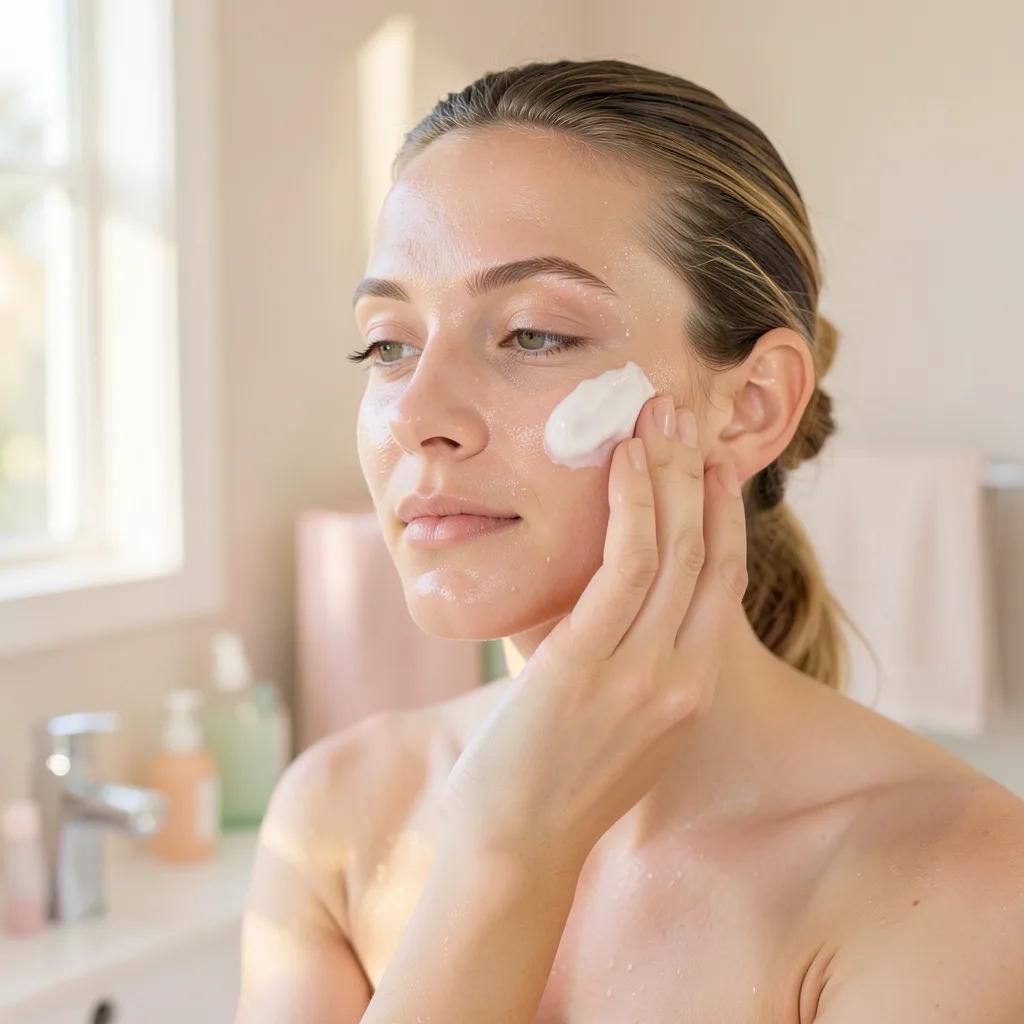
For years, the word “retinol” has been synonymous with two very different things: incredible skin transformation and intense, often painful irritation. It is the gold standard of skincare, praised by dermatologists for its ability to accelerate cell turnover, diminish the appearance of fine lines, and clear up stubborn texture. Yet, for those with sensitive skin or those who prefer a “slow and steady” approach to beauty, the traditional retinol experience—complete with peeling, redness, and the dreaded “purging” phase—has often felt like too high a price to pay. Enter Glossier, a brand built on the philosophy of “Skin First, Makeup Second.” With the launch of their Universal Pro-Retinol, the brand aims to bridge the gap between efficacy and gentleness, offering a night treatment designed for everyone, regardless of their previous experience with retinoids.
Key takeaways
- Uses 0.5% Retinyl Sunflowerate for a slow-release, non-irritating alternative to traditional, harsh retinol treatments.
- Includes Mondo Grass Root and glycerin to hydrate and protect the skin barrier against moisture loss during use.
- Apply a pea-sized amount to clean, dry skin at night, starting two to three times weekly to build tolerance.
- Avoid using alongside Vitamin C or chemical exfoliants like AHAs and BHAs to prevent over-exfoliation and stinging.
- Expect visible improvements in skin texture, fine lines, and pore clarity after eight to twelve weeks of consistent use.
The Glossier Universal Pro-Retinol isn’t just another derivative in a crowded market; it represents a thoughtful approach to vitamin A. By utilizing a unique complex that balances the power of a retinoid with the soothing properties of plant-based extracts, Glossier has created a product that invites the “retinol-curious” into the fold without the fear of compromising their skin barrier. In this comprehensive guide, we will explore the science behind this formulation, how to integrate it into your existing routine, and what you can realistically expect from this gentle powerhouse.
Understanding the Formula: What is Pro-Retinol?
To understand why Glossier’s formula is different, we first need to look at the specific type of retinoid they’ve chosen: 0.5% Retinyl Sunflowerate. Most over-the-counter retinol products use pure retinol or retinyl palmitate. While pure retinol is effective, it is notoriously unstable and can be highly irritating because it converts into retinoic acid relatively quickly once it hits the skin. Retinyl Sunflowerate, on the other hand, is an innovative hybrid. It is composed of retinol attached to fatty acids derived from sunflower oil.
This molecular structure is significant for two reasons. First, the sunflower fatty acids act as a delivery system that allows the retinol to penetrate the skin more gradually. Instead of a sudden “hit” of vitamin A that shocks the system, the skin receives a sustained release. Second, the fatty acids themselves are inherently nourishing. They help to replenish the skin’s lipid barrier even as the retinol works to resurface it. This dual-action approach is what allows Glossier to label the product as “Universal.” It is potent enough to show results but buffered enough to minimize the side effects that typically drive people away from retinoids.
In addition to the Pro-Retinol complex, the formula is creamy and humectant-rich. Unlike many retinol serums that feel thin or medicinal, this has the texture of a lightweight night cream. It’s designed to feel like a treat rather than a treatment, aligning with the brand’s focus on a pleasurable user experience. By choosing an ester (a derivative) rather than a pure acid or a high-percentage alcohol-based serum, Glossier prioritizes the long-term health of the stratum corneum—the outermost layer of your skin.
The Science of Gentle Resurfacing
How exactly does a “gentle” product still manage to resurface the skin? The magic lies in the biological process of cellular turnover. Our skin naturally sheds dead cells and replaces them with new ones, but this process slows down significantly as we age, often starting in our mid-20s. This slowdown leads to a dull complexion, enlarged pores, and the formation of fine lines. Retinoids work by communicating with skin cells, encouraging them to behave like younger, healthier cells.
Glossier’s Universal Pro-Retinol facilitates this communication without the inflammatory response often associated with higher-strength prescriptions like Tretinoin. Because the Retinyl Sunflowerate is broken down more slowly by the skin’s enzymes, the “message” to renew is delivered consistently over several hours. This prevents the “burn” that occurs when the skin is overwhelmed by too much active ingredient at once. Over time, this consistent renewal helps to thicken the deeper layers of the skin (the dermis) while smoothing out the top layer (the epidermis).
Furthermore, the inclusion of Stevia Leaf Extract in the formula serves a specific purpose. Stevia is often used in natural skincare as a retinol-alternative or booster because it helps to smooth the skin’s surface and minimize the look of fine lines through a different biological pathway. By combining a mild retinoid with a botanical smoother, Glossier maximizes the visible results while keeping the actual concentration of vitamin A at a level that is tolerable for the vast majority of users.
Key Ingredients That Support Your Skin Barrier
A common mistake in skincare is focusing solely on the “active” ingredient while ignoring the supporting cast. Glossier avoided this pitfall by packing the Universal Pro-Retinol with ingredients that proactively defend the skin barrier. When you use a resurfacing agent, your skin’s natural moisture barrier is temporarily more vulnerable. To counter this, Glossier included a blend of Mondo Grass Root Extract and Glycerin.
Mondo Grass Root is a powerhouse for hydration. It is known for its ability to help the skin retain moisture and strengthen its natural defense mechanisms. In a retinol product, this is crucial because it helps prevent the trans-epidermal water loss (TEWL) that leads to the “tight,” itchy feeling many people experience when starting a new treatment. Glycerin, a classic humectant, works alongside it to pull moisture from the air into the skin, ensuring that the complexion remains plump and dewy.
The base of the product also features skin-softening emollients that give it a “cushioning” effect. This is particularly beneficial for those who have tried retinol in the past and found it too drying. By housing the Pro-Retinol in a moisturizing base, Glossier essentially builds the “sandwich method” (applying moisturizer before and after retinol) directly into the product itself. This thoughtful formulation ensures that the skin is being nourished at the exact moment it is being treated.
Who Is This Product For?
The beauty of the Universal Pro-Retinol is its broad appeal, but it is especially well-suited for specific groups of people. First and foremost, it is the ideal “starter retinol.” If you have never used a retinoid before and are nervous about how your skin will react, this is a safe and effective place to begin. It allows your skin to build up a tolerance (a process called retinization) without the physical discomfort of more aggressive formulas.
Secondly, it is a fantastic option for individuals with sensitive or reactive skin. People with conditions like mild rosacea or those who simply flush easily often find that standard 1% retinol serums are too harsh. Because Glossier’s formula is fragrance-free and contains soothing botanicals, it offers a way for sensitive types to enjoy the anti-aging and texture-refining benefits of vitamin A without the subsequent flare-ups.
Finally, this product is for the “minimalist” who wants a streamlined routine. Because it is so moisturizing, many users find they don’t need to layer as many products at night. If you’re looking for a single step that addresses dark spots, fine lines, and uneven texture while still keeping your skin hydrated, this fits the bill perfectly. It’s about achieving results through consistency rather than intensity, making it a staple for those who prefer a low-maintenance approach to high-performance skincare.
How to Integrate Glossier Pro-Retinol into Your Routine
Even though this formula is gentle, it is still a potent treatment that requires a strategic approach. To get the best results, you should always apply it at night, as retinoids are sensitive to sunlight and can break down if exposed to UV rays. Start with a clean, dry face. Using a gentle cleanser like Glossier’s Milky Jelly Cleanser ensures that your skin is clean without being stripped of its natural oils. It is important to wait until your skin is completely dry before applying the Pro-Retinol; applying retinoids to damp skin can actually increase the rate of absorption too much, which might lead to irritation.
A pea-sized amount is all you need for your entire face. Dot it on your forehead, cheeks, and chin, then gently massage it outward, avoiding the delicate skin directly around the eyes and the corners of the mouth, where the skin is thinnest. If you find your skin is particularly dry, you can follow up with a rich moisturizer like After Baume to lock in the treatment and provide an extra layer of protection.
Frequency is key. For the first two weeks, try using the product only two or three nights a week. This gives your skin time to adjust. If you don’t experience any redness or peeling, you can gradually increase usage to every other night, and eventually every night. Listen to your skin; if it feels tight or looks slightly red, take a night off. Skincare is a marathon, not a sprint, and your skin will thank you for being patient.
The Molecular Hierarchy: Why Retinyl Sunflowerate is a Game Changer
To truly appreciate the innovation behind Glossier’s choice of active, one must understand the “retinoid ladder.” In the world of Vitamin A, there is a hierarchy of potency and irritation. At the top sits Retinoic Acid (Tretinoin), a prescription-strength powerhouse that requires no conversion by the skin; it goes straight to work. Below that are Retinaldehyde, then Retinol, and finally, Retinyl Esters. Usually, Retinyl Esters are considered the weakest link because they require three conversion steps to become Retinoic Acid. However, Retinyl Sunflowerate is not a traditional ester. It is a bio-engineered hybrid that bridges the gap between the stability of an ester and the efficacy of pure retinol.
When you apply a standard 1% retinol, your skin’s enzymes must work quickly to convert it. This rapid conversion often leads to a localized inflammatory response, which manifests as the redness and peeling many fear. Retinyl Sunflowerate, however, uses the sunflower fatty acids as a “slow-release” anchor. Because the molecule is larger and more complex, the skin’s enzymes break it down at a more measured pace. This doesn’t mean it is less effective; rather, it means the “biological load” on the skin is distributed over a longer period. This makes it an ideal choice for those who have previously failed with traditional retinol due to “retinoid dermatitis,” a condition where the skin barrier becomes chronically inflamed from over-processing.
Moreover, the inclusion of sunflower fatty acids provides a secondary benefit that is often overlooked. These fatty acids are rich in linoleic acid, an essential component of the skin’s natural sebum. People with acne-prone or textured skin often have lower levels of linoleic acid in their sebum, which leads to thicker, stickier oil that clogs pores. By delivering Vitamin A alongside these specific fatty acids, Glossier is not just resurfacing the skin; it is actively improving the quality of the skin’s natural oils. This makes the Universal Pro-Retinol a dual-threat for those struggling with adult acne and early signs of aging simultaneously.
Synergistic Pairings: Maximizing Efficacy with Your Current Routine
While the Universal Pro-Retinol is a powerhouse on its own, its performance can be significantly enhanced—or hindered—by the products you layer with it. To maximize the results of the Retinyl Sunflowerate, it is wise to pair it with Niacinamide (Vitamin B3). Niacinamide is a stabilizer for the skin barrier; it increases the production of ceramides, which are the “glue” that holds your skin cells together. When used in conjunction with a retinoid, Niacinamide can mitigate potential irritation before it even starts. If you are using Glossier’s Super Pure serum, apply it in the evening before your Pro-Retinol to create a resilient, hydrated base.
Conversely, there are certain “clashes” you must avoid to prevent compromising your skin’s health. The most common mistake is the simultaneous use of Vitamin C (L-Ascorbic Acid) and Retinol. Vitamin C thrives in a low-pH, acidic environment, while the enzymes required to convert Pro-Retinol function best at a more neutral pH. Using them together can render both products less effective and cause unnecessary stinging. The gold standard for any retinoid user is to use Vitamin C in the morning to fight free radicals and the Universal Pro-Retinol at night to repair and renew. This “divide and conquer” strategy ensures your skin receives the full benefits of both actives without the chemical conflict.
Another critical consideration is the use of chemical exfoliants like AHAs (Alpha Hydroxy Acids) or BHAs (Beta Hydroxy Acids). While it might be tempting to use Glossier’s Solution alongside the Pro-Retinol to “speed up” the clearing of dark spots, this can be a recipe for disaster for the uninitiated. Both products work to increase cell turnover. Using them on the same night can lead to over-exfoliation, resulting in a shiny, “plastic” look to the skin that indicates a damaged barrier. If you must use both, adopt a “skin cycling” approach: use your chemical exfoliant one night, your Pro-Retinol the next, followed by two nights of recovery with only hydrating, barrier-repairing creams like After Baume.
Managing Expectations: What Results to Expect and When
In a world of instant gratification, it’s important to remember that retinoids take time to work. You won’t wake up the next morning with entirely new skin. However, with consistent use, the changes are profound. In the first 2 to 4 weeks, you might notice a subtle “glow” as dead skin cells begin to shed more efficiently. Your skin may feel smoother to the touch, and makeup might apply more evenly.
The real transformation typically happens around the 8 to 12-week mark. This is the amount of time it takes for a full cycle of new collagen production and deep cellular turnover to become visible on the surface. At this stage, users often report a visible reduction in the appearance of fine lines, especially around the forehead and mouth. Pores may appear smaller because they are no longer clogged with debris, and post-inflammatory hyperpigmentation (the dark marks left behind by old breakouts) will begin to fade.
It is also important to note what
Related posts:
 Retinol for Eczema
 RoC’s Retinol Capsules are a Game-Changer for Smooth, Youthful Skin
 The Best Toners for Acne-Prone Skin That Won’t Strip Your Face
 Jan Marini Age Intervention Guide
 Proper Order of Skincare Application
 Debunking Common Retinol Myths for Better Skincare Results
 Glossier You: Complete Review
 Why Your Boyfriend Secretly Loves Your Glossier Shopping Trips