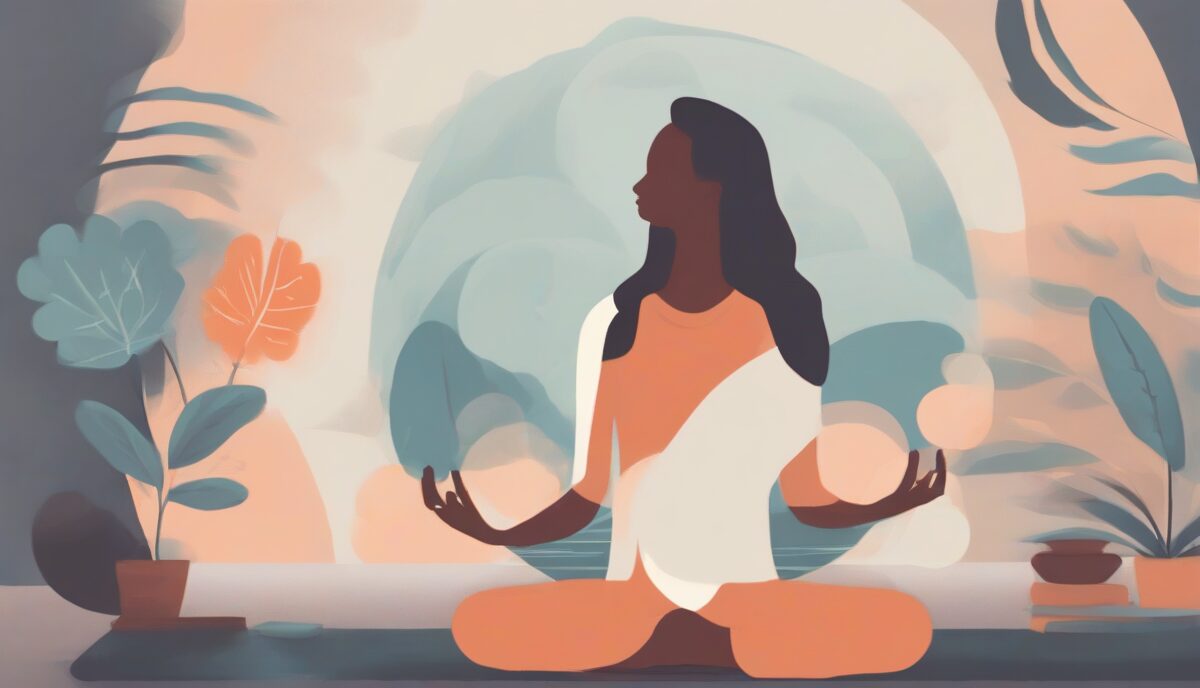
In today’s fast-paced world, finding time to meditate can be challenging. However, taking just five minutes out of your day to practice short meditations can significantly improve your mental well-being. Below, we have compiled 17 effective short meditations that you can easily fit into your busy schedule.
1. Mindful Breathing
Focus on your breath, taking slow, deep inhales and exhales. This can help calm your mind and reduce stress.
2. Body Scan
Starting from your toes and moving up to your head, bring awareness to each part of your body. Notice any tension and consciously relax those areas.
3. Gratitude Meditation
Spend a few minutes thinking about the things you are grateful for. This practice can boost your mood and overall positivity.
4. Visualization
Imagine a peaceful place where you feel safe and relaxed. Visualize yourself in this place, soaking in the tranquility.
5. Mantra Meditation
Choose a word or phrase that you find soothing. Repeat it silently to yourself, focusing on the sound and meaning.
6. Loving-Kindness Meditation
Send thoughts of love and kindness to yourself and others. Start with yourself, then extend these feelings to loved ones, acquaintances, and even people you find challenging.
7. Walking Meditation
Take a slow, mindful walk. Pay attention to each step, the sensation of your feet touching the ground, and your surroundings.
8. Progressive Muscle Relaxation
Tense and then relax each muscle group in your body, starting from your toes and working up to your head.
9. Counting Breaths
Count your breaths up to ten, then start over. This can help you stay focused and present.
10. Sound Meditation
Focus on the sounds around you, whether it’s the hum of a fan, birds chirping, or distant traffic. Let the sounds wash over you without judgment.
11. Candle Gazing
Light a candle and gaze at the flame. This practice can help improve concentration and bring a sense of calm.
12. Affirmation Meditation
Repeat positive affirmations to yourself, such as “I am calm,” “I am strong,” or “I am at peace.”
13. Mindful Eating
Take a small piece of food and eat it slowly, savoring each bite. Pay attention to the taste, texture, and aroma.
14. Five Senses Meditation
Focus on what you can see, hear, smell, taste, and touch. This practice can help ground you in the present moment.
15. Heartbeat Meditation
Place your hand over your heart and feel your heartbeat. Focus on its rhythm and let it guide your meditation.
16. Sky Gazing
Look up at the sky and observe the clouds, stars, or the vast blue expanse. This can bring a sense of peace and perspective.
17. One-Minute Meditation
Set a timer for one minute and focus solely on your breathing or a specific sensation in your body. This mini-meditation can be done multiple times a day.
Stealth Meditation: Integrating Mindfulness into the High-Pressure Workplace
The modern office environment—whether in a corporate skyscraper or a home office—is often the primary source of the very stress we seek to alleviate. However, it is also the most fertile ground for five-minute meditations because of the frequent “micro-transitions” that occur throughout the workday. One of the most effective stealth techniques is addressing “Email Apnea,” a term coined to describe the unconscious habit of holding one’s breath or breathing shallowly while checking messages. To counter this, you can implement a five-minute “Inbox Awareness” session. Before opening your email client, sit back and feel the weight of your body against the chair. As you read through your messages, keep one part of your awareness on the sensation of air entering and leaving your nostrils. If you notice your breath hitching as you read a stressful request, consciously lengthen the exhale. This prevents the sympathetic nervous system from locking into a fight-or-flight state before your day has even truly begun.
Another workplace-specific technique is “The Threshold Meditation.” Every time you walk through a doorway—whether it’s to a meeting room, the breakroom, or your own office—use that physical transition as a trigger to take three conscious breaths. In a five-minute window between meetings, instead of scrolling through your phone, try “Keyboard Mindfulness.” Place your hands lightly on your desk or keyboard and feel the texture of the keys without pressing them. Notice the temperature of the plastic or metal and the subtle vibrations of the room. This tactile grounding pulls your focus out of the abstract anxieties of future deadlines and back into the physical reality of the present moment. For those in open-plan offices where closing your eyes might feel awkward, “Soft Focus Meditation” is ideal. Keep your eyes open but relax your gaze, allowing your peripheral vision to expand. This physiological shift signals to the brain that there is no immediate threat, effectively lowering cortisol levels even in a noisy environment.
The Physiology of 300 Seconds: Why Five Minutes Actually Changes Your Brain
It is a common misconception that meditation requires hours of silence to be effective. From a neurological perspective, five minutes is more than enough time to trigger the “Relaxation Response,” a term pioneered by Dr. Herbert Benson of Harvard Medical School. When you engage in a focused five-minute practice, you are actively stimulating the Vagus nerve, the longest nerve of the autonomic nervous system. This stimulation acts as a natural brake on the heart rate and blood pressure. During these 300 seconds, the amygdala—the brain’s alarm center—begins to quiet down, while the prefrontal cortex, responsible for executive function and emotional regulation, becomes more active. This is why you often feel a sense of clarity and “reset” after even a very brief session; you have literally shifted your brain chemistry from a state of reactive stress to one of proactive calm.
Furthermore, the concept of neuroplasticity suggests that the frequency of meditation is often more important than the duration. Consistent five-minute bursts create “neural pathways of least resistance.” If you meditate for five minutes every day at 2:00 PM, your brain begins to anticipate this shift, making it easier to enter a meditative state over time. This is particularly useful for individuals dealing with chronic stress, where the nervous system has become “hyper-vigilant.” By introducing regular five-minute intervals of peace, you are teaching your nervous system that it is safe to downregulate. This cumulative effect means that the benefits of a five-minute session often linger for hours afterward, improving your resilience against subsequent stressors that occur later in the day.
Advanced Breathwork: Targeted Patterns for Rapid Mental Shifts
While basic mindful breathing is a foundational tool, specific rhythmic patterns can be used within a five-minute window to achieve targeted mental states. One of the most powerful is the “Physiological Sigh,” a pattern naturally used by mammals to offload carbon dioxide rapidly. To practice this for five minutes, take a deep inhale through the nose, followed by a second, shorter “sharp” inhale to fully inflate the alveoli in the lungs, then release a long, slow exhale through the mouth. This specific pattern is one of the fastest ways to lower your heart rate in real-time. It is particularly effective when you feel a sudden spike in anxiety or frustration, as it forces the diaphragm to move in a way that signals immediate safety to the brainstem.
For those seeking mental sharpness and focus rather than just relaxation, “Box Breathing” (also known as Square Breathing) is the gold standard, frequently used by elite athletes and special operations teams. Imagine a square: inhale for a count of four, hold for four, exhale for four, and hold the empty breath for four. Repeating this cycle for five minutes creates a state of “calm alertness.” It balances the autonomic nervous system, providing the benefits of relaxation without the lethargy that can sometimes follow deeper meditative states. Alternatively, if you are struggling with heat—either environmental or the “heat” of anger—try “Sitali Breath.” Curl your tongue into a tube (or purse your lips if you cannot curl your tongue) and inhale through the opening. The air is cooled by the moisture on your tongue, providing a literal and metaphorical cooling effect on your system. These structured techniques provide a “job” for the mind to do, making them excellent for beginners who find silent meditation too daunting.
Transit Zen: Turning Commutes and Waiting Lines into Sanctuary
We often view travel time or time spent waiting in line as “dead time”—something to be endured or filled with digital distraction. However, these moments are perfect opportunities for five-minute meditations that require no special environment. If you are on a train or bus, try “Audio-Spatial Awareness.” Instead of blocking out the noise with headphones, listen to the layer of sounds furthest away from you. Perhaps it’s the hum of the engine or the distant city traffic. Then, pull your awareness to the sounds closest to you—your own breathing or the rustle of a neighbor’s newspaper. Finally, try to hear all the sounds simultaneously as a single “soundscape,” without labeling them as good or bad. This practice expands your awareness and prevents the feeling of being “trapped” or claustrophobic in crowded spaces.
If you are standing in a long queue, use “Gravity Grounding.” Instead of checking your watch or phone, bring your entire focus to the soles of your feet. Notice how your weight shifts almost imperceptibly from left to right, or from heels to toes. Imagine roots extending from your feet deep into the earth, anchoring you. This shifts your center of gravity and immediately calms the restless energy that usually accompanies waiting. For those who commute by car, “Red Light Mindfulness” is a transformative habit. Every time you hit a red light, take that as a signal to relax your jaw, drop your shoulders away from your ears, and take two deep belly breaths. Rather than seeing the red light as an obstacle to your destination, view it as a mandatory five-second or thirty-second meditation retreat. Over a long commute, these micro-sessions prevent the buildup of “road rage” and ensure you arrive at your destination in a much more composed state.
Somatic Grounding for Acute Stress and Sensory Overload
When stress becomes overwhelming, the mind often becomes a whirlwind of “what-ifs,” making traditional thought-based meditation difficult. In these moments, somatic (body-based) grounding is essential. A highly effective five-minute technique is the “Temperature Reset.” If you feel a panic attack or extreme stress rising, splash ice-cold water on your face or hold an ice cube in your hand for a few minutes. The intense sensory input from the cold forces the mind to snap back into the present moment and triggers the “mammalian dive reflex,” which naturally slows the heart rate. Once the initial shock subsides, spend the remaining minutes of your five-minute block focusing on the sensation of the skin warming back up. This transition from cold to warm is deeply soothing to the nervous system.
Another somatic approach is “Proprioceptive Awareness.” This involves deeply feeling the boundaries of your physical self. Clench your fists as tight as you can for five seconds, then release them suddenly, feeling the blood rush back into your fingers. Repeat this with your toes, your glutes, and your shoulders. This “pulsing” of tension and release helps to discharge pent-up sympathetic energy. It is especially useful for people who feel “jittery” or “wired but tired.” By consciously engaging the muscles and then letting go, you are providing a physical outlet for the stress hormones circulating in your system. This practice can be done sitting or standing and is virtually invisible to observers, making it another excellent tool for public or professional settings where you need an immediate reset.
The Art of Habit Stacking: Ensuring Your 5-Minute Practice Sticks
The greatest challenge with short meditations isn’t the difficulty of the techniques, but the consistency of the practice. To overcome this, use the psychological principle of “Habit Stacking,” popularized by habit researchers. The core idea is to identify a current habit you do every day and then stack your new five-minute meditation on top of it. For example, “After I pour my first cup of coffee, I will sit for five minutes of mindful breathing.” The coffee becomes the “anchor” or the trigger for the meditation. Because the coffee-pouring is already an established neurological pathway, the meditation becomes much easier to integrate than if you tried to do it at a random time each day.
To maximize the success of habit stacking, it is helpful to create a “meditation environment” that requires zero setup. If you have to move cushions or find a quiet room, you are less likely to do it. Instead, designate a “meditation chair” or even a specific corner of your sofa. If you meditate at your desk, perhaps a specific small object—like a smooth stone or a small plant—can serve as your visual cue. Another effective stack is the “Digital Cleanup.” Before you close your laptop for the day, commit to a five-minute “Closing Ritual” meditation. This marks a clear boundary between “work mode” and “home mode,” preventing work stress from bleeding into your evening. By linking the meditation to the physical act of closing the computer, you create a powerful psychological transition that helps you truly decompress.
ADHD-Friendly Variations: Meditation for the Restless Mind
For many individuals, especially those with ADHD or naturally high energy, the instruction to “sit still and clear your mind” can actually increase anxiety. For these individuals, five-minute meditations should be active and sensory-rich. “Fidget Meditation” is a legitimate and effective technique. Use a worry stone, a piece of fabric with an interesting texture, or even a specialized fidget spinner. Set a timer for five minutes and focus all your attention on the tactile sensations of the object. Notice the ridges, the smoothness, and the way the light hits it. When your mind wanders—which it will—simply bring your focus back to the physical sensation in your fingers. The movement provides the stimulation the ADHD brain craves, while the focus provides the benefits of mindfulness.
Another variation is “Peripheral Expansion.” Instead of focusing on a single point (which can feel restrictive), sit or stand and try to see as much of the room as possible without moving your eyes. Notice the corners of the ceiling, the floor, and the walls to your left and right. This “wide-angle” vision is neurologically linked to the parasympathetic nervous system. It is almost impossible to maintain a high-stress state while your vision is in a wide, soft-focus mode. This technique is particularly helpful because it doesn’t require the mind to be “quiet”; it simply requires the eyes to be “wide.” For those who find even five minutes of sitting impossible, “Micro-Yoga” can fill the gap. Spend five minutes moving through just two or three simple stretches—like a seated cat-cow or a standing forward fold—while syncing each movement to a full breath. The requirement to coordinate movement with breath keeps the restless mind occupied, achieving the same centering effect as a seated meditation but through a kinesthetic channel.
FAQ
1. Can short meditations be effective?
Yes, even short meditations can be very effective. They help reduce stress, improve focus, and enhance overall well-being.
2. How often should I practice short meditations?
It’s beneficial to practice short meditations daily. Even a few minutes each day can make a significant difference.
3. Do I need any special equipment to meditate?
No, you don’t need any special equipment. All you need is a quiet space and a few minutes of your time.
4. Can I meditate if I’m not religious?
Absolutely. Meditation is a secular practice that focuses on mindfulness and mental well-being.
5. What if I can’t clear my mind during meditation?
It’s normal for your mind to wander. Gently bring your focus back to your breath or the chosen point of focus without judgment.
Related posts:
 You’ve Been Breathing Wrong Your Entire Life: Here’s How to Fix It
 Ways to Improve Your Breathing Technique
 Breethe’s Meditations for Stress Relief: Find Your Calm
 60 Meditation Exercises and Activities to Relieve Stress & Anxiety
 Breathing Exercise for Better Sleep
 Mastering Habit Stacking
 Simple Steps to Start a Successful Habit Stacking Routine
 PHA Bodyweight Workout: Efficient Fitness Anywhere, Anytime