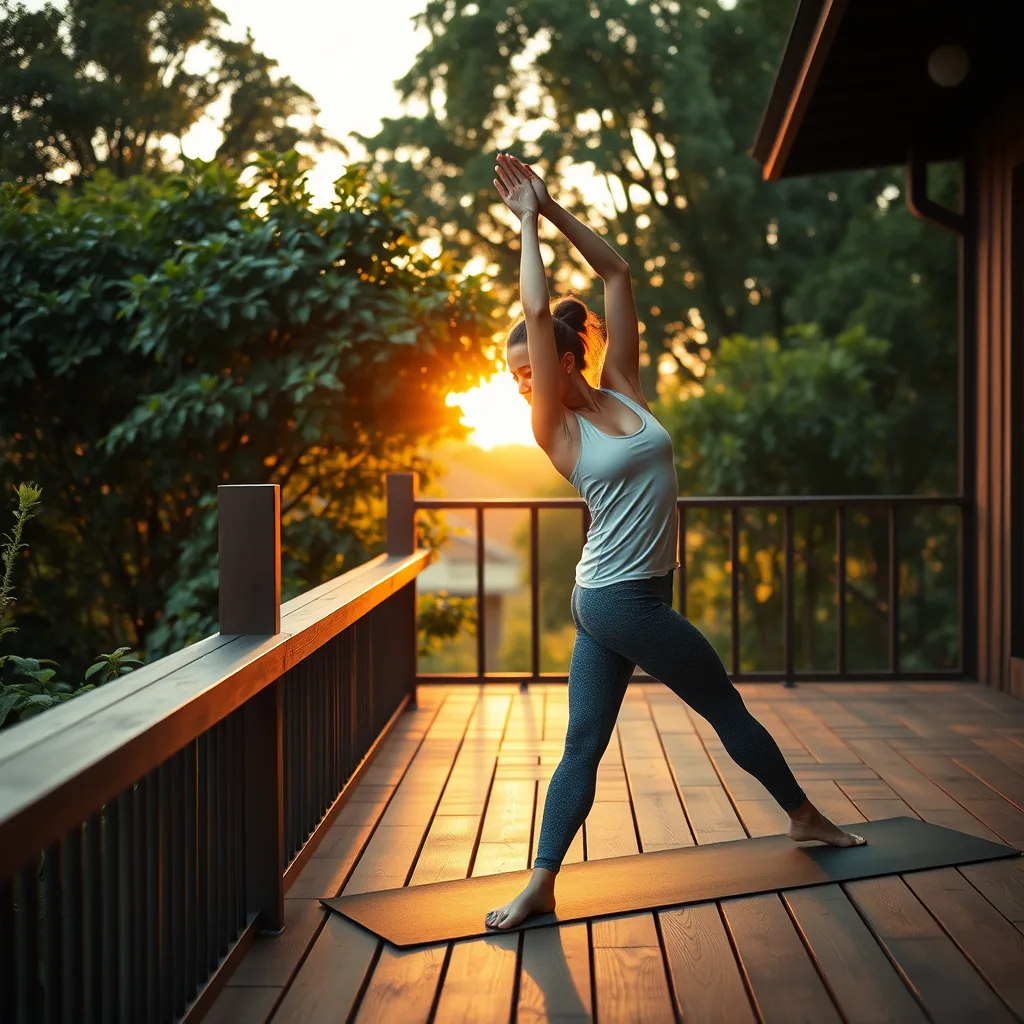
In our fast-paced modern existence, the nervous system is frequently trapped in a state of high alert. We move from one task to another, often disconnected from the physical reality of our bodies and the present moment. Grounding yoga offers a sanctuary from this sensory overload, utilizing deliberate movement, steady breath, and intentional focus to anchor our awareness back into the earth. This practice is not about achieving advanced flexibility or athletic performance; it is about cultivating a deep, somatic sense of stability that carries over into your daily life.
Key takeaways
- Focus on the physical sensation of your body touching the floor to shift from a fight-or-flight state to rest and digest.
- Use Ujjayi rhythmic breathing to sync your movements with your breath, creating an auditory anchor for your mind.
- Incorporate long-held hip openers like Pigeon or Lizard pose to release emotional tension stored in the connective tissue.
- Practice micro-grounding at your desk by visualizing a connection to the earth while pressing your feet firmly into the floor.
Understanding the Physiology of Grounding
Grounding, or earthing, is a concept rooted in both mindfulness traditions and physiological science. When we practice grounding, we are actively signaling to the vagus nerve—the primary component of the parasympathetic nervous system—that we are safe. By focusing on the parts of the body in direct contact with the floor, we shift our neurological state from “fight or flight” to “rest and digest.” This transition is essential for emotional regulation, stress reduction, and the restoration of mental clarity. As you move through a grounding flow, your goal is to minimize the distance between your consciousness and your physical sensations.
Setting Your Sacred Space
Before you unroll your mat, consider the environment. Grounding begins with the intentionality of your space. Clear away physical clutter, dim the lights, or introduce a grounding scent like cedarwood or sandalwood. The objective is to remove external distractions so that your internal dialogue can settle. Wear clothing that allows for full range of motion without restriction. By treating your practice as an appointment with yourself, you honor the need for stability, making it easier to drop into a meditative state once you begin the physical sequence.
The Foundation: Mountain Pose (Tadasana)
Every grounding flow begins with Tadasana. While it may appear simple, standing in Mountain Pose is an active engagement of the entire body. Spread your toes wide and imagine roots extending from the soles of your feet deep into the ground beneath you. Distribute your weight evenly between the balls and heels of your feet. Engage your quadriceps slightly, tuck your tailbone gently, and broaden your collarbones. Close your eyes and focus on the sensation of gravity pulling you toward the earth. This is your baseline; return here whenever you feel your mind drifting toward future worries or past regrets.
Flowing with the Breath: The Anchor
Breath is the bridge between the mind and the body. In a grounding flow, we utilize Ujjayi breath—a steady, rhythmic inhalation and exhalation through the nose that creates a soft oceanic sound in the back of the throat. This breath provides an auditory anchor. As you move through sun salutations, prioritize the rhythm of the breath over the depth of the stretch. If you find yourself holding your breath, you have moved too quickly. Slow down your movements to match the pace of your breathing; this synchronization is what allows the body to release stored tension.
Hip Openers for Emotional Release
The hips are widely considered the warehouse for stored emotional tension. When we are stressed, our hip flexors tighten as a protective mechanism. Integrating poses such as Pigeon Pose (Eka Pada Rajakapotasana) or Lizard Pose (Utthan Pristhasana) allows for the gentle release of this tension. Move into these shapes with compassion, using blocks or bolsters to support your body. Do not force the stretch; instead, breathe into the areas of resistance. By staying in these poses for 3-5 minutes, you allow the connective tissue (fascia) to soften, facilitating a profound sense of physical and emotional release.
Rooting Down in Warrior II (Virabhadrasana II)
Warrior II is a powerful grounding posture because it demands a wide, stable base. As you extend your legs, press firmly into the outer edge of your back foot. This engagement creates a sense of being “locked” into the floor, providing a feeling of strength and unshakeable resolve. Keep your torso centered between your hips, avoiding the tendency to lean forward. Reach your arms out wide, but soften your shoulders away from your ears. In this pose, visualize yourself as a mountain—unmoved by the winds of external circumstances. Focus your gaze on a single point to steady your mind.
Restorative Stillness: Child’s Pose (Balasana)
There is immense power in the pause. Child’s Pose is the ultimate grounding posture, bringing the forehead into direct contact with the earth. This contact stimulates the parasympathetic nervous system and encourages the mind to quiet. If your forehead does not reach the mat, use a block or a folded blanket. As you rest in this shape, let your hips sink heavy toward your heels. Notice the expansion of your back body with every inhale. Use this pose as a transition point between more active sequences to ensure that your energy remains contained and centered rather than scattered.
Savasana: The Final Integration
Savasana, or Corpse Pose, is the most important part of your practice. It is where the benefits of the movement are integrated into the nervous system. Lie flat on your back, letting your feet fall open and your palms face upward. Release all effort in your muscles. If you feel restless, place a weighted blanket or a sandbag on your hips to provide sensory feedback that anchors you to the floor. Stay here for at least 8 to 10 minutes. Let your breath return to its natural, unforced rhythm. This is the practice of letting go—a vital skill for maintaining inner peace in a chaotic world.
The Anatomy of Stability: Engaging the Pelvic Floor
True grounding begins at the base of the torso. The pelvic floor acts as the energetic and physical anchor for the entire spine, yet it is often overlooked in standard yoga flows. To cultivate a deeper sense of stability, practice Mula Bandha, or the root lock. By gently lifting the muscles of the pelvic floor toward the navel, you create a “container” for your breath and energy. This is not about squeezing tightly, which can trigger tension, but rather finding a subtle, inward lift that prevents energy from leaking outward. When you stand in Tadasana or hold a balancing pose like Tree Pose (Vrksasana), engage this lock to feel a sense of internal buoyancy that supports your physical grounding. This engagement stabilizes the pelvis, ensuring that your foundation is not just resting on the floor, but actively resisting the pull of gravity with intentionality.
Navigating Proprioceptive Feedback Loops
Grounding is fundamentally about proprioception—your body’s ability to sense its position in space. To enhance this, try practicing a portion of your flow with your eyes closed. When visual input is removed, the brain is forced to rely on tactile feedback from the soles of the feet and the inner ears. As you transition between poses, notice the shift in weight distribution. Are you leaning into the toes, or are you balanced? Can you feel the texture of the mat or the temperature of the air against your skin? By heightening these sensory inputs, you pull your consciousness out of the abstract “thought-space” and into the tangible “physical-space.” This practice is particularly helpful for those who feel “spaced out” or dissociated after long hours of screen time, as it forces the nervous system to recalibrate based on immediate environmental data.
The Role of Downward-Facing Dog in Grounding
While often treated as an active stretch for the hamstrings, Down-Facing Dog (Adho Mukha Svanasana) is a masterclass in grounding through the hands and feet. In a grounding flow, modify your approach: focus less on the straightness of your legs and more on the “push” into the earth. Spread your fingers wide, gripping the mat as if you are clawing into the soil, and actively root your heels toward the floor. Visualize an energetic line moving from your hands, up your arms, into your heart, and down your legs into the earth. This inversion calms the nervous system by placing the head below the heart, which slows the heart rate and redirects blood flow. Stay in this shape for ten deep, slow breaths, focusing on the weight of your head and the firm connection of your knuckles to the mat.
Integrating Grounding into Desk-Bound Days
You do not need a yoga mat to practice the principles of grounding. If you find yourself in a high-stress meeting or sitting at a desk, utilize “Micro-Grounding.” Plant both feet flat on the floor, ensuring your knees are at a ninety-degree angle. Close your eyes for a moment and place your hands on your thighs. As you inhale, visualize a cord of light extending from your tailbone deep into the center of the earth. As you exhale, imagine any excess mental “static” or anxiety draining down that cord into the ground. This simple visualization, combined with the physical sensation of your feet pressing into the floor, can reset your nervous system in under sixty seconds. Use this technique to bridge the gap between your professional responsibilities and your internal state of peace.
The Nuance of Yin-Style Grounding
To deepen your grounding practice, consider incorporating Yin Yoga principles, which emphasize long-held, passive shapes that target the deep fascia. Unlike a flow that builds heat, a Yin-inspired grounding session focuses on cooling and surrender. Hold poses like Butterfly Pose (Baddha Konasana) or a supported Child’s Pose for five to seven minutes. During these long holds, the body naturally enters a state of “rebound,” where the nervous system is forced to move beyond the superficial muscles and into the connective tissues. If you feel an emotional release—such as a sudden urge to cry or a wave of fatigue—know that this is a sign of successful grounding. The body is finally permitted to let go of the “armoring” it uses to survive the day. Use a bolster or a stack of pillows to support your torso, allowing your muscles to become completely soft and heavy.
Balancing Energy with Alternate Nostril Breathing
Grounding is not just about physical connection; it is about balancing the hemispheres of the brain. Nadi Shodhana, or Alternate Nostril Breathing, is a powerful pranayama technique to add to the end of your flow. By alternating the flow of breath between the left and right nostrils, you harmonize the solar (active) and lunar (receptive) energies in the body. Sit in a comfortable, grounded position—perhaps on a folded blanket to elevate the hips. Use your thumb to close the right nostril, inhale through the left, then switch and exhale through the right. This practice is specifically designed to soothe an overactive mind and prepare the body for deep, restorative rest. It acts as an energetic “reset button,” ensuring that the stability you cultivated during your physical flow is locked into your mental state.
FAQ: Grounding Yoga
Q: How often should I practice a grounding flow to see benefits?
A: Consistency is more important than duration. Even 15 minutes of grounding movement performed daily is more effective for nervous system regulation than a single 90-minute session once a week. Aim for a daily practice, even if it is just a few minutes of standing meditation.
Q: Can I practice this flow if I have limited mobility?
A: Absolutely. Grounding yoga is highly adaptable. You can practice many of these postures while seated in a chair, focusing on the connection of your feet to the floor and your sit bones to the seat. The intention of grounding—focusing on stability and breath—remains the same regardless of the physical variation.
Q: What should I do if my mind keeps wandering during the practice?
A: It is perfectly normal for the mind to wander. When you notice this happening, gently label the thought as “thinking” and return your awareness to the physical sensations of your body or the sound of your breath. Do not judge yourself; the act of noticing the distraction and returning to center is the actual practice of mindfulness.
Q: Are there specific times of day that are best for grounding?
A: While you can practice grounding at any time, many people find it most beneficial in the morning to set a stable tone for the day, or in the evening to release the accumulated stress of the day before sleep. Choose the time that allows you to be most consistent.
Q: Do I need special equipment for a grounding flow?
A: You do not need expensive gear. A non-slip yoga mat is helpful for safety, but you can also practice on a rug or a firm carpet. Props like blocks, bolsters, and blankets are useful for support, but household items like sturdy books or couch cushions can serve as excellent substitutes for beginners.
Related posts:
 Lindsay Ellingson’s Stress-Relieving Yoga Move
 3 yoga mats totally reimagined for the better
 Master Chair Pose Without Falling Over: A Yoga Guide for Real People
 The Benefits of Grounding: Connecting with the Earth
 PHA Bodyweight Workout: Efficient Fitness Anywhere, Anytime
 What Is Grounding and Why Everyone’s Talking About It
 Yoga Tips for Beginners
 Pelvic Floor Expert’s Advice