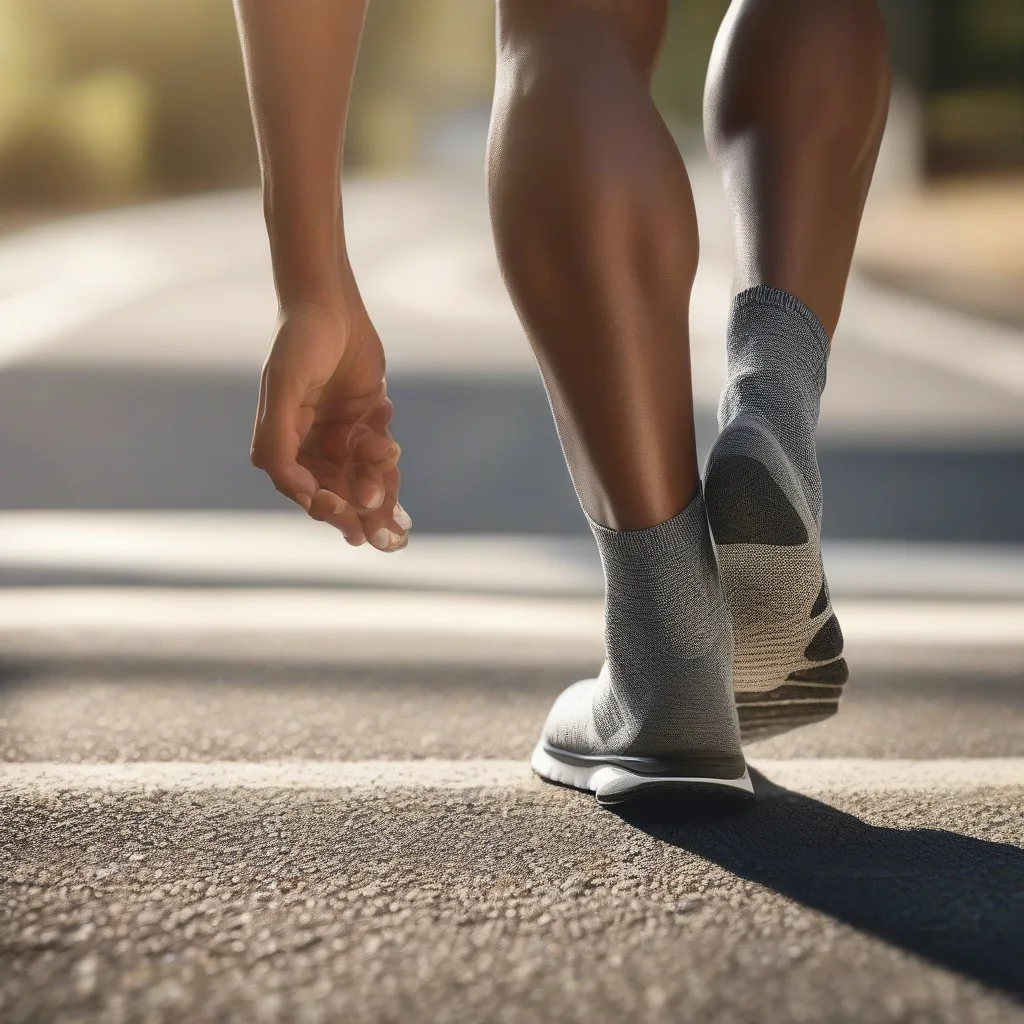
For many runners, the focus remains firmly on the shoe. We spend hours researching foam density, arch support, and gait analysis, yet we often relegate the humble sock to an afterthought. However, your choice of sock is the primary interface between your foot and your footwear. A poor-quality sock can render the most expensive running shoe ineffective by causing friction, moisture buildup, and painful blisters. Understanding the technical aspects of sock construction is essential for anyone looking to improve their comfort and performance on the road or trail.
Key takeaways
- Avoid cotton; choose synthetic blends or merino wool to wick moisture and reduce blister risk.
- Select cushioning based on distance and shoe volume, and prioritize seamless toes to minimize friction.
- Use no-show socks for road racing and crew-length socks to protect against debris during trail runs.
- Wash socks inside out and avoid fabric softeners to maintain moisture-wicking properties and fiber integrity.
- Look for arch compression for support and mesh ventilation zones to improve breathability and temperature regulation.
The Critical Role of Material Composition
The most important factor in choosing a running sock is the material. Cotton is the enemy of the runner. It absorbs moisture, holds it against the skin, and loses its structural integrity when wet, creating a high-friction environment that is a breeding ground for blisters. Instead, look for synthetic blends or high-quality wool.
Synthetic materials like polyester, nylon, and elastane are engineered to wick moisture away from the skin and transport it to the outer layer of the fabric where it can evaporate. This keeps the foot dry and reduces the risk of maceration—the softening of the skin caused by prolonged moisture exposure. Merino wool has also become a gold standard. It is naturally moisture-wicking, temperature-regulating, and antimicrobial, meaning it resists odors even after long, sweaty sessions. Look for a blend that combines the durability of synthetics with the comfort of wool.
Understanding Thickness and Cushioning
The level of cushioning you choose should depend on your specific needs, the distance you run, and the fit of your shoes. Cushioning is generally categorized into three levels: ultra-thin, light, and maximal. Ultra-thin socks are designed for racing or for runners who prefer a “barefoot” feel and maximum ground sensitivity. These are ideal for those who already have a perfect shoe fit and want to avoid any extra bulk.
Light cushioning is the most versatile option. These socks feature targeted padding in the heel and forefoot, providing protection where impact is highest without adding unnecessary weight. Maximal cushioning is best for long-distance efforts like ultramarathons or for runners who prefer a plush, supportive feel. Keep in mind that thicker socks take up more volume inside the shoe. If you switch to a heavily padded sock, ensure your running shoes have enough internal volume to prevent compression of the foot, which can cut off circulation.
The Importance of Seamless Construction
Blisters are almost always caused by friction, and seams are the most common source of friction. In traditional socks, the toe seam is a thick, raised ridge that sits directly over the delicate skin of your toes. During a long run, this ridge can cause significant irritation. High-performance running socks utilize seamless toe construction, where the fabric is linked together in a way that creates a flat, undetectable surface.
Beyond the toe box, look for socks that feature a contoured fit. A good running sock should feel like a second skin. It should have a defined heel pocket that keeps the fabric from slipping down into the shoe, and a snug mid-foot compression zone that prevents the sock from bunching up as you move. If you can feel the fabric shifting under your foot, you are at a much higher risk for developing hot spots.
Managing Moisture and Breathability
Even with moisture-wicking materials, the design of the sock plays a huge role in how well your feet breathe. Look for socks that feature mesh ventilation zones, usually located on the top of the foot. These panels of thinner, more open-weave fabric allow heat to escape and air to circulate, keeping your foot temperature regulated.
If you are a runner who suffers from excessively sweaty feet, look for socks with a higher percentage of hydrophobic synthetic fibers. These fibers are designed to repel water rather than just moving it. Additionally, consider the height of the sock. While low-cut or “no-show” socks are popular for aesthetics, they can sometimes allow debris to enter the shoe or rub against the back of the heel. A quarter-length or crew-length sock provides a better barrier against dirt, small rocks, and sand, especially for trail runners.
Compression Features for Recovery and Support
Compression socks have moved beyond the realm of medical recovery into mainstream running. These socks apply graduated pressure to the foot and lower leg, which some runners find helps reduce muscle fatigue and improves blood flow. In the context of a running sock, “arch compression” is the most common feature. This is a tighter band of elastic fabric wrapped around the mid-foot.
Arch compression serves two main purposes: it provides a subtle, supportive feeling that can help reduce arch fatigue during long efforts, and it keeps the sock firmly in place, preventing the fabric from sliding and causing friction. While full-length compression sleeves are a different topic, choosing a sock with a solid arch band is a simple way to add an extra layer of structural support to your stride.
Selecting the Right Height for Your Activity
Sock height is often viewed as a fashion choice, but it carries functional implications. No-show socks are the most lightweight and provide the cleanest look, making them popular for road racing. However, they offer the least protection against the shoe collar rubbing your ankle bone.
Quarter-length socks sit just above the ankle. They are excellent for everyday training and provide a good balance between breathability and protection. Crew socks, which reach the mid-calf, are the preferred choice for trail runners. The extra height protects the lower leg from brush, ticks, and trail debris. When choosing your height, consider the environment you run in. If you are on a dusty, rocky trail, the extra coverage of a crew sock is almost always worth the slight trade-off in breathability.
Caring for Your Technical Socks
High-quality running socks are an investment, and proper care will extend their lifespan significantly. Because these socks are made of technical fibers, they require different treatment than your standard cotton socks. First and foremost, avoid fabric softeners. Softeners leave a waxy coating on the fibers, which clogs the moisture-wicking channels and reduces the sock’s ability to breathe. This can quickly turn a high-performance sock into a damp, uncomfortable one.
Wash your socks inside out to help remove the dead skin cells and sweat trapped in the fabric. Use a mild detergent and, if possible, air dry them. High heat from a dryer can break down the elastane (the elastic component) over time, causing the socks to lose their shape and slip down during your runs. If you must use a dryer, choose the lowest heat setting available.
Anatomical Mapping and High-Friction Zones
Beyond general cushioning, advanced sock engineering now utilizes anatomical mapping to address specific high-friction zones unique to the running gait. During the transition from mid-foot strike to toe-off, the skin on the plantar surface of the foot undergoes significant shear forces. Modern performance socks incorporate varying knit densities to reinforce the heel and the metatarsal heads—the two areas most prone to friction-induced blisters. By using a denser, high-density loop construction in these specific zones while maintaining a lighter, more breathable gauge elsewhere, manufacturers create a sock that acts as a protective barrier without the bulk of a uniformly thick sock. When inspecting potential pairs, look for “zoned” construction; if the fabric feels identical in thickness from the toes to the cuff, it may lack the targeted protection needed for high-mileage training.
The Impact of Fiber Denier and Yarn Twist
The performance of a synthetic sock is dictated not just by the material type, but by the physical construction of the yarn itself. High-end running socks utilize micro-denier fibers, which are thinner than a human hair. These fibers increase the surface area of the fabric, allowing for exponentially faster moisture evaporation. Furthermore, the “twist” of the yarn plays a critical role in durability. A high-twist yarn is more resistant to pilling and abrasion, ensuring that the sock doesn’t break down after only a few dozen washes. When evaluating a sock, stretch it gently; if you see the fabric “thinning out” or showing light through the weave immediately, the yarn density is likely too low to withstand the mechanical stress of a long run. A premium sock should maintain its opacity and tactile “springiness” even when stretched to its limit.
Navigating Sock-Shoe Interface Interference
A frequently overlooked factor is the interaction between the sock’s exterior texture and the shoe’s internal lining. Some socks are designed with a slightly “tacky” or brushed exterior finish that grips the interior of the shoe, preventing micro-movements of the foot during technical descents or sharp cornering. Conversely, if you wear a sock with a very slick, low-friction exterior in a shoe with a loose heel counter, you may experience unwanted sliding. Trail runners, in particular, should look for socks that offer a balance of internal smoothness—to protect the skin—and external texture to stabilize the foot within the shoe. If you notice your foot sliding inside your shoe despite a secure lacing system, testing a sock with a different exterior knit texture can often resolve the instability without the need for new footwear.
Thermal Regulation and Seasonal Adaptation
Runners often make the mistake of wearing the same sock year-round, but seasonal variations in temperature and humidity require an adjustment in strategy. In the heat of summer, look for socks made with “hollow-core” synthetic fibers or specialized cooling yarns that conduct heat away from the skin. In colder, wet conditions, the logic shifts toward thermal insulation that retains its effectiveness even when damp. While merino wool is excellent for this, look for “dual-layer” socks for extreme winter conditions; these socks feature an inner layer that stays dry against the skin and an outer layer that insulates. This dual-layer system is arguably the most effective way to prevent the “frozen foot” sensation caused by sweat-soaked socks losing their thermal properties in sub-freezing temperatures.
The Role of Elastic Memory in Long-Term Comfort
The “memory” of the elastane or spandex used in a sock determines how well it retains its shape over the course of a 20-mile run. A common failure point in cheaper socks is “bagging out,” where the material loses its elasticity and begins to bunch around the toes or the arch. This bunching creates focal points of pressure, which are almost guaranteed to cause blisters. Elite-level running socks are engineered with Lycra or similar high-memory polymers that undergo heat-setting processes to ensure they return to their original form after every stretch. If you find yourself having to adjust your socks mid-run, it is a clear indicator that the elastic memory of the garment is insufficient for your activity level or duration.
Addressing Biomechanical Asymmetries with Sock Choice
Every runner has slight biomechanical asymmetries—one foot may be slightly larger, have a higher arch, or exhibit a different pronation pattern than the other. If you find that you consistently develop blisters on only one foot, your socks might actually be part of the solution. Some runners benefit from “asymmetric” or “ergonomic” sock designs that are specifically shaped for the left and right foot. These socks accommodate the natural curvature of the toes and the position of the medial arch more precisely than traditional “tube”-style socks. For those with unique foot shapes, such as a wide forefoot or bunions, seeking out these anatomically specific designs can significantly reduce the pressure points that a standard, symmetrical sock would otherwise exacerbate.
Sustainable Manufacturing and Material Ethics
As the running industry moves toward sustainability, the construction of your socks is changing. Many brands are now incorporating recycled post-consumer plastics (like rPET) into their synthetic blends. Surprisingly, these recycled materials often perform just as well as virgin synthetics, provided the polymerization process is high-quality. Additionally, for those concerned with ethical sourcing, look for manufacturers that utilize Responsible Wool Standard (RWS) certified merino. This ensures that the wool is harvested under humane conditions. Choosing sustainable, high-performance materials doesn’t have to mean sacrificing durability; in fact, the move toward high-quality recycled fibers has often led to more rigorous testing and better-engineered yarns, resulting in a product that is both better for the environment and better for your feet.
Frequently Asked Questions
Q: Can I wear the same socks for road running and trail running? A: While you can, it is often better to specialize. Road socks prioritize weight and breathability, while trail socks prioritize durability and protection from debris. If you switch, consider a crew-length sock for the trails to keep rocks and dust out of your shoes.
Q: How do I know if my socks are the right size? A: A running sock should feel snug but not restrictive. If you see deep indentations on your skin after taking them off, they are too tight. If the fabric bunches up or slides around your heel, they are too big. Many brands offer sizing based on your shoe size; follow their specific charts as they can vary between brands.
Q: Why do I still get blisters even with expensive socks? A: Socks are only one piece of the puzzle. Blisters are caused by a combination of friction, moisture, and pressure. If your shoes are too small, or if your gait causes excessive rubbing in one specific area, even the best socks won’t prevent a blister. Ensure your shoes have enough room for foot swelling, and consider using anti-chafe balms on high-risk areas.
Q: Are toe socks actually better for preventing blisters? A: Many runners swear by toe socks because they eliminate skin-on-skin friction between the toes, which is a common cause of blisters. They take some getting used to and can be slower to put on, but for runners prone to between-toe blisters, they are often the most effective solution.
Q: How often should I replace my running socks? A: Much like shoes, socks have a shelf life. Once the elastic starts to lose its snap, the heel pocket loses its shape, or the fabric begins to thin significantly in the high-impact areas, it is time to replace them. Generally, if you rotate through a set of 5-7 pairs, you can expect them to last for several hundred miles of running.
Related posts:
 The Best Socks to Wear with Boots for Maximum Comfort and Style
 Smart Shoe Shopping Tips Everyone Should Know
 Old Navy’s Hygge Sock Sale Is the Black Friday Deal Your Feet Need
 How to choose the right running shoes
 Meghan Markle’s High Heel Hack
 Hoka Bondi 8: Maximum Cushioning Review
 The 5 Most Common Causes of Painful Blisters On Your Feet, According to Podiatrists
 Blister Treatment Guide