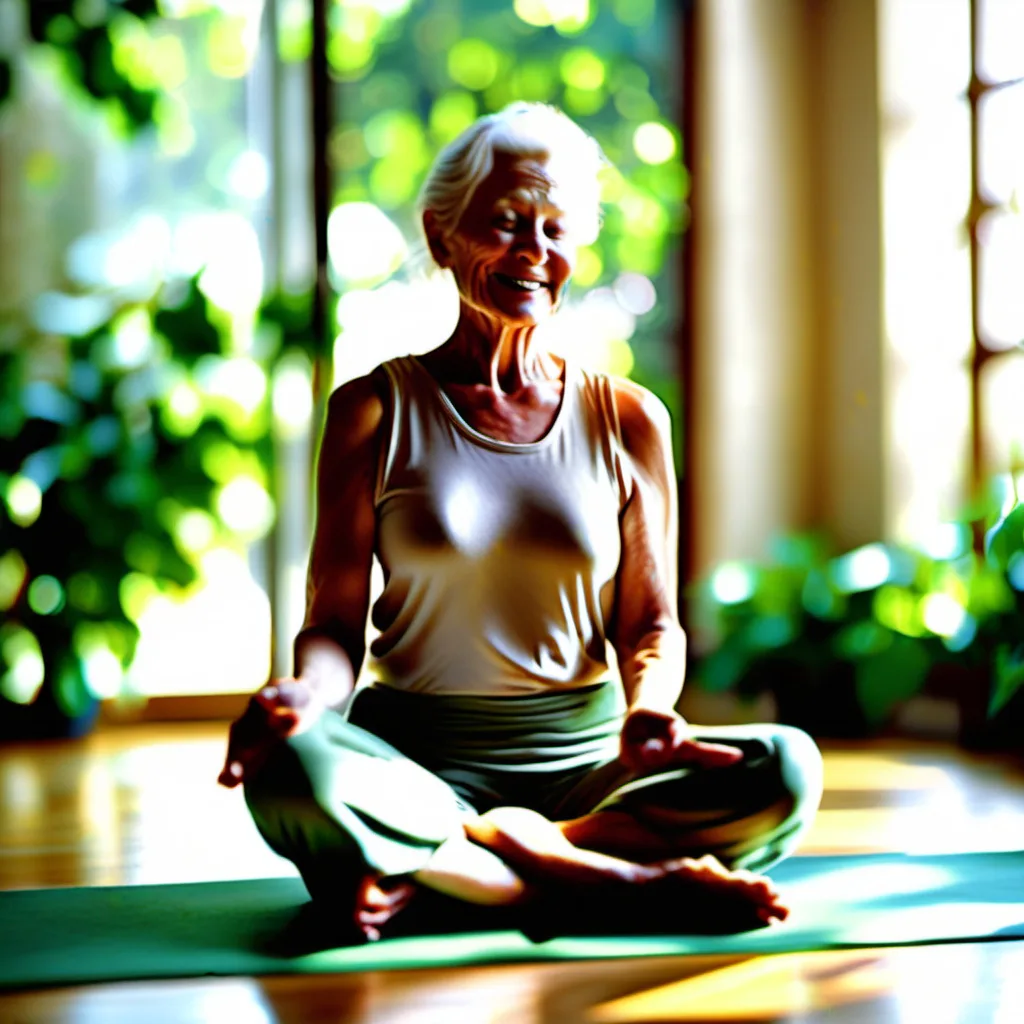
When we think of aging, the images that often come to mind are of decline, limitation, and a gradual withdrawal from the vibrancy of life. However, Tao Porchon-Lynch, a world-renowned yoga master who has crossed the century mark, stands as a living contradiction to these stereotypes. With a smile that radiates genuine joy and a body that remains remarkably flexible and strong, Tao is not merely a survivor of time, but a master of it. Her life is a testament to the idea that happiness is not a byproduct of youth or circumstance, but a conscious choice and a disciplined practice.
Key takeaways
- Practice total forgiveness to release emotional burdens and prevent chronic stress.
- Maintain a young heart by embracing curiosity and learning new skills regularly.
- Use mindful breathing during physical movement to calm the nervous system and clear energy.
- Engage in daily rituals like gratitude and kindness to build a foundation for lasting joy.
- Prioritize intergenerational connections to foster personal growth and avoid social isolation.
Tao’s journey began decades ago, studying under the legendary B.K.S. Iyengar, and her teachings have since influenced thousands across the globe. But beyond the physical mastery of asanas, Tao offers a profound blueprint for emotional and spiritual longevity. Her approach to happiness is rooted in the liberation of the heart, the release of past burdens, and an unwavering commitment to love. By integrating her wisdom into our daily lives, we can shift our perspective on aging and discover a source of vitality that does not diminish with the passing years.
The Transformative Power of Forgiveness
One of the most central pillars of Tao Porchon-Lynch’s philosophy is the practice of total forgiveness. Tao often speaks about how holding onto resentment is like carrying a heavy stone in one’s pocket every single day; eventually, that weight exhausts the spirit and weakens the body. For Tao, forgiveness is not about condoning harmful behavior or forgetting the past, but about freeing oneself from the emotional shackles that bind us to old wounds.
She teaches that anger and grudge-holding create a state of chronic stress in the body, manifesting as tension in the shoulders, tightness in the chest, and a general sense of fatigue. When we forgive, we stop the leak of energy that occurs when we relive past traumas. This liberation allows the body’s natural healing mechanisms to function more effectively and opens the heart to receive joy.
Actionable Guidance: The Forgiveness Ritual
To implement this in your own life, try a guided forgiveness exercise. Write a letter to someone who has hurt you, expressing every emotion—anger, sadness, and betrayal—without holding back. Do not send this letter. Instead, read it aloud to yourself, acknowledging the pain, and then consciously decide to let it go. End the session by writing, “I release you and I release myself,” and safely burn or shred the paper. This symbolic act helps signal to the subconscious that the emotional debt has been cleared.
Cultivating a “Young Heart” Regardless of Age
Tao is frequently asked about her secret to staying “young.” Her answer is simple: she refuses to believe she is old. In her view, age is a number, but “old” is a state of mind. Many people enter a psychological contract with aging, believing that once they reach a certain age, they should stop trying new things, stop playing, or stop dreaming. Tao rejects this narrative entirely.
Cultivating a young heart means maintaining a sense of curiosity and playfulness. It is the ability to look at the world with wonder, to laugh at oneself, and to remain open to new experiences. When we identify as “old,” we subconsciously limit our movements and our ambitions, which accelerates the physical decline we fear. By maintaining the identity of a lifelong student, Tao keeps her neural pathways active and her spirit invigorated.
Practical Example: The Curiosity Challenge
To keep your heart young, engage in a “Curiosity Challenge” once a month. Do something you have never done before and that makes you feel like a beginner. This could be taking a pottery class, learning a few phrases of a new language, or visiting a part of your city you’ve never explored. The act of being a novice forces the brain to create new connections and reminds you that growth is possible at any stage of life.
Yoga as a Tool for Mental and Physical Freedom
For Tao, yoga is far more than a series of physical stretches; it is a comprehensive system for living. While the world often focuses on the “workout” aspect of yoga, Tao emphasizes the union of breath, movement, and consciousness. She views the body as a temple that requires regular maintenance, not for the sake of vanity, but to ensure that the spirit has a clear and unobstructed vehicle through which to express itself.
The physical practice of yoga helps remove blockages in the body, allowing energy (prana) to flow freely. However, the true magic happens when the physical movement is paired with mindful breathing. This combination calms the nervous system, reduces cortisol levels, and creates a sense of inner spaciousness. Tao’s longevity is not just due to the poses she performs, but the consistency with which she honors her body’s need for movement.
Actionable Guidance: Mindful Movement for Every Day
You don’t need to be able to do a headstand to benefit from yoga. Start with five minutes of conscious stretching every morning. Focus on the areas where you hold the most stress—usually the neck, hips, and lower back. As you stretch, synchronize your breath: inhale to create space and exhale to release tension. Focus entirely on the sensation of the muscle lengthening, treating the movement as a moving meditation rather than a chore.
The Art of Letting Go and Releasing the Past
A recurring theme in Tao’s teachings is the necessity of letting go. Many of us spend a significant portion of our mental energy ruminating on “what could have been” or mourning losses from years ago. Tao suggests that the past is a place of reference, not a place of residence. To live fully in the present, we must learn the art of shedding the versions of ourselves that no longer serve us.
Letting go requires a deep level of trust in the flow of life. It involves accepting that certain chapters must close for new ones to begin. Tao encourages us to view life as a river; if we try to swim against the current by clinging to the past, we exhaust ourselves. If we float and allow the current to take us, we find a sense of ease and grace.
Practical Example: The “Shedding” Inventory
Once a season, perform an emotional inventory. Ask yourself: “What belief, grudge, or habit am I carrying that no longer helps me grow?” It might be a belief that you aren’t “good enough” at a certain skill, or a lingering sadness over a failed relationship. Acknowledge the belief, thank it for what it taught you, and then consciously decide to leave it behind. This mental decluttering creates the emotional capacity needed for new happiness to enter.
Love as a Universal Energy and Daily Practice
If you spend five minutes with Tao Porchon-Lynch, the most striking thing is the unconditional love she radiates toward everyone she meets. She does not view love as a romantic emotion reserved for a few people, but as a universal energy that connects all living beings. In her philosophy, love is the highest vibration we can attain, and it is the most powerful antidote to fear and loneliness.
Tao believes that by projecting love toward others—even those we find difficult—we actually heal ourselves. When we judge or hate, we create a barrier between ourselves and the world, which leads to isolation. When we lead with love, we dissolve those barriers and realize that we are all part of the same human experience. This perspective shifts the focus from “what can I get from the world?” to “what can I give to the world?”
Actionable Guidance: The Compassion Circuit
Practice a “Compassion Circuit” daily. Throughout your day, whenever you encounter a stranger—a cashier, a driver, a colleague—silently wish them well. Mentally say, “I wish you happiness, I wish you peace.” This small shift in internal dialogue changes your own emotional state from one of neutrality or judgment to one of openness and warmth, effectively raising your own mood and energy levels.
Living Fully in the Present Moment
Much of human suffering stems from living in the “not-now.” We are either anxious about a future that hasn’t happened or regretful of a past that cannot be changed. Tao teaches that the only place where life actually exists is in the present moment. By anchoring ourselves in the “now,” we stop the cycle of unnecessary suffering and begin to notice the small, beautiful details of existence that we otherwise overlook.
Present-moment awareness is not about ignoring the future or the past, but about ensuring they do not dominate our current experience. Tao demonstrates this through her presence; when she speaks, she is entirely there, listening and responding with full attention. This quality of presence is what makes her interactions feel so revitalizing to others.
Practical Example: The 5-4-3-2-1 Grounding Technique
When you feel overwhelmed by anxiety or trapped in a loop of negative thoughts, use this grounding technique to return to the present: Name 5 things you can see, 4 things you can touch, 3 things you can hear, 2 things you can smell, and 1 thing you can taste. This forces your brain to switch from the abstract (the worries of the mind) to the concrete (the sensations of the body), instantly bringing you back to the present moment.
Overcoming Fear and Embracing Vulnerability
Throughout her century of life, Tao has faced immense challenges, including the turmoil of world wars and the struggles of establishing herself in a foreign culture. Yet, she views fear not as a stop sign, but as a signal that something important is happening. She teaches that the only way to move through fear is to walk directly into it with a sense of openness.
Many people avoid vulnerability because they fear judgment or failure. However, Tao shows us that vulnerability is where true strength lies. Being open about our struggles, our hopes, and our imperfections allows others to connect with us on a deeper level. By embracing the unknown with a spirit of adventure rather than dread, we unlock a level of freedom that most people never experience.
Actionable Guidance: The “Micro-Brave” Step
Identify one small thing that scares you—perhaps speaking up in a meeting, starting a conversation with a stranger, or trying a difficult yoga pose. Commit to taking one “micro-brave” step toward that fear every week. The goal is not to eliminate fear, but to build the muscle of courage. Over time, you will realize that the fear was mostly an illusion and that the reward for your bravery is a more expansive life.
Practical Daily Rituals for Sustainable Joy
Happiness, for Tao, is not a lightning bolt of inspiration but a result of consistent, small habits. She emphasizes the importance of rituals that nourish the body, mind, and spirit. These rituals provide a stable foundation, ensuring that even on difficult days, there is a baseline of peace and wellness to return to.
Sustainable joy comes from aligning your daily actions with your deepest values. When we spend our days in a rush, ignoring our physical needs and neglecting our emotional health, we create a state of internal friction. By slowing down and intentionally carving out time for self-care and connection, we reduce this friction and allow joy to emerge naturally.
Daily Ritual Checklist:
- Morning Gratitude: Before getting out of bed, name three specific things you are grateful for today.
- Conscious Movement: Spend at least 15-30 minutes moving your body in a way that feels good, whether it’s yoga, dancing, or walking.
- Digital Detox: Set aside one hour a day where all screens are off, allowing your mind to settle and your creativity to surface.
- Act of Kindness: Perform one small, selfless act for someone else without expecting anything in return.
- Evening Reflection: Before sleep, reflect on one moment of the day that brought you a sense of peace or joy.
The Alchemy of Mindful Nutrition and Vitality
While the physical practice of yoga provides the structure for longevity, Tao Porchon-Lynch emphasizes that the fuel we provide our bodies determines the quality of the energy we can project. Longevity is not merely about avoiding illness, but about maintaining a high vibration of vitality. This requires a shift from seeing food as mere calories or taste-satisfaction to seeing it as information and medicine for the cells.
Tao’s approach to nutrition centers on the principle of “living foods.” Foods that are raw, organic, and minimally processed carry a higher enzymatic charge, which supports the body’s natural detoxification processes. When we consume foods that are aligned with nature, we reduce the inflammatory load on our joints and organs, which is critical as we age. However, the way we eat is just as important as what we eat. Mindful eating—the practice of being fully present with the flavors, textures, and scents of a meal—triggers the parasympathetic nervous system, ensuring that digestion is efficient and nutrients are absorbed fully.
Practical Example: The Mindful Tasting Ritual
To integrate this into your life, dedicate the first five minutes of every meal to complete silence. Before the first bite, observe the colors of your food and acknowledge the sunlight, water, and soil that created it. As you chew, focus on the changing texture and the subtle notes of flavor. This practice prevents the “stress-eating” cycle where the body remains in a fight-or-flight state, which often leads to bloating and poor nutrient absorption. By slowing down, you transform a routine biological necessity into a meditative act of gratitude.
Edge Case: Managing Dietary Restrictions
Many people worry that strict nutritional guidelines are impossible due to medical conditions or cultural constraints. The key here is the concept of “conscious substitution.” If a specific “superfood” is unavailable or contraindicated for your health, focus instead on the quality of the available options. Choose the freshest version of whatever you can eat and prioritize hydration. Tao reminds us that the intention behind the meal—the desire to nourish and honor the body—is where the true healing begins.
The Power of Intergenerational Connection and Sangha
A common tragedy of aging in modern society is the increasing isolation of the elderly. Tao, however, thrives by remaining deeply embedded in a multi-generational community. In the yogic tradition, this is referred to as Sangha—a community of like-minded individuals who support one another’s spiritual growth. Tao does not seek out only those her own age; instead, she actively engages with youth, students, and professionals from all walks of life.
Intergenerational connection creates a symbiotic flow of energy. The elderly provide the “root”—the wisdom, perspective, and historical context—while the youth provide the “bloom”—the fresh energy, new ideas, and technological curiosity. When these two forces merge, it prevents the elderly from becoming stagnant in their ways and prevents the young from becoming untethered from their roots. Tao’s ability to relate to a 20-year-old student with the same ease as a 90-year-old peer is a primary driver of her mental agility.
Actionable Guidance: Building Your Own Sangha
To cultivate this, look for “bridge opportunities” in your community. This could be volunteering for a mentorship program, joining a mixed-age hobby group, or simply starting a conversation with someone three decades older or younger than you. The goal is to move beyond superficial interactions. Ask deep questions: “What is the most important lesson you’ve learned this year?” or “What do you believe is the purpose of a good life?” These exchanges break down ageist stereotypes and remind us that the human experience is universal, regardless of the birth year.
Practical Example: The Reverse Mentorship Model
Try a “Reverse Mentorship” arrangement. Find someone younger than you to teach you a modern skill (like using a new piece of software or understanding a current social trend) and, in return, offer your guidance on a life challenge they are facing. This removes the hierarchy of “teacher and student” and replaces it with a partnership of mutual growth, which keeps the ego humble and the mind open.
Mastering the Breath: Pranayama for Emotional Stability
While the existing focus on yoga covers the physical asanas, the true engine of Tao’s vitality is Pranayama, or the science of breath control. In the yogic tradition, breath is the bridge between the conscious and unconscious mind. Tao teaches that while we cannot always control the external circumstances of our lives, we can always control the rhythm of our breath, which in turn regulates our emotional response to those circumstances.
When we are stressed, our breath becomes shallow and rapid, signaling to the brain that we are in danger. This triggers the release of cortisol and adrenaline, which, over decades, can wear down the cardiovascular system and cloud mental clarity. By consciously lengthening the exhale and deepening the inhalation, we can manually flip the switch from the sympathetic (stress) nervous system to the parasympathetic (rest and digest) nervous system. This is not just a relaxation technique; it is a biological intervention that preserves the longevity of the organs.
Actionable Guidance: The Nadi Shodhana (Alternate Nostril Breathing) Technique
To balance the left and right hemispheres of the brain and calm the nervous system, practice Nadi Shodhana for five minutes a day:
1. Sit comfortably with a straight spine.
2. Use your right thumb to close your right nostril and inhale deeply through the left.
3. Close the left nostril with your ring finger, release the right, and exhale through the right.
4. Inhale through the right, close it, and exhale through the left.
This rhythmic crossing of the midline of the body helps synchronize the brain and creates a state of “alert calmness,” allowing you to handle high-stress situations without losing your inner peace.
Edge Case: Breathing During Acute Anxiety
In moments of panic or extreme anger, complex breathing patterns can feel overwhelming. In these cases, Tao suggests the “Sigh of Relief.” Take a deep breath in through the nose, and then let out a loud, audible sigh through the mouth. This physical release signals the diaphragm to relax and immediately breaks the loop of a panic response, providing a quick reset for the nervous system.
Navigating Physical Limitation with Grace
One of the most challenging aspects of aging is the inevitable change in physical capability. Even for a master like Tao, the body has limits. The secret to her happiness is not that she has avoided physical decline, but that she has changed her relationship with it. Most people react to a new limitation—such as a stiff joint or a slower gait—with grief or frustration. This mental resistance creates a second layer of suffering that is often more painful than the physical limitation itself.
Tao views physical limitations as an invitation to find a new way of moving. If a certain pose is no longer accessible, she doesn’t see it as a failure; she sees it as an opportunity to explore a variation. This is the shift from “I can’t do this anymore” to “How can I experience this differently?” By removing the judgment of “correct” or “incorrect” movement, she maintains her joy and prevents the psychological depression that often accompanies physical decline.
Practical Example: Adaptive Movement Mapping
When you encounter a physical limitation, perform a “Movement Map.” Instead of focusing on the area that is restricted, focus on the areas that are still fluid. If your knees are stiff, focus on the fluidity of your arms and the strength of your core. Use props—chairs, straps, or blocks—not as “crutches,” but as tools for exploration. The goal is to maintain the feeling of the stretch and the flow of energy, rather than the precise geometric shape of the pose. This ensures that the spirit remains expansive even when the physical frame contracts.
Actionable Guidance: The “Listen and Adjust” Protocol
During any physical activity, implement a three-second check-in every few minutes. Ask yourself: “Is this movement coming from a place of ease or a place of force?” If you feel force, stop immediately and adjust the angle or depth of the movement until ease returns. This prevents injury and reinforces the habit of listening to the body’s subtle signals, fostering a relationship of trust between the mind and the physical form.
The Discipline of Non-Attachment to Outcomes
A significant portion of human unhappiness stems from the gap between our expectations and our reality. We attach our happiness to a specific outcome: a promotion, a child’s success, or a specific health goal. When these outcomes aren’t met, we experience a sense of loss. Tao’s longevity is supported by the practice of Vairagya, or non-attachment. This does not mean being indifferent or cold; rather, it means engaging fully in life while remaining detached from the result.
Non-attachment allows us to act with maximum effort but minimum anxiety. When we are attached to the outcome, we are operating from a place of fear—fear of failure, fear of judgment, or fear of loss. When we let go of the outcome, we are operating from a place of play. This shift reduces the chronic stress that accelerates aging and allows us to enjoy the process of living for its own sake, rather than as a means to an end.
Practical Example: The “Process-First” Approach
Apply non-attachment to a current project or goal. Instead of focusing on the end goal (e.g., “I must lose 10 pounds” or “I must get this job”), focus entirely on the daily process (e.g., “I will enjoy the feeling of walking today” or “I will enjoy the act of preparing my application”). If the desired result happens, it is a bonus. If it doesn’t, the value of the experience remains intact because the joy was found in the doing, not the receiving.
Edge Case: Dealing with Unexpected Loss
Non-attachment is most difficult during times of grief. In these moments, Tao suggests focusing on the “eternal essence” rather than the physical form. By recognizing that the love and lessons shared with a person are permanent and cannot be taken away, the pain of loss is balanced by the gratitude of having known them. Non-attachment in grief is not about not feeling the pain, but about not letting the pain define your entire identity.
The Healing Frequency of Laughter and Joy
If there is one trait that defines Tao Porchon-Lynch’s presence, it is her infectious laughter. She doesn’t just laugh at jokes; she laughs at the absurdity of life, at her own mistakes, and at the sheer wonder of existing. From a physiological perspective, laughter is one of the most potent health tools available. It increases the production of endorphins, lowers blood pressure, and strengthens the immune system by increasing the activity of T-cells and natural killer cells.
More importantly, laughter is a state of surrender. You cannot truly laugh and be in a state of rigid control at the same time. Laughter breaks the tension of the ego and opens the heart. Tao treats joy not as a reward for a life well-lived, but as a prerequisite for living well. She encourages us to seek out the “silly” side of existence, recognizing that taking ourselves too seriously is a form of mental tension that ages us prematurely.
Actionable Guidance: The “Laughter Walk”
Once a week, take a “Laughter Walk.” As you walk through your neighborhood, look for things that are unexpectedly funny, whimsical, or absurd. When you find something, allow yourself to giggle or laugh out loud, even if you are alone. If you are with a partner, share the absurdity. This trains the brain to scan the environment for joy rather than scanning for threats or problems, effectively rewiring your default emotional state toward positivity.
Practical Example: Reframing the “Blunder”
The next time you make a mistake—spill a drink, forget a word, or trip slightly—instead of reacting with embarrassment or self-criticism, try to find the comedy in the situation. Imagine you are a character in a lighthearted movie. By laughing at the blunder, you immediately dissolve the stress response and signal to your subconscious that you are safe and okay. This prevents the accumulation of small, daily stresses that contribute to long-term burnout and spiritual fatigue.
Frequently Asked Questions
1. Is it too late to start a yoga practice if I am older or not flexible?
Absolutely not. Tao herself emphasizes that yoga is for every body. The goal is not to touch your toes, but to notice what happens on the way down. Start with gentle movements, use props like blocks or chairs for support, and focus on your breath. The benefit of yoga comes from the consistency of the practice and the intention behind it, not the depth of the stretch.
2. How do I forgive someone who has never apologized or shown remorse?
Forgiveness is a gift you give to yourself, not the other person. It does not require the other person’s participation or an apology. By forgiving, you are simply deciding that you no longer want to carry the burden of that pain. You are reclaiming your energy and your peace of mind, which is the ultimate victory over the situation.
3. What should I do when I feel “stuck” in a negative mindset?
When you are stuck in a negative loop, the fastest way out is through the body. Physical movement—even a short walk or a few deep breaths—can break the mental cycle. Additionally, shifting your focus to something external through an act of kindness or a grounding exercise can help pull you out of your internal narrative and back into the present moment.
4. How can I maintain a “young heart” when life feels stressful and overwhelming?
The key is to find small pockets of play and wonder amidst the stress. This could be as simple as listening to a favorite song, playing with a pet, or spending a few minutes in nature. By intentionally scheduling “play time,” you remind your brain that life is not just about survival and responsibility, but also about enjoyment and curiosity.
5. How does the concept of “universal love” apply to people I genuinely dislike?
Universal love doesn’t mean you have to like everyone or spend time with people who are toxic. Instead, it means recognizing that the person you dislike is likely acting out of their own pain, fear, or ignorance. By seeing their struggle rather than just their behavior, you can feel a sense of compassion (or at least neutrality) toward them, which prevents their negativity from affecting your own inner peace.
Related posts:
 PHA Bodyweight Workout: Efficient Fitness Anywhere, Anytime
 Balencyoga: Luxury Yoga Wear
 Living in Fear
 Wake Up Zen: The Gentle Yoga Alarm That’s Replacing Jarring Morning Buzzers
 Instagram’s Period Yoga Phenomenon
 Desk Yoga for Back Pain Relief
 A Year of Daily Yoga: What I Learned
 Yoga Tips for Beginners