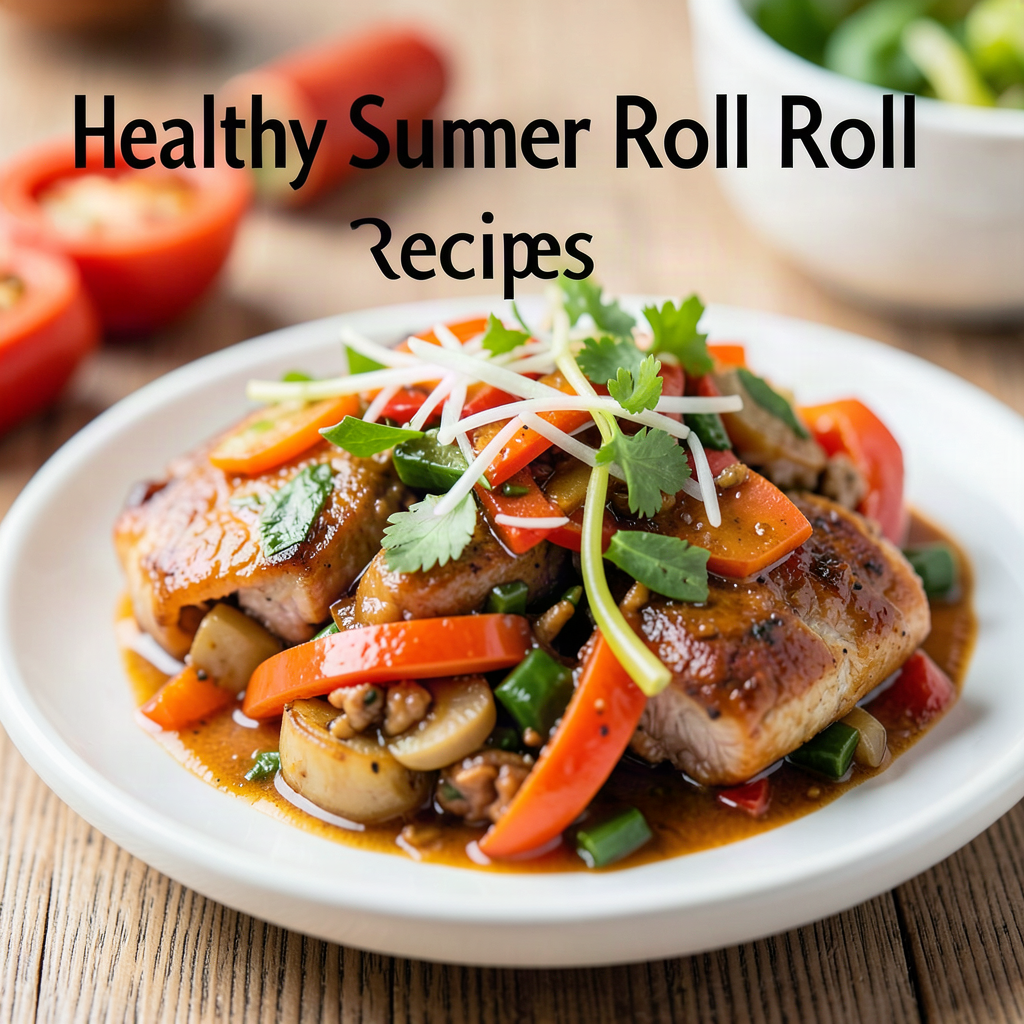
Summer rolls are a light, refreshing way to enjoy fresh vegetables, herbs, and protein without heating up the kitchen. Unlike their fried counterparts, these rolls are assembled raw, wrapped in translucent rice paper, and served with a flavorful dipping sauce. They fit neatly into a variety of eating plans, from gluten‑free and vegan to low‑carb and paleo, because the fillings can be swapped to match any dietary preference. In this guide you will learn how to select the best rice paper, prepare a rainbow of fillings, master the rolling technique, and create five versatile dipping sauces that keep the rolls exciting all season long.
Choosing the Right Rice Paper
Rice paper comes in round and square sheets, typically 22 to 28 centimeters in diameter. Thinner sheets are more delicate and produce a translucent roll, while thicker sheets hold up better to hearty fillings. Look for brands that list only rice flour, water, and salt on the ingredient list. Avoid papers that contain tapioca starch if you prefer a cleaner label. To soften a sheet, dip it in lukewarm water for five to eight seconds; it should become pliable but not mushy. Lay the softened sheet flat on a clean kitchen towel to absorb excess moisture before adding fillings. Store unopened packages in a cool, dry pantry and reseal opened packs in an airtight container to prevent them from drying out.
Building a Balanced Filling Base
A colorful vegetable base supplies crunch, sweetness, and nutrients. Julienne carrots, cucumber, red bell pepper, and purple cabbage into matchstick strips about five centimeters long. Add a handful of butter lettuce or romaine for a soft layer that cushions the rice paper. For extra texture, toss in thinly sliced jicama or radish. Season the vegetables lightly with a pinch of sea salt and a splash of rice vinegar; this brightens flavor without overwhelming the dipping sauce. Arrange the strips in neat rows so each roll receives a balanced mix of colors and textures.
Protein Options for Every Diet
Protein turns a snack into a satisfying meal. Cooked shrimp, poached chicken breast, or thinly sliced pork tenderloin work well for omnivores. For plant‑based eaters, press firm tofu, marinate in soy sauce, lime juice, and garlic, then pan‑sear until golden. Tempeh steamed and crumbled adds a nutty bite. Edamame beans, shelled and blanched, provide a quick protein boost. Chickpeas roasted with smoked paprika give a crunchy, savory element. Choose one protein per roll or combine two for variety.
Herb and Flavor Boosters
Fresh herbs are the soul of a summer roll. Mint leaves, cilantro sprigs, Thai basil, and Vietnamese perilla each bring a distinct aroma. Tear the leaves rather than chopping to preserve essential oils. Add a few thin slices of jalapeño or bird’s eye chili for heat, and a grating of lime zest for brightness. A drizzle of toasted sesame oil over the assembled fillings adds depth without making the roll soggy. Experiment with combinations to discover your signature flavor profile.
Mastering the Rolling Technique
Place the softened rice paper on a flat surface. Lay a line of lettuce across the lower third, then layer vegetables, protein, and herbs in that order. Fold the bottom edge over the fillings, tuck the sides inward, and roll tightly toward the top edge, similar to a burrito. The roll should feel firm but not compressed. If the paper tears, the water dip was too long; if the roll unravels, the fillings are too bulky. Practice with a few sheets before assembling a full batch.
Five Signature Dipping Sauces
1. Peanut Hoisin: whisk together peanut butter, hoisin sauce, lime juice, soy sauce, minced garlic, and a splash of water until smooth. 2. Nuoc Cham: combine fish sauce, lime juice, sugar, water, minced garlic, and sliced chili; stir until sugar dissolves. 3. Almond Butter Lime: blend almond butter, coconut aminos, lime zest, ginger, and warm water. 4. Tahini Miso: mix tahini, white miso paste, rice vinegar, maple syrup, and water. 5. Spicy Mango: puree ripe mango, lime juice, sriracha, and a pinch of salt. Store each sauce in a sealed jar in the refrigerator for up to five days.
Meal‑Prep and Storage Tips
Prep all vegetables and proteins up to three days ahead; keep each component in separate airtight containers. Rice paper should be softened only moments before rolling to avoid stickiness. Assembled rolls can be placed on a parchment‑lined tray, covered with a damp paper towel, and refrigerated for up to four hours. For longer storage, keep fillings and sauces separate and roll just before serving. This prevents the rice paper from becoming gummy and preserves the crisp texture of the vegetables.
Creative Variations and Serving Ideas
Turn rolls into a deconstructed salad bowl by slicing them crosswise and tossing with extra sauce. Use large lettuce leaves as a wrapper for a low‑carb version. Arrange mini rolls on a platter with a trio of sauces for a party appetizer. Add fruit such as thin mango or papaya strips for a sweet twist. For a breakfast roll, fill with scrambled eggs, avocado, and chives, then serve with a light yogurt‑herb dip. The possibilities are limited only by seasonal produce and personal taste.
Seasonal Produce Guide for Peak Flavor
Choosing vegetables and herbs at their seasonal peak makes every roll taste brighter and requires less seasoning. In early summer, look for crisp snap peas, tender baby carrots, and sweet corn kernels that can be sliced off the cob and added raw for a burst of sugar. Mid‑season brings peak cucumbers, radishes, and zucchini; these hold their crunch even after a brief dip in the rice paper. Late summer offers heirloom tomatoes, thin‑sliced peaches, and fragrant basil varieties such as lemon or cinnamon basil that add an unexpected aromatic twist. When shopping at a farmers market, ask the grower which varieties were harvested that morning; the freshest produce will have a firm texture and a vivid color that signals high nutrient density. Store leafy herbs upright in a glass of water covered loosely with a produce bag, and keep root vegetables in a cool, dark drawer to extend shelf life. If you encounter overripe fruit such as mushy mango, puree it into a sauce rather than using it as a filling, preventing the roll from becoming soggy. Edge case: when a heat wave accelerates ripening, blanch heartier greens like kale for ten seconds, shock in ice water, and pat dry; this softens the fibers without losing the vibrant green hue.
Building a color palette from seasonal produce also improves visual appeal. Aim for at least three distinct hues in each roll: a deep purple from shredded cabbage, a bright orange from julienned carrot, and a fresh green from mint or cilantro. This not only looks inviting on a platter but ensures a broader spectrum of phytonutrients. For a winter‑time variation, swap summer vegetables for roasted beet ribbons, thinly sliced fennel, and pickled ginger; the same rolling technique applies, and the flavor profile shifts to earthy and warming while still staying raw‑friendly.
Finally, consider the water content of each ingredient. High‑moisture items like watermelon or cucumber release liquid that can weaken the rice paper. Pat these items thoroughly with paper towels and, if necessary, sprinkle a pinch of salt, let sit for five minutes, then pat again. This draws out excess moisture and concentrates flavor. For herbs, tear rather than chop to keep essential oils intact, and add them just before rolling to avoid wilting. By aligning your fillings with the calendar, you maximize taste, nutrition, and the overall eating experience.
Alternative Wrappers Beyond Rice Paper
Rice paper is the classic choice, but several other wrappers can expand texture and dietary options. Large collard green leaves, blanched for fifteen seconds and patted dry, provide a sturdy, slightly bitter canvas that holds heavy fillings such as marinated tempeh or roasted sweet potato. Their broad surface area also makes them ideal for open‑face presentations where the filling is displayed like a tartine. Nori sheets, lightly toasted, add a subtle umami note and work well with Asian‑inspired fillings like pickled daikon, shiso, and sesame‑crusted tofu. Because nori becomes brittle when wet, keep the fillings relatively dry and roll immediately after placing the sheet on a damp cloth.
For a low‑carb, gluten‑free alternative, use thin cucumber ribbons created with a mandoline. Lay overlapping ribbons on a cutting board, add a line of filling, and roll tightly; the result resembles a sushi roll but stays completely raw. Soy‑based wrappers, often sold as “spring roll skins,” are thinner than rice paper and contain a small amount of wheat starch; verify the label if gluten is a concern. Egg‑roll wrappers can be used raw for a chewier bite, but they contain egg and wheat, so they suit omnivorous diets only. Another creative option is rice‑paper‑thin lettuce cups: separate butter lettuce leaves, trim the thick ribs, and use each leaf as a single‑serve wrapper. This method eliminates the need for dipping sauce altogether if you drizzle a light vinaigrette directly onto the filling.
When experimenting with new wrappers, test the moisture balance first. Submerge a single sheet in lukewarm water for the recommended time, then lay it on a clean kitchen towel. If the wrapper tears easily, reduce the soak by two seconds; if it remains stiff, add a second dip. Keep a small bowl of water nearby for quick re‑hydration during a large batch. Edge case: collard greens can become overly soft if left in water too long; a quick blanch followed by an ice bath preserves structure. By diversifying wrappers, you cater to paleo, keto, and raw‑food guests without sacrificing the handheld convenience that defines a summer roll.
Advanced Rolling Shapes and Presentation Techniques
Beyond the standard cylinder, several shapes add visual interest and functional benefits. The classic tight cylinder is ideal for dipping because the sealed ends keep sauce inside. To achieve a uniform diameter, place the filling in a straight line across the lower third, fold the bottom edge over, tuck the sides, and roll with steady pressure. For an open‑ended “cigar” roll, leave the top edge unsealed; this allows the diner to see the colorful layers and works well for platters where rolls are stood upright in a shallow dish. A cone shape, formed by folding the rice paper into a triangle before adding fillings, creates a pocket that holds chunkier ingredients like diced mango or avocado without leaking.
Pinwheel slices turn a single roll into bite‑size appetizers. After rolling a tight cylinder, chill for ten minutes to firm the rice paper, then cut into one‑inch rounds with a sharp, damp knife. Arrange the pinwheels on a rectangular platter, alternating colors for a mosaic effect. For a decorative envelope fold, place the filling in the center, bring the four corners to the middle, and press gently; the result resembles a small parcel and is perfect for individual servings at a brunch buffet. When serving a crowd, consider a “roll‑your‑own” station: lay out softened wrappers, pre‑portioned fillings in labeled bowls, and a printed diagram showing each folding method. Guests can customize shape and filling, turning preparation into an interactive experience.
Edge cases arise with very wet fillings such as watermelon or tomato concassé. In those instances, create a barrier layer of lettuce or a thin spread of cream cheese mixed with herbs before adding the juicy component. This prevents the wrapper from becoming soggy and maintains structural integrity. For transport, pack rolled cylinders in a single layer on a parchment‑lined tray, cover with a damp paper towel, and place the tray inside an insulated carrier with a cold pack. The rolls stay firm for up to two hours, and the presentation remains pristine when uncovered at the destination.
Nutritional Profiles and Macro Tracking for Custom Rolls
Understanding the macro composition of each component lets you tailor rolls to specific dietary goals. A standard 22‑centimeter rice paper sheet contributes roughly 30 calories, 7 grams of carbohydrate, and negligible protein or fat. Adding 50 grams of poached chicken breast adds about 80 calories, 18 grams of protein, and 1 gram of fat. Firm tofu, pressed and pan‑seared, provides 70 calories, 8 grams of protein, and 4 grams of fat per 50‑gram serving. For a low‑carb version, replace the rice paper with a large collard leaf (5 calories, 1 gram carbohydrate) and fill with cucumber ribbons, avocado (½ medium = 120 calories, 11 grams fat, 6 grams carbohydrate), and smoked salmon (30 grams = 60 calories, 12 grams protein, 1 gram fat). The total roll stays under 10 grams of net carbs while delivering a high‑quality protein hit.
Sauces can dominate the calorie count. The peanut hoisin sauce averages 45 calories per tablespoon, mostly from fat and sugar. A lighter nuoc cham made with reduced‑sodium fish sauce, lime, and a touch of stevia drops the count to 10 calories per tablespoon. When tracking macros, measure sauce portions with a spoon rather than pouring freely. For vegan athletes, combine tempeh (100 grams = 190 calories, 20 grams protein, 11 grams fat) with a tahini‑miso drizzle (1 tablespoon = 35 calories, 3 grams fat, 1 gram protein) and a generous handful of edamame (½ cup = 100 calories, 9 grams protein, 5 grams fat). This roll delivers roughly 30 grams of protein with a balanced fat profile.
Edge case: if you follow a strict ketogenic plan, avoid rice paper entirely and use nori or cheese‑based wrappers (thin slices of baked cheese cooled into crisp sheets). Track net carbs by subtracting fiber from total carbohydrates; many vegetables like bell pepper and cabbage contribute 2‑3 grams of fiber per 100 grams, lowering net impact. Use a spreadsheet or nutrition app to log each ingredient weight; the cumulative data helps you hit daily targets without guesswork. By quantifying each roll, you transform a casual snack into a precise meal component that fits any macro‑centric program.
Pairing Summer Rolls with Drinks and Complementary Sides
The light, herbaceous nature of summer rolls pairs beautifully with beverages that cleanse the palate without overwhelming the delicate flavors. A chilled jasmine iced tea, lightly sweetened with a splash of honey, mirrors the floral notes of Thai basil and mint. For an adult gathering, a dry sake served at 10°C accentuates the umami of fish‑sauce‑based nuoc cham while cutting through peanut sauce richness. A crisp lager or a Belgian witbier with coriander and orange peel echoes the citrus zest in the fillings. Non‑alcoholic options include sparkling water infused with cucumber and lime, or a cold‑brew hibiscus tea that adds a tart ruby hue to the table.
Side dishes should complement texture and temperature contrast. A simple edamame bowl tossed with sea salt and a squeeze of lemon provides a warm, protein‑rich counterpoint. Pickled daikon and carrot ribbons (quick‑pickled in rice vinegar, sugar, and salt for thirty minutes) add acidity and crunch, balancing the soft rice paper. A cold soba noodle salad dressed with sesame oil, soy sauce, and toasted sesame seeds offers a heartier carbohydrate base for those who want a more substantial meal. For a gluten‑free crowd, serve a quinoa tabbouleh with parsley, mint, tomato, and lemon; the herb overlap creates flavor harmony across the spread.
Edge case: when serving rolls at a brunch, pair with a light mimosa made from fresh orange juice and brut sparkling wine; the bubbles lift the herb aromatics. If the menu includes a spicy mango dipping sauce, offer a cooling cucumber‑mint yogurt dip on the side to give guests a milder alternative. For a picnic, pack drinks in insulated bottles and sides in separate compartments to avoid condensation softening the rolls. By curating beverages and sides that echo or contrast the roll’s flavor profile, you elevate the experience from a simple snack to a cohesive, memorable meal.
Scaling Up: Batch Preparation, Transport, and Crowd‑Friendly Tips
Producing dozens of rolls for a party requires an assembly‑line mindset. Begin by prepping all vegetables, proteins, and herbs up to three days ahead; store each in its own airtight container with a paper towel to absorb excess moisture. On the day of the event, set up a long clean surface with stations: a shallow pan of lukewarm water for softening wrappers, a damp kitchen towel for drying, a row of filling bowls in the order they will be layered, and a final station for sauce portioning. Assign one person to dip and lay wrappers, another to add fillings, and a third to roll and place finished rolls on parchment‑lined trays. This division of labor reduces the time each wrapper spends exposed to air, minimizing stickiness and tears.
For transport, arrange rolls in a single layer on a tray, cover with a damp (not wet) paper towel, and seal the tray with a tight‑fitting lid or plastic wrap. Place the tray inside a cooler with a gel pack positioned at the side, not directly on the rolls, to keep the temperature around 4°C without freezing the delicate rice paper. If the journey exceeds two hours, consider packing the components separately and assembling on‑site; this guarantees optimal texture. When serving a buffet, display rolls on a chilled marble slab or a bed of ice wrapped in a clean cloth; the cold surface keeps the wrappers firm for the duration of the event.
Edge cases include unexpected humidity, which can make rice paper gummy even after a brief dip. In high‑humidity environments, reduce soak time to three seconds and increase the amount of drying towel surface area. For outdoor summer festivals, pre‑portion sauces into small ramekins with lids to prevent spillage and contamination. Provide a “roll‑your‑own” kit for kids: pre‑cut wrappers, bite‑size filling pieces, and a mild yogurt‑herb dip; this engages younger guests and reduces the need for adult assistance. By planning the workflow, controlling temperature, and anticipating environmental factors, you can scale summer rolls from a kitchen experiment to a reliable, crowd‑pleasing centerpiece.
Frequently Asked Questions
Can I make summer rolls ahead of time?
You can prepare all components up to three days in advance, but assemble the rolls no more than four hours before eating to keep the rice paper from becoming overly soft.
What is the best way to keep rice paper from tearing?
Dip each sheet in lukewarm water for only five to eight seconds, then lay it on a clean kitchen towel to remove excess moisture before filling.
Are summer rolls suitable for a low‑carb diet?
Traditional rice paper contains carbohydrates, but you can swap it for large lettuce leaves or thin cucumber ribbons to create a low‑carb version.
How do I prevent the dipping sauce from separating?
Whisk sauces thoroughly and store them in airtight jars; a quick stir before serving re‑emulsifies any separation.
Can I freeze assembled summer rolls?
Freezing is not recommended because the rice paper becomes brittle and the fresh vegetables lose texture; freeze only the protein components if needed.
Related posts:
 High-Protein Foods That Pack a Serious Nutritional Punch
 Beyond Breakfast: The Plant-Based Sausage That’s Changing the Morning Game
 Delicious Ground Chicken Recipes
 The Truth About Double-Dipping and Germs
 Keto Mexican Night: Cauliflower Enchiladas That Actually Taste Amazing
 Candice Kumai’s Healthy Turmeric Fried Rice Recipe
 Guilt-Free Cinnamon Roll Recipe
 Perfect Somen Noodles Recipe