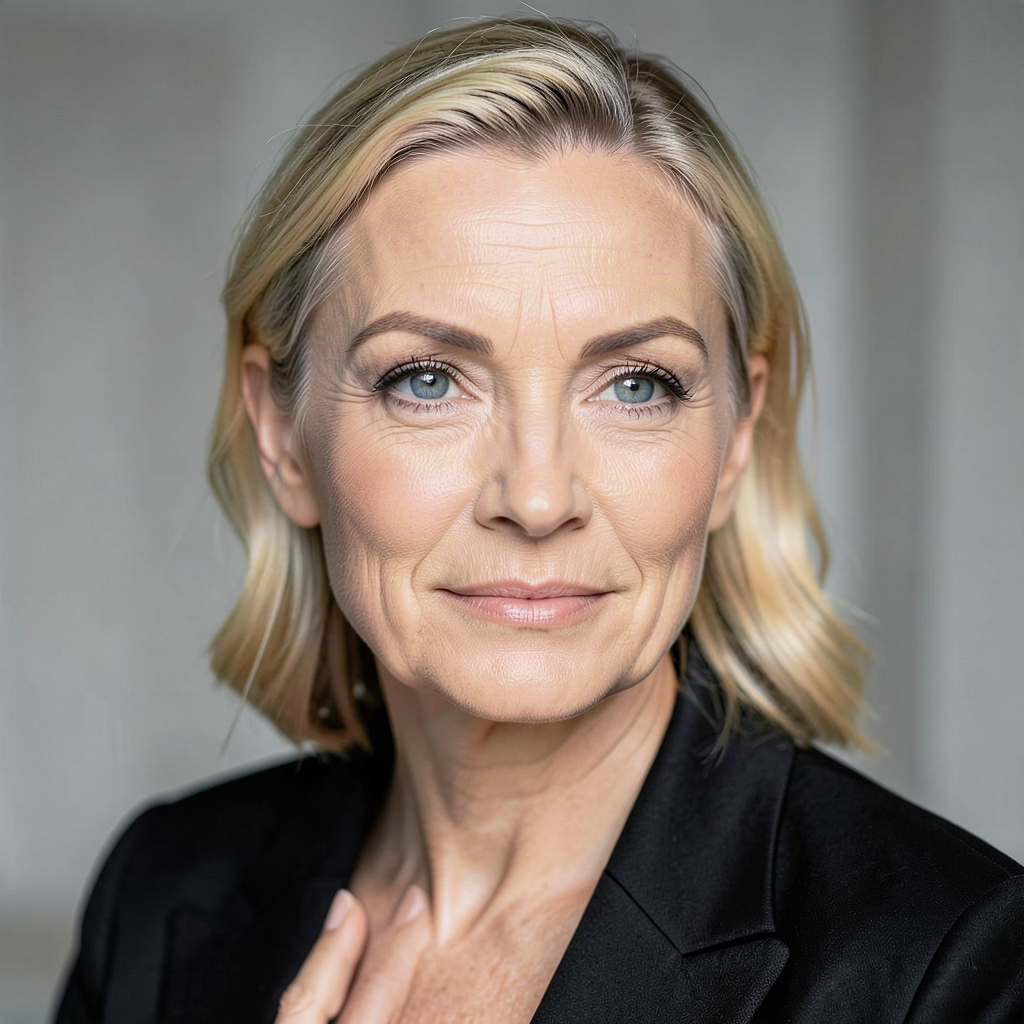
When we think of timeless elegance, Dame Helen Mirren often stands as the gold standard. Her approach to beauty is not about the erasure of time, but rather the celebration of it. Among the various elements of her sophisticated look, her eyebrows play a pivotal role. Often overlooked in the broader conversation of skincare and makeup, the eyebrows are the architectural framework of the face. They communicate emotion, define the gaze, and provide a sense of balance that can either lift the features or weigh them down.
Key takeaways
- Avoid over-plucking to preserve density, allowing brows to naturally frame your face as you age.
- Use a mapping technique with a pencil to identify your brow's ideal starting point, arch, and tail.
- Groom in natural light using a standard mirror to avoid the distortions of high-magnification lenses.
- Define brows with light, hair-like strokes using a pencil shade slightly softer than your natural hair color.
- Train wiry gray hairs with conditioning serums or clear waxes rather than removing them to maintain volume.
Helen Mirren has frequently spoken about her preference for a natural aesthetic, eschewing the heavy-handed trends of modern cosmetics in favor of a look that feels authentic to her age and personality. Her “tips” are less about specific product endorsements and more about a philosophy of restraint, precision, and acceptance. For those looking to achieve a look that is polished yet effortless, studying the Mirren approach to brows offers a masterclass in grooming for longevity and grace.
The Philosophy of Natural Aging and the Brow
At the heart of Helen Mirren’s beauty ethos is the idea that aging is not a problem to be solved, but a process to be managed with dignity. This philosophy extends directly to the eyebrows. In an era where “Instagram brows”—characterized by heavy pomades, sharp edges, and an almost painted-on appearance—have dominated the landscape, Mirren represents a return to the organic. She understands that as we age, the skin loses elasticity and the brow bone may shift, meaning a rigid, overly sculpted brow can often look unnatural or even harsh against softening features.
The goal of the Mirren approach is not to recreate the brows of one’s twenties, but to optimize the brows of the present. This means prioritizing health over precision. By allowing the brows to retain some of their natural fullness and softness, the face maintains a youthful vitality that is often lost when brows are over-groomed. The focus shifts from “perfection” to “harmony,” ensuring that the eyebrows complement the eyes and the overall structure of the face without dominating it.
Understanding Brow Architecture as We Age
To follow in Mirren’s footsteps, one must first understand how eyebrows change over time. As we enter our middle and later years, it is common for brow hairs to thin, lose pigment, or grow in erratic directions. Some people experience a “migration” where the brow appears to drop slightly, contributing to a tired or heavy-lidded look. Understanding these biological shifts is essential for choosing the right grooming strategy.
Mirren’s look leverages the power of the arch to create a natural lifting effect. By maintaining a clean but soft arch, one can visually “open up” the eye area, mimicking the effects of a lift without the need for invasive procedures. The key is to identify the highest point of the natural arch and support it, rather than trying to force a new shape. This biological awareness prevents the common mistake of plucking too much from the bottom of the brow, which can inadvertently lower the appearance of the brow line and make the eyes look droopy.
The Danger of Over-Plucking and the Path to Recovery
Many of us carry the scars of the 1990s and early 2000s, an era defined by the “pencil-thin” brow. Helen Mirren’s current look serves as a reminder of why fullness is superior to minimalism when it comes to facial framing. Over-plucking can lead to permanent follicle damage, leaving gaps that are difficult to fill naturally. Mirren advocates for a gentler touch, emphasizing that a slightly thicker, more natural brow is almost always more flattering than one that has been overly manicured.
For those recovering from years of over-plucking, the path to a Mirren-style brow requires patience. The actionable guidance here is to stop all plucking for at least three to six months. This allows the “stray” hairs to grow in, which often helps identify where the natural shape actually lies. During this growth phase, a clear brow gel can be used to keep unruly hairs in place. Once the fullness returns, a professional shaping session can remove only the hairs that truly fall outside the natural perimeter, ensuring the brow remains lush and supportive of the upper eyelid.
Shaping for Your Unique Face Shape
While Helen Mirren’s brows are a blueprint, the application must be tailored to the individual. The secret to her polished look is that her brows are in perfect proportion to her features. To achieve this balance, one should use the “mapping” technique. Start by holding a pencil vertically from the side of the nostril to the inner corner of the eye; this is where the brow should begin. Then, angle the pencil from the nostril through the center of the pupil; this marks the peak of the arch. Finally, angle the pencil from the nostril to the outer corner of the eye to find where the brow should end.
For those with a rounder face, a slightly more defined arch can add necessary structure. For those with a longer face, a flatter, more horizontal brow can create a balancing effect. Mirren’s brows are a testament to the “classic” shape—a soft curve that follows the orbital bone. The goal is to avoid harsh angles or “blocked-off” starts, which can make the expression look angry or artificial. By following the natural bone structure, the brows act as a subtle lift for the entire face.
Minimalist Grooming Techniques for a Soft Look
Mirren’s aesthetic is built on the principle of “less is more.” In terms of grooming, this means moving away from aggressive waxing or threading in favor of precise tweezing. Waxing can often remove too much hair at once, leading to an overly sterilized look that lacks character. Tweezing allows for a hair-by-hair decision process, ensuring that the integrity of the brow shape is maintained.
Practical steps for minimalist grooming include:
- Lighting: Always groom in natural light. Bathroom mirrors with overhead lighting can create shadows that lead to over-plucking.
- The “Step Back” Rule: After plucking a few hairs, step back two feet from the mirror. This prevents you from focusing on a single hair and losing sight of the overall symmetry.
- Taming, Not Removing: Instead of plucking hairs that grow slightly out of place, try trimming them. Brush the brow hairs upward with a spoolie and use small beauty scissors to trim only the tips that extend far beyond the brow line. This maintains the density while cleaning up the silhouette.
Subtle Definition: The Art of the Brow Pencil and Gel
When it comes to makeup, Helen Mirren avoids the heavy-handed approach. She doesn’t “draw” brows; she “defines” them. The difference lies in the technique and the product. For a mature, sophisticated look, the goal is to mimic the appearance of actual hair rather than filling in a solid block of color.
To achieve this, use a fine-tipped brow pencil or a brow pen in a shade that is one tone lighter than the natural hair. Dark colors can look harsh and aging, whereas a slightly lighter, taupe or soft brown shade creates a softer, more youthful glow. Instead of drawing a continuous line, use short, flicking motions to create “hair-like strokes” in the areas where the brow is sparse. Focus primarily on the arch and the tail, leaving the inner corners light and airy.
Finish the look with a clear or lightly tinted brow gel. Brushing the hairs upward and slightly outward not only sets the shape but also creates a subtle volume that makes the brows look healthier and more vibrant. This simple step adds a polished, “groomed” feel without the need for heavy cosmetics.
Caring for Graying and Silver Brows
One of the most courageous and beautiful aspects of Helen Mirren’s style is her embrace of her natural color. Graying eyebrows are a common part of aging, but they can sometimes make the face look washed out if the contrast is lost. Mirren shows us that silver brows can be an asset, adding a distinguished and ethereal quality to the gaze.
If you wish to embrace your silver brows, the focus should be on grooming and hydration. Gray hairs can often be coarser and more stubborn than pigmented hairs. Using a tiny drop of castor oil or a dedicated brow serum at night can soften the hair and keep the follicles healthy. If the brows have become too pale and you feel your features have lost definition, a very light tint—using a professional-grade dye—can restore a hint of shadow without looking unnatural. However, the most “Mirren-esque” choice is to embrace the silver, using a clear gel to ensure they are neat and well-shaped, letting the natural luminosity of the gray hair add to the overall elegance of the look.
The Psychological Impact of Grooming and Self-Care
Beyond the aesthetics, the act of grooming the eyebrows is a ritual of self-care. Helen Mirren often exudes a sense of confidence that comes from being comfortable in her own skin. When we take the time to care for the details of our appearance, it is not necessarily about vanity, but about intentionality. The process of shaping and defining the brows is a moment of mindfulness, a way of saying that we are worth the effort regardless of our age.
This psychological shift—from “fixing” a flaw to “enhancing” a feature—is where true beauty lies. When we stop fighting the clock and start working with our current selves, the stress of aging diminishes. A well-groomed brow can act as a psychological “lift,” making us feel more awake, alert, and put-together. This internal confidence is what truly radiates from Mirren, making her eyebrow tips more about the spirit of self-acceptance than the tools used to achieve the look.
Integrating Brows into a Holistic Beauty Routine
To truly capture the essence of a timeless look, brow care must be integrated into a broader beauty routine. The skin around the eyebrows is thin and prone to sagging. Incorporating a gentle facial massage or using a firming cream around the brow bone can help maintain the structural support for the eyebrows. Hydration is also key; skin that is well-hydrated provides a smoother canvas for brow products and prevents the skin from looking crepey around the arch.
Furthermore, the brows should be viewed in relation to the rest of the face. For example, if you are wearing a bold lip, keeping the brows soft and natural prevents the look from becoming overdone. If you are wearing minimal makeup, a slightly more defined brow can provide the necessary structure to make the face look polished. By treating the eyebrows as part of a holistic system, you achieve that seamless, effortless elegance that Helen Mirren is known for.
Selecting the Right Tools for Mature Precision
To execute the Mirren-inspired philosophy of restraint, the quality of one’s tools is just as important as the technique used. As we age, the skin becomes thinner and more prone to irritation, and the brow hairs themselves can become coarser or more brittle. Using the wrong tools can lead to unnecessary skin trauma or the accidental plucking of healthy hairs that are essential for maintaining the brow’s structural integrity.
The first essential is the tweezer. For mature brows, a slanted-tip stainless steel tweezer is generally superior to pointed or flat tips. The slant allows for a precise grip on the hair closest to the root, reducing the likelihood of snapping the hair mid-shaft, which can leave a prickly stubble and disrupt the soft silhouette. Those with limited dexterity or tremors should seek out ergonomic tweezers with non-slip grips, ensuring that the pressure is applied evenly and avoiding the “slip” that often results in over-plucking.
Beyond the tweezers, the spoolie brush is an unsung hero of the natural look. A spoolie is not merely for blending; it is a diagnostic tool. By brushing the hairs in various directions, one can identify the natural “grain” of the brow. For those following a minimalist approach, using a clean, firm-bristled spoolie to lift the hairs before trimming ensures that only the truly protruding lengths are removed. This prevents the “choppy” look that occurs when hairs are trimmed while lying flat against the skin.
Finally, the choice of mirror is critical. While the existing guidance emphasizes natural light, the type of magnification can be a double-edged sword. A 10x magnifying mirror is useful for removing a single, stubborn gray hair, but relying on it for the entire grooming process is a mistake. High magnification distorts the proportions of the face, making a slight asymmetry look like a major flaw. The professional approach is to use a standard mirror for 90% of the work and reserve the magnifying mirror only for the final, surgical refinements of the arch.
Addressing the “Wiry” Texture of Aging Brow Hairs
A common challenge that arises as brows transition to silver or gray is a change in texture. The loss of melanin is often accompanied by a change in the hair follicle’s production of sebum, leaving the hair feeling wiry, coarse, and resistant to shaping. These “rogue” hairs often grow in directions that defy the natural flow of the brow, creating a frazzled appearance that can make the face look tired or unkempt.
The Mirren approach to wiry hair is not to pluck these hairs—as they often provide the necessary volume to keep the brow from looking sparse—but to “train” them. This can be achieved through the consistent use of a nourishing balm or a heavy-duty clear wax. By applying a small amount of product and brushing the hair into the desired position twice daily, the hair can be coaxed into a more cooperative alignment over time. This is a slow process of conditioning rather than a quick fix of removal.
For exceptionally stubborn hairs that refuse to lay flat, a technique known as “directional trimming” is effective. Instead of cutting the hair straight across, use small beauty scissors to trim the hair at a slight angle, following the direction of growth. This removes the bulk of the wiry tip without creating a blunt edge, allowing the hair to blend seamlessly with the softer hairs surrounding it. This maintains the density of the brow while eliminating the “wild” aesthetic.
Edge cases include those with extremely curly brow hairs that may kink and create gaps. In these instances, avoid heavy gels that can clump the curls together, making the gaps more apparent. Instead, opt for a lightweight brow soap or a conditioning serum that softens the cuticle of the hair, making it more pliable and easier to smooth into a cohesive shape.
The Synergy Between Brow Positioning and Eyelid Support
One of the most sophisticated aspects of Helen Mirren’s look is how her eyebrows interact with the surrounding anatomy, particularly the upper eyelids. As the skin loses collagen, the brow often descends, and the eyelid may begin to hood, which can obscure the eye and create a heavy, fatigued expression. The strategic positioning of the brow can act as a non-surgical “lift,” creating more visual space between the lash line and the brow bone.
To achieve this effect, the focus should be on the “under-arch.” By meticulously removing only the stray hairs that grow too low on the brow bone—without encroaching on the main body of the brow—one can create a cleaner line that visually pushes the brow upward. This creates a crisp boundary that makes the eye area appear more open and alert. The key is to avoid the temptation to thin the brow from the bottom to create a higher arch; instead, focus on the perimeter to remove the “visual noise” that weighs the eye down.
Furthermore, the tail of the brow plays a crucial role in eyelid support. A brow tail that drops too low or extends too far toward the temple can actually drag the eye downward, emphasizing sagging skin. By subtly lifting the end of the brow—either through precise grooming or a tiny amount of filling pencil—one can create an upward diagonal line that counteracts the downward pull of gravity. This subtle shift in geometry can significantly alter the perceived age of the gaze, providing a sense of lift and vitality.
This technique requires a deep understanding of the orbital bone. By feeling the bone structure with the fingertips, one can determine where the brow should naturally end to provide the most support. The goal is to ensure the brow follows the curve of the bone without dipping into the hollow of the eye socket, which would otherwise create a sunken appearance.
Nutritional Foundations for Brow Density
While external grooming and makeup provide the finishing touches, the health of the brow begins at the follicular level. Following a philosophy of natural grace means supporting the body’s ability to maintain hair density and quality. As we age, the rate of hair growth slows, and the follicles may become dormant. Incorporating specific nutrients into the diet can help maximize the potential of the remaining brow hairs.
Biotin, a B-vitamin, is well-known for supporting keratin production, which is the primary protein making up the hair shaft. Foods rich in biotin, such as eggs, almonds, and whole grains, help ensure that the brow hairs grow in strong and are less prone to breakage. Similarly, Omega-3 fatty acids found in walnuts, flaxseeds, and fatty fish help lubricate the hair follicle from the inside out, reducing the brittleness often associated with silver brows and giving them a natural, healthy sheen.
Iron and zinc are also critical; a deficiency in these minerals can lead to premature thinning of the eyebrows. Leafy greens, legumes, and pumpkin seeds provide the necessary minerals to keep the follicle active. For those who prefer a more targeted approach, a high-quality multivitamin can fill the gaps, but the Mirren-esque approach prioritizes whole, nutrient-dense foods that support overall systemic health, which in turn reflects in the luminosity of the skin and the fullness of the brows.
Hydration also plays a surprising role in brow appearance. Dehydrated skin can appear crepey and sunken, which makes the brow hairs look sparser than they actually are. By maintaining optimal hydration levels, the skin around the brow remains plump, providing a more supportive base for the hairs and making the overall architecture of the brow look more robust and youthful.
Navigating Semi-Permanent Options Through a Naturalist Lens
In the modern beauty landscape, options like microblading, powder brows, and nano-blading are often marketed as the ultimate solution for thinning brows. However, from the perspective of a naturalist like Helen Mirren, these procedures must be approached with extreme caution. The primary risk of semi-permanent makeup is its rigidity; a brow that is tattooed into place cannot evolve as the face continues to age and shift.
If one chooses to explore these options, the “Mirren-approved” approach would be to prioritize “hyper-realism” over “definition.” Traditional microblading often creates lines that are too uniform, resulting in a stamped-on look that clashes with the softness of mature skin. Nano-blading, which uses a thinner needle to create more delicate, hair-like strokes, is a more acceptable alternative as it mimics the organic irregularity of natural brow growth.
An important edge case to consider is the color choice for semi-permanent pigments. Many people make the mistake of choosing a color that matches their current hair, but for mature brows, it is often better to choose a shade slightly cooler and lighter than the natural hair. This prevents the brows from looking too “heavy” or artificial against a paler or silvering complexion. The goal is to add a hint of shadow and structure, not to create a bold statement.
Ultimately, the most natural alternative to permanent makeup is the use of a high-quality brow tint. A professional tint lasts several weeks and provides the definition of microblading without the lifelong commitment. This allows the individual to adjust the shade and shape as their natural hair color evolves, maintaining the flexibility and authenticity that are central to aging with grace.
Seasonal Adjustments for Brow Maintenance
Brow care is not a static routine; it must adapt to the changing environment. The skin and hair react differently to the humidity of summer and the dryness of winter, and failing to adjust grooming habits can lead to suboptimal results.
During the summer months, increased humidity and heat can cause brow gels and waxes to melt or slide, leading to a loss of shape throughout the day. To counteract this, switch to a water-resistant clear gel or a lightweight brow soap. These products provide a stronger hold that withstands perspiration without feeling heavy or sticky. Additionally, the increased sun exposure can fade both natural brow pigment and tinted products. Applying a broad-spectrum SPF around the brow area is essential, as sun damage can weaken the hair follicles and lead to increased thinning over time.
In the winter, the primary challenge is dryness. Cold air and indoor heating can strip the moisture from the brow hairs, making them more prone to breakage and giving them a dull, matte appearance. This is the ideal time to introduce a nightly conditioning ritual. A small amount of organic castor oil or a peptide-based serum applied with a spoolie can deeply hydrate the hair and the surrounding skin, preventing the “flaky” look that can sometimes occur around the brow arch during winter.
Furthermore, the lighting changes between seasons can affect how we perceive our brow shape. The harsh, direct light of summer can reveal every stray hair, leading to a temptation to over-pluck. Conversely, the soft, diffused light of winter can hide gaps, leading to an under-defined look. By remaining mindful of these environmental shifts, one can maintain a consistent, polished appearance year-round, ensuring the brows always complement the overall complexion.
The Art of the “Zero-Product” Brow
There are days when the goal is not a “look,” but a state of effortless readiness. Achieving a polished appearance without a single drop of makeup requires a mastery of structural grooming. This is the purest expression of the Mirren philosophy: the belief that the natural architecture of the face, when properly maintained, is sufficient.
The foundation of the zero-product brow is the “clean perimeter.” This involves removing only the hairs that grow far beyond the natural brow line, particularly in the “unibrow” zone and the lower orbital area. By keeping these boundaries crisp, the brows look intentional and groomed even without color. The focus here is on contrast—the contrast between the lushness of the brow and the clarity of the surrounding skin.
Another key technique is the “strategic lift.” Using a clean spoolie, brush the hairs upward and slightly toward the temple. If the hairs are healthy and well-conditioned, they will hold this position for a significant portion of the day, creating a natural lift that mimics the effect of a brow gel. For those with more stubborn hairs, a tiny amount of aloe vera gel—a natural, non-cosmetic alternative—can provide a subtle hold without the artificial shine of commercial products.
Finally, the zero-product brow relies on the health of the skin. A gentle exfoliation of the brow area once a week removes dead skin cells that can trap hairs or cause them to grow inward. Following this with a lightweight moisturizer ensures the skin is luminous, which makes the natural color of the brows—whether they be brown, blonde, or silver—stand out with a healthy, vibrant clarity. This approach proves that elegance is not about what we add to the face, but about how we care for what is already there.
Frequently Asked Questions
How can I fix asymmetrical eyebrows without over-plucking?
It is important to remember that no one has perfectly symmetrical brows; attempting to make them identical often leads to over-plucking and a loss of natural shape. The best approach is to aim for “sisters, not twins.” Use a brow pencil to subtly fill in the gaps on the lower brow to match the height of the higher one, or slightly extend the tail of the shorter brow. Focus on balancing the overall weight of the brows rather than the exact placement of every hair.
What is the best brow product for mature skin?
For mature skin, avoid heavy waxes or thick pomades, which can settle into fine lines and look unnatural. Instead, opt for a fine-tipped pencil, a brow powder, or a tinted gel. These products offer a more diffused, softer finish that mimics natural hair. A clear brow gel is also highly recommended for lifting and setting the hairs without adding unnecessary weight or color.
Can I use a brow serum if my hair has already stopped growing?
While serums cannot revive a follicle that is completely dead, they can significantly improve the health, thickness, and luster of existing hairs. Many serums contain peptides and conditioners that make the brows appear fuller and more resilient. If you have experienced significant loss, a serum can help optimize the remaining hair, making the grooming process easier and the results more natural.
How often should I shape my eyebrows to maintain a natural look?
To avoid the temptation of over-plucking, it is best to groom your brows every two to four weeks. Frequent plucking can lead to a loss of shape and a “thinned out” appearance. By waiting longer between sessions, you can see the natural growth pattern more clearly and only remove the hairs that are truly out of place, maintaining the lushness that characterizes the natural look.
Should I dye my gray eyebrows or leave them natural?
The choice depends on your personal style and the level of contrast you desire. If you feel that gray brows make your face look washed out, a professional tint in a soft, natural shade can add definition. However, embracing silver brows is a sophisticated choice that aligns with Helen Mirren’s philosophy of aging gracefully. If you choose to leave them natural, focus on shaping and using a clear gel to keep them polished and intentional.
Related posts:
 Eyebrow Extensions Are the New Lash Extensions
 Master the Art of DIY Brow Lamination at Home
 Jenna Dewan’s Drugstore Secret for Perfect Eyebrows
 Thin Eyebrow Comeback: The Makeup Tricks That Make It Work
 Eyebrow Dandruff Is Real and Here’s How to Fix It
 Your Complete Guide to Eyebrow Grooming Without the Salon Price
 Perfect Eyebrow Grooming Tips
 Maybelline Total Temptation Eyebrow Definer Pencil: Perfect Brows Made Easy