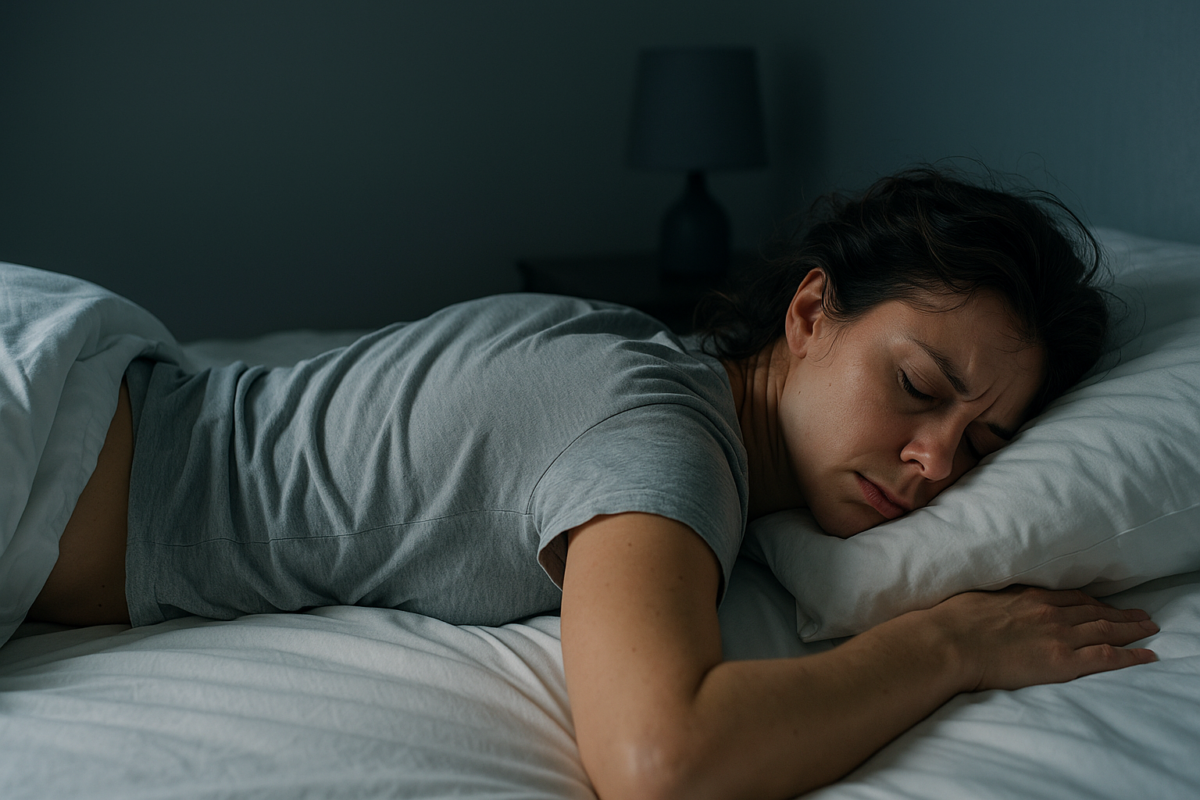
You crawl into bed after a long day, turn onto your stomach, tuck one arm under the pillow, and feel that familiar sense of relief. For many, this is the only position that feels truly comfortable for falling asleep. But what if this nightly habit is secretly undermining your health? Stomach sleeping, while common, comes with a host of documented physical consequences that range from morning aches to long-term spinal issues.
This isn’t about shaming a preferred sleep posture. Comfort is critical for restorative sleep. However, understanding the mechanics of your body during sleep can empower you to make informed choices. This article explores the hidden trade-offs of stomach sleeping, explains the biomechanics at play, and offers practical, compassionate strategies for those who want to transition to healthier sleep positions without sacrificing a good night’s rest.
Understanding Spinal Alignment in Sleep
Your spine is not a rigid pole; it’s a graceful, S-shaped structure designed to distribute weight and absorb shock. When standing with good posture, the natural curves of the neck (cervical spine), upper back (thoracic spine), and lower back (lumbar spine) are in harmonious balance. The goal during sleep is to maintain this neutral alignment as closely as possible.
When you sleep on your stomach, this balance is fundamentally disrupted. Your head must rotate nearly 90 degrees to the side to breathe, twisting the cervical spine out of its natural curve. Simultaneously, the weight of your torso presses your stomach into the mattress, which can cause the lumbar spine to arch excessively or sag, depending on mattress firmness. This position places sustained, uneven stress on joints, muscles, and ligaments that are meant to be at rest, setting the stage for pain and stiffness.
The Neck and Back: Ground Zero for Strain
The most immediate and common complaints from stomach sleepers involve the neck and upper back. Holding your head turned to one side for hours is akin to maintaining a static, awkward twist all night. This can strain the sternocleidomastoid and trapezius muscles, leading to chronic tightness, tension headaches that originate at the base of the skull, and reduced range of motion.
Over time, this sustained positioning can contribute to cervical spine issues. It places asymmetric pressure on the facet joints (the small stabilizing joints between vertebrae) and can accelerate wear on the cervical discs. For individuals with pre-existing conditions like arthritis or disc degeneration, stomach sleeping can significantly exacerbate pain and inflammation.
Breathing and Circulation: The Unseen Impacts
The position of your torso and neck directly influences your respiratory system. With your face pressed into a pillow and your neck twisted, your airway can become slightly compromised. This may lead to shallower breathing or, in some cases, contribute to increased airway resistance similar to mild sleep apnea, reducing sleep quality and oxygen intake.
Circulation can also be affected. Pressure on the abdomen may subtly impede venous return from the lower body. Furthermore, if you sleep with your arms positioned overhead or under your body, you might experience temporary nerve compression or reduced blood flow, leading to that “pins and needles” sensation or numbness upon waking.
Skin and Cosmetic Concerns
The pressure of your face against a pillowcase night after night has tangible effects on your skin. This constant contact and friction can contribute to wrinkles, often called “sleep lines.” Over decades, these compression lines can become permanently etched, particularly on the side you favor. It also creates an environment where oils, bacteria, and product residue from your skin are ground back into your pores, potentially worsening acne or causing irritation. Using a silk or satin pillowcase can reduce friction but doesn’t address the root postural issue.
Digestive Discomfort Overnight
Lying prone with direct pressure on the stomach and intestines can be uncomfortable for those with sensitive digestion or conditions like acid reflux (GERD). While the head elevation common in stomach sleeping can sometimes help reflux, the abdominal pressure can have the opposite effect, pushing stomach contents upward. This can lead to nighttime heartburn, bloating, and disrupted sleep.
Special Considerations for Pregnant Women
Stomach sleeping becomes physically impossible and is strongly discouraged as pregnancy progresses. Even in early pregnancy, it’s advisable to start transitioning away from this position. The pressure on the uterus is unnecessary and can cause discomfort. The optimal sleep position during pregnancy is on the side, specifically the left side, which improves circulation to the heart, fetus, and kidneys.
Why It Feels Comfortable: The Paradox Explained
If it’s so problematic, why do so many people find it comfortable? The answer often lies in individual anatomy and habit. For some, it may temporarily relieve pressure points from other positions. It can also feel comforting due to the sense of pressure on the abdomen. Most importantly, it’s a deeply ingrained habit. Your body has adapted to this position, and the muscles have shortened or lengthened to accommodate it, making other positions feel strange at first.
Transitioning to a Healthier Sleep Position
Changing a lifelong sleep habit requires patience and strategy. An abrupt switch will likely lead to a restless night. Here is a gradual, practical approach:
- Start with Your Side: Begin the night lying on your side. Use a supportive pillow that fills the space between your neck and mattress, keeping your spine straight. Place a firm pillow or a body pillow in front of you to hug and another behind your back to prevent rolling onto your stomach.
- Optimize Your Back: Sleeping on your back is considered optimal for spinal alignment. If you try this, use a thin pillow under your head and consider a small pillow or rolled towel under your knees to support the lumbar curve.
- The Pillow Trick: For committed stomach sleepers, a strategic pillow under the hips/pelvis can help. It elevates the midsection, reducing the extreme arch in the lower back and making the position slightly less taxing.
- Retrain with Cues: Wear a snug-fitting t-shirt with a tennis ball sewn into the front, or place pillows around you as physical barriers. This gentle cue will make you aware when you start to roll over.
Choosing the Right Sleep Gear
Your mattress and pillow are critical. Stomach sleepers often benefit from a firmer mattress that prevents the hips from sinking too deeply and exaggerating the spine’s curve. The pillow should be very thin, flat, or even absent. A thick pillow forces the neck into an even more extreme angle. Consider specialty pillows with a cut-out or depression for your face if you must sleep prone, allowing for easier breathing with less neck rotation.
The Neurological Toll: Brain Glymphatic Function and Sleep Architecture
While the spinal and musculoskeletal consequences of prone sleeping are well-documented, emerging research points to subtler neurological impacts tied to sleep architecture and the brain’s overnight cleaning process. Your sleep position influences cerebrospinal fluid (CSF) dynamics through the glymphatic system, a waste-clearance network most active during deep, non-REM sleep. Studies using MRI scans have shown that lateral (side) sleeping, particularly on the right side, may facilitate more efficient CSF interchange compared to supine or prone positions. The mechanics of stomach sleeping—with the head turned and potential jugular venous compression—could create suboptimal hydrodynamic conditions for this critical detoxification process. Over decades, inefficient clearance of metabolic byproducts like beta-amyloid (associated with Alzheimer’s pathology) during sleep may contribute to cumulative neurological risk. Furthermore, the cervical torsion inherent to prone positioning can alter blood flow through the vertebral arteries, which supply the posterior brain and cerebellum. While typically asymptomatic in healthy individuals, this may exacerbate symptoms in those with vertebral artery insufficiency or contribute to morning vertigo or brain fog upon waking.
Orthopedic Implications Beyond the Spine: Shoulders, Hips, and Peripheral Nerves
The strain of stomach sleeping extends its reach to the peripheral joints and neural pathways. The typical posture involves one or both arms positioned overhead, under the pillow, or tucked beneath the torso. This can impinge on the rotator cuff tendons and subacromial bursa in the shoulder, particularly if internal rotation is maintained for hours. Over time, this may contribute to adhesive capsulitis (frozen shoulder) or worsen existing tendinopathies. Similarly, the hip joint is forced into internal rotation and slight extension, potentially stressing the anterior hip capsule and the iliopsoas tendon. For individuals with femoroacetabular impingement or early osteoarthritis, this sustained positioning can increase morning stiffness and pain. Perhaps most insidious is the effect on peripheral nerves. The brachial plexus—a network of nerves from the neck to the arm—can be stretched or compressed with the arm overhead, leading to transient paresthesia (numbness and tingling) in the fingers. The ulnar nerve at the elbow (“funny bone”) is vulnerable to compression against the mattress if the arm is bent, while the lateral femoral cutaneous nerve at the front of the hip can be irritated by pressure, manifesting as meralgia paresthetica—a burning, tingling sensation over the outer thigh. These are often dismissed as temporary “sleeping funny,” but chronic nightly compression can lead to persistent neuropathic symptoms.
The Diaphragmatic Compromise: Respiratory Mechanics and Oxygen Saturation
Prone sleeping imposes a unique mechanical load on the primary muscle of respiration: the diaphragm. When lying face-down, the anterior abdominal wall is compressed against the mattress, restricting its natural expansion during inhalation. This forces the diaphragm to work against increased resistance, potentially leading to shallower, more rapid chest breathing (thoracic breathing) rather than deep, efficient diaphragmatic breathing. For healthy individuals, this may only slightly increase the work of breathing, but for those with respiratory conditions like COPD or asthma, it can heighten dyspnea and reduce functional residual capacity. Moreover, the weight of the torso can limit full excursion of the lower rib cage, further reducing tidal volume. Pulse oximetry studies on healthy stomach sleepers show minimal drops in oxygen saturation, but the effect is more pronounced in individuals with obesity or sleep-disordered breathing. The prone position is sometimes used therapeutically in ICU settings for severe ARDS to improve oxygenation, but this involves careful rotation and spinal support entirely absent in domestic sleep. The at-home stomach sleeper experiences a paradox: while the position may mildly improve airway patency by pulling the tongue forward, it simultaneously mechanically restricts the bellows of the lungs, creating an inefficient breathing pattern that may fragment sleep stages and reduce time in restorative slow-wave sleep.
Metabolic and Hormonal Interference: Cortisol, Growth Hormone, and Insulin Sensitivity
Sleep quality and posture intersect with endocrine function in ways we are just beginning to map. Fragmented or non-restorative sleep, which can be a byproduct of the positional discomfort and micro-arousals associated with stomach sleeping, disrupts the precise temporal release of hormones. Growth hormone, crucial for tissue repair and metabolism, is secreted primarily during deep sleep (Stages 3 and 4). Discomfort-induced sleep instability can blunt this pulse. Similarly, the cortisol awakening response—a sharp rise in cortisol that helps mobilize energy for the day—can be exaggerated and dysregulated following poor sleep, potentially contributing to morning anxiety and afternoon fatigue. More indirectly, chronic pain from cervical or lumbar strain triggers low-grade systemic inflammation, elevating cytokines like IL-6 which can induce insulin resistance. A 2023 cohort study published in the Journal of Sleep Research found a correlation between non-neutral sleep postures (primarily prone) and higher fasting insulin levels, independent of sleep duration or BMI. The mechanism is likely multifactorial, involving sleep fragmentation, pain-related stress, and even mild nocturnal hypoxia. While stomach sleeping alone won’t cause metabolic syndrome, it may act as a persistent negative modulator within a broader risk profile, especially when combined with other lifestyle factors.
Pediatric and Developmental Considerations: From Infancy to Adolescence
The discussion of stomach sleeping risks is critically different for pediatric populations. For infants under one year, prone sleeping is a major modifiable risk factor for Sudden Infant Death Syndrome (SIDS) and is unequivocally discouraged—the “Back to Sleep” campaign has saved thousands of lives. The mechanisms include rebreathing exhaled carbon dioxide, upper airway obstruction, and impaired arousal from sleep. However, as children grow, the calculus changes. Many toddlers and children naturally adopt prone positions. For them, the primary concerns are orthodontic and craniofacial development. The constant pressure of the face against the mattress can influence the growing bones of the midface and mandible. Pediatric dentists note a higher incidence of anterior open bite and maxillary constriction in habitual prone sleepers, as the hand or arm tucked under the face can exert asymmetric force. Additionally, persistent cervical rotation may contribute to the development of positional plagiocephaly (flattening of one side of the skull) or torticollis (wry neck), even beyond infancy. For adolescents, the combination of prone sleeping and prolonged smartphone use in flexion creates a perfect storm for anterior head carriage and upper crossed syndrome, postural distortions that are increasingly common in teen populations. Encouraging side or back sleeping during these formative years can be a proactive measure for musculoskeletal health.
The Interplay with Mattress and Pillow Materials: Beyond Firmness
Advice for stomach sleepers often stops at “use a firm mattress and a thin pillow,” but the material science of sleep surfaces offers more nuanced solutions. Memory foam, for instance, can be a double-edged sword. While it contours to the body and may reduce pressure points, its viscoelastic properties mean it continues to settle under sustained load. For a stomach sleeper, this can lead to the hips sinking deeper over the course of the night, progressively increasing lumbar extension. A high-quality latex mattress or a hybrid with individually pocketed coils may offer a more resilient, supportive surface that resists this gradual sinking. For pillows, the quest is for one that provides minimal elevation but maximal support for the turned head. A shredded memory foam pillow can be molded to create a central depression for the face, reducing neck rotation from 90 to perhaps 45 degrees. Alternatively, a contoured pillow with a raised edge for the neck and a lower central area for the face can provide alignment. Emerging are “prone pillows” with a fully open space for the face, akin to a massage table, but these require sleeping at the very edge of the pillow to be effective and can be impractical. The most overlooked factor is bed foundation; a sagging box spring or slats spaced too widely can create a hammock effect, worsening spinal misalignment regardless of mattress quality. Stomach sleepers should prioritize a rigid, flat foundation above all else.
Adaptive Strategies for the Incorrigible Stomach Sleeper: Damage Mitigation
For those who, after earnest effort, revert to or cannot abandon stomach sleeping, a mitigation-focused approach is more compassionate and realistic than futile prohibition. The goal shifts from achieving neutral alignment to minimizing the degree of deviation. First, implement the “scissor leg” modification: instead of lying flat with legs extended, bend one knee up to near 90 degrees and rotate that hip outward (like a runner’s starting block). This rotation in the lumbar spine reduces the anterior pelvic tilt and flattens the exaggerated low back arch. Alternate legs throughout the night. Second, consciously vary the direction of head turn; if you always turn right, train yourself to alternate left and right to distribute cervical strain asymmetrically. Third, place a thin, firm pillow under the pelvis (not the abdomen) to elevate the hips slightly, which, counterintuitively, can reduce lumbar lordosis. Fourth, ensure the arm not tucked under the pillow is kept down by the side, not overhead, to minimize brachial plexus traction. Finally, integrate a daily compensatory routine: morning thoracic extension exercises over a foam roller to counteract prolonged spinal flexion, chin tucks to strengthen deep neck flexors, and pectoral doorway stretches to oppose the internally rotated shoulder posture. Think of this as postural hygiene—brushing and flossing for the musculoskeletal system to offset the nightly stress. Acceptance paired with smart compensation can yield meaningful risk reduction without the sleep-disturbing struggle of absolute position change.
FAQ: Your Questions Answered
Q: I’ve slept on my stomach for 30 years and have no pain. Should I still change?
A: Not everyone experiences noticeable negative effects, much like some people never have back pain despite poor sitting posture. However, you may be accumulating low-grade stress on joints and soft tissue that could manifest later. It’s a preventative measure. If you’re pain-free, a transition is less urgent, but exploring side or back sleeping could still improve your sleep quality.
Q: Is it ever okay to sleep on my stomach?
A: Short naps or occasional periods are generally fine. The risk comes from spending 6-8 hours every night in that position. If you must sleep prone, use a very thin or no pillow and ensure your mattress is firm to minimize spinal distortion.
Q: Will changing my sleep position really help my chronic neck pain?
A> It can be a significant component, especially if your pain is worst in the morning. Addressing sleep posture alongside daily ergonomics, stress management, and targeted stretching often yields the best results. It’s a foundational change, not an instant cure.
Q: How long does it take to get used to sleeping on my back or side?
A> Expect an adjustment period of 2 to 6 weeks. The first few nights will feel most unfamiliar. Consistency is key—using pillows for support and returning to the new position each time you wake up will help your body adapt.
Q: Are there any health conditions that make stomach sleeping particularly risky?
A> Yes. Individuals with neck arthritis, chronic back pain, spinal stenosis, or severe acid reflux should actively avoid stomach sleeping. Those with osteoporosis should also avoid it due to the increased strain on the spine. Always consult with a healthcare provider for personalized advice regarding chronic conditions.
Sleep is a pillar of health, and your position is a key part of that foundation. While stomach sleeping offers a sense of comfort for many, the hidden costs to your spine, neck, and overall well-being are real. The goal isn’t to achieve a “perfect” position but to find one that supports your body’s natural alignment, allowing you to wake up feeling truly restored. By understanding the risks and gently experimenting with alternatives, you can make an empowered choice for your long-term health, one night at a time.
Related posts:
 Sleep Personality Test: What Your Sleeping Position Reveals About You
 Best Memorial Day Mattress Deals
 Mattress Protectors: The Unsung Heroes of a Good Night’s Sleep
 The 9 best pillows for every type of sleeper and neck pain
 Dealing with Low Back Pain While Sleeping
 Pillow Talk: The Perfect Number for Better Sleep
 Sleep Science: Should You Really Be Flipping Your Mattress
 Coop Eden Pillow Experience