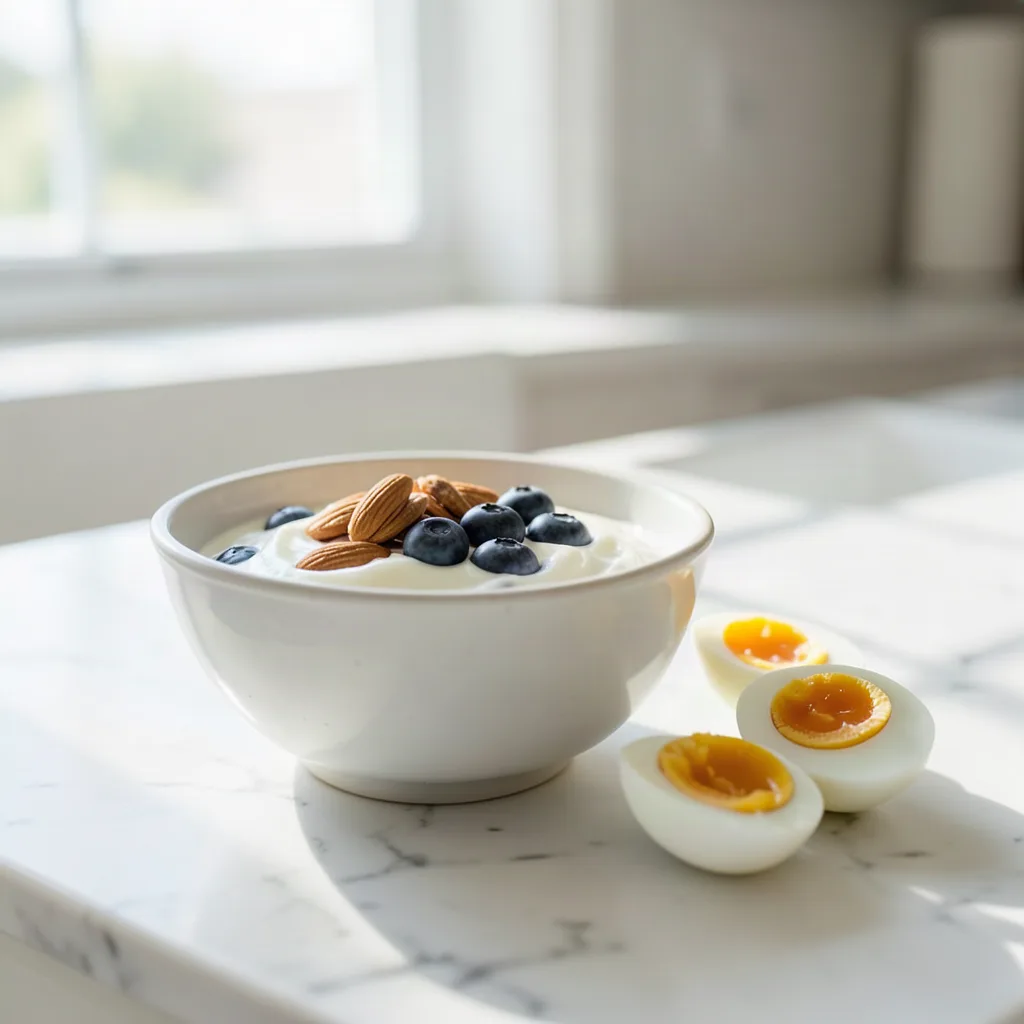
Mornings are chaotic. Between getting yourself ready, managing family schedules, and trying to stay on top of work emails, breakfast often becomes an afterthought—or worse, skipped entirely. Yet starting your day with adequate protein is one of the most practical ways to stabilize blood sugar, maintain steady energy, and avoid the mid-morning energy crash that derails productivity and willpower.
Key takeaways
- Aim for 20 to 40 grams of protein at breakfast to increase satiety and regulate appetite-influencing hormones.
- Batch-prepare hard-boiled eggs, egg muffins, or breakfast burritos on weekends for quick, reheatable morning meals throughout the week.
- Use Greek yogurt or cottage cheese as high-protein bases, pre-portioning them into containers for effortless assembly with fruit.
- Boost overnight oats or smoothies with protein powder and Greek yogurt to achieve 25–30 grams of protein per serving.
- Keep shelf-stable emergency options like string cheese, nuts, and jerky visible to prevent skipping breakfast on chaotic mornings.
The challenge isn’t knowing that protein matters. It’s finding breakfast options that are genuinely quick, require minimal decision-making, and don’t demand a culinary degree to prepare. This guide walks through high-protein breakfast ideas specifically designed for mornings when time is tight, ingredients are limited, and you need something you can actually execute.
Why Protein Matters for Your Morning
Protein takes longer to digest than carbohydrates or fat, which means it provides sustained satiety. When you eat a high-protein breakfast, you’re less likely to experience sharp hunger spikes two hours later. This stability reduces snacking, supports more consistent energy levels, and makes it easier to make intentional food choices throughout the day.
Beyond satiety, protein supports muscle maintenance, supports immune function, and helps regulate hormones that influence appetite. For busy people, this translates to fewer decision points during the day—you’re not constantly evaluating snack options or fighting fatigue-driven food cravings.
Most nutrition guidance suggests aiming for 20–40 grams of protein at breakfast, depending on your body size and overall nutrition goals. The specific target matters less than establishing a consistent baseline that works for you.
Eggs: The Quickest High-Protein Foundation
Eggs remain the gold standard for busy mornings because they’re versatile, affordable, and genuinely fast. A simple two-egg scramble takes five minutes and delivers roughly 12 grams of protein. The real efficiency comes from batch preparation or strategic shortcuts.
Hard-boiling a dozen eggs on Sunday provides grab-and-go protein for the entire week. Pair two hard-boiled eggs with whole-grain toast and fruit, and you have a complete breakfast assembled in 90 seconds. If hard-boiled eggs become monotonous, peel them in advance and toss them into grain bowls, salads, or even eat them plain with a pinch of salt.
For mornings when you have slightly more time, a veggie-loaded omelet or scramble adds fiber and micronutrients without significantly increasing prep time. Frozen vegetables cook faster than fresh ones and require no chopping. Keep bags of diced peppers, spinach, or broccoli in your freezer specifically for this purpose.
Egg muffins—baked egg mixtures portioned into muffin tins—can be made in batches and reheated in 30 seconds. Mix beaten eggs with diced vegetables, cheese, and cooked meat, pour into greased muffin cups, and bake at 350°F for about 20 minutes. A batch yields 12 muffins that stay fresh for five days refrigerated.
Greek Yogurt and Cottage Cheese Bowls
Greek yogurt contains roughly double the protein of regular yogurt—about 15–20 grams per 7-ounce container—making it an exceptionally efficient protein source. The barrier to using it frequently is typically monotony, not difficulty.
Instead of eating plain yogurt with granola, treat it as a base for intentional combinations. Layer yogurt with nuts, seeds, and fresh or frozen berries. Add a drizzle of honey or a sprinkle of cinnamon for flavor complexity without much additional effort. The combination delivers protein, fiber, healthy fats, and carbohydrates in a single bowl you can assemble while the coffee brews.
Cottage cheese, often overlooked, contains similar protein density and pairs surprisingly well with both sweet and savory applications. A bowl of cottage cheese with sliced peaches and granola tastes indulgent while delivering 25+ grams of protein. Some people prefer mixing cottage cheese into oatmeal to boost the protein content without changing the familiar taste profile significantly.
Pre-portion yogurt and cottage cheese into smaller containers as soon as you bring them home. This removes a decision step during busy mornings and makes grabbing breakfast feel effortless. Keep granola, nuts, and berries visible in your pantry so combinations feel intuitive rather than requiring deliberate planning.
Overnight Oats and Protein Overnight Cups
Overnight oats solve the time problem by doing most of the work while you sleep. The basic formula is oats, milk (or milk alternative), yogurt, and optional flavorings, mixed in a jar and refrigerated overnight. In the morning, you eat directly from the jar or transfer to a bowl.
To boost protein content significantly, use Greek yogurt as your liquid base and add a scoop of vanilla or unflavored protein powder. A standard overnight oats recipe with yogurt and powder delivers 25–30 grams of protein, enough to sustain you through a full morning of work.
Flavor combinations prevent boredom: berries with vanilla, banana with peanut butter, apple with cinnamon, or chocolate with almond butter. Prepare three to five jars on Sunday evening, and you have grab-and-go breakfasts ready for the entire week. Some people prefer eating overnight oats cold directly from the jar; others heat them briefly in the microwave.
The main limitation is that overnight oats require planning—you must prepare them the evening before. For people with genuinely unpredictable schedules, this might not align with reality. In those cases, focus on other options that require no advance preparation.
Protein Smoothies and Smoothie Bowls
A protein smoothie requires only a blender and takes under five minutes start to finish. The formula is simple: liquid base, protein source, fruit or vegetables, and optional fat from nuts or seeds. Greek yogurt, protein powder, milk, frozen banana, and berries create a complete breakfast in one glass.
The advantage of smoothies is flexibility. You can use whatever fruit you have on hand, fresh or frozen. You can hide vegetables—spinach is virtually invisible in a berry smoothie—making it an option for people who dislike eating whole vegetables early in the day. You can batch-prepare smoothie packs by portioning frozen fruit, greens, and protein powder into freezer bags, then blending with liquid in the morning.
Smoothie bowls are thicker, eaten with a spoon, and topped with granola, nuts, and coconut. They feel more substantial than drinkable smoothies and work well for people who prefer texture variety at breakfast. The prep time is comparable to a drinkable smoothie, but the eating experience feels different enough to maintain interest across weeks.
The main drawback of smoothies is that drinking calories feels less satisfying than chewing and eating solid food. Some people find themselves hungry 90 minutes later despite adequate protein content. If this describes your experience, smoothies work better as a component of breakfast rather than the entire meal—pair one with toast or a granola bar for added satiety.
Breakfast Burritos and Wraps
A breakfast burrito is essentially scrambled eggs, cheese, and vegetables wrapped in a tortilla. The genius is that you can make several on Sunday and eat them throughout the week, reheating for 30 seconds in the microwave when needed.
The basic formula: scramble eggs, warm a tortilla, add cheese, diced vegetables, and optional cooked meat like sausage or bacon, then wrap tightly. A well-constructed burrito delivers 20–25 grams of protein and stays fresh for five days refrigerated. Portion them into individual foil or parchment wrapping so they’re literally grab-and-go.
Flavor variations keep things interesting: Southwest-style with peppers and salsa, Mediterranean with spinach and feta, or simple with just cheese and herbs. The prep work happens once per week, and the eating happens six mornings without additional effort.
For people with freezer space, breakfast burritos freeze remarkably well for up to three weeks. Wrap them individually and label with the date. Reheat from frozen by microwaving for 60–90 seconds until warm throughout. Having 10–12 prepared burritos in the freezer means you literally never have to think about breakfast again.
Cottage Cheese Pancakes and Protein Waffles
Cottage cheese pancakes sound unconventional but deliver exceptional protein density. The base recipe blends cottage cheese, eggs, oats, and vanilla into a batter. These pancakes contain roughly 15 grams of protein per serving compared to 5–8 grams in traditional pancakes.
The texture is slightly different from wheat flour pancakes—denser and more custard-like—but most people find them genuinely enjoyable, especially with maple syrup and berries. They freeze exceptionally well, so making a batch on Sunday provides grab-and-reheat breakfasts throughout the week.
Similar logic applies to protein waffles made with added protein powder or cottage cheese. The cooking process is identical to regular waffles, but the nutritional profile shifts dramatically. One waffle with syrup and fruit provides comparable nutrition to a full breakfast plate while requiring minimal decision-making in the morning.
The advantage over other options is that these feel like treats rather than health food, making consistency easier for people who struggle with breakfast monotony. The disadvantage is that they require more active cooking than simply combining pre-made components.
No-Cook Options for Emergency Mornings
Some mornings, everything goes wrong. Your alarm fails to work, a child gets sick, or you simply wake up 15 minutes behind schedule. No-cook options ensure you still eat protein rather than heading into the day on fumes.
String cheese, nuts, and jerky are genuinely quick: grab and go. A combination of string cheese, a handful of almonds, and beef jerky delivers 15–20 grams of protein in less than 30 seconds and requires no preparation. This combination isn’t exciting, but it’s executable when nothing else is.
A simple peanut butter and banana sandwich on whole-grain bread takes maybe two minutes and provides solid protein plus carbohydrates. Greek yogurt eaten directly from the container with berries added requires no utensils or prep—you can literally eat it while checking emails.
Keep shelf-stable protein options visible in your pantry and breakfast areas. Protein bars, nuts in pre-portioned bags, and cheese blocks are acceptable emergency options. They’re not ideal as daily breakfast, but they prevent you from skipping breakfast entirely on chaotic mornings, which is the actual goal.
Timing, Portions, and Practical Implementation
The most sophisticated breakfast strategy fails if you don’t actually execute it. The practical implementation matters more than finding the theoretically optimal breakfast.
Start with one or two options you genuinely enjoy eating, then batch-prepare one day per week. If you hate overnight oats, don’t force them just because they’re efficient. If you love scrambled eggs, make a huge batch, portion them into containers, and eat them across the week with different side dishes to maintain variety.
Set a realistic protein target—perhaps 25 grams—and choose breakfast options that reliably meet it. Track what you eat for a few days to understand what actually satisfies you until lunch. Some people need 25 grams to feel full until noon; others need 35 grams. Optimize based on your actual experience rather than generic recommendations.
Keep breakfast ingredients visible and accessible. If protein powder is buried in a cabinet, you won’t use it. If eggs are front and center in the refrigerator, you’ll think of them first. Physical organization influences decision-making more than willpower does.
Accept that consistency matters more than perfection. Eating a high-protein breakfast four or five days per week is dramatically better than eating it once per week and then feeling frustrated when you inevitably miss days. Build a routine around options that actually fit your life rather than aiming for an idealized version that requires constant willpower.
Addressing Common Barriers
The most common barrier to eating high-protein breakfast is decision fatigue. Mornings are cognitively demanding, and making food choices adds friction. Solve this by removing decisions: prepare options in advance, make the same breakfast five days per week, or create a simple rotation of three options that requires no thinking.
Another barrier is cost perception. High-protein breakfasts sometimes seem expensive compared to cheap cereal. In reality, eggs, oatmeal, and yogurt are among the least expensive foods available. Protein powder is an investment but provides exceptional cost per serving over weeks of use. Calculate the actual cost of your preferred breakfast rather than relying on perception.
Some people genuinely dislike typical breakfast foods. If you hate eggs, oatmeal, and yogurt, you’re not broken—you have different preferences. Breakfast doesn’t require traditional breakfast foods. Leftover chicken and rice, a sandwich, or soup are acceptable breakfast options if they contain adequate protein and satisfy you. Cultural and personal preferences matter more than conventional breakfast categories.
Limited time is a real constraint, but it’s often solvable through batching rather than daily cooking. If you genuinely have no time for a sit-down breakfast, you have five extra minutes once per week for batch preparation. Choose options that work with this reality rather than fighting it.
Meal Prep Systems That Actually Stick
The difference between someone who eats high-protein breakfast consistently and someone who intends to but doesn’t usually comes down to systems, not motivation. A working meal prep system removes the friction between intention and execution by making the right choice the easiest choice.
Start by identifying your constraint: Is it time on weekday mornings, decision-making capacity, or access to ingredients? If mornings are genuinely rushed, you need entirely prepared options—nothing that requires assembly or cooking. If you have 10 minutes but struggle with decisions, you need one rotating breakfast option you eat five days per week. If ingredients are your constraint, you need a shopping list tied directly to your breakfast rotation so you’re never in a situation where you want to eat something but lack the components.
The most sustainable systems use what researchers call “choice architecture.” Organize your kitchen so that high-protein breakfast ingredients are visible and accessible while less healthy options require extra effort to reach. Store Greek yogurt at eye level in your refrigerator. Keep nuts in clear containers on your counter. Pre-portion cheese into snack bags immediately after grocery shopping. Keep breakfast-relevant utensils—your blender, muffin tins, storage containers—visible and accessible rather than buried in cabinets.
Document what you actually eat for two weeks without changing anything. Most people discover they naturally gravitate toward two or three breakfast options they prefer. Build your meal prep system around those preferences rather than trying to force variety. If you eat scrambled eggs three times per week anyway, make scrambled eggs your primary prep option instead of fighting your natural inclination toward something theoretically “better.”
Calendar your prep day as a non-negotiable weekly commitment. Most people find Sunday evening or Saturday morning most practical. Block 60–90 minutes, prepare all your breakfasts for the week, and store them immediately in visible, labeled containers. This single weekly investment eliminates breakfast decisions for six days. The cognitive load reduction alone makes this worthwhile, separate from the time savings.
Track one metric that matters to you: perhaps the number of mornings you eat a high-protein breakfast, your energy levels until lunch, or your mid-morning snacking frequency. Review this metric weekly. If your system is working, you’ll see the evidence. If it’s failing, diagnose specifically what broke—did prep time exceed your available window, did you forget to buy a key ingredient, did you lose interest in your chosen options—and adjust the system, not your willpower.
Protein Powder Strategies Beyond Smoothies
Protein powder often gets pigeonholed as a smoothie ingredient, but it’s genuinely versatile and solves the timing problem when you need high protein quickly. Understanding how to deploy it beyond blenders opens new options.
Mix protein powder directly into Greek yogurt to boost a single container from 15 grams to 25+ grams of protein without significantly changing the taste or texture. Vanilla or chocolate powder blends seamlessly with yogurt; unflavored powder works too if you add cinnamon or honey. This takes 30 seconds and transforms a decent breakfast into an excellent one.
Stir protein powder into oatmeal as it cooks. A quarter cup of dry oats with a scoop of vanilla protein powder and cinnamon creates an exceptionally satisfying breakfast bowl with 20+ grams of protein. The powder hydrates into the oatmeal and doesn’t create a gritty texture if you mix it in early.
Blend protein powder into pancake and waffle batter without measuring separately. Instead of using a specific recipe, simply add one scoop to your existing favorite batter recipe. It typically requires slightly more liquid than the recipe calls for—add liquid gradually until you reach the right consistency. This simple swap increases protein by 20–25 grams per batch without changing the taste noticeably.
Mix protein powder into cottage cheese for a pudding-like consistency you can eat with a spoon or grab from a container. Two-ingredient breakfasts sound boring, but they work exceptionally well when you’re exhausted or facing a genuinely chaotic morning. Chocolate protein powder with cottage cheese tastes surprisingly dessert-like if that appeals to you.
Create a “breakfast smoothie pack” system: portion frozen fruit, greens, and a measured scoop of protein powder into individual freezer bags. In the morning, dump one bag into your blender with liquid and blend. This removes the decision-making step of measuring protein powder and selecting fruit. You’re not deciding what to eat; you’re simply executing a predetermined system.
Note that protein powder quality varies substantially. Cheaper powders sometimes contain fillers, artificial sweeteners, or ingredients that upset your digestive system. Spend slightly more for a powder from a reputable manufacturer if your budget allows. You’ll use it frequently enough that the per-serving cost remains reasonable, and you’ll actually enjoy using it rather than forcing it into breakfast despite digestive complaints.
Strategic Use of Convenience Foods Without Guilt
High-protein breakfast doesn’t require cooking from scratch every single day. Strategically deployed convenience foods solve real time constraints and prevent breakfast from becoming another source of stress.
Pre-cooked rotisserie chicken is genuinely useful at breakfast if you’re comfortable with non-traditional breakfast foods. Shred it, portion it into containers, and pair it with grain or vegetables. A breakfast of rice, shredded chicken, and steamed broccoli delivers 30+ grams of protein, takes five minutes to assemble, and satisfies most people until lunch. It doesn’t feel like a conventional breakfast, but it meets the actual goal: adequate protein with minimal morning effort.
Canned tuna or salmon represents similar convenience. Mix it into eggs for an omega-3 boost, pile it onto toast with avocado, or combine it with cottage cheese. The protein density is exceptional, the cost is reasonable, and no cooking is required beyond basic assembly.
High-quality frozen vegetable products—not heavily breaded or fried versions, but simply frozen vegetables—save considerable time. Frozen hash browns mixed into scrambled eggs or added to breakfast burritos cook faster than fresh potatoes and require literally zero prep. Frozen peppers and onions are already diced, eliminating the chopping step that discourages people from adding vegetables to eggs.
String cheese, pre-cooked turkey sausage links, and hard-boiled eggs from grocery store prepared sections remove even the cooking step. Yes, they cost more than making them yourself. But they cost less than skipping breakfast or buying fast food, and they reliably get eaten because they require zero effort. For people with limited time or energy, these convenience options are pragmatic solutions, not failures of willpower.
Cottage cheese and Greek yogurt from grocery stores are themselves convenience products—the actual work of creating them is done. Buying quality versions rather than budget versions often costs only 50 cents more per container and tastes substantially better, making you more likely to eat them. This small upgrade in the convenience products you’re already buying sometimes has outsized impact on consistency.
The mental shift that matters: convenience foods are tools, not character flaws. Using a rotisserie chicken or canned fish isn’t cheating. It’s recognizing that your morning time is valuable and deploying resources to protect it. The person who eats pre-made convenience options five days per week is succeeding at breakfast better than the person with aspirations to cook everything from scratch but ends up skipping breakfast instead.
Scaling High-Protein Breakfast for Families
Preparing high-protein breakfast for multiple people with potentially different preferences and tolerances creates real logistical complexity. But the same batching principles that work for individuals scale effectively.
Identify one baseline high-protein option everyone will eat: perhaps scrambled eggs, Greek yogurt bowls, or breakfast burritos. Prepare this base option for the entire family in one cooking session. Then create individual modifications: some people add fruit, others add nuts, some people prefer toast on the side. The heavy lifting—preparing the protein component—happens once. Individual variations require minimal additional effort.
Cook large batches of eggs using a sheet pan method. Whisk together 12 eggs with salt, pepper, and milk, pour into a greased sheet pan, bake at 350°F for 15–20 minutes, then cut into squares. This yields 12 portions from one 15-minute cooking session. Portion them into containers and reheat individually each morning. For families of four, this represents three days of eggs from one batch with essentially no daily effort.
Cottage cheese pancakes scale beautifully because you can make 20–30 at once, freeze them, and reheat throughout the week. Each family member grabs however many they want and reheats them individually. Add toppings based on preference: some people want syrup, others prefer fruit, others want yogurt and granola.
Create a “breakfast bar” in your refrigerator where everyone can assemble bowls: base options like oatmeal or yogurt, plus toppings like nuts, berries, granola, and honey arranged in containers. Older children can assemble their own breakfasts, reducing your morning load. Younger children can pick from pre-assembled options you’ve prepared. This approach gives everyone some autonomy while keeping your preparation load manageable.
Communicate your protein targets with your family and explain why you’re emphasizing breakfast. Children often become more engaged with eating when they understand the purpose. Explaining that protein helps their bodies work well and keeps them from getting too hungry might increase their willingness to eat what you’ve prepared. This isn’t manipulative—it’s honest education that creates buy-in.
Accept that family members will have different protein needs and preferences. Your teenager might need 35 grams of protein to feel full until lunch while your 10-year-old needs 20. Your spouse might want eggs while you prefer yogurt. Flexible systems accommodate these differences without requiring you to cook multiple separate breakfasts. Prepare the protein components, let people choose their own combinations and portions, and call it done.
Addressing Digestive Sensitivity and Timing Around Workouts
High-protein breakfast can sometimes create digestive discomfort, especially if you’re dramatically increasing protein intake or if your digestive system is sensitive. Understanding the patterns helps you optimize rather than abandon the approach.
Egg-based breakfasts are sometimes harder to digest than dairy or plant-based protein, particularly for people with sensitive stomachs. If scrambled eggs leave you feeling uncomfortable, try Greek yogurt or cottage cheese instead. The protein density is similar, but the digestive load differs significantly for some people.
Protein powder, particularly whey-based powders, can cause bloating or digestive upset in some people. Experiment with different types: whey, casein, plant-based blends, or single-source plant proteins like pea or rice protein. Most people find at least one option that sits well. You might need to increase your liquid intake to help your digestive system process it smoothly.
Timing around workouts matters substantially. If you exercise early morning, eating a large, protein-heavy meal immediately beforehand might cause cramping or digestive discomfort. Instead, eat a small carbohydrate-focused snack 20–30 minutes before exercise (banana, toast, etc.), then eat your substantial high-protein breakfast 30–60 minutes after your workout. Your muscles will utilize the post-workout protein effectively, and you’ll avoid the discomfort of exercising on a full stomach.
If you train fasted and prefer not to eat beforehand, you can still accomplish high-protein breakfast timing: exercise, then eat a substantial 30+ gram protein breakfast within 60 minutes afterward. This provides muscle support from the workout without pre-exercise digestive complaints.
Some people feel noticeably full and sluggish after very high-protein breakfast. If this describes you, you might actually need less protein than generic recommendations suggest, or you might need to include more carbohydrates alongside your protein to feel balanced. A breakfast of 20 grams of protein plus substantial carbohydrates might satisfy you better than 35 grams of protein with minimal carbs. Again, personalization based on your actual experience matters more than hitting a theoretical target.
Hydration significantly impacts how well you digest protein. If you’re increasing protein intake, simultaneously increase your water intake throughout the day. Many digestive complaints from higher protein intake actually resolve simply by drinking more water. This is particularly important if you’re consuming protein powder or relying heavily on concentrated protein sources.
Sustainability and Preventing Breakfast Burnout
The most common reason people abandon high-protein breakfast isn’t that it doesn’t work—it’s that they get bored or overwhelmed by the effort required to maintain it. Building sustainability into your system from the start prevents this inevitable burnout.
Rotate between four or five breakfast options rather than eating the same thing daily. Monday through Wednesday you eat Option A, Thursday and Friday you eat Option B, then the weekend you choose freely. This creates enough variety to prevent boredom while maintaining enough routine that the choice and preparation feel manageable. You’re not constantly learning new recipes; you’re rotating between tested options you know how to execute.
Schedule your prep day at a time when you actually have energy and availability, not the time you think you “should” prep. If Sunday evening feels too overwhelming, prep on Saturday morning instead. If weekday prep works better for your schedule, prep on Wednesday evening for Thursday through Sunday breakfast. The specific day matters less than actually doing it consistently.
When you notice yourself getting bored with your breakfast rotation, add one new option before you completely lose interest. This prevents the situation where you wake up one morning, hate all your prepared options, and abandon breakfast entirely. Rotating in a new option every four to six weeks keeps things fresh without requiring constant menu innovation.
Celebrate the wins. Track how many mornings you ate high-protein breakfast, notice your energy stability, observe your reduced mid-morning hunger. These wins are genuinely worth acknowledging. They’re concrete evidence that your system is working and that your effort is producing real results. This positive reinforcement makes continuing the habit feel worthwhile rather than burdensome.
Accept that some weeks will break your pattern. Vacation, illness, major work deadlines, or family emergencies will occasionally derail your breakfast routine. This doesn’t mean you’ve failed. It means you’re human and life is sometimes chaotic. Restart your routine the next week without shame or elaborate redemption narratives. The goal is consistency over time, not perfection every single day.
Frequently Asked Questions
How much protein do I actually need at breakfast? General recommendations suggest 20–40 grams depending on body size and nutrition goals. Most evidence indicates that 25–30 grams provides substantial satiety benefits for most people. Your actual needs might differ; try a target amount for two weeks and assess how you feel until lunch. If you’re constantly hungry, increase protein by five grams and reassess. This personalization matters more than hitting a theoretical number.
Can I eat the same breakfast every single day without getting bored? Some people genuinely don’t experience boredom with repetitive meals; others find identical daily breakfasts boring after a few days. Experiment for two weeks with the same breakfast daily. If you feel bored or find yourself eating less, rotate between three options instead. Neither approach is wrong—it’s about your individual preferences and how consistently you actually eat breakfast.
What’s the best way to store prepared breakfasts? Most prepared high-protein breakfasts stay fresh for 4–5 days refrigerated. Eggs, yogurt-based bowls, and breakfast burritos all fit this timeline. Label containers with the date so you eat older items first. For longer storage, freeze items like breakfast burritos, pancakes, and waffles; most defrost well when reheated. Smoothie bowls and overnight oats don’t freeze well, so prepare those fresh or only make a few days’ worth at a time.
How can I make high-protein breakfasts work with dietary restrictions? Most high-protein options have variations: dairy-free yogurt alternatives, egg-free tofu scrambles, gluten-free wraps, or nut-free seeds. Identify one or two go-to options that work with your specific restrictions, then batch-prepare them. You might have fewer options than someone without restrictions, but the principle remains identical: prepare once, eat multiple times throughout the week.
Is it okay to have coffee instead of breakfast on busy mornings? Coffee provides caffeine but no calories or nutrition. You might not feel immediately hungry, but your body is running on fumes. Eating even a small high-protein breakfast—20 minutes of fruit and yogurt—provides more sustainable energy than coffee alone. If breakfast feels truly impossible, at minimum add protein powder to your coffee or grab a quick no-cook option rather than skipping entirely. Consistency matters more than perfection.
Related posts:
 Are We Really Too Busy for Breakfast?
 This High-Protein Cottage Cheese Wants to Be the New Greek Yogurt
 High-Protein Foods That Pack a Serious Nutritional Punch
 Post-Run Nutrition Guide
 9 Healthy Breakfasts That Aren’t Oatmeal
 Creative Cottage Cheese Recipes
 The One-Ingredient Swap That Makes Any Salad Dressing Healthier
 Choosing the Healthiest Granola Bar