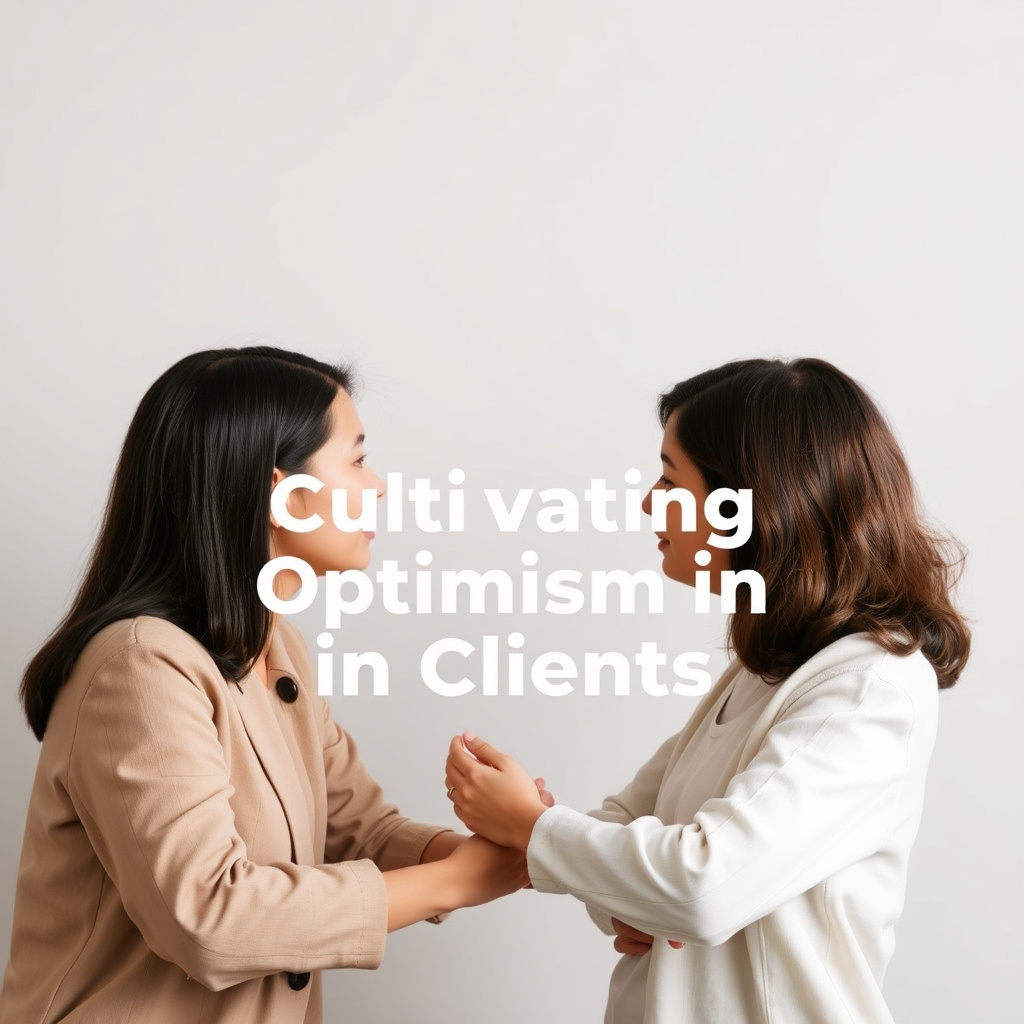
In the landscape of therapeutic practice, hope is often viewed as a byproduct of successful treatment—a feeling that emerges once a client has healed. However, a growing body of psychological evidence suggests that hope is not merely a result of therapy, but one of its most powerful catalysts. When we speak of “Hope Therapy,” we are referring to a deliberate, cognitive-based approach to cultivating optimism, not as a naive denial of reality, but as a psychological tool for resilience and change.
For a client trapped in the depths of depression, anxiety, or chronic trauma, the world often feels static and immutable. Hopelessness is not just a symptom; it is a cognitive filter that screens out possibilities and reinforces the belief that effort is futile. To move a client from this state of stagnation toward a state of agency requires more than encouragement; it requires a structured framework that teaches the client how to think and act hopefully. By treating hope as a skill that can be learned and refined, practitioners can help clients rebuild their lives from the ground up.
Understanding the Framework of Hope Theory
p>To cultivate optimism effectively, it is helpful to lean on C.R. Snyder’s Hope Theory. Snyder proposed that hope is not a vague emotion, but a cognitive set consisting of three interdependent components: goals, pathways, and agency. When any of these three are missing, a client may experience a sense of hopelessness.
Goals are the targets of our mental energy. Without a clear goal, agency has nowhere to go, and pathways have no destination. In a therapeutic setting, goals must be meaningful to the client, not the therapist. They should be specific enough to be attainable but significant enough to inspire action.
Pathways are the perceived ability to generate routes to those goals. A client may have a goal (e.g., “I want to feel connected to others”) but feel they have no pathway to achieve it (e.g., “I don’t know how to talk to people”). Cultivating hope involves brainstorming multiple pathways, ensuring that if one route is blocked, the client knows how to pivot to another.
Agency is the motivational component—the “willpower” or belief that one can successfully execute the pathways. Agency is the engine that drives the process. A client might have a goal and a map (pathway), but if they lack the belief that they are capable of taking the first step, they remain paralyzed.
By analyzing which of these three pillars is weakest in a client, a therapist can tailor their interventions. If the client is aimless, the focus is on goal-setting. If they are overwhelmed, the focus is on pathway creation. If they are defeated, the focus is on strengthening agency.
Distinguishing Hope from Toxic Positivity
p>One of the most significant risks in cultivating optimism is the slide into “toxic positivity.” This is the belief that regardless of the pain or difficulty of a situation, one should maintain a positive mindset. In a clinical setting, toxic positivity is counterproductive because it invalidates the client’s lived experience and can lead to shame when the client inevitably struggles.
True hope is fundamentally different from blind optimism. While blind optimism says, “Everything will be fine,” hope says, “I do not know if everything will be fine, but I have the capacity to navigate whatever happens.” Hope requires the acknowledgment of pain, loss, and hardship. It does not seek to erase the darkness but rather to find a way to walk through it.
Practitioners can avoid toxic positivity by employing validation before activation. This means fully acknowledging the weight of the client’s current suffering before introducing hopeful frameworks. For example, instead of saying, “Look on the bright side,” a therapist might say, “It is completely understandable that you feel defeated right now given what you’ve been through. At the same time, I want to explore if there is a small piece of this situation that we can influence together.” This approach honors the client’s reality while gently opening a door to possibility.
Assessing the Baseline of Hope in Clients
p>Before implementing hope-based interventions, it is essential to assess where the client stands. Hopelessness often manifests as “cognitive tunneling,” where the client can only see the obstacles and is blind to the opportunities. This is often characterized by absolute language: “I will never get better,” “There is no way out,” or “I am completely alone.”
To assess the baseline, therapists can use a combination of standardized scales and qualitative inquiry. However, the most revealing assessments often happen during the narrative process. Listen for the presence or absence of “future-oriented” language. Does the client talk about next month, next year, or a hypothetical future? If the client cannot imagine a version of themselves six months from now, they are operating from a baseline of profound hopelessness.
It is also important to identify “latent hope.” Even in the most discouraged clients, there is often a small spark—the very fact that they have entered the therapy room is an act of hope. By highlighting this paradox (“You feel like things won’t change, yet you are here today trying to find a way”), the therapist can use the client’s own actions as evidence that hope still exists, however faintly.
Practical Strategies for Goal Setting
p>When a client is in a state of low hope, traditional long-term goal setting can feel overwhelming and unattainable. The key to cultivating optimism is the implementation of “micro-wins.” A micro-win is a goal so small that it is almost impossible to fail, providing the client with an immediate experience of success.
The Laddering Technique: Instead of focusing on the peak of the mountain (the ultimate goal), help the client focus on the next rung of the ladder. If the ultimate goal is “to find a fulfilling career,” the first rung might be “to spend fifteen minutes researching one company.” This prevents the client from becoming paralyzed by the distance between their current state and their desired state.
Collaborative Goal Design: Goals should be co-created. When a therapist suggests a goal, it can feel like a demand or a prescription. When a client identifies the goal, it becomes a mission. Ask questions like, “If you woke up tomorrow and felt just 5% more hopeful, what is one small thing you would do differently?” This shifts the focus from a total transformation to a marginal improvement, which is far more psychologically manageable.
Externalizing the Goal: For some clients, the goal can be tied to something outside themselves—a pet, a child, or a community project. Sometimes, the agency to act for oneself is missing, but the agency to act for another remains. This “altruistic hope” can serve as a bridge toward personal hope.
Developing Pathways: The Art of Problem-Solving
p>Many clients experience a “blockage” where they believe there is only one way to solve a problem, and if that way fails, all hope is lost. This is a cognitive distortion known as dichotomous thinking. Cultivating optimism requires expanding the client’s repertoire of pathways.
The “Three-Way Brainstorm”: When a client encounters an obstacle, challenge them to come up with three different ways to handle it: one that is conventional, one that is bold, and one that is completely unconventional. This exercise trains the brain to stop seeing a wall and start seeing a puzzle. It shifts the client from a passive recipient of fate to an active problem-solver.
Contingency Planning: Anxiety often kills hope because the client fears the “what if” of failure. By creating “Plan B” and “Plan C” explicitly, the therapist reduces the stakes of any single failure. When a client knows that a setback is not a dead end but a signal to switch pathways, they are more likely to take the initial risk.
Resource Mapping: Help the client list every possible resource they have, no matter how small. This includes internal resources (patience, a sense of humor, past resilience) and external resources (a supportive friend, a library, a community center). Seeing a physical list of resources helps the client realize they are not entering the battle empty-handed.
Strengthening Agency: Cultivating the Will to Act
p>Agency is the engine of hope. Without it, goals and pathways are merely fantasies. Strengthening agency involves building self-efficacy—the belief in one’s ability to execute the actions required to achieve a goal.
Mining for Past Successes: Clients in a state of hopelessness often suffer from “selective amnesia,” forgetting the times they overcame adversity. The therapist can act as a historian, reminding the client of their previous victories. Ask, “Tell me about a time in your life when you felt stuck and managed to find a way out. What strength did you use then that we can tap into now?”
The Power of “Yet”: A simple but profound linguistic shift can alter a client’s sense of agency. When a client says, “I don’t know how to handle my anxiety,” the therapist can gently append the word “yet.” (“You don’t know how to handle it yet.”) This small addition transforms a permanent deficit into a temporary state of learning, keeping the door to growth open.
Incremental Mastery: Encourage the client to engage in activities where success is guaranteed. This might be as simple as a daily stretching routine or organizing a single drawer. These small acts of mastery provide the neurological evidence the brain needs to believe that action leads to result, which in turn fuels the agency needed for larger challenges.
The Role of Narrative Reframing in Optimism
p>Every client comes to therapy with a story about who they are and what their life means. For the hopeless client, the narrative is often one of failure, victimization, or inevitability. To cultivate optimism, the therapist must help the client rewrite this narrative.
From Victim to Survivor to Architect: The first shift is often from feeling like a victim (“This happened to me”) to feeling like a survivor (“I survived this”). The final shift is toward becoming an architect (“I can build something new from these pieces”). This transition is not about ignoring the trauma, but about changing the role the client plays in their own story.
Identifying the “Inner Critic” vs. the “Inner Advocate”: Help the client personify their hopelessness as an external voice—the Inner Critic. By separating the feeling of hopelessness from their identity, the client can begin to argue against it. When the Critic says, “You’ll never succeed,” the client can practice responding with the voice of the Inner Advocate: “I have struggled before and survived; it is possible that I can succeed this time.”
Future-Self Visualization: Ask the client to describe a version of themselves one year from now who has found a sense of peace. What does that person’s day look like? How do they breathe? How do they speak? By visualizing a successful future self, the client creates a mental anchor that pulls them forward through the current difficulty.
Integrating Mindfulness and Acceptance
p>While hope looks forward, mindfulness keeps the client grounded in the present. There is a delicate balance between striving for a better future and accepting the current moment. Without acceptance, hope can become a form of escapism—a desire to be “anywhere but here.”
The “And” Philosophy: Teach the client to hold two opposing truths simultaneously. “I feel deep sadness right now, and I am working toward a more hopeful future.” This prevents the client from feeling that they must be “cured” of their pain before they can be hopeful. It integrates the struggle into the journey.
Mindful Observation of Hopelessness: Instead of fighting the feeling of hopelessness, encourage the client to observe it with curiosity. “I notice that the feeling of hopelessness is very strong today. I can feel it in my chest.” By observing the emotion rather than becoming the emotion, the client creates a psychological gap. In that gap, the possibility of a different response emerges.
Grounding in Small Joys: Optimism is sustained by the ability to notice small, positive stimuli in the present. Encourage the client to keep a “glimmer journal”—a record of tiny moments of beauty or connection (a warm cup of tea, a kind word from a stranger, the color of the sky). This retrains the brain to scan the environment for positives, making the larger goal of hope feel more attainable.
Measuring Progress and Sustaining Long-Term Optimism
p>Hope is not a linear climb; it is often a series of two steps forward and one step back. The goal of therapy is not to eliminate all moments of doubt, but to give the client the tools to recover from them more quickly.
The Hope Portfolio: Encourage the client to create a physical or digital “Hope Portfolio.” This can include letters to their future self, lists of their strengths, photos of people they love, and records of their micro-wins. When a wave of hopelessness hits, the portfolio serves as objective evidence that their current feeling is a temporary state, not a permanent truth.
Relapse Prevention: Discuss the “Hope Dip.” Warn the client that as they begin to make progress, they may experience a period of intense doubt or a sudden setback. By anticipating the dip, the client is less likely to interpret a setback as a total failure. Instead, they can see it as a natural part of the healing process.
Celebrating the Process, Not Just the Outcome: Shift the reward system from the final goal to the act of hoping itself. Celebrate the fact that the client tried a new pathway, even if it didn’t work. Celebrate the fact that they identified a goal, even if they haven’t reached it yet. By rewarding the effort of optimism, the therapist reinforces the habit of hope.
The Somatic Dimension of Hope: Moving Beyond Cognition
While Snyder’s Hope Theory focuses on the cognitive processes of goals, pathways, and agency, hopelessness is rarely just a thought pattern; it is a physiological state. For many clients, hopelessness manifests as a “collapsed” somatic posture—shoulders rounded, chest constricted, gaze downward, and a general sense of heaviness in the limbs. When a client is in this state, cognitive reframing can often feel superficial because the body is sending a constant signal of defeat to the brain. To truly cultivate optimism, the therapist must address the somatic architecture of hopelessness.
The Physiology of Collapse: In states of profound despair, the nervous system often enters a dorsal vagal shutdown response. This is a biological survival mechanism characterized by immobilization and numbness. In this state, the prefrontal cortex—the area responsible for the “pathway” thinking discussed previously—is effectively offline. Attempting to brainstorm goals while a client is in a state of somatic collapse is like trying to install software on a computer that has no power. The therapist must first help the client move from a state of shutdown to a state of social engagement.
Somatic Interventions for Hope: Practitioners can use gentle somatic prompts to shift the client’s physical state, thereby opening the door to cognitive hope. For example, the “Expansive Reach” exercise involves asking the client to slowly stretch their arms outward and lift their chin, physically opening the chest and heart space. This shift in posture signals to the brain that the environment is safe enough to look upward and outward. Another technique is “Grounding through Resistance,” where the client pushes their feet firmly into the floor while imagining they are rooting themselves into the earth. This creates a physical sensation of stability and strength, providing a somatic foundation for the concept of agency.
The Feedback Loop of Movement: By integrating movement into the session, the therapist helps the client experience a”bottom-up” shift in mood. When a client notices that changing their posture changes their internal feeling, they gain a new, immediate pathway to influence their emotional state. This is a powerful lesson in agency: the realization that while they cannot control the external world, they have direct, immediate agency over their physical presence within it.
Navigating Hope within Systemic Oppression and Marginalization
A critical edge case in Hope Therapy is the client who is experiencing genuine, systemic hopelessness. When a client is facing systemic racism, poverty, or institutional oppression, the traditional narrative of “working harder” or “finding a new pathway” can feel invalidating or even gaslighting. In these contexts, the therapist must distinguish between clinical hopelessness (a symptom of depression) and systemic hopelessness (a rational response to an oppressive environment). To ignore the systemic reality is to risk sliding back into toxic positivity.
Radical Hope vs. Individualistic Optimism: In these scenarios, the therapist should introduce the concept of “Radical Hope.” Unlike individualistic optimism, which suggests that a person can simply “think their way” out of a problem, Radical Hope acknowledges the structural barriers while still asserting the value of striving for a better future. It is the hope that emerges not from the belief that the system is fair, but from the belief that the individual’s dignity and humanity are worth fighting for regardless of the system.
Shifting the Locus of Agency: For marginalized clients, agency is often stripped away by external forces. The therapeutic goal shifts from “achieving a personal goal” to “reclaiming autonomy.” This might involve helping the client identify “zones of influence”—specific areas of their life where they still possess power, even if those areas are small. For example, a client struggling with housing instability may not have agency over their living situation, but they may have agency over how they support their children or how they engage with their community. By validating the external injustice while highlighting internal and communal autonomy, the therapist prevents the client from internalizing systemic failure as personal failure.
Collective Hope as a Catalyst: Hope is often more sustainable when it is shared. Therapists can encourage clients to connect with others who share their lived experience. This shifts the burden of hope from the individual to the collective. When a client sees others navigating similar systemic barriers and finding ways to survive and thrive, the “pathway” is no longer a theoretical exercise in a therapy room; it becomes a visible, lived reality. Collective hope transforms the struggle from a lonely battle into a shared mission, which significantly strengthens the agency of the individual.
Relational Hope and the Co-Regulation of Optimism
Hope does not always emerge from within the client; often, it is “borrowed” from the therapeutic relationship. For a client who has spent years being told they are broken or beyond help, the therapist’s unwavering belief in their capacity for change serves as an external scaffolding for their own developing hope. This process is known as the co-regulation of optimism.
The Therapist as the “Hope-Holder”: In the early stages of treatment, a client may have zero agency and no visible pathways. In this gap, the therapist acts as the “hope-holder.” This is not about cheerleading, but about maintaining a steady, professional conviction that change is possible. When a therapist says, “I can see that you don’t believe things can get better right now, and that’s okay. I will hold onto the belief that they can for both of us until you’re ready to hold it too,” they are providing a relational bridge. This reduces the client’s fear of failure because the responsibility for hope is shared.
Mirroring Success and Agency: The therapist can use a technique called “Agency Mirroring.” Whenever the client exhibits a spark of autonomy—such as questioning a suggestion, arriving on time despite a struggle, or expressing a preference—the therapist mirrors it back to them with clinical precision. For example: “I noticed that when we discussed the plan, you suggested a different time that worked better for you. That was a moment of you taking charge of your own process.” By mirroring these small acts of agency, the therapist helps the client build a new identity as someone who is capable of influencing their own life.
The Danger of Over-Identification: A challenge in relational hope is the risk of the therapist becoming too emotionally invested in the client’s “success.” If the therapist’s own sense of competence becomes tied to the client’s optimism, they may inadvertently pressure the client to “get better” faster than they are able. This can lead to a subtle form of coercion where the client performs hope to please the therapist. To avoid this, the practitioner must maintain a stance of “detached care,” where they provide the support and the belief but leave the timing and the pace of the shift entirely to the client.
Hope in the Face of Irreversible Loss and Chronic Illness
One of the most complex applications of Hope Therapy is when the client’s goal is physically or logically unattainable. In cases of terminal illness, permanent disability, or the death of a child, the traditional “goal-pathway-agency” model must be adapted. When a “cure” is impossible, the definition of hope must shift from recovery to meaning.
Existential Hope and the Shift to Quality of Life: In these situations, the therapist helps the client transition from “curative hope” (the hope that the situation will be reversed) to “existential hope” (the hope that life can still be meaningful despite the situation). The goal is no longer to “get back to normal,” but to define what a “good day” looks like within the new constraints. For a client with a degenerative disease, a goal might shift from “walking again” to “finding a way to communicate my love to my grandchildren.” This is not a compromise; it is a recalibration of hope toward the things that truly matter.
Pathways of Legacy and Contribution: When the future is shortened or limited, agency can be found in the act of legacy-building. The therapist can help the client create pathways for contributing to the world or their loved ones. This might involve writing letters, recording stories, or mentoring others. By focusing on what they can still give, the client moves from a state of passive suffering to a state of active contribution. This transforms the narrative from one of loss to one of enduring impact, providing a profound sense of agency even in the face of physical decline.
The “Both/And” of Grief and Hope: The primary challenge here is avoiding the erasure of grief. The therapist must employ a rigorous “and” philosophy: “You are devastated by this loss, and we are looking for a way to find a moment of peace today.” This prevents hope from becoming a denial of death or disability. Instead, hope becomes the tool that allows the client to carry their grief without being crushed by it. The agency lies in the choice of how to suffer and how to live in the time that remains.
Cultural Perspectives on Hope and Optimism
The framework of Hope Therapy is often rooted in Western, individualistic psychology, which emphasizes personal achievement, autonomy, and the linear pursuit of goals. However, hope manifests differently across various cultures, and a one-size-fits-all approach can be ineffective or culturally insensitive.
Collectivist Hope vs. Individualist Hope: In collectivist cultures, hope is often tied to the well-being of the family, the community, or the ancestral line rather than the individual self. A client from such a background may find little motivation in a goal that only benefits them personally. To cultivate optimism in these clients, the therapist should frame goals in terms of relational harmony and collective resilience. Instead of asking, “What do you want for yourself?” the therapist might ask, “What version of yourself would be the most helpful to your family?” This aligns the therapeutic process with the client’s core values, making the agency feel more authentic and sustainable.
Fatalism and Spiritual Hope: In some cultures or religious traditions, there is a strong belief in destiny or divine will (fatalism). To a Western practitioner, this might look like a lack of agency. However, for the client, “surrendering to God’s will” can actually be a powerful coping mechanism that reduces anxiety and provides a sense of peace. The therapist should not attempt to “correct” this belief by pushing for total individual agency. Instead, they can integrate spiritual hope into the framework. For example, the “pathway” may be viewed as a collaboration between the client’s efforts and divine guidance. This allows the client to maintain their spiritual identity while still engaging in the practical steps toward improvement.
The Role of Endurance as Hope: In some contexts, hope is not seen as the expectation of a positive change, but as the strength to endure a difficult situation with dignity. This “hope as endurance” is common in cultures that have a history of long-term survival under hardship. In these cases, the therapist should validate endurance as a form of agency. The goal is not necessarily to “fix” the situation, but to strengthen the client’s capacity to remain whole and virtuous in the midst of the struggle. This reframes the client’s persistence as a victory in itself, rather than a failure to achieve a specific outcome.
Managing the Therapist’s Hope and Countertransference
The process of cultivating optimism in others is emotionally taxing. Therapists often experience a specific type of countertransference when working with profoundly hopeless clients: the “savior impulse.” This is the unconscious desire to “rescue” the client from their despair, often driven by the therapist’s own discomfort with the client’s pain.
The Trap of the Savior Impulse: When a therapist becomes too invested in “fixing” a client’s hopelessness, they may begin to push goals and pathways too aggressively. This can lead to a subtle power imbalance where the therapist is doing the “work” of hoping for the client. If the client fails to meet a goal, the therapist may feel a sense of personal failure or frustration, which the client can sense. This can inadvertently reinforce the client’s belief that they are a disappointment, thereby damaging their agency.
Maintaining Vicarious Hope: The healthier alternative is “vicarious hope.” This is the ability to believe in the client’s potential without taking responsibility for the outcome. It requires a disciplined boundary where the therapist provides the tools and the environment for hope, but accepts that the client is the only one who can actually walk the pathway. To maintain this, therapists must engage in their own self-care and supervision, processing the feelings of helplessness that naturally arise when working with severe depression or trauma.
Processing the “Hope Gap”: The “hope gap” is the distance between where the therapist sees the client’s potential and where the client currently perceives their reality. The therapist’s job is to inhabit this gap with patience. When the gap feels too wide, the therapist must resist the urge to close it through force. Instead, they should use the gap as a diagnostic tool. If the client is pushing back strongly against a hopeful suggestion, it is often a sign that the current goal is too large or that a somatic/systemic barrier has not yet been addressed. By slowing down and validating the gap, the therapist ensures that when the shift to optimism finally happens, it is grounded in the client’s own truth, not the therapist’s expectations.
Digital Hopelessness and the Modern Cognitive Environment
In the contemporary era, therapists must account for the impact of the digital environment on a client’s capacity for hope. The phenomenon of “doomscrolling”—the tendency to continuously scroll through bad news on social media—creates a cognitive feedback loop that reinforces the belief that the world is an irredeemable place. This digital landscape actively erodes the “pathway” and “agency” components of hope by presenting a global scale of suffering that feels impossible for any one individual to influence.
Algorithmic Hopelessness: Social media algorithms are designed to maximize engagement, and negative emotions (fear, anger, outrage) typically drive more engagement than positive ones. Consequently, a client struggling with depression is often fed a steady diet of content that confirms their worst fears about the future. This is not just a mood issue; it is a cognitive distortion amplified by technology. The client begins to confuse their curated digital feed with the totality of human experience, leading to a state of “algorithmic hopelessness.”
Digital Hygiene for Hope: To counter this, therapists can introduce “Digital Hygiene” as a practical pathway toward optimism. This involves helping the client curate their digital environment to protect their mental agency. Strategies include:
- The “Positive Ratio” Feed: Encouraging the client to intentionally follow accounts that highlight human resilience, scientific progress, or small acts of kindness to balance the negativity.
- Time-Boxing Information Intake: Setting a specific, limited window for news consumption to prevent the “tunneling” effect of constant crisis updates.
- Active vs. Passive Consumption: Shifting from passive scrolling (which fosters helplessness) to active digital connection (which fosters agency), such as joining a supportive online community or using a tool for creative expression.
Frequently Asked Questions
Q: How do you help a client who is clinically suicidal and expresses absolute hopelessness?
A: In cases of acute crisis, the priority is safety and stabilization over cognitive optimism. However, once the client is safe, the focus shifts to “micro-hope.” This involves focusing on the next ten minutes, the next hour, or the next day. The goal is not to find a reason for living in the long term, but to find a reason to stay safe for the immediate moment. The therapeutic relationship itself becomes the primary source of hope—the belief that the therapist believes in the client’s survival even when the client cannot.
Q: Can someone be “too hopeful,” and does that interfere with therapy?
A: Yes, this is often seen as “manic optimism” or avoidant coping. If a client uses hope to bypass the necessary work of grieving or processing trauma, it can hinder progress. In these cases, the therapist must gently bring the client back to the present and help them integrate their pain. The goal is realistic optimism—a state where the client acknowledges the full scope of their challenges but still believes in their ability to manage them.
Q: What is the difference between Hope Therapy and Positive Psychology?
A: Positive Psychology is a broad field that studies the strengths and virtues that allow individuals and communities to thrive. Hope Therapy, specifically drawing from Hope Theory, is a targeted clinical application. While Positive Psychology might look at general happiness or flourishing, Hope Therapy focuses specifically on the cognitive mechanics of goal-attainment and the psychological recovery from hopelessness.
Q: How do you handle it when a client’s goals are unrealistic or unattainable?
A: The key is to avoid shutting down the goal, as this can damage the client’s agency. Instead, use “goal decomposition.” If a client has an unattainable goal, help them identify the core value behind that goal. If they want to “be a billionaire tomorrow,” the underlying value might be “security” or “influence.” By identifying the value, you can help them create realistic pathways to achieve a sense of security or influence in their current life.
Q: How long does it typically take for a client to shift from a state of hopelessness to optimism?
A: There is no set timeline, as it depends on the depth of the trauma or the severity of the depression. However, shifts often happen in “quantum leaps” rather than a steady incline. A client may feel hopeless for weeks, and then a single micro-win or a moment of profound connection in therapy can trigger a shift in perspective. The therapist’s role is to provide the consistent framework and support that makes those leaps possible.
Related posts:
 Expressive Arts Therapy: Using Art for Healing and Growth
 15+ Best Hope Therapy Techniques, Interventions + Tools (incl. Worksheets)
 How to Engage Therapy Clients & Build Rapport: 35 Tips
 Embracing Optimism: The Key to Aging Gracefully and Happily
 Termination in Therapy
 Meditation Meets Manicures at Sundays NYC
 When and How to Switch Therapists Without the Drama
 What is Transference in Therapy? (+ 6 Examples & Case Studies)