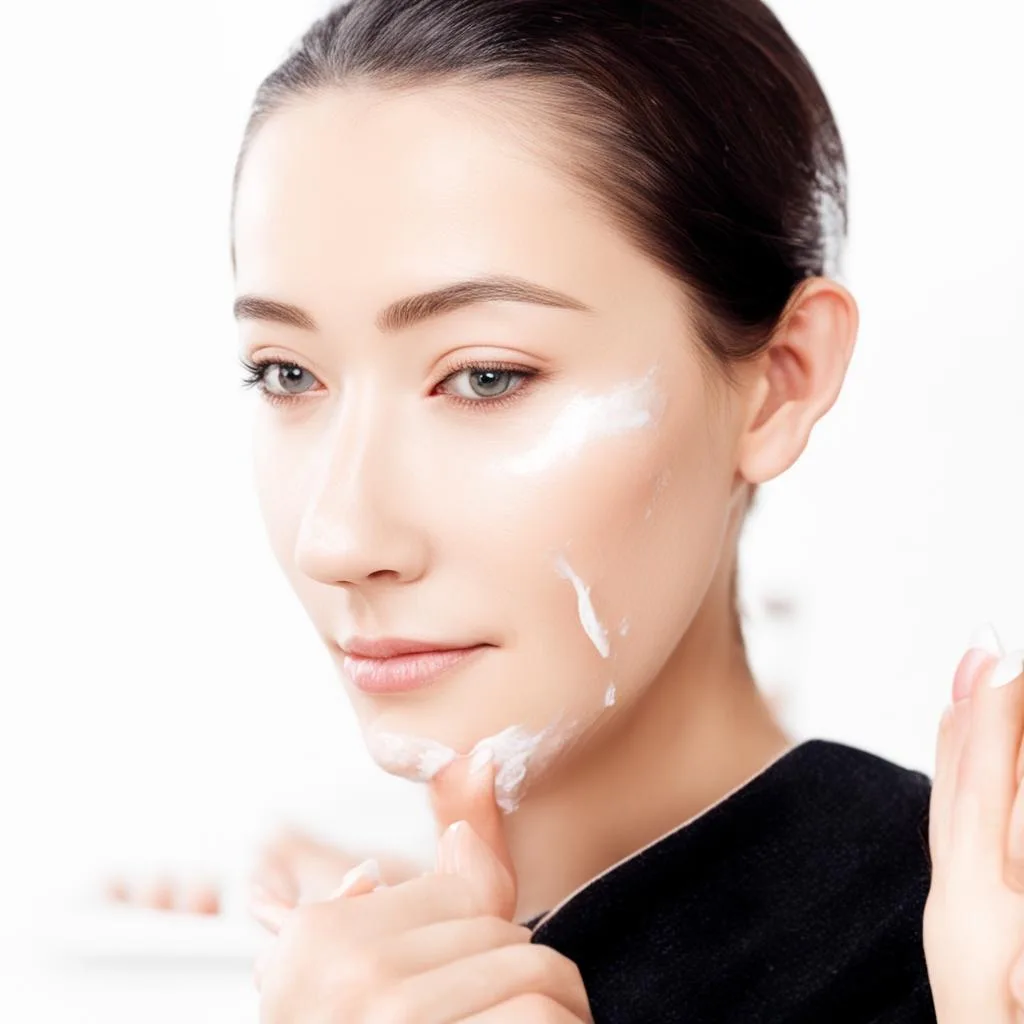
The True Value of Your Skin
When it comes to skincare, it’s easy to get caught up in marketing claims and the latest product releases. But at the end of the day, the true value of skincare comes from nurturing our skin – and ourselves – with care and compassion.
Key takeaways
- Spend less on cleansers since active ingredients are rinsed off before they can deeply penetrate the skin barrier.
- Invest in leave-on serums where price often reflects better ingredient stability, delivery systems, and reduced irritation risks.
- Choose airless pumps or opaque bottles over jars to protect sensitive antioxidants from degrading due to light and air.
- Splurge on sunscreens with pleasant textures to encourage consistent daily application of the required half-teaspoon amount.
- Focus on masstige brands that offer clinical-grade ingredients without the high markups associated with luxury celebrity endorsements.
Focus on Ingredients, Not Price Tags
Rather than obsessing over the cost of serums and moisturizers, shift your focus to choosing products with high-quality, skin-healthy ingredients like antioxidants, essential fatty acids, and botanical extracts. A $15 serum made with nourishing oils and vitamins can be far more valuable than a $100 cream full of synthetic fragrances and fillers.
The Most Powerful Ingredient is Self-Care
Your skincare routine offers wonderful opportunities for self-care. Treat yourself to a soothing facial massage as you apply products. Savor aromatic lotions that relax your senses. Or simply take moments to admire your reflection – freckles, wrinkles and all – as you nurture your skin.
The Splurge vs. Save Matrix: Identifying Where to Invest
To build a high-performing routine without draining your bank account, you must categorize your products based on their contact time with your skin and the complexity of their formulation. This is often referred to as the “Wash-Off Rule.” Products that stay on your skin for less than sixty seconds—primarily cleansers—do not require a significant financial investment. A $10 cleanser from a reputable drugstore brand often uses the same gentle surfactants, such as coco-glucoside or decyl glucoside, as a $60 luxury equivalent. Since the active ingredients in a cleanser are rinsed down the drain before they can deeply penetrate the dermis, spending more than $15 to $20 on this step yields diminishing returns.
Conversely, the “Leave-On” category is where your budget should be strategically allocated. Serums and targeted treatments are formulated with smaller molecular weights designed to bypass the skin barrier and deliver biological changes. When you pay a premium for a serum, you are often paying for the delivery system—the liposomes or fermentation processes that ensure the active ingredient reaches its target without evaporating or irritating the surface. For example, a high-end hyaluronic acid serum may contain multiple molecular weights (low, medium, and high) to hydrate different layers of the skin, whereas a budget version might only use high-molecular-weight salt that sits on top. Identifying these technical differences allows you to save on the “prep” steps and splurge on the “correction” steps.
Sunscreen represents the ultimate edge case in the splurge vs. save debate. While inexpensive sunscreens provide the same SPF protection as luxury ones, the “cosmetic elegance” varies wildly. If a $10 sunscreen feels greasy or leaves a white cast, you are less likely to apply the required half-teaspoon for the face and neck. In this instance, spending $30 or $40 on a formula that feels like a lightweight moisturizer is a valid investment in your long-term health, as consistency is more important than the raw cost of the UV filters themselves.
Deciphering the Cost of Actives: Stability and Bioavailability
When evaluating whether a product is worth its price tag, we must look at the stability of the active ingredients, particularly Vitamin C (L-ascorbic acid) and Retinoids. L-ascorbic acid is notoriously unstable; it oxidizes when exposed to light and air, turning a useless orange hue. Cheap formulations often lack the stabilizing co-antioxidants, such as Ferulic Acid and Vitamin E, or the precise pH balancing (usually below 3.5) required for the skin to actually absorb the molecule. Therefore, a $15 Vitamin C serum that oxidizes in three weeks is actually more expensive in the long run than a $100 stabilized formula that remains potent for six months.
Retinoids follow a similar logic. While you can find entry-level retinol for under $20, these formulas are often prone to causing significant irritation because the retinol is “naked.” Higher-priced alternatives frequently use encapsulated technology, where the retinol is housed in a microscopic shell that releases the ingredient slowly over several hours. This time-release mechanism reduces the inflammatory response, making the product more effective because you can use it every night rather than every third night. When you increase the price point, you are often paying for a lower “irritation tax,” allowing for better long-term results.
Furthermore, consider the concentration vs. the quality of the source. A brand may claim 10% Niacinamide, but if the raw material contains high levels of nicotinic acid (a common impurity), it can cause flushing and redness. Premium brands often pay for higher-purity grades of raw materials and conduct third-party clinical trials to prove their specific formulation works, rather than relying on general “ingredient deck” studies. This clinical backing is a significant portion of the price tag, providing a level of insurance that the product will perform as advertised.
Packaging, Stability, and the Invisible Costs of Product Integrity
One of the most overlooked factors in skincare pricing is the vessel that holds the product. You might find two moisturizers with identical ingredient lists, but one is in an open-mouth jar and the other is in an opaque, airless pump. The jar packaging is significantly cheaper to manufacture, but it exposes the contents to oxygen and bacteria from your fingers every time you use it. Antioxidants like resveratrol or green tea polyphenols degrade rapidly in the presence of oxygen. By the time you reach the bottom of a $20 jar, the “hero” ingredients may have lost all biological activity.
Airless pump technology and dual-chambered bottles are expensive to engineer. These designs prevent air from entering the container as the product is dispensed, maintaining the internal vacuum. When you spend more on these types of packaging, you are essentially paying for a “freshness guarantee.” This is particularly crucial for “clean” skincare brands that use fewer synthetic preservatives; without high-end packaging, these products would have a shelf life of only a few weeks once opened.
Additionally, the use of Miron glass or UV-coated plastics adds to the cost. These materials block specific light frequencies that trigger chemical reactions within the formula. If you are someone who keeps their skincare on a sunny bathroom vanity, these packaging investments are vital. If you are on a strict budget, you can bypass these costs by choosing products in simple aluminum tubes—which are airtight and light-proof—often found in French pharmacy brands or medical-grade ointments. Understanding that the bottle is part of the formula’s efficacy helps reframe the price as a functional necessity rather than just aesthetic branding.
The Mathematical Approach: Calculating Cost-Per-Use and Lifespan
To truly understand what you are spending, you must shift from the “sticker price” to the “cost-per-use.” A standard 30ml (1 oz) bottle of serum contains approximately 600 drops. If your routine requires two drops per application, once a day, that bottle will last you 300 days. A $60 serum, therefore, costs you exactly $0.20 per day. When viewed through this lens, many high-end treatments are actually more affordable than a daily cup of coffee or even a single-use sheet mask, which can cost $5 to $10 for a one-time benefit.
Compare this to a $15 cleanser that you use twice daily in large amounts. If that 150ml bottle lasts you only six weeks, your annual spend on cleanser is roughly $130. If you switched to a $30 concentrated cleansing balm that lasts six months, your annual spend drops to $60. The initial output is higher, but the efficiency of the formula reduces the long-term cost. This is the “efficiency paradox” of skincare: concentrated, high-quality products often require less volume per application to achieve the desired result.
Edge cases exist where the cost-per-use logic fails, specifically with products that have a short shelf life. Most Vitamin C serums and organic face oils should be discarded six months after opening. If you buy a jumbo-sized luxury oil for $150 but only use a fraction of it before it goes rancid, the cost-per-use skyrockets. In these categories, buying smaller, cheaper quantities more frequently is the more fiscally responsible choice. Always check the PAO (Period After Opening) symbol—a small open jar icon with a number and the letter ‘M’—to determine if you will actually finish the product before it expires.
Professional Treatments vs. At-Home Maintenance: Balancing Your Budget
A common mistake in skincare budgeting is viewing home care and professional treatments as separate silos. In reality, they are deeply interdependent. If you are spending $200 every month on professional chemical peels or microneedling, your at-home routine should be a minimalist, supportive system focused on barrier repair and hydration. Using expensive, aggressive actives at home while undergoing professional treatments is not only a waste of money but can lead to over-exfoliation and chronic inflammation, which ages the skin faster.
On the flip side, a robust at-home routine featuring prescription-strength retinoids (like Tretinoin) and high-potency antioxidants can reduce the frequency with which you need professional interventions. For many, spending $100 a month on a high-tier home regimen is more cost-effective than spending $1,200 a year on lasers to fix damage that could have been prevented. Think of your daily products as the “maintenance” and professional treatments as the “renovation.” If the maintenance is impeccable, the renovations can be smaller and less frequent.
Consider also the rise of at-home devices, such as LED masks or microcurrent tools. These carry high upfront costs (often $300 to $500) but offer unlimited uses. If an LED mask replaces a $150 monthly professional light therapy session, it pays for itself in less than four months. However, the caveat is compliance; an expensive device is a $0 value if it sits in a drawer. Before splurging on tech, audit your habits. If you enjoy the ritual of a 10-step routine, you will likely get a high ROI from a device. If you prefer a 2-minute routine, that money is better spent on a single, high-quality multi-tasking serum.
Navigating the Middle Ground: The Rise of “Masstige” and Direct-to-Consumer
The skincare market has traditionally been bifurcated between the $10 drugstore aisle and the $150 department store counter. However, the most value is currently found in the “masstige” (mass-prestige) and Direct-to-Consumer (DTC) sectors. Brands in the $25 to $50 range often utilize the same laboratories and chemists as luxury houses but skip the multi-million dollar celebrity endorsement campaigns and expensive retail floor space. By cutting out the middleman, these brands can afford to put higher concentrations of patented peptides or rare botanical extracts into their formulas while keeping the price accessible.
When shopping in this middle tier, look for brands that offer transparency in their sourcing. This is where you find “clinical-grade” ingredients without the “prestige markup.” For instance, a $30 moisturizer from a science-focused DTC brand might include 5% ceramides—the physiological ratio needed to actually repair the skin barrier—whereas a $15 mass-market version might only contain a “dusting” of ceramides for marketing purposes. The $15 difference buys you therapeutic efficacy rather than just a pleasant texture.
However, be wary of the “collection trap.” Because these products are reasonably priced, it is easy to buy ten different $25 serums, resulting in a $250 expenditure on a routine that is too complex for the skin to handle. The goal of smart spending is not to buy more affordable things, but to buy fewer, better things. A streamlined middle-tier routine consisting of a gentle cleanser, a high-quality antioxidant serum, a well-formulated moisturizer, and a reliable sunscreen will almost always outperform a chaotic 12-step routine of budget products.
The Hidden Price of “Clean” and “Natural” Marketing
The terms “clean,” “natural,” and “organic” are not regulated by the FDA, yet they often command a 30% to 50% price premium. It is important to distinguish between the cost of the ingredients and the cost of the certifications. A brand that is “Ecocert” or “COSMOS” certified pays significant annual fees and undergoes rigorous audits to maintain those labels. If environmental sustainability and organic farming are part of your personal value system, this price premium is a legitimate reflection of those external costs. However, from a purely dermatological standpoint, an organic cold-pressed oil is not necessarily “better” for your skin than a high-quality, sustainably sourced synthetic alternative.
In fact, “natural” ingredients are often more expensive because they are subject to crop yields, weather patterns, and complex extraction processes. A synthetic version of a molecule (like Vanillin or Vitamin E) is often purer and more stable than its botanical counterpart, which may contain hundreds of unknown chemical compounds that can trigger allergies. When you see a very expensive “all-natural” balm, you are often paying for the rarity of the harvest and the artisanal method of production.
To spend wisely in this category, look for “bio-identical” ingredients. These are lab-created versions of molecules found naturally in the skin (like squalane or ceramides). They offer the safety and sustainability of synthetic manufacturing with the biocompatibility of natural ingredients, usually at a much more reasonable price point than rare botanical extracts. By focusing on how the skin recognizes a molecule rather than how the molecule was grown, you can achieve superior results while keeping your skincare budget focused on performance over poetry.
FAQ
What ingredients should I look for in skincare products?
Some skin-healthy ingredients to look for are antioxidant-rich extracts like green tea, nourishing oils like jojoba, and skin-replenishing ceramides. Avoid products with lots of alcohol, fragrance, and parabens.
Do more expensive products work better?
Not necessarily. Many inexpensive options from reputable brands use high-quality ingredients that nourish skin beautifully. Focus more on ingredients than price tags when choosing skincare.
How can I make my skincare routine self-care?
Treat skincare moments as an act of self-love. Light a candle, put on relaxing music, massage products into skin – make it meaningful. Being present while nurturing your skin is wonderful self-care.
Do I need a special routine for my skin type?
Having a basic routine with gentle cleanser, nourishing serums packed with antioxidants, and rich moisturizer can benefit all skin types. You can then customize with additional products – like acne treatments or hydrating mists – as needed.
What if I can’t afford expensive products?
Caring for your skin has more to do with techniques and ingredients than high costs. Implement self-care practices daily, choose quality affordable products, and your skin will thank you.
Related posts:
 Gemstones in Skincare
 Rael and Good Chemistry Advanced Antioxidant Serum Review
 When To Splurge on Expensive Skincare
 Top Beauty Brands of 2019
 Crystal-Infused Beauty Products That Actually Work
 Proper Order of Skincare Application
 The Best Drugstore Body Products Worth Your Money
 Spring Awakening: The Hydrating Serums Your Winter Skin Is Craving