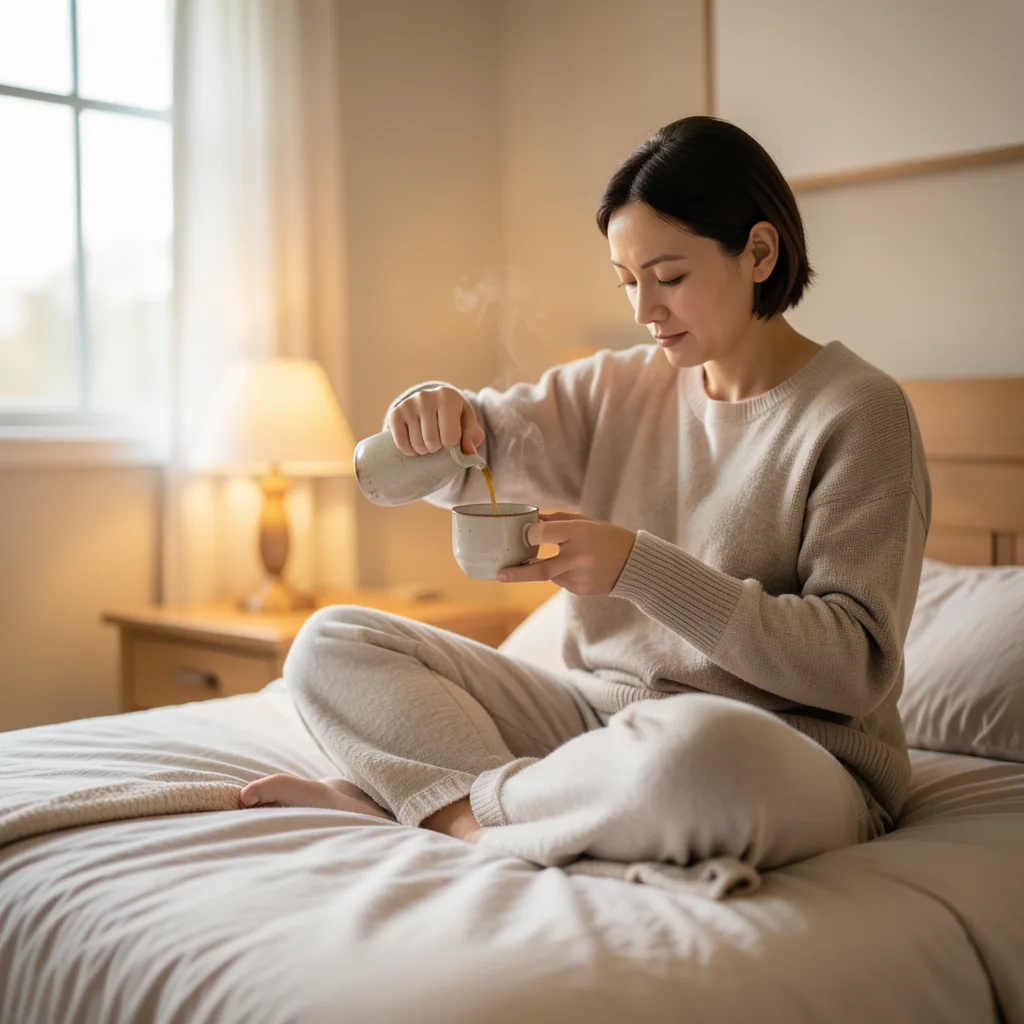
In our fast-paced, hyper-connected world, the transition from a high-stress workday to a restful night of sleep is rarely automatic. Many of us find ourselves staring at the ceiling, our minds racing with unfinished tasks, digital notifications, and tomorrow’s anxieties. This is where the power of a deliberate evening routine comes into play. Creating a relaxing evening routine is not just a luxury; it is a fundamental pillar of mental health and physical well-being. By establishing a series of predictable, calming activities, you signal to your nervous system that the day’s demands have ended and it is safe to enter a state of deep rest.
Key takeaways
- Disconnect from electronic devices 60 to 90 minutes before sleep to reduce blue light and psychological stimulation.
- Maintain a bedroom temperature between 60 and 67 degrees Fahrenheit to facilitate the body’s natural core temperature drop.
- Implement a caffeine cutoff ten hours before bedtime to prevent interference with sleep-signaling adenosine receptors.
- Use a brain dump or the 3-2-1 planning method to offload anxieties and tasks onto paper before bed.
- Take a warm bath 1-2 hours before bed to trigger vasodilation, which helps cool the body’s core for sleep.
A successful evening routine is highly personal, but it always shares the same goal: lowering cortisol levels and encouraging the production of melatonin. Whether you have fifteen minutes or two hours, the quality of your transition matters more than the quantity of time spent. This guide will explore the physiological foundations of relaxation and provide a comprehensive, step-by-step framework for building a routine that leaves you feeling restored and ready for the day ahead.
The Science of Winding Down: Why Your Brain Needs a Buffer
To understand why an evening routine is effective, we must look at the biological mechanisms of sleep. Our bodies operate on a circadian rhythm—an internal 24-hour clock that regulates cycles of alertness and sleepiness. This rhythm is heavily influenced by external cues, primarily light and temperature. During the day, exposure to sunlight keeps us alert. As darkness falls, the pineal gland in the brain begins to secrete melatonin, the hormone responsible for sleep.
However, modern life often disrupts this natural process. Artificial blue light from smartphones and computers tricks the brain into thinking it is still daytime, suppressing melatonin production. Furthermore, high-stress activities late in the evening keep the sympathetic nervous system (our “fight or flight” response) active. A relaxing evening routine serves as a bridge, allowing the body to shift into the parasympathetic nervous system, often referred to as the “rest and digest” state. By consciously managing your environment and activities, you provide the biological cues your brain needs to initiate the sleep cycle effectively.
Step 1: The Digital Sunset and Setting Boundaries
The first and perhaps most challenging step in creating a relaxing evening routine is the “digital sunset.” This involves disconnecting from electronic devices at least 60 to 90 minutes before your intended sleep time. The goal is twofold: reducing blue light exposure and eliminating the psychological stimulation that comes from social media, emails, and news cycles.
Actionable guidance for a digital sunset includes:
- The Charging Station: Create a designated charging area outside of the bedroom. When you enter your wind-down period, place your phone there and do not pick it up until the next morning.
- App Blockers: Use built-in features like “Screen Time” (iOS) or “Digital Wellbeing” (Android) to automatically disable non-essential apps after a certain hour.
- Analog Alternatives: Replace the habit of scrolling with tactile activities. If you usually check the news, try reading a physical book or a Kindle with a paper-white display (with the backlight turned down and warm).
Setting boundaries also means saying no to work-related tasks. Checking a work email at 9:00 PM can trigger a spike in cortisol that takes hours to subside. Establish a hard cutoff time for professional communication to protect your mental space.
Step 2: Cultivating a Sensory-Friendly Environment
Your physical environment acts as a powerful trigger for your brain. If your home is brightly lit and cluttered, your mind will likely remain in an active, “doing” mode. To foster relaxation, you must curate an environment that appeals to all five senses in a calming way.
Lighting: Swap bright overhead lights for warm-toned lamps or even candlelight. Dimmer switches are invaluable for gradually lowering the light levels as bedtime approaches. Warm light (yellow/orange spectrum) is far less disruptive to melatonin than the cool white light typical of office settings.
Scent: Aromatherapy is a scientifically backed method for reducing anxiety. Lavender, bergamot, and cedarwood are known for their sedative properties. You might use an essential oil diffuser, a high-quality soy candle, or a linen spray on your pillow to create a “scent association” with sleep.
Temperature: The body’s core temperature needs to drop slightly to initiate sleep. Aim to keep your bedroom between 60–67 degrees Fahrenheit (15–19 degrees Celsius). A cool room combined with warm bedding creates the ideal microclimate for deep rest.
Step 3: Mindful Movement and Physical Release
While vigorous exercise is best kept for earlier in the day, gentle movement in the evening can help release the physical tension accumulated throughout the hours of sitting or standing. The focus here should be on stretching and breathing rather than elevating the heart rate.
Consider incorporating these practices:
- Progressive Muscle Relaxation (PMR): While lying down, systematically tense and then release each muscle group, starting from your toes and moving up to your face. This helps you become aware of where you are holding stress.
- Restorative Yoga: Poses like Child’s Pose (Balasana), Legs-Up-The-Wall (Viparita Karani), and Reclined Butterfly (Supta Baddha Konasana) encourage the body to relax deeply. Hold these poses for 3–5 minutes while focusing on deep, diaphragmatic breathing.
- Gentle Neck and Shoulder Rolls: Most of us carry tension in our upper bodies due to computer work. Simple, slow rolls can alleviate the “tech neck” that often causes headaches and discomfort at night.
Step 4: Nourishing the Body Without Overloading
What you consume in the evening significantly impacts your sleep architecture. A heavy, spicy, or sugary meal right before bed can lead to indigestion and frequent wakeups. However, going to bed hungry can also be disruptive. The key is balance.
Timing: Aim to finish your last large meal about 2–3 hours before sleep. This gives your digestive system time to work so that your body can focus on cellular repair during the night.
The Ideal Evening Snack: If you are hungry, choose a small snack that combines complex carbohydrates with a bit of protein or healthy fat. Examples include a small bowl of oatmeal, a banana with almond butter, or a handful of walnuts. These foods contain precursors to serotonin and melatonin, such as tryptophan and magnesium.
Hydration: Be mindful of your fluid intake. While staying hydrated is important, drinking large amounts of water right before bed will lead to middle-of-the-night bathroom trips. Opt for a small cup of herbal tea—chamomile, valerian root, and passionflower are excellent caffeine-free options that promote relaxation.
Step 5: Mental Offloading and the Art of Journaling
One of the biggest barriers to a relaxing evening is the “mental loop”—the tendency to replay the day’s events or worry about tomorrow’s to-do list. To combat this, you need a system for offloading these thoughts from your brain onto paper.
The Brain Dump: Spend five minutes writing down every task, worry, or idea currently in your head. Once it is on paper, your brain no longer feels the need to constantly remind you of it, reducing cognitive load.
The 3-2-1 Planning Method: To ease anxiety about the coming day, write down three things you want to accomplish tomorrow, two things you are grateful for today, and one thing you want to improve or learn. This provides a sense of closure for the current day and a clear roadmap for the next, preventing that 2:00 AM “Oh no, I forgot!” realization.
Gratitude Journaling: Focusing on positive experiences, no matter how small, shifts the brain from a state of lack or stress to a state of contentment. This neurological shift is a powerful precursor to peaceful sleep.
Step 6: Personal Hygiene as a Restorative Ritual
Instead of viewing your evening wash-up as a chore, transform it into a self-care ritual. The act of cleansing can be symbolic of washing away the day’s stresses.
The Warm Bath or Shower: Taking a warm bath or shower 1–2 hours before bed is highly effective. The warm water increases blood flow to the hands and feet, which helps the body’s core temperature drop more quickly once you get out—a natural signal for sleep. Adding Epsom salts to a bath provides magnesium, which can be absorbed through the skin to help relax muscles.
Skincare as Mindfulness: Use your skincare routine as a time to be fully present. Notice the texture of the creams, the scent of the cleanser, and the sensation of your hands on your face. This slow, deliberate process anchors you in the present moment, acting as a form of moving meditation.
Step 7: Cultural and Creative Pursuits for the Soul
The final stage of your routine should involve low-stimulation activities that bring you joy or quiet contemplation. This is the time to engage the “being” mode of your brain rather than the “doing” mode.
Reading for Pleasure: Choose fiction or light non-fiction. Avoid high-stakes thrillers or dense professional development books that might overstimulate your mind. Getting lost in a story is an excellent way to disconnect from your own reality and lower your heart rate.
Listening: If your eyes are tired, consider an audiobook, a calm podcast, or ambient music. Many people find “brown noise” or “pink noise” (softer versions of white noise) to be incredibly soothing for the nervous system.
Creative Hobbies: Simple, repetitive tasks like knitting, drawing, or light puzzling can be very grounding. These activities encourage a “flow state” that is naturally relaxing and takes your mind off daily stressors.
Customizing Your Routine: Flexibility and Consistency
The most effective evening routine is the one you actually follow. It is important to remain flexible; your routine on a Tuesday night after a long commute might look different from your routine on a slow Sunday evening. The key is to have a “minimum viable routine” for busy nights—perhaps just five minutes of stretching and a cup of tea—to maintain the habit.
Consistency is what turns these actions into signals. When you perform the same steps in the same order, you are conditioning your brain. Eventually, just the act of brewing your evening tea or dimming the lights will trigger a relaxation response. Be patient with yourself as you build these habits, and remember that the goal is progress, not perfection. Over time, your relaxing evening routine will become an essential sanctuary, protecting your health and happiness in an increasingly busy world.
The Afternoon Pivot: Managing the “Caffeine Tail” and Cortisol
While most evening routines focus on the hours immediately preceding sleep, the foundation of a truly restorative night is actually laid in the mid-afternoon. To understand why your brain might still feel “wired” at 10:00 PM despite a digital sunset, we must look at the pharmacokinetics of caffeine and the natural rhythm of cortisol. Caffeine has a half-life of approximately five to six hours. This means if you consume a large cup of coffee at 4:00 PM, half of that caffeine is still circulating in your system at 10:00 PM, actively blocking adenosine receptors—the molecules responsible for signaling sleep pressure to your brain.
To optimize your evening transition, implement a “Caffeine Cutoff” at least ten hours before your intended bedtime. For most, this means a hard stop at 12:00 PM or 2:00 PM. Beyond caffeine, the late afternoon is often a time for “anticipatory stress.” We begin to worry about the tasks we didn’t finish today or the meetings scheduled for tomorrow morning. This triggers a secondary cortisol spike that can override the natural evening dip required for melatonin production.
An effective strategy to mitigate this is the “Work-to-Home Threshold Ritual.” This is a five-minute transition performed before you leave your workspace or close your laptop. It involves a brief review of your accomplishments for the day followed by a physical gesture of closure—shutting the laptop lid firmly, clearing your desk of stray papers, or even a quick breathing exercise. By mentally “archiving” the workday while still in the work environment, you prevent professional anxieties from bleeding into your domestic sanctuary, making the later steps of your evening routine far more effective.
Advanced Sleep Architecture: Optimizing Biological Thermal Regulation
The existing article mentions the importance of a cool room, but the science of thermoregulation goes much deeper than just the thermostat setting. Our bodies follow a distinct temperature curve: we are warmest in the late afternoon and coolest in the early morning hours. A rapid drop in core body temperature is one of the most powerful biological triggers for sleep onset. You can manipulate this process through a phenomenon known as the “warm bath effect,” which involves more than just getting clean.
When you emerge from a warm bath or shower, your blood vessels are dilated (vasodilation), particularly in your hands and feet. This allows your body to dump core heat into the environment with incredible efficiency. To maximize this, consider the “socks hack.” Research suggests that wearing loose, breathable socks to bed can actually help you fall asleep faster. By warming the feet, you cause the blood vessels there to dilate, which helps the rest of your body’s core temperature drop more quickly. It sounds counterintuitive, but warm extremities lead to a cooler core.
Furthermore, the materials you interact with during your routine matter. Synthetic fabrics like polyester trap heat and moisture, leading to “micro-arousals” throughout the night as your body struggles to regulate its temperature. Transition your evening wear and bedding to natural, moisture-wicking fibers. Tencel, bamboo, and high-quality long-staple cotton facilitate better airflow. For those who experience “night sweats” or have high metabolic rates, look into specialized cooling pads or weighted blankets designed with glass beads rather than plastic, as they dissipate heat more effectively while still providing the calming benefits of deep pressure stimulation.
Auditory Conditioning: Using Binaural Beats and Frequency Therapy
While the previous sections touched on ambient music, there is a more technical approach to using sound to re-engineer your brainwaves for rest. This is known as brainwave entrainment. When you are alert and working, your brain primarily operates in Beta waves (13–30 Hz). As you relax, you shift into Alpha (8–13 Hz), and eventually into Theta (4–8 Hz) and Delta (0.5–4 Hz) during deep sleep.
Binaural beats can assist this transition. This involves playing two slightly different frequencies in each ear (requiring headphones). The brain perceives a third “beat” that is the mathematical difference between the two. For example, if you play 200 Hz in the left ear and 205 Hz in the right, your brain processes a 5 Hz beat, which sits in the Theta range associated with deep relaxation and meditation. Incorporating 15 to 20 minutes of Theta-frequency binaural beats during your reading time or while performing your skincare routine can “pull” your brain state down from the high-frequency buzz of the day.
Another layer of sound therapy is the use of “Pink Noise” or “Brown Noise.” Unlike White Noise, which has equal intensity across all frequencies and can sometimes sound harsh, Pink Noise (like steady rain or wind) has more power at lower frequencies. Studies have shown that Pink Noise can increase the duration of stable, deep slow-wave sleep and improve memory consolidation. If you live in a noisy urban environment, using a dedicated high-fidelity sound machine to create a consistent “auditory cocoon” prevents the startle response triggered by sudden outside noises, such as a car alarm or a neighbor’s door closing, which can spike your heart rate even if they don’t fully wake you up.
Decision Fatigue Mitigation: The “Tomorrow-Proofing” Strategy
A significant source of evening restlessness is “micro-decision fatigue.” Throughout the day, we make thousands of choices, and by the evening, our executive function is depleted. This often leads to “revenge bedtime procrastination,” where we stay up late scrolling because we lack the cognitive energy to simply decide to go to bed. To combat this, your evening routine should include a “Tomorrow-Proofing” phase that eliminates the need for decisions the following morning.
This goes beyond a simple to-do list. Spend ten minutes physically prepping for the first hour of the next day. This includes:
- The Uniform: Lay out your entire outfit, including shoes and accessories. This removes the “what should I wear?” friction that can cause morning stress.
- The Launchpad: Place your keys, wallet, bag, and any items you need to take with you in a designated spot near the door.
- Meal Prep: Set out your coffee mug, prep the coffee maker, or pack your lunch.
The psychological benefit here is twofold. First, it provides a sense of mastery and control over your environment. Second, it signals to your brain that the future is “handled.” When you lie down, your mind is less likely to scan for potential problems because you have already physically addressed the immediate hurdles of the coming day. This creates a “mental runway” that allows for a smoother takeoff into sleep.
Co-Regulation and the Social Dynamics of Relaxation
Most evening routine advice assumes you are a solo actor, but for those living with partners, roommates, or pets, your environment is socially dynamic. If your partner is watching an action movie or engaging in a heated debate while you are trying to wind down, your nervous system will naturally stay alert. This is where the concept of “Co-Regulation” becomes vital.
Co-regulation is the process by which one person’s nervous system influences another’s. If you are practicing deep, slow breathing and maintaining a calm demeanor, you can actually help lower the stress levels of those around you. Establish a “Shared Quiet Hour” with your household. This doesn’t mean you have to do the same activity; rather, it’s an agreement that after a certain time, the house moves into a low-stimulation mode. This might look like “Parallel Play”—where you and your partner sit in the same room, one reading and the other knitting, without the need for constant conversation or digital distraction.
For those with pets, incorporate them into the routine. The act of slowly brushing a dog or cat can be a form of tactile mindfulness. The rhythmic motion and the physical connection release oxytocin in both the human and the animal, which directly counteracts cortisol. However, be mindful of “pet-induced sleep fragmentation.” If your pet disrupts your sleep, the evening routine should include a clear transition where they are settled into their own designated sleeping area, ensuring that your sanctuary remains undisturbed.
Cognitive Reframing: Overcoming Sleep-Onset Anxiety
For many, the act of trying to follow a “perfect” evening routine can ironically become a source of stress. This is known as “orthosomnia”—an unhealthy obsession with achieving perfect sleep. If you find yourself checking your sleep tracker or worrying that your routine isn’t “relaxing enough,” you are inadvertently triggering the sympathetic nervous system.
To fix this, utilize a cognitive behavioral technique called “Paradoxical Intention.” If you find yourself lying in bed, unable to sleep because your mind is racing about the routine itself, give yourself permission to stay awake. Tell yourself, “I am just going to lie here and enjoy the feeling of these soft sheets without the goal of sleeping.” By removing the demand for sleep, you remove the performance anxiety associated with it. Relaxation is not something you can force; it is something you allow to happen.
Another powerful reframing tool is “Cognitive Shuffling.” This is a word-association game that occupies the analytical part of your brain with nonsensical imagery, preventing it from engaging in stressful problem-solving. Pick a neutral word like “BEDTIME.” Start with the first letter, ‘B’, and visualize things starting with B: a bear, a boat, a banana. Once you run out of B-words, move to ‘E’: an elephant, an eagle, an envelope. This “scrambles” your thoughts in a way that mimics the hypnagogic state (the transition between wakefulness and sleep), essentially tricking your brain into sliding into a dream state.
Seasonal Synchronicity: Adjusting Your Routine for Light Cycles
A static evening routine often fails because it ignores the dramatic shifts in natural light throughout the year. Your body’s internal clock is highly sensitive to the seasonal changes in the photoperiod. In the height of summer, the sun may still be up at 9:00 PM, while in winter, it may be dark by 4:30 PM. A rigid 8:00 PM wind-down might feel unnatural in July and too late in December.
During the summer months, your routine must prioritize artificial darkness. This is the time to lean heavily on blackout curtains and to start your “digital sunset” even earlier, as the external environment is still signaling “daytime.” You may also need to utilize a colder shower than usual to combat the higher ambient evening temperatures that can stall the core temperature drop.
Conversely, in the winter, many people suffer from a lack of light during the day, which can lead to a “flat” circadian rhythm where the body never feels fully awake or fully asleep. In this season, your evening routine should focus on warmth and “Hygge”—the Danish concept of coziness. Use full-spectrum light therapy (SAD lamps) in the morning to anchor your rhythm, and in the evening, focus on firelight or very low-wattage amber bulbs. The winter routine is an opportunity for deeper hibernation; allow yourself a longer wind-down period and perhaps a slightly earlier bedtime to align with the earth’s natural cycle. By adjusting your habits to the seasons, you work with your biology rather than against it, ensuring your routine remains sustainable year-round.
Frequently Asked Questions
How long should a relaxing evening routine take?
There is no set time, but most people find that 30 to 60 minutes is the “sweet spot.” This allows enough time for the body to transition through different stages of relaxation without feeling rushed. If you are short on time, even a 15-minute condensed version can be effective if it includes a digital detox and a few minutes of deep breathing.
What if I can’t avoid screens in the evening due to work or study?
If screens are a necessity, take steps to mitigate their impact. Use “Night Shift” or “Blue Light Filter” modes on all devices to shift the screen toward the warmer end of the spectrum. Consider wearing blue-light-blocking glasses. Most importantly, try to take a 5-minute “screen break” every 30 minutes to look away and stretch, and ensure the very last 15 minutes before bed are entirely screen-free.
I have kids and a busy household; how can I find time for this?
For parents, the evening routine often starts after the children are in bed. However, you can also involve children in a “family wind-down.” Dimming the lights for the whole house, playing soft music, and engaging in quiet activities like reading together can help everyone transition. If you only have 10 minutes of solo time, prioritize the activity that helps you most, such as a quick shower or a few minutes of journaling.
Is it okay to watch TV as part of a relaxing routine?
While TV is a screen, it is generally less stimulating than a smartphone because it is a passive experience and usually viewed from a distance. If watching a familiar, lighthearted show helps you unwind, it can be part of your routine. However, try to turn it off at least 30 minutes before bed to allow your brain to settle, and avoid “binge-watching” which can lead to staying up much later than intended.
How soon will I see the benefits of a new evening routine?
Some benefits, like feeling more relaxed in the moment, are immediate. However, improvements in sleep quality and daytime energy levels usually take about two to three weeks of consistent practice. This is because your body needs time to adjust its internal clock and recognize the new cues you are providing. Stick with it, and the long-term cumulative effects will be significant.
Related posts:
 Turkey Day Slumber: Bedroom Inspiration for the Ultimate Food Coma
 Three Scientific Reasons to Become a Morning Person
 PHA Bodyweight Workout: Efficient Fitness Anywhere, Anytime
 Weekend Sleep Recovery
 Can You Actually Sleep Too Much? The Surprising Health Risks
 Optimal Bedtime Guide
 Do You Really Need Less Sleep as You Age?
 How to Improve Your Sleep Quality at Night