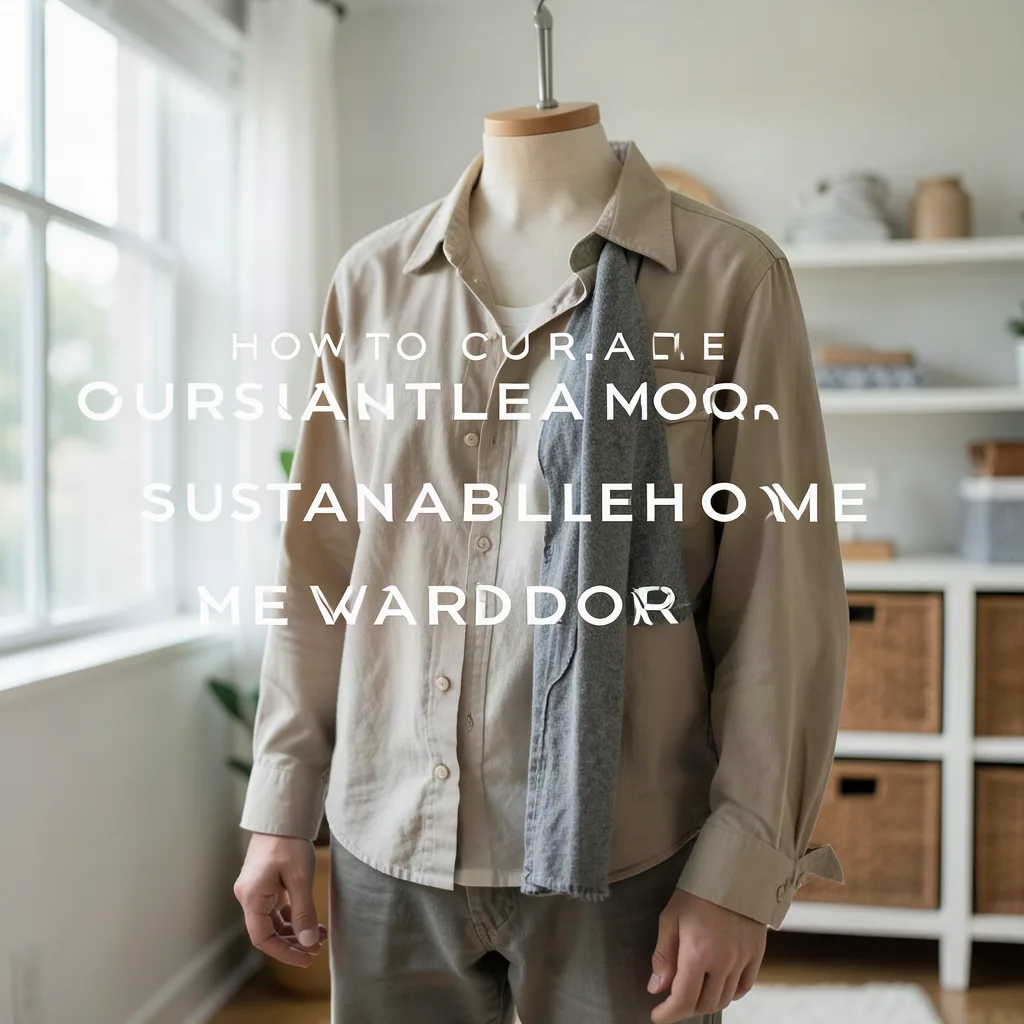
When you think about sustainability, clothing is often one of the most overlooked areas of your home. A typical household can accumulate hundreds of items of clothing, many of which are fast fashion pieces that are bought, worn a few times, and then discarded. By curating a more sustainable home wardrobe, you not only reduce waste but also save money, support ethical production, and develop a personal style that truly reflects your values. This guide walks you through practical steps to assess, simplify, and revitalize the clothes you own, turning your closet into a model of eco‑friendly living.
Understand the Impact of Your Wardrobe
The environmental cost of clothing is staggering. The fashion industry accounts for roughly 10% of global carbon emissions, uses more water than the entire aviation sector, and generates massive amounts of textile waste. When you keep items longer, choose secondhand, or select garments made from sustainable fibers, you directly lessen these impacts. Understanding the broader picture helps you make conscious decisions that ripple out far beyond your personal style choices.
Assess Your Current Closet
Before you can improve anything, you need a clear picture of what you already have. Start by emptying one drawer or hanging area, sorting items into four piles: keep, donate, recycle, and discard. Take note of fabrics, colors, and the frequency with which each item is worn. A simple spreadsheet or a note on your phone can help you track these details. This audit reveals hidden gems, duplicates, and pieces that rarely see the light of day – all of which are clues for the next steps.
Adopt a Minimalist Mindset
Minimalism isn’t about depriving yourself of joy; it’s about creating space for what truly matters. A sustainable wardrobe often emerges from a minimalist approach: owning fewer, higher‑quality items that you love and wear regularly. Ask yourself: does this item bring me joy? Will I wear it at least once a month? If the answer is no, consider letting it go. This mindset reduces impulse purchases, cuts down on storage needs, and encourages you to invest in pieces that stand the test of time.
Choose Quality Over Quantity
Quality fabrics and construction extend a garment’s lifespan. Look for natural fibers like organic cotton, linen, wool, and Tencel, which are biodegradable and often produced with lower chemical impact. Synthetics such as polyester are derived from fossil fuels and shed micro‑plastics during washing. When you do buy new items, prioritize brands that use transparent supply chains, fair‑trade certification, and recycled materials. Investing a bit more upfront can save money and resources over the long run.
Embrace Secondhand and Vintage Finds
Secondhand shopping is one of the most effective ways to lower your environmental footprint. Thrift stores, consignment shops, and online platforms like Depop, Poshmark, or Facebook Marketplace offer gently used clothing at a fraction of the cost of new items. Vintage pieces, especially from the 90s and early 2000s, often feature timeless designs and superior craftsmanship. When you buy secondhand, you extend the life of a garment and divert it from landfill, creating a circular economy that benefits everyone.
Implement a Capsule Wardrobe Strategy
A capsule wardrobe is a curated collection of versatile pieces that mix and match effortlessly. To build one, start with a neutral color palette – think blacks, whites, navy, olive, and beige. Then add a few accent colors and patterns for visual interest. Aim for a total of roughly 30–40 items, including tops, bottoms, dresses, outerwear, and footwear. Each piece should be able to pair with at least three others, maximizing outfit options while minimizing the number of items you need to care for and store.
Extend the Life of Your Clothes
Even the most carefully chosen garments need proper care. Wash clothes in cold water, use eco‑friendly detergents, and air‑dry whenever possible. For items that do require machine drying, toss in a dryer ball or a wool dryer sheet to reduce static and fluff. Repair small damages promptly: a missing button, a loose seam, or a tiny rip can often be fixed with a simple stitch or fabric glue. Learning basic sewing skills empowers you to keep your favorite pieces looking fresh for years.
Sustainable Care and Storage
Storage solutions also play a role in sustainability. Opt for breathable garment bags made from recycled materials, and avoid plastic bins that trap moisture and cause mildew. Use cedar blocks or lavender sachets to keep drawers fresh naturally. When cleaning, avoid harsh chemicals; baking soda, white vinegar, and lemon juice are effective, non‑toxic alternatives. Regularly rotate items in your closet so that everything gets wear and prevents stagnation.
Practical Tips for Ongoing Curation
Curating a sustainable wardrobe is not a one‑time project; it’s an ongoing practice. Set a quarterly review date to evaluate what you’ve worn, what’s been neglected, and what new additions you might need. Use a “one in, one out” rule: for every new piece you bring home, remove an old one. Keep a wishlist to avoid impulsive buys, and wait at least 30 days before purchasing non‑essential items. Finally, share your journey on social media or with friends; community support can reinforce sustainable habits and inspire others to follow suit.
Deep‑Dive into Fabric Certifications and Supply‑Chain Transparency
Understanding the alphabet soup of certifications lets you separate marketing fluff from genuine impact. GOTS guarantees organic fibers from field to finished garment and includes social criteria for workers. OEKO‑TEX Standard 100 tests for harmful substances but does not address labor conditions. Fair Trade Certified focuses on equitable wages and safe workplaces, often paired with organic cotton. Bluesign evaluates chemical management across the entire production chain. When a brand lists multiple logos, verify each on the certifier’s public database; some companies display outdated or borrowed seals. Ask for a factory map or a tier‑one supplier list; transparent brands publish this on their website or provide it on request. Edge case: a small artisan label may lack formal certification yet follow rigorous practices; in that case request a written statement of fiber source, dye process, and worker policies. Keep a personal cheat‑sheet of the most common marks so you can scan tags quickly while shopping.
Supply‑chain transparency goes beyond a badge. Look for brands that disclose water usage per kilogram of fabric, carbon intensity per garment, and waste‑diversion rates. Some publish an annual impact report audited by a third party; others use blockchain traceability where each step from farm to retail is recorded. If a brand only offers a vague “made responsibly” claim, treat it as a red flag. When you cannot find data, email the customer‑service team with specific questions – response time and depth often reveal the real commitment. Remember that certifications can be costly for tiny producers; a lack of seal does not automatically mean unsustainable, but it does shift the burden of proof to you.
Practical tip: create a spreadsheet column for each certification you trust. When you add a new piece, tick the relevant boxes. Over time you’ll see patterns – perhaps you favor GOTS‑certified knits but rarely buy Bluesign‑approved outerwear. This data informs future purchases and highlights gaps where you might seek a certified alternative. Edge case: vintage items pre‑date modern standards; evaluate them on material durability and potential for repair rather than certification.
Finally, consider the end‑of‑life certification. Cradle to Cradle Certified assesses circular design, material health, and recyclability. Garments bearing this mark are engineered for disassembly, making future recycling far easier. Prioritizing such pieces closes the loop and reduces the chance your clothing becomes landfill waste.
Leverage Digital Wardrobe Tools for Ongoing Curation
Technology can turn a chaotic closet into a searchable database. Apps like Stylebook, Cladwell, and Save Your Wardrobe let you photograph each item, tag attributes (color, fabric, season, occasion), and log wear frequency. Start by dedicating a weekend to photograph every piece; use consistent lighting and a plain background for accurate color capture. Tagging each garment with the certification data from the previous section creates a powerful filter – you can instantly pull up all GOTS‑certified tops or all items made from Tencel.
Set up automated reminders for seasonal rotation. Most apps allow you to mark items as “active” or “stored” and will notify you when a stored piece has not been worn in twelve months. This prompts a decision: donate, repair, or repurpose. Edge case: sentimental items you rarely wear but cannot part with. Create a “heritage” folder in the app; they stay out of the active rotation but remain documented for insurance or future gifting.
Integrate a wish‑list function with a 30‑day cooling‑off rule. When you spot a potential purchase, add it to the list with a target date. The app can send a push notification on day 30 asking if you still want it. This reduces impulse buys and aligns with the “one in, one out” principle. Some platforms sync with retailer APIs to alert you when a wish‑list item goes on sale from a certified brand, letting you buy responsibly at a lower price.
Data export is a hidden gem. Export your wardrobe CSV once a year and run a pivot table to see the ratio of natural versus synthetic fibers, the average cost per wear, and the percentage of certified pieces. These metrics guide budgeting for the next year – you might decide to allocate more funds to replace high‑wear synthetics with durable organic cotton basics.
Privacy note: choose apps that store data locally or on encrypted cloud services you control. Read the terms of service; some free apps monetize your style data for advertising. If privacy is paramount, a simple spreadsheet on your own device works just as well, albeit with less visual flair.
Clothing Rental, Swap Events, and Community Sharing Models
Rental platforms such as Rent the Runway, Nuuly, and local library‑style closets let you wear high‑impact pieces for a fraction of the purchase price. Before committing, calculate cost per wear: a $200 dress rented for $30 per occasion yields a lower environmental cost if you only need it twice a year. Check the platform’s cleaning protocol – many use ozone or liquid CO2 cleaning, which uses less water and fewer chemicals than traditional dry cleaning.
Community swap events are low‑tech, high‑impact alternatives. Organize a quarterly “wardrobe exchange” with friends, neighbors, or a local makerspace. Set clear rules: each participant brings a maximum of ten items in good condition, items are sorted by category, and a token system ensures fair trade. Edge case: size mismatches. Include a “tailor‑ready” table where items needing minor alterations can be claimed by someone with sewing skills, turning a potential discard into a custom fit.
Digital swap networks like the Facebook Group “Freecycle Fashion” or the app “Swap Society” expand the pool beyond geography. List items with detailed measurements, fabric content, and any flaws. Use a standardized condition scale (new, like new, gently worn, needs repair) to manage expectations. When shipping, choose carbon‑neutral carriers or consolidate shipments to reduce emissions.
Hybrid models combine rental and resale. Some brands offer a “buy‑back” program: you purchase a garment, wear it, then return it for store credit. The brand refurbishes and resells it as certified pre‑owned. This creates a closed loop and often includes a repair guarantee. Evaluate the buy‑back price versus the original cost; a 40‑50% return is typical for high‑quality items.
Legal and hygiene considerations: for intimate apparel, swimwear, or items with personal fit, rental may be less suitable. In those categories, prioritize secondhand purchases with a thorough wash before first wear. Always inspect seams, elastic integrity, and fabric pilling before accepting a swapped piece.
Upcycling, Visible Mending, and Creative Repurposing Techniques
Visible mending turns repair into a design statement. Sashiko stitching, a Japanese running‑stitch technique, reinforces worn knees on jeans while adding geometric patterns. Use contrasting thread (indigo on black denim, white on navy) to highlight the mend. For beginners, start with a simple running stitch along a frayed hem; a 2‑inch needle and cotton thread are all you need. Edge case: stretch fabrics like leggings. Use a stretch‑compatible thread and a zigzag stitch on a sewing machine to maintain elasticity.
Upcycling projects can transform a single garment into multiple new pieces. A worn‑out button‑down shirt can become a tote bag, a set of napkins, and a pocket square. Draft a cutting plan on paper first: mark the largest rectangle for the bag body, smaller squares for napkins, and a bias strip for the pocket square. This reduces waste and yields a coordinated accessory set. If you lack a sewing machine, hand‑sew with a backstitch for durability; many community centers offer free machine access.
Dyeing gives a second life to faded natural fibers. Low‑impact fiber reactive dyes work on cotton, linen, and rayon at 30‑40°C, using less water than conventional vat dyeing. Test a swatch first; color shift can be dramatic on blended fabrics. For a subtle ombre, dip the lower half of a dress in dye bath, then rinse gradually. Edge case: synthetic blends resist these dyes; consider fabric paint or natural dye extracts (avocado pits for pink, onion skins for yellow) which adhere to a wider range of fibers.
Repurposing hardware extends usefulness beyond clothing. Salvage metal zippers, buttons, and snaps from irreparable garments. Store them in labeled jars; they become a free hardware library for future projects. A broken zipper can be replaced on a jacket, turning a discard into a functional piece. If a zipper is beyond repair, the teeth can be used as decorative closures on a handmade pouch.
Document each project with before‑and‑after photos in your digital wardrobe app. Tag the entry with “upcycled” and note the time invested. Over a year you’ll build a portfolio of creative repairs that can inspire others and serve as a reference for similar future damages.
Microfiber Capture, Low‑Impact Laundry, and Water‑Saving Habits
Every wash of synthetic clothing releases thousands of microfibers into waterways. Install a washing‑machine filter such as the Guppyfriend bag or a permanent lint‑trap like the Filtrol 160. Place the bag around the load; it captures up to 90% of fibers. Clean the bag after each cycle – the collected lint can be disposed of in household waste, preventing it from entering sewage treatment plants that are not equipped to filter microplastics.
Switch to a front‑loading machine if possible; they use 40‑50% less water and energy per load than top‑loaders. When purchasing a new appliance, look for the ENERGY STAR label and a high Integrated Modified Energy Factor (IMEF). If replacement isn’t an option, run full loads only – a half‑load wastes the same amount of water and energy as a full one.
Cold‑water detergents formulated for low temperatures (15‑20°C) clean effectively while cutting heating energy by up to 90%. Pair them with a dosage dispenser to avoid over‑use; excess detergent leaves residue that attracts dirt and shortens fabric life. For heavily soiled items, pre‑soak in a bucket with a tablespoon of baking soda and a splash of white vinegar for 30 minutes before the machine cycle.
Air‑dry whenever climate permits. A retractable clothesline on a balcony or a drying rack in a well‑ventilated room eliminates dryer energy entirely. If you must tumble‑dry, use wool dryer balls; they separate fabrics, reduce drying time by 20‑30%, and naturally soften without chemical sheets. Edge case: delicate knits that stretch when hung. Lay them flat on a mesh drying rack to retain shape.
Water‑saving habits extend beyond the machine. Collect the initial cold‑water run from the shower in a bucket and use it for the first rinse cycle of a hand‑wash load. Install a low‑flow faucet aerator on the laundry sink to cut water use during pre‑treatment. Track your household water meter monthly; a sudden spike often signals a leak or an inefficient cycle that can be corrected.
Budget‑Friendly Strategies for Building a Sustainable Wardrobe Over Time
Sustainable fashion is often perceived as expensive, but a strategic approach spreads cost across years. Start with a “foundation budget” – allocate a fixed monthly amount (e.g., $50) solely for wardrobe upgrades. Use this fund to replace the highest‑impact items first: a certified organic cotton tee worn daily, a pair of responsibly sourced denim, a versatile wool sweater. Prioritize pieces with the highest cost‑per‑wear potential.
Leverage end‑of‑season sales from ethical brands. Many transparent labels discount 30‑50% in January and July to clear inventory. Sign up for newsletters and set price‑alert filters on sites like CamelCamelCamel for specific SKUs. Edge case: limited‑size runs sell out fast; add the item to your wish‑list in the digital wardrobe app and enable instant notifications.
Secondhand marketplaces can yield high‑quality items at a fraction of retail. Set saved searches for specific brands, sizes, and fabric types (e.g., “Eileen Fisher organic linen size M”). Use the “buy it now” option to avoid bidding wars. When purchasing, request additional photos of seams, labels, and any wear spots. Factor in shipping emissions – choose sellers within your region or those offering carbon‑neutral shipping.
DIY alterations stretch the life of affordable basics. A $15 thrifted blazer can be tailored for $30, yielding a fit comparable to a $200 new piece. Learn basic alterations: taking in side seams, shortening sleeves, adding darts. Community colleges often offer low‑cost sewing workshops; many libraries host free “repair cafés” where volunteers assist.
Track total cost of ownership in your spreadsheet. Include purchase price, repair costs, cleaning expenses, and estimated resale value. Over a five‑year horizon, a $120 organic cotton shirt that lasts 200 wears costs $0.60 per wear, while a $30 fast‑fashion tee lasting 20 wears costs $1.50 per wear. This data justifies higher upfront spend and guides future allocations.
Frequently Asked Questions
Q1: How do I know if a piece is truly sustainable?
A: Look for certifications such as GOTS (Global Organic Textile Standard), Fair Trade, or OEKO‑TEX, which indicate responsible production. Check the fabric content – natural fibers like organic cotton, linen, or wool typically have a lower environmental impact than synthetic blends. Transparency about the brand’s supply chain and production practices is another strong indicator.
Q2: Is it okay to buy fast fashion if I only wear it a few times?
A: Fast fashion items are designed for short‑term use, which contributes to waste. Instead, consider borrowing, renting, or opting for higher‑quality pieces that last longer. If you must purchase fast fashion, ensure you donate or recycle the item after use rather than discarding it in a landfill.
Q3: How can I repair clothes at home without sewing skills?
A: Simple fixes like using fabric glue for small tears, applying iron‑on patches, or sewing on missing buttons with a basic needle and thread can extend a garment’s life. Many tutorials are available online for beginners, and craft stores sell easy‑use repair kits.
Q4: What are the best ways to store seasonal items sustainably?
A: Use breathable storage bags, cedar blocks, or natural odor absorbers like baking soda. Store items in a cool, dry place away from direct sunlight to prevent fabric degradation. Avoid plastic wrap, which traps moisture and can lead to mold.
Q5: Can a capsule wardrobe be stylish and professional?
A: Absolutely. A well‑curated capsule can include tailored blazers, crisp shirts, classic trousers, and elegant dresses that work for both casual and professional settings. Focus on quality tailoring and timeless silhouettes to ensure your wardrobe remains versatile and stylish year after year.
Related posts:
 The Art of Upcycling: Giving Your Clothes a Second Life
 Guide to Eco-Friendly Fashion
 How to Transition to a Minimalist Wardrobe
 The Athleisure Outerwear Taking Over This Fall
 90s Style Sweatshirts Revival
 Green Fashion Face-Off: H&M’s Fall Collection vs. Truly Eco-Friendly Brands
 Best Minimalist Clothing Brands
 Crystal-Infused Fashion