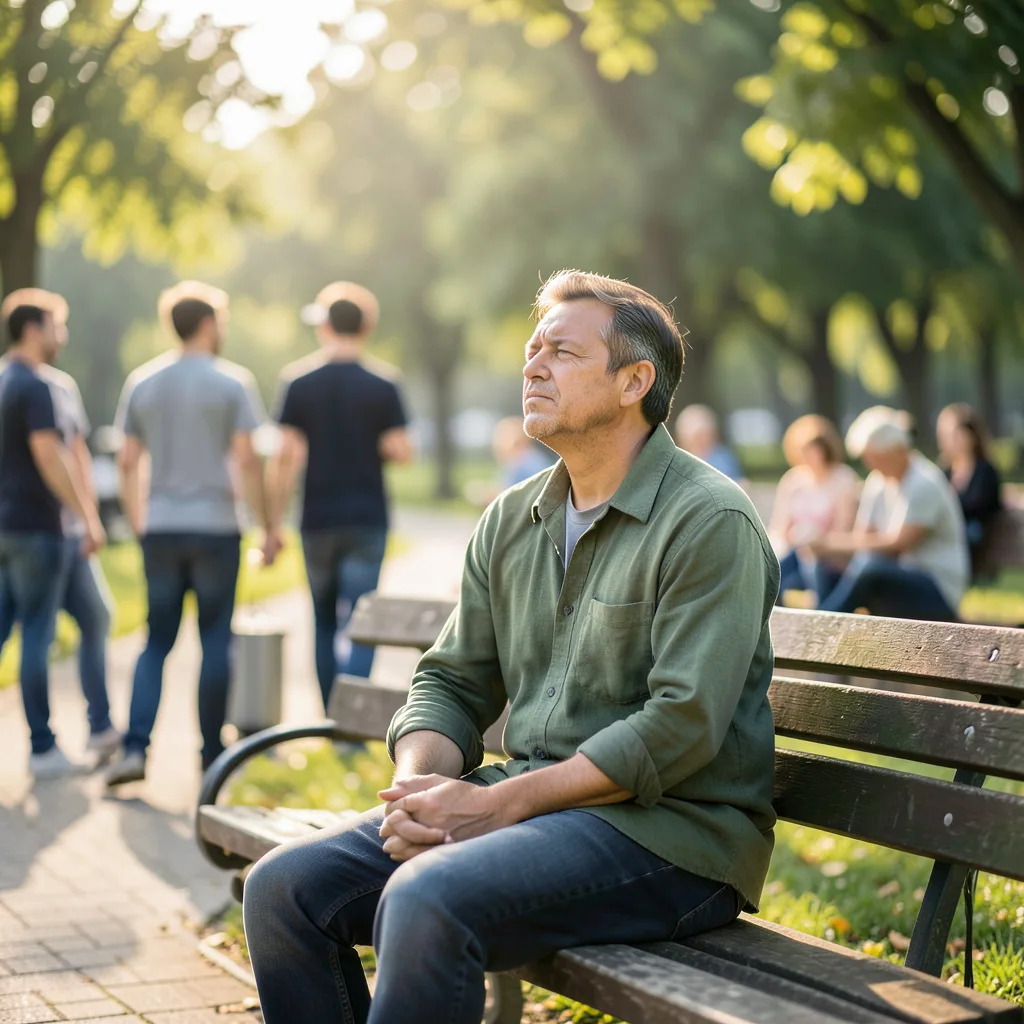
Many people continue to feel lingering worry about COVID‑19 even as restrictions ease. Exposure therapy, a well‑studied cognitive‑behavioral technique, can help reduce that anxiety by gradually confronting feared situations in a safe, structured way. This guide walks you through the principles, practical steps, and real‑world examples so you can start a self‑directed program or work with a therapist.
Key takeaways
- Identify specific triggers and rank them on a distress scale to create a manageable hierarchy for your exposure sessions.
- Practice confronting feared situations in small, consistent increments, staying in them until your anxiety level drops by at least half.
- Incorporate grounding techniques like deep breathing or mindfulness to help manage physiological stress during your exposure practice.
- Treat setbacks as recalibration events by returning to previously mastered levels before moving forward again in your plan.
Understanding Exposure Therapy
Exposure therapy is based on the idea that avoidance maintains fear. When you repeatedly face a feared stimulus without the catastrophic outcome you expect, the brain learns that the situation is safer than imagined. The process involves three core components: identification of the fear, creation of a graded hierarchy, and repeated, prolonged exposure at each level until anxiety diminishes. Research shows that this approach works for specific phobias, social anxiety, and health‑related worries, including pandemic‑related distress.
Identifying Your Specific COVID‑19 Triggers
Start by writing down every situation, thought, or sensation that spikes your anxiety. Common triggers include crowded indoor spaces, hearing coughing sounds, reading case‑count news, or touching surfaces without sanitizing. Be as concrete as possible: instead of “public places,” note “grocery store aisle during peak hour.” This list becomes the raw material for your hierarchy and helps you see patterns you might otherwise miss.
Building a Fear Hierarchy
Rank each trigger on a 0‑100 scale of distress, where 0 is completely calm and 100 is panic. Aim for 10‑15 items that span the full range. For example: 15 – reading a neutral article about vaccines; 35 – watching a short news clip about variants; 55 – walking past a pharmacy; 70 – entering a busy coffee shop; 90 – attending a crowded indoor event without a mask. Write the hierarchy on paper or a digital spreadsheet so you can reorder items as you progress.
Planning Gradual Exposure Sessions
Choose the lowest‑rated item that still produces noticeable anxiety (typically 30‑40). Schedule a dedicated time, set a timer for 20‑30 minutes, and stay in the situation until your distress drops by at least half. Resist the urge to leave early or use safety behaviors such as excessive hand‑sanitizing. After the session, record the peak anxiety, the duration, and any thoughts that arose. Move to the next item only when the current one feels manageable on two consecutive attempts.
Using Imaginal and In‑Vivo Techniques
In‑vivo exposure means confronting the real situation (e.g., riding a bus). Imaginal exposure involves vividly visualizing the feared scenario when real‑world practice isn’t feasible (e.g., imagining a packed concert). Both are effective; combine them for flexibility. For imaginal work, write a detailed script describing sights, sounds, bodily sensations, and feared outcomes. Read it aloud daily, staying with the discomfort until it lessens. This builds confidence for later in‑vivo steps.
Tracking Progress and Adjusting the Plan
Maintain a simple log: date, hierarchy item, starting SUDS (Subjective Units of Distress Scale) rating, ending rating, duration, and notes. Review weekly. If an item stalls—rating stays high after several sessions—consider breaking it into smaller sub‑steps or adding a relaxation practice before exposure. Conversely, if you breeze through several items, you may safely accelerate. Flexibility prevents frustration and keeps momentum.
Integrating Relaxation and Cognitive Skills
Pair exposure with diaphragmatic breathing, progressive muscle relaxation, or brief mindfulness grounding (5‑4‑3‑2‑1 senses). These tools lower physiological arousal, making it easier to stay in the exposure. Additionally, challenge catastrophic thoughts (“If I get COVID I will die”) by examining evidence, generating balanced alternatives, and practicing them during exposure. Cognitive restructuring reinforces the new learning that the feared outcome is unlikely.
When to Seek Professional Support
Self‑guided exposure works for mild to moderate anxiety. Consider a therapist if: anxiety remains severe after several weeks, you experience panic attacks during exposure, avoidance spreads to many life domains, or you have a history of trauma that complicates the process. A licensed CBT therapist can tailor the hierarchy, provide accountability, and address co‑occurring issues such as depression or obsessive‑compulsive tendencies.
Adapting Exposure to Evolving Public‑Health Guidance
Public‑health recommendations shift as variants emerge, vaccination rates change, and local mandates are lifted or reinstated. A rigid hierarchy built on yesterday’s rules can become a source of new anxiety when the environment no longer matches the exposure plan. Treat the hierarchy as a living document: schedule a brief “guideline review” every two weeks, note any changes (e.g., mask mandates, capacity limits), and adjust the corresponding hierarchy items up or down by 5‑10 SUDS points. For example, if indoor dining moves from “mask‑required” to “mask‑optional,” the item “eat at a busy restaurant without a mask” may drop from 80 to 65, allowing you to approach it sooner. Conversely, a sudden surge may push “attend a crowded concert” back up, prompting a temporary return to imaginal rehearsal until the real‑world risk aligns with your tolerance. Document each revision in your exposure log so you can see how external data and internal distress interact over time.
Edge case: When guidelines contradict personal risk factors (e.g., you are immunocompromised but local policy drops masking), create a parallel “personal‑risk hierarchy” that reflects your medical reality. Use the same grading method, but anchor the top items to your clinician’s advice rather than public mandates. This dual‑track approach prevents the feeling of “going against the rules” while still honoring your health needs.
Tailoring Exposure for High‑Risk and Long‑COVID Populations
Individuals with chronic conditions, immunosuppression, or lingering post‑viral symptoms often experience a layered anxiety: fear of acute infection plus fear of symptom flare‑ups. Standard exposure that only targets situational avoidance may miss the somatic cue‑reactivity that drives panic when a mild cough or fatigue appears. Begin by mapping “body‑signal triggers” alongside situational ones: a slight temperature rise, a new headache, or a familiar brain‑fog episode. Build a separate micro‑hierarchy for interoceptive exposure—e.g., 20 = notice a mild throat tickle without checking temperature; 45 = hold a warm compress on the forehead for two minutes; 70 = perform a brief stair climb that raises heart rate to 110 bpm. Pair each step with a brief cognitive label (“this sensation is a normal physiological response, not a sign of reinfection”).
For long‑COVID patients, incorporate pacing principles: limit exposure sessions to 10‑15 minutes if fatigue spikes, and use a “energy budget” spreadsheet to track exertion versus recovery. If a session triggers a post‑exertional malaise episode, treat it as data, not failure—adjust the next session’s intensity downward and note the threshold. Collaboration with a physiotherapist or occupational therapist can provide objective activity‑monitoring (actigraphy, heart‑rate variability) that informs hierarchy calibration.
Leveraging Technology: Virtual Reality, Apps, and Biofeedback
When real‑world exposure is logistically difficult—rural areas with few crowded venues, or personal safety concerns—virtual reality (VR) offers a controllable, repeatable environment. Commercially available VR platforms (e.g., Oxford VR, Psious) include modules for “public transport,” “grocery store,” and “mask‑less indoor gathering.” Start with a 5‑minute immersion at the lowest SUDS‑rated scene, gradually increasing duration and crowd density. Record physiological data (heart rate, skin conductance) via a wearable; a drop of ≥15 % in peak heart‑rate response across three consecutive sessions signals readiness for the next hierarchy level.
Smartphone apps can automate hierarchy management, SUDS prompting, and exposure scheduling. Look for apps that export CSV logs for therapist review (e.g., “Exposure Coach,” “FearTools”). Set push notifications for “daily micro‑exposure” (e.g., listen to a 30‑second coughing audio clip while standing in your kitchen). For imaginal work, use text‑to‑speech to play your personalized script hands‑free, allowing you to practice while commuting or doing chores.
Edge case: Some users experience simulator sickness in VR. If nausea arises, switch to 360° video on a tablet—still immersive but with a stable horizon. Always have a “grounding break” protocol: remove headset, name five objects in the room, and breathe diaphragmatically for 30 seconds before deciding whether to continue.
Managing Setbacks, Relapse, and the “Second Wave” of Anxiety
Progress in exposure is rarely linear. A new variant, a personal illness, or a media‑driven panic cycle can cause a sudden SUDS spike on previously mastered items. Treat setbacks as “re‑calibration events” rather than failures. When a spike occurs, pause the current hierarchy level, return to the last item that yielded a stable ≤30 SUDS rating, and run two consecutive sessions there. This “step‑back‑two‑steps‑forward” rule restores confidence without erasing gains.
Implement a “relapse‑prevention plan” that includes: (1) a quick‑reference card with three grounding techniques, (2) a pre‑written cognitive restructuring statement for the most common catastrophic thought (“If I get COVID again, I will be hospitalized”), and (3) a scheduled “maintenance exposure” calendar (monthly for top‑tier items, quarterly for mid‑tier). Review the plan after any major life change—travel, new job, vaccination booster—to anticipate context shifts.
Edge case: If anxiety spreads to unrelated domains (e.g., fear of all respiratory illnesses), broaden the hierarchy to include “flu‑season grocery trip” or “child’s school cough.” The same exposure mechanics apply; the broader hierarchy prevents the “whack‑a‑mole” effect where new fears pop up faster than you can treat them.
Embedding Exposure into Daily Routines and Social Contexts
Standalone exposure sessions can feel like “homework” that competes with work, caregiving, and leisure. Integrate micro‑exposures into existing habits to increase ecological validity and reduce dropout. For instance, if you already walk the dog each morning, add a brief “mask‑off” segment on a quiet side street (SUDS 30) and gradually extend the mask‑off distance. If you attend a weekly book club, volunteer to arrive five minutes early and sit near the entrance (SUDS 45) before moving deeper into the room over successive weeks.
Social accountability amplifies adherence. Pair with a “exposure buddy”—a friend or peer who also works on COVID‑related anxiety. Share hierarchy items, agree on weekly check‑ins, and co‑conduct exposures when possible (e.g., both enter a café together). The buddy can model calm behavior, provide real‑time SUDS feedback, and celebrate milestones. Document joint sessions in a shared spreadsheet; the social contract reduces the temptation to cancel.
Edge case: When a buddy’s progress outpaces yours, jealousy or discouragement may arise. Normalize differing trajectories in the first meeting, and set a rule that each person only comments on their own SUDS numbers. If comparison persists, shift to a therapist‑facilitated group where a professional moderates discussion.
Addressing Moral Injury, Guilt, and Collective Trauma in Exposure Work
Many people carry guilt about potentially transmitting the virus, survivor guilt after losing loved ones, or moral injury from perceived failures to protect others. These affective layers can masquerade as simple fear and blunt exposure gains if left unaddressed. Begin by distinguishing “fear‑based avoidance” (e.g., “I avoid crowds because I might get sick”) from “guilt‑based avoidance” (e.g., “I avoid crowds because I might infect someone else”). Write a two‑column list; each column gets its own mini‑hierarchy.
For guilt‑based items, use “responsibility‑reappraisal” scripts during imaginal exposure: visualize the feared scenario, then deliberately insert a balanced thought (“I follow current guidelines; transmission risk is low; I am not solely responsible for others’ health”). Pair this with a brief compassion‑focused meditation (e.g., 3‑minute loving‑kindness toward self and others) before each exposure. Research shows that adding self‑compassion reduces shame‑driven avoidance more than exposure alone.
Collective trauma—community loss, disrupted rituals—can create a background hypervigilance that spikes SUDS across unrelated items. Schedule a monthly “community‑meaning” session: attend a memorial walk, volunteer at a vaccination clinic, or participate in a storytelling circle. These activities re‑anchor identity beyond the virus and provide evidence that safe social engagement is possible. Track any SUDS changes in the week following; a consistent drop suggests the meaning‑making work is synergizing with exposure.
Edge case: If guilt spirals into rumination that lasts >30 minutes post‑exposure, insert a structured “worry‑time” window (15 minutes, same time each day) where you write down intrusive thoughts, then close the notebook. This containment prevents rumination from contaminating the next exposure session.
Frequently Asked Questions
How long does exposure therapy take to reduce COVID‑19 anxiety?
Most people notice a measurable drop in distress after 6‑12 sessions spread over several weeks. Consistency matters more than speed; daily short exposures often work better than occasional long ones.
Can I do exposure therapy on my own without a therapist?
Yes, many individuals successfully use self‑directed exposure for specific fears. The key is a clear hierarchy, regular practice, and honest tracking. If progress stalls or symptoms worsen, professional guidance is recommended.
What if I experience a panic attack during an exposure?
Pause the exposure, use a grounding technique (name five things you see, four you feel, three you hear, two you smell, one you taste), and allow the panic to subside. Return to the same hierarchy item later, perhaps at a lower intensity, rather than abandoning the plan.
Do I need to expose myself to actual virus risk?
No. Exposure targets the anxiety response, not the virus itself. You can simulate feared cues (e.g., wearing a mask in a safe room, listening to coughing audio) without increasing infection risk.
How do I maintain gains after the program ends?
Schedule periodic “maintenance exposures” (once a month) for the highest‑rated items. Continue using relaxation and cognitive tools during everyday stressors. Keeping a brief journal of any new triggers helps catch relapse early.
Related posts:
 Cannabis and COVID-19
 COVID-19 Vaccines for Children: What Parents Need to Know
 COVID-19 Vaccine and Pregnant Women: Weighing the Benefits and Risks
 Finding a Social Anxiety Therapist
 Best Hydrating Masks for Air Travel
 What Immunocompromised People Need to Know About COVID-19 Risk
 CDC Releases Updated Holiday Guidelines for Safe Celebrations
 Living in Fear