Assess Your Skin
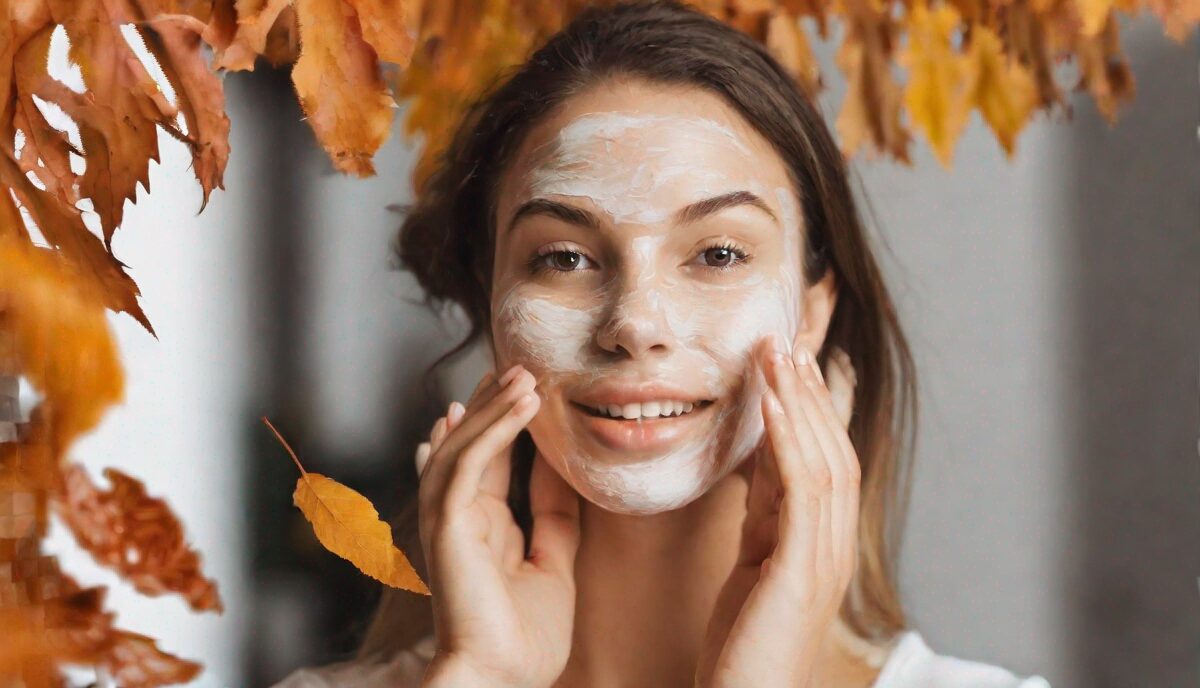
As the seasons change, it’s important to understand how your skin changes too. In the fall, cooler drier weather often leads to dullness or more redness and irritation. Take some time to examine your skin – make notes or take photos to track changes over time.
Focus on Gentleness
Fall weather can make skin more sensitive, so focus on gentle exfoliation a few times a week rather than harsh scrubbing. Look for exfoliators with round soft beads or chemical exfoliants like lactic acid instead of abrasive scrubs.
Stay Hydrated
Hydration is key for healthy skin. Be sure to drink plenty of water and use heavier moisturizers both morning and night.
Nourish with Plant Oils
Plant oils like jojoba, rosehip seed, and marula are great for providing nourishment for drier fall skin. Add a few drops to your moisturizer or apply directly at night.
Use Sun Protection
Don’t forget SPF just because it’s not summer! UV exposure happens year round. Look for moisturizers with SPF 30 or higher.
Targeted Chemical Exfoliants for Fall Transitions
While lactic acid is a fantastic starting point for autumn, the drop in humidity often requires a more nuanced approach to chemical exfoliation. Polyhydroxy Acids (PHAs), such as gluconolactone and lactobionic acid, are the unsung heroes of fall skincare. Unlike traditional Alpha Hydroxy Acids (AHAs), PHAs have a larger molecular structure, meaning they penetrate the skin more slowly and do not cause the same level of stinging or irritation. Crucially for the fall, PHAs are also humectants; they attract water to the skin while simultaneously dissolving the bonds between dead skin cells. This dual-action approach ensures that you are removing dullness without compromising the moisture barrier that is already under stress from indoor heating.
For those dealing with lingering hyperpigmentation from summer sun exposure, mandelic acid is an excellent fall choice. Derived from bitter almonds, mandelic acid is oil-soluble enough to get into pores but gentle enough for those with sensitive or deeper skin tones who might be prone to post-inflammatory hyperpigmentation. If you find your skin feels ‘tight’ but looks ‘shiny’—a classic sign of dehydration combined with oiliness—switching to a mandelic acid toner twice a week can help refine texture without the aggressive ‘snap’ of a high-percentage glycolic acid. Always monitor for ‘crepey’ textures, which indicate you should scale back the frequency of these acids as the temperature continues to dip.
Incorporating Enzymatic Exfoliation for Sensitive Skin
As the wind picks up and the air loses its moisture, even the most resilient skin can become reactive. This is where enzymatic exfoliation becomes superior to both physical scrubs and strong acids. Proteolytic enzymes, typically derived from fruits like papaya (papain), pineapple (bromelain), or pumpkin, work by specifically targeting and digesting the keratin proteins in the uppermost layer of dead skin. Unlike acids, which lower the skin’s pH and can sometimes lead to a stinging sensation, enzymes operate effectively at a more neutral pH level, making them ideal for the ‘transitional’ days of late September and October.
A pumpkin enzyme mask is particularly seasonal and effective; pumpkin is naturally rich in Vitamin A (beta-carotene) and Vitamin C, which help brighten the complexion while the enzymes do the heavy lifting. When using enzymes, the application technique matters: many enzyme powders or masks require a bit of warmth or moisture to remain active. Applying your enzyme treatment while in a steamy bathroom (though not under a hot shower head) can help the enzymes stay ‘alive’ and working longer. If you notice any redness that lasts longer than ten minutes post-rinse, it is a sign that the enzyme concentration is too high or the application time was too long for your fall-sensitized barrier.
The Art of Layering: Exfoliation in a Multi-Step Fall Routine
The sequence in which you apply your products becomes critical as you introduce richer creams to your fall regimen. A common mistake is applying an exfoliant over a heavy facial oil or occlusive moisturizer, which creates a barrier that the active ingredients cannot penetrate. Conversely, applying a strong acid directly to bone-dry skin in a dry room can lead to rapid absorption and irritation. In the fall, the ‘sandwich’ method or ‘buffer’ method can be adapted: apply a thin layer of a hydrating essence or a light hyaluronic acid serum first, let it dry partially, and then apply your exfoliant. This slows down the penetration rate, making the treatment more tolerable.
Furthermore, the fall is often when people reintroduce retinoids (Retinol, Retinaldehyde, or Tretinoin) into their routine after a summer hiatus. It is vital to avoid using chemical exfoliants on the same night as your retinoid. A ‘skin cycling’ approach works best during this season: Night 1 is for exfoliation to clear the path; Night 2 is for your retinoid to stimulate cellular turnover; and Nights 3 and 4 are dedicated solely to recovery with ceramides and fatty acids. This 4-night cycle prevents the dreaded ‘fall flake’—that combination of dry weather and over-processed skin that leads to a compromised moisture barrier.
Body Exfoliation and the Prevention of Keratosis Pilaris
We often neglect the skin below the neck once it is covered by sweaters and jeans, but the friction of heavy clothing combined with dry air can exacerbate conditions like Keratosis Pilaris (KP), often called ‘chicken skin.’ Fall is the ideal time to transition from physical loofahs, which can harbor bacteria and cause micro-tears, to chemical body exfoliants. Look for body lotions containing urea. Urea is a unique ingredient because, at lower concentrations (5-10%), it acts as a powerful humectant, but at higher concentrations (20% or more), it becomes a keratolytic agent that dissolves the keratin plugs in pores.
For rough areas like elbows, knees, and heels, a salicylic acid-based body wash can be used in the shower. The key is ‘short contact therapy’: apply the wash to these areas and let it sit for 2-3 minutes before rinsing. This allows the BHA to penetrate the thicker skin of the body without the risk of irritation that comes with a leave-on product. Immediately after patting dry—while the skin is still slightly damp—apply a lipid-rich cream. This traps the moisture in and ensures the exfoliated skin is protected from the abrasive texture of wool or synthetic fall fabrics.
Repairing the Acid Mantle: Post-Exfoliation Ingredients
Exfoliation is only half of the equation; the other half is the immediate reconstruction of the acid mantle. In the summer, your skin’s natural sebum might have been enough to patch over the gaps left by exfoliation, but in the fall, you must manually replace those lipids. Look for post-exfoliation products that feature a 3:1:1 ratio of ceramides, cholesterol, and fatty acids. This specific ratio has been scientifically shown to accelerate barrier repair. If you are using an AHA or BHA exfoliant, following it up with a product containing niacinamide (Vitamin B3) can be highly beneficial, as niacinamide helps the skin produce its own natural ceramides.
Be cautious with hyaluronic acid (HA) in very dry fall climates. If the air is drier than your skin, HA can actually pull moisture *out* of the deeper layers of your dermis and evaporate it into the air, leaving you drier than before. If you use an HA serum after exfoliating, always ‘seal’ it with an occlusive layer—something containing shea butter, squalane, or petrolatum. This creates a physical seal that prevents transepidermal water loss (TEWL), ensuring that the fresh, exfoliated cells underneath remain plump and hydrated rather than shriveling in the autumn chill.
Scalp and Lip Care: Extending Exfoliation Beyond the Face
Two areas frequently forgotten in fall routines are the scalp and the lips. As the humidity drops, the scalp can become itchy and flaky, which is often mistaken for dandruff but is frequently just ‘winter xerosis’ or dry skin. A salicylic acid scalp serum or a gentle physical scalp scrub used once a week can remove product buildup and dead skin, allowing your natural oils to distribute more evenly. This is particularly important if you are using more dry shampoo in the fall to combat the ‘flatness’ that comes with wearing hats.
Lips, meanwhile, have the thinnest skin on the body and no oil glands, making them the first to suffer when the temperature drops. Instead of using a rough sugar scrub which can cause painful fissures, try a chemical ‘lip peel’ using a very low percentage of lactic acid or a fruit enzyme. Alternatively, after brushing your teeth, very gently use a damp washcloth to buff away dead skin. The most critical step is what follows: a thick, lanolin-based or petrolatum-based ointment. Avoid flavored lip balms containing menthol or camphor during the fall, as these are ‘rubefacients’ that increase blood flow and can actually dry out the lips further through evaporation, undoing all the benefits of your exfoliation.
Professional Peels and Advanced Autumn Procedures
Fall is widely considered ‘Peel Season’ in the dermatology world. Because the UV index is lower and people spend less time in direct sunlight, it is the safest time to undergo deeper professional treatments that would be too risky in the summer. If at-home exfoliation isn’t yielding the results you want for deep-seated sun damage or fine lines, consider a professional TCA (Trichloroacetic Acid) peel or a series of glycolic peels. These treatments go deeper than over-the-counter products, reaching the papillary dermis to trigger significant collagen production.
FAQ
What is the best way to exfoliate in the fall?
Gentle exfoliation a few times a week is better than harsh scrubbing which can irritate skin. Look for rounded scrub particles rather than abrasive beads or shells.
How much water should I drink for healthy skin?
There’s no magic number, but aim for at least six to eight 8 oz glasses of water per day. Hydration plays a huge role in skin’s appearance and ability to retain moisture.
Should I exfoliate if my skin is peeling from the weather?
No, that can make things worse! Focus on gentle hydration and nourishment until skin adjusts.
Why is sun protection still important in fall?
UV exposure happens all year, not just summer. Reflective surfaces like snow actually intensify sun exposure in winter. Protect skin daily.
What natural oils help nourish fall skin?
Jojoba, rosehip seed, marula and other plant oils provide great nourishment without clogging pores.
Related posts:
 The Best Toners for Acne-Prone Skin That Won’t Strip Your Face
 Proper Order of Skincare Application
 The Slow Beauty Movement’s Secret Hydration Recipes
 PHA Bodyweight Workout: Efficient Fitness Anywhere, Anytime
 Proper Use of Exfoliating Mitts
 The Best Natural Tools for Silky Smooth Skin
 How Hard Should You Really Scrub Your Face?
 Foundation’s Impact on Skin