
Children are natural explorers, but the modern world can sometimes dampen that innate drive. When parents, teachers, or caregivers deliberately nurture curiosity, young learners develop stronger problem‑solving skills, deeper empathy, and a lifelong love of learning. This guide walks you through practical, research‑backed steps to foster curiosity in children aged 3‑12, offering concrete examples you can start using today.
Understand the Nature of Curiosity
Curiosity is more than a fleeting interest; it is a cognitive engine that pushes a child to seek new information, test hypotheses, and revise mental models. Developmental psychologists distinguish between perceptual curiosity (driven by sensory novelty) and epistemic curiosity (driven by a desire for knowledge). Recognising these types helps you tailor experiences—bright textures for toddlers stimulate perceptual curiosity, while open‑ended puzzles nurture epistemic curiosity in older kids. Remember that curiosity fluctuates: a child may be intensely curious about dinosaurs one week and then shift to space the next. Respect these shifts as signals of emerging interests rather than distractions.
Create a Safe and Stimulating Environment
A child’s willingness to explore hinges on feeling safe. Arrange spaces where materials are within reach, surfaces are sturdy, and potential hazards are minimized. A low‑shelf bookshelf, a sturdy table, and washable floor mats signal that experimentation is welcome. Include a variety of open‑ended materials—blocks, natural objects (pinecones, shells), art supplies, and simple tools like magnifying glasses. Rotate items periodically to keep the environment fresh without overwhelming the child with clutter. When children see that their environment supports trial and error, they are more likely to take intellectual risks.
Ask Open‑Ended Questions and Model Inquiry
Instead of asking yes/no questions, pose prompts that require elaboration. For example, after a nature walk, try “What do you think would happen if we planted these seeds in the shade?” or “How does the bark feel, and why might a tree need that texture?” Model curiosity yourself: verbalise your own thought process aloud—“I wonder why the sky turns orange at sunset; let’s look it up together.” This demonstrates that asking questions is a normal, valued behavior. Encourage children to keep a “question journal” where they write or draw queries that arise during the day. Review the journal weekly and explore answers together.
Encourage Exploration Through Play and Hands‑On Activities
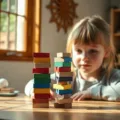
Play is the primary vehicle for learning in early childhood. Design activities that require manipulation, prediction, and observation. Simple experiments—like mixing water with food coloring to observe diffusion, or building a tower with mismatched blocks to test balance—invite children to hypothesise, test, and reflect. Provide loose parts (buttons, fabric scraps, cardboard tubes) and let kids decide how to combine them. When they encounter obstacles, ask, “What could we try differently?” rather than stepping in immediately. This approach builds resilience and reinforces the idea that effort, not just success, fuels discovery.
Use Stories, Books, and Media to Spark Wonder
Literature is a gateway to curiosity. Choose books that pose questions or present mysteries—think of classic tales like “The Magic Tree House” series or nonfiction picture books about the ocean. After reading, pause to discuss: “What would you do if you found a secret door in your backyard?” Incorporate age‑appropriate documentaries or short videos, but always follow up with a hands‑on extension. If a child watches a segment about volcanoes, set up a baking‑soda volcano experiment to connect visual information with tactile experience. This multimodal approach strengthens comprehension and fuels further inquiry.
Celebrate Mistakes and the Learning Process
Many children fear failure because they associate mistakes with disappointment. Reframe errors as valuable data. When a tower collapses, ask, “What part of the structure was weakest?” or “How can we make it sturdier?” Display a “Failure Wall” where children pin photos of projects that didn’t work as expected, alongside notes on what they learned. Praise persistence (“I love how you kept trying different angles”) rather than just the final outcome. This mindset shift encourages risk‑taking, a core component of curiosity.
Integrate Curiosity‑Driven Projects into Daily Routines
Curiosity doesn’t have to be a separate activity; it can weave into everyday moments. Turn cooking into a science lesson: ask children to predict how changing the amount of yeast will affect bread rise, then test the hypothesis. During grocery trips, explore nutrition labels together and ask, “Why do you think this snack has more sugar than that one?” In bedtime routines, invite children to share one thing they wondered about that day and brainstorm ways to investigate it tomorrow. Consistent integration normalises curiosity as a habit rather than a novelty.
Leverage Technology Wisely to Expand Horizons
Digital tools can amplify curiosity when used intentionally. Interactive apps that simulate ecosystems, coding platforms for kids, or virtual museum tours provide access to experiences beyond the local environment. Set clear boundaries: allocate specific times for exploratory tech use, and always follow up with offline discussion or activity. For instance, after exploring a virtual space mission, challenge the child to design a simple model rocket using household items. This bridges virtual curiosity with tangible creation.
Reflect and Adjust: Monitoring Growth of Curiosity
Regular reflection helps adults gauge whether strategies are effective. Keep a simple log noting the topics that capture the child’s interest, the types of questions they ask, and how often they engage in self‑directed exploration. Review the log monthly and adjust the environment or prompts accordingly—perhaps introduce more nature‑based activities if outdoor curiosity spikes, or add building kits if engineering questions dominate. Involving the child in this reflection empowers them to take ownership of their learning journey.
Leverage Cultural Diversity to Spark Curiosity
When children encounter cultures, languages, and traditions that differ from their everyday experience, the resulting sense of novelty acts as a powerful catalyst for inquiry. Rather than treating multicultural exposure as a one‑off field trip, embed it in the rhythm of the week so that curiosity becomes a habit of cross‑cultural comparison. For example, designate a “World Discovery Day” every Thursday. On that day, rotate the focus among continents, and let the child choose a country to explore. Provide a simple “cultural kit” that includes a map, a few authentic objects (a piece of fabric, a traditional musical instrument, a spice), and a picture‑book written in both the child’s native language and the target language. Ask guiding prompts such as, “What sounds do you hear when you shake this instrument?” or “How might the climate of this country affect the way people dress?” The child’s natural desire to make sense of the unfamiliar will generate a cascade of questions.
Edge cases often arise when families live in homogenous neighborhoods or when a child’s home language dominates the environment. In those situations, virtual exchanges can fill the gap. Platforms that connect classrooms across continents—such as ePals or PenPal Schools—allow children to exchange short video clips, drawings, or simple questionnaires. Set a weekly “pen‑pal curiosity challenge”: each child receives a prompt from their partner (e.g., “Show me something in your kitchen that makes a funny sound”) and then must investigate the answer by creating a short presentation. This reciprocal model teaches children that curiosity is a social contract, not a solitary pursuit.
To deepen the experience, integrate culinary curiosity. Choose a recipe from the featured country and involve the child in every step: reading the ingredient list, measuring, and observing chemical changes. Ask, “Why does the dough rise when we add yeast?” and then compare it to a flatbread from another culture that uses baking soda. The sensory richness of taste, smell, and texture makes abstract concepts concrete, reinforcing the habit of asking “why”.
Finally, celebrate the discoveries with a family “Culture Wall”—a corkboard where children pin photos, sketches, or short notes about what they learned. Over time the wall becomes a visual timeline of curiosity‑driven cultural exploration, encouraging the child to revisit past questions and notice patterns of interest.
Inquiry‑Based Assessment: Turning Evaluation into Exploration
Traditional grading can unintentionally signal that learning is a destination rather than a journey, dampening curiosity. Reframe assessment as a collaborative inquiry where the child becomes a co‑researcher of their own progress. Begin with a “Question‑First” rubric: instead of listing criteria like “completes assignment,” list prompts such as “What new idea did you discover while working on this project?” and “Which strategy did you try first, and what did you change when it didn’t work?” The child fills out the rubric alongside the adult, turning the evaluation into a reflective dialogue.
Project‑based portfolios are another effective tool. Encourage the child to compile a digital or physical folder that contains drafts, sketches, failed experiments, and final products. After each addition, schedule a brief “Curiosity Review” where the child explains the problem they were trying to solve, the questions that emerged, and the evidence they gathered. Use a simple coding system—such as stars for “new question generated” and circles for “evidence collected”—to visualize growth. This visual feedback loop reinforces the idea that asking questions is as valuable as arriving at the correct answer.
When children are older (8‑12 years), introduce a “Self‑Generated Assessment” worksheet. The worksheet asks them to identify three learning goals, propose one experiment or research activity for each goal, and predict the outcomes. After completing the activity, they compare predictions to results, note discrepancies, and write a brief analysis. This process mirrors the scientific method and normalizes the iterative nature of learning.
Edge cases include children who feel anxious about public performance or who struggle with writing. For these learners, replace written reflections with audio recordings or visual mind‑maps. The key is to maintain the inquiry focus—what they wondered, how they investigated, and what they discovered—while providing a mode of expression that feels safe.
By shifting assessment from a static judgment to a dynamic inquiry, you model a growth mindset that fuels ongoing curiosity.
Designing Outdoor Learning Spaces that Invite Questioning
Nature is an endless laboratory, yet many homes and schools treat outdoor areas as mere playfields. Transform a garden, balcony, or schoolyard into a “Curiosity Corner” by deliberately arranging elements that provoke observation, hypothesis, and experimentation. Start with a sensory pathway: lay down a sequence of materials—smooth river stones, rough bark, soft moss, crunchy leaves—each labeled with a simple icon. Invite the child to walk barefoot, notice the sensations, and record their impressions in a pocket notebook. Prompt them with, “What do you think makes the moss feel so cool?” This tactile entry point naturally leads to questions about humidity, shade, and plant biology.
Next, install a low‑tech weather station. A rain gauge made from a clear plastic bottle, a wind vane crafted from cardboard, and a thermometer placed at child height give concrete data for daily observation. Provide a weather log sheet where the child notes temperature, cloud type, and any unexpected phenomena (e.g., a sudden gust that bends a flower). Over weeks, encourage them to ask, “Why does the wind blow stronger in the afternoon?” or “What causes dew to form on the grass?” The data become evidence for their own investigations.
For children who love building, create a “Mini‑Engineering Bay” using reclaimed wooden pallets, PVC pipes, and simple tools. Challenge them to design a bridge that can hold a set of toy cars, or a catapult that launches a marshmallow a specific distance. Each trial generates a new set of questions about force, balance, and material strength. Document the designs with photos and brief notes; a wall‑mounted “Design Journal” keeps the process visible and invites iterative improvement.
Edge cases often involve limited outdoor space or inclement weather. In those scenarios, bring the outdoors inside with a portable “Nature Box.” Fill a clear container with sand, pebbles, pine cones, and small insects (live or preserved). Provide magnifying glasses and a notebook, and rotate the contents weekly to maintain novelty. Even a balcony can host a “Window‑Side Observatory” where the child tracks bird activity, records plant growth in small pots, and asks, “Why do some birds visit our feeder more often than others?”
By intentionally embedding inquiry tools in outdoor settings, you turn every breeze, leaf, and stone into a prompt for deeper questioning.
Mindfulness Practices that Heighten Observational Curiosity
Curiosity thrives on a calm, attentive mind. When children practice mindfulness, they train their brains to notice subtle details that would otherwise slip by. Begin with a “Five‑Senses Pause” before any activity: ask the child to silently name five things they see, four they hear, three they can touch, two they can smell, and one they can taste (even if it’s the taste of the air). This simple exercise sharpens sensory acuity, laying the groundwork for more nuanced questions.
Introduce a “Curiosity Breath” routine. Have the child inhale while silently counting “1” and imagine a question forming, then exhale while counting “2” and picture the question traveling outward. Repeat for three cycles, each time allowing a new question to surface. After the breathing, ask the child to write or draw the question that emerged. This practice links breath awareness with mental curiosity, making the two mutually reinforcing.
Mindful walks are particularly effective. Choose a short route—perhaps around the block or through a park—and instruct the child to walk slowly, noticing one new detail every minute (a pattern on a bark, an insect’s movement, a cloud shape). Provide a small notebook for quick sketches or keyword notes. After the walk, sit together and discuss the observations: “What surprised you about the ant trail?” This post‑walk reflection turns passive observation into active inquiry.
Edge cases include children who find stillness uncomfortable or who have hyperactive tendencies. For them, use “movement‑based mindfulness.” Have the child bounce a ball while focusing on the sound it makes, then pause and ask, “What changed in the sound when I bounced harder?” The physical activity satisfies the need for movement while still cultivating focused attention.
Finally, create a “Curiosity Corner” in the home where a small cushion, a timer, and a jar of curiosity prompts (e.g., “What would happen if I mixed ice and warm water?”, “How does a shadow change during the day?”) are kept. Encourage the child to spend five minutes each day in the corner, selecting a prompt, practicing the mindfulness breath, and noting their thoughts. Over time, the child learns to summon curiosity intentionally, even in moments of stress or boredom.
Collaborative Curiosity Networks: Peer Learning and Community Mentors
Curiosity is contagious; when children see peers asking bold questions, they are more likely to emulate that behavior. Structure opportunities for collaborative inquiry that blend the energy of peer interaction with the guidance of knowledgeable adults. One effective model is the “Mini‑Science Circle.” Gather a small group (3‑5 children) and assign each a role: question‑starter, data‑collector, recorder, and presenter. Begin with a shared mystery—”Why do some leaves turn red earlier than others?”—and let the question‑starter pose variations. The group then designs a simple experiment (collecting leaves from different trees, measuring color change), records observations, and presents findings to a community mentor (a parent, teacher, or local naturalist).
Community mentors expand the curiosity network beyond the immediate family. Reach out to local experts—librarians, museum educators, retired engineers—and invite them to host a “Curiosity Hour” once a month. During these sessions, the mentor shares a short demonstration (e.g., how a simple circuit works) and then challenges the children to modify it or ask follow‑up questions. The mentor’s role is to model how experts themselves remain curious, emphasizing that expertise does not equal finality.
Intergenerational projects add another rich layer. Pair children with grandparents for a “Story‑Science Fusion” activity: the elder tells a childhood story that involves a natural phenomenon (e.g., a thunderstorm), and the child investigates the science behind it using simple experiments. This not only fuels curiosity but also preserves cultural heritage.
Edge cases include children who are shy or who dominate conversations. Implement a “Talking Stick” system where only the holder may speak, ensuring each child gets equal airtime. For dominant talkers, assign the role of “Question Curator” who must collect at least two unanswered questions from peers before presenting their own. This balances participation and reinforces the value of listening.
Document the collaborative outcomes on a shared wall chart titled “Our Curiosity Map.” Each project occupies a node, linked to the next by arrows that indicate how one question led to another. Over months, the map visually demonstrates the network effect of shared inquiry, motivating children to contribute new branches.
Personalized Curiosity Pathways Using Simple Data Tracking
Every child’s curiosity follows a unique trajectory, shaped by personality, environment, and prior experiences. By collecting lightweight data on interests, question frequency, and preferred modalities, adults can tailor interventions that keep the child in a state of optimal challenge—neither bored nor overwhelmed. Start with a “Curiosity Log” that the child updates daily: a brief line noting the most intriguing question they asked, the activity they engaged in, and a self‑rating of excitement (1‑5). Over a week, review the log together and identify patterns—perhaps the child consistently rates high excitement after building with LEGO but low after reading silently.
Use these patterns to construct a “Curiosity Pathway”—a visual roadmap that aligns upcoming activities with the child’s demonstrated preferences while gently nudging them toward new domains. For instance, if the child loves building, introduce a “Story‑Building” challenge: read a short myth, then ask the child to construct a model of the myth’s setting, prompting questions about geography, materials, and physics. This bridges a strong interest (construction) with a weaker one (literature), expanding the curiosity net.
Technology can streamline tracking without becoming a screen‑time pitfall. Simple spreadsheet templates or free apps like “Google Keep” allow quick entry of the log items. Set a weekly reminder for a “Curiosity Check‑In” where the child and adult discuss the log, celebrate wins, and decide on the next week’s focus. The key is to keep the process brief (5‑10 minutes) and conversational, not a formal evaluation.
Edge cases arise when a child’s curiosity spikes dramatically in one area, leading to tunnel vision (e.g., an obsession with dinosaurs). Rather than suppressing the passion, use it as an entry point to broader concepts. Create a “Dinosaur Science Lab” that includes paleontology, geology, and even art (drawing skeletal reconstructions). As the child masters each sub‑skill, gradually introduce adjacent topics—ancient ecosystems, climate change—thereby widening the scope while respecting the original fascination.
Another challenge is when a child’s curiosity wanes during transitional periods (e.g., moving schools). In such times, the log may reveal a drop in question frequency. Respond by lowering the barrier to entry: provide ready‑made question cards (e.g., “What makes a magnet stick?”, “Why does water freeze?”) that the child can pick up without having to generate a question from scratch. The goal is to reignite the habit of questioning, after which the child can resume self‑directed inquiry.
By treating curiosity as a measurable, adaptable pathway rather than a static trait, adults can provide just‑in‑time scaffolding that keeps the child’s inquisitive engine humming.
Frequently Asked Questions
1. How can I foster curiosity in a child who seems disinterested?
Start by observing what catches their attention, even briefly. Use that as a springboard for deeper inquiry. Offer low‑pressure choices—let them pick a book, a tool, or a topic for a short project. Celebrate any sign of engagement, and avoid pressuring them to produce results. Over time, the child learns that curiosity is safe and rewarding.
2. Is there a risk of overwhelming a child with too many choices?
Yes. While variety stimulates interest, too many options can cause analysis paralysis. Limit choices to three or four items at a time, rotating them weekly. This maintains novelty without creating decision fatigue. Observe which selections the child repeatedly returns to, and expand on those interests.
3. How do I balance screen time with curiosity‑building activities?
Designate specific “exploration windows” where technology serves a purpose—such as watching a short documentary followed by a related experiment. Keep these sessions brief (10‑15 minutes) and always pair them with hands‑on follow‑up. Outside of those windows, prioritize tactile play, outdoor discovery, and reading.
4. What role do peers play in nurturing curiosity?
Collaborative projects amplify curiosity by exposing children to diverse perspectives. Encourage group activities like building a shared LEGO city or conducting a simple science fair together. Peer questions often spark new lines of inquiry that an adult might not anticipate, expanding the learning landscape.
5. How can I assess whether my child’s curiosity is developing?
Look for increased question frequency, longer attention spans on topics of interest, and a willingness to experiment independently. A simple indicator is the child’s ability to articulate what they learned after a project without prompting. Maintaining a curiosity journal or log provides concrete evidence of growth over weeks and months.
Related posts:
 How to Help Children Grieve and Deal with Loss
 The Power of Asking ‘Why’ to Improve Focus
 What is Appreciative Inquiry? (+9 Examples and 2 Tools)
 The Science Behind Having a Favorite Child
 What is Appreciative Inquiry? A Brief History & Real Life Examples
 Child Therapy: 19 Counseling Techniques & Worksheets for Kids
 4 parenting tips to get me through the big milestones, from potty training to first days of school
 How to Foster a Growth Mindset in Children