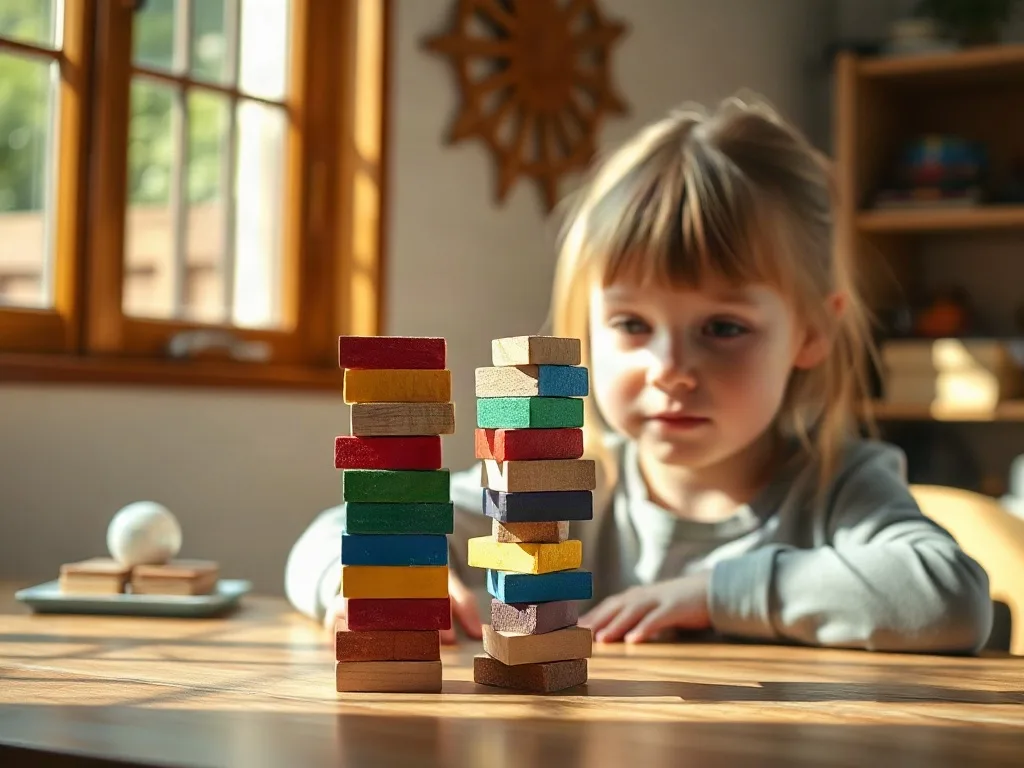
Helping a child develop a growth mindset is one of the most valuable gifts a caregiver can give. A growth mindset, a term popularized by psychologist Carol Dweck, is the belief that abilities and intelligence can be developed through dedication, effort, and learning from setbacks. When children internalize this perspective they become more resilient, more willing to take on challenges, and more likely to persist when the path gets tough. The following guide offers practical, research‑backed strategies you can weave into everyday family life.
Key takeaways
- Praise the process and effort rather than innate intelligence to encourage persistence and resilience in children.
- Use the word yet to transform feelings of limitation into possibilities and view mistakes as valuable learning data.
- Model your own growth by narrating struggles and celebrating incremental progress to show that improvement is a lifelong journey.
- Set specific learning goals focused on mastery rather than performance outcomes to build self-regulation and ownership.
Understanding the Growth Mindset Concept
Before you can teach a growth mindset you need a clear picture of what it looks like in action. Children with a fixed mindset believe talent is innate and unchangeable; they avoid challenges, give up easily, and see effort as a sign of inadequacy. In contrast, a growth mindset frames effort as the pathway to mastery. Explain the difference using simple language: “Your brain is like a muscle. The more you use it, the stronger it gets.” Share age‑appropriate stories of famous people who failed many times before succeeding, such as Thomas Edison or J.K. Rowling. Reinforce the idea that mistakes are data, not verdicts.
Model a Growth Mindset Yourself
Children learn far more from what they observe than from what they are told. Narrate your own learning process out loud. When you struggle with a new recipe, a work project, or a fitness routine, say things like “I am finding this tricky, so I will try a different approach and see what happens.” Celebrate your own incremental progress. If you make a mistake, acknowledge it, analyze what went wrong, and state the next step you will take. This transparent modeling shows that growth is a lifelong journey, not a childhood phase.
Praise Effort Over Outcome
Research shows that praising intelligence or talent can inadvertently foster a fixed mindset. Shift your language to highlight process: “You worked really hard on that puzzle,” or “I noticed you tried three different strategies before you solved it.” When a child receives a good grade, ask “What study habits helped you most?” rather than simply saying “You are so smart.” This redirects attention to controllable actions and reinforces the belief that effort leads to improvement.
Teach the Power of “Yet”
The word “yet” transforms a statement of limitation into a statement of possibility. Encourage children to add “yet” to any self‑critical thought: “I can not ride a bike” becomes “I can not ride a bike yet.” Create a visual reminder, such as a poster on the fridge that reads “Not yet” with space for kids to write their current challenges. Revisit the list weekly and celebrate any items that have moved from “not yet” to “done.”
Create a Safe Space for Mistakes
Fear of failure paralyzes learning. Designate a “mistake friendly” zone in your home where spills, broken towers, and wrong answers are met with curiosity instead of criticism. When a child errs, ask open‑ended questions: “What did you notice?” “What could you try next time?” Avoid rescuing them immediately; let them wrestle with the problem a bit. This builds problem‑solving muscles and teaches that setbacks are normal stepping stones.
Set Learning Goals Instead of Performance Goals
Performance goals focus on the result (e.g., “Get an A on the test”), while learning goals focus on the process (e.g., “Master the multiplication tables up to 12”). Help your child write specific, measurable learning goals for each week. Review progress together on a Sunday evening, discussing what strategies worked and what could be adjusted. This habit cultivates self‑regulation and a sense of ownership over growth.
Encourage Curiosity and Problem‑Solving
Curiosity fuels a growth mindset. Provide open‑ended materials such as building blocks, art supplies, or nature exploration kits. Pose questions like “I wonder what would happen if we mixed these colors?” or “How could we make this bridge stronger?” Resist the urge to give the answer; instead guide the child through hypothesis, testing, and reflection. Celebrate the investigative process regardless of the final product.
Build Consistent Routines That Reinforce Growth
Consistency turns mindset lessons into habits. Incorporate a brief “growth check‑in” into bedtime or dinner conversations: each family member shares one thing they struggled with today and one thing they learned. Use a family journal or a shared digital board to track these reflections over months. Over time the routine normalizes the language of growth and makes it a natural part of family culture.
Embedding Growth Mindset in Academic Subjects
When a child tackles a math problem, the language used in the moment shapes whether the experience feels like a test of ability or an invitation to learn. Replace statements such as you are good at math with observations like you tried three different strategies before finding the one that worked. This shift keeps attention on the process and signals that the brain is building new connections each time a new approach is attempted.
In reading, model a think‑aloud that shows how a proficient reader monitors comprehension. Say things like I notice I am confused about this paragraph, so I will reread and look for clues. Invite the child to annotate the text with questions, predictions, and connections. When a misinterpretation occurs, treat it as data: ask what led to that reading and what could be adjusted next time.
Science labs provide a natural arena for hypothesis testing. Before an experiment, have the child write a prediction and a reason for it. After the result, guide a structured reflection: what happened, why it might have happened, and what variable to change next. This cycle mirrors the scientific method and reinforces the idea that unexpected outcomes are valuable information.
Writing workshops benefit from a revision‑first mindset. Instead of correcting every error, highlight one strength and one specific area to improve. Use a rubric that separates ideas, organization, voice, and conventions, and ask the child to self‑score each dimension before the teacher does. The conversation then centers on growth steps rather than a final grade.
- Create a weekly learning‑goal sheet for each subject that lists a concrete skill such as master two‑digit multiplication or write a paragraph with a clear topic sentence.
- Schedule a brief review session where the child explains which strategies helped and which felt stuck.
- Celebrate the shift from I can not do this to I can not do this yet by adding a sticky note to a visible board.
Consistent use of these practices across subjects builds a coherent narrative: effort, strategy, and reflection are the engines of improvement in every academic domain.
Navigating Fixed‑Mindset Messages from Peers and Media
Children absorb messages about talent from classmates, social media influencers, television shows, and video‑game leaderboards. A peer who says I am just naturally smart at soccer can unintentionally reinforce a fixed view. Equip the child with a simple response script: Everyone improves with practice, even the pros. Role‑play the script at home so it feels natural when the moment arises.
Social media feeds often showcase highlight reels without the behind‑the‑scenes struggle. Teach media literacy by watching a popular creator’s video together and pausing to ask what practice might have led to that skill. Point out that editing hides the many failed attempts. This habit turns passive consumption into critical analysis.
Video games can be a double‑edged sword. Many games reward persistence through leveling systems, yet leaderboards emphasize rank over growth. Encourage the child to set personal mastery goals such as complete the tutorial without hints rather than chase a global ranking. When frustration spikes, prompt a break and a quick reflection: what did I learn from that attempt?
Family conversations about media messages reinforce the growth lens. During a car ride, ask what did you notice about how the character talked about talent? This low‑stakes dialogue normalizes questioning fixed narratives and builds the child’s internal filter.
- Create a media‑audit chart where the child logs shows, games, or posts that promote effort versus those that glorify innate ability.
- Discuss one entry each week and brainstorm alternative growth‑focused interpretations.
- Encourage the child to produce a short video or comic that illustrates a personal learning journey, turning them into a creator of growth‑mindset content.
By actively deconstructing external fixed‑mindset cues, the child learns to protect and expand their own belief in developable ability.
Supporting Neurodiverse Learners with a Growth Lens
Children with ADHD, autism, dyslexia, or other neurodevelopmental differences often receive feedback that emphasizes deficits. Reframe the narrative by identifying each child’s unique learning profile as a set of strengths and growth edges. For example, a child with ADHD may excel at divergent thinking; frame that as a superpower for brainstorming while targeting sustained attention as a skill to cultivate.
Use visual progress trackers that break a large goal into micro‑steps. A color‑coded chart showing completed, in‑progress, and upcoming steps makes abstract growth tangible. Celebrate each micro‑step with a specific comment: you stayed on the reading task for five minutes longer than yesterday.
Collaborate with therapists and teachers to align language. Share the family’s growth‑mindset vocabulary — effort, yet, strategy — so that the child hears a consistent message across settings. Request that IEPs or 504 plans include goals phrased as learning objectives rather than performance benchmarks.
Scaffold executive‑function demands by teaching explicit planning routines. A simple three‑column planner (what, how, when) helps the child externalize the steps needed for a task. Review the planner together each evening, noting which strategies worked and which need adjustment.
- Introduce a strength‑inventory activity where the child lists things they do easily and things they want to improve.
- Use assistive technology such as speech‑to‑text or text‑to‑speech as tools that expand capacity, not crutches that signal inability.
- Schedule regular check‑ins with the child’s support team to review growth data and adjust accommodations.
When neurodiverse learners see their differences described as variation rather than flaw, they internalize the belief that growth is possible on their own terms.
Turning Perfectionism into Productive Striving
Perfectionism often masquerades as high standards but actually stalls progress because the child fears any mistake. Recognize the signs: excessive erasing, avoidance of new tasks, meltdowns over minor errors. Name the pattern gently: I notice you feel upset when the drawing is not exactly like the picture. That is a sign you care deeply about doing well.
Introduce the concept of a good‑enough threshold. Before starting an assignment, agree on a concrete criterion such as include three supporting details in the paragraph. When the child meets the criterion, mark the task complete even if the handwriting is not flawless. This teaches that completion and learning outweigh flawless execution.
Implement learning loops: attempt, reflect, adjust, repeat. After each loop, ask what changed and what stayed the same. Document the loop in a simple table so the child sees progress over multiple cycles. The visual record shifts focus from the final product to the iterative process.
Teach self‑compassion scripts. When the inner critic says this is terrible, the child can reply I am learning, and it is okay to be imperfect right now. Practice the script during low‑stakes activities like building a Lego set, then transfer it to higher‑stakes schoolwork.
- Set a timer for a work block; when it rings, the child stops and notes one thing they improved.
- Create a mistake‑museum board where each error is displayed with a note about what was learned.
- Model the same behavior by sharing a personal work‑in‑progress and narrating the acceptance of its current state.
Over time, the child replaces the perfectionist drive with a striving mindset that values growth over flawless performance.
Growth Mindset in Sports, Arts, and Extracurriculars
Coaches and instructors play a pivotal role in shaping mindset. Request that they use language such as you adjusted your footwork after the first drill rather than you have natural talent. When a child hears effort‑focused feedback from multiple adults, the message solidifies.
Introduce a practice log where the child records the specific skill worked on, the strategy tried, and the outcome. For a pianist, this might be practiced the left‑hand arpeggio slowly with a metronome, noticed uneven timing, will increase tempo by five beats per minute next session. The log turns practice into data collection.
During competitions or performances, frame the event as a showcase of current learning rather than a verdict on ability. Before a game, ask what is one thing you want to try today? Afterward, debrief with three questions: what went well, what surprised you, what will you tweak next time?
Encourage cross‑training of mindset skills. A child who learns to break a soccer drill into smaller components can apply the same chunking strategy to a difficult piano passage. Highlight these transfers explicitly so the child sees growth mindset as a universal toolkit.
- Set a seasonal learning goal such as improve free‑throw consistency by ten percent rather than make the varsity team.
- Celebrate effort milestones like attended every practice this month with a family ritual.
- Use video review sparingly; focus on one observable improvement per viewing session.
When extracurriculars become laboratories for deliberate practice and reflective adjustment, the child experiences growth mindset in action beyond the classroom.
Measuring Progress Without Reinforcing Fixed Labels
Traditional grades and test scores often function as fixed labels. Supplement them with a portfolio that collects work samples, self‑assessments, and teacher notes over time. A portfolio shows trajectory: the first essay had three paragraphs; the latest has five with varied sentence structures.
Introduce a competency map for each subject. List key skills such as multiply fractions, cite evidence, or debug a simple program. The child marks each skill as exploring, developing, or proficient. This visual map makes growth visible and avoids the all‑or‑nothing feeling of a single letter grade.
Schedule quarterly growth conferences where the child presents the portfolio and competency map to parents and teachers. The child leads the conversation, describing which strategies accelerated learning and where they feel stuck. This ownership reinforces agency.
Use reflective prompts instead of numeric ratings. Ask what did you do differently this month that helped you understand the concept? The answer becomes a narrative of progress that can be revisited later.
- Create a digital folder with subfolders for each competency; the child drags new artifacts in as they are completed.
- Incorporate peer feedback forms that focus on specific observations rather than judgments.
- Set a family rule: no comparison of grades between siblings; only discussion of personal growth trends.
By measuring progress through multiple, process‑oriented lenses, the child internalizes that ability is a moving target, not a static label.
Frequently Asked Questions
What age is best to start teaching a growth mindset?
You can begin as early as toddlerhood by narrating effort and celebrating attempts. The language evolves with the child’s cognitive development, but the core principle remains the same at every stage.
How do I handle a child who says “I am just not good at this”?
Acknowledge the feeling, then gently add “yet.” Ask what small step they could try next. Offer a concrete strategy, such as breaking the task into smaller pieces or seeking a tutorial video together.
Can too much praise backfire?
Yes. Praise that labels the child as “smart” or “talented” can create pressure to maintain that label. Focus praise on specific actions, strategies, and perseverance instead.
What if my child refuses to try new things?
Start with low‑stakes activities that align with their interests. Use the “choose your challenge” method: present two or three options and let them pick. Gradually increase difficulty as confidence builds.
How can teachers and parents align on growth mindset messaging?
Share the same vocabulary (effort, yet, learning goals) and ask the teacher for examples of classroom language. Consistency across environments reinforces the mindset more powerfully than isolated efforts.
Related posts:
 4 parenting tips to get me through the big milestones, from potty training to first days of school
 69 Growth Mindset Activities, Lessons & Worksheets for All Ages
 Fixed Mindset Vs Growth Mindset: Changing a Fixed Mindset into a Growth Mindset
 Why Family Traditions Matter More Than You Think
 Presidential Astrology: Fixed Signs
 How to Help Children Grieve and Deal with Loss
 Fixed Signs: Why These Zodiac Powerhouses Never Back Down
 The Science Behind Having a Favorite Child