Fresh pesto is one of summer’s greatest pleasures, bursting with the vibrant flavor of basil, garlic, and Parmesan. But when your garden is overflowing with basil or you’ve made more pesto than you can use immediately, freezing becomes your best preservation strategy. Properly frozen pesto retains its bright, herbaceous flavor and can bring a taste of summer to your winter meals. This comprehensive guide will walk you through multiple methods for freezing pesto, storage best practices, and creative ways to use your frozen reserves throughout the year.
Why Freezing Pesto Works Better Than Other Preservation Methods
Freezing stands out as the superior preservation method for pesto because it maintains the sauce’s fresh flavor and vibrant color far better than refrigeration or canning. While refrigerated pesto oxidizes quickly, turning brown within days even under a layer of olive oil, frozen pesto can last up to six months while retaining its characteristic bright green color and aromatic qualities.
Unlike canning, which requires high heat that degrades the delicate oils in basil and can alter the texture of cheese and nuts, freezing preserves the raw, fresh quality that makes pesto special. The cold temperature essentially pauses enzymatic activity without destroying the compounds that give pesto its distinctive taste.
The key advantage is convenience. Frozen pesto thaws quickly, often in just minutes at room temperature or seconds in a warm pan, making it nearly as accessible as fresh pesto. This means you can enjoy homemade pesto on pasta, in soups, or as a sandwich spread any day of the year without the pressure of using it immediately.
Preparing Pesto for Freezing: Essential Tips
The preparation stage significantly impacts your frozen pesto’s quality. Start by making your pesto with the freshest possible ingredients, as freezing preserves the current state rather than improving it. Use basil leaves that are vibrant green without brown spots or wilting.
One important consideration is whether to include cheese in pesto destined for the freezer. Hard cheeses like Parmesan can become grainy when frozen and thawed. Many experienced cooks recommend making pesto without cheese, then stirring in freshly grated Parmesan after thawing. This preserves the cheese’s texture and allows you to adjust the amount based on your final use.
If you prefer the convenience of fully prepared pesto, you can freeze it with cheese included. The texture change is subtle when the pesto is mixed into hot pasta or other dishes. Simply be aware that eating it directly as a dip may reveal the slightly grainier consistency.
Before freezing, taste your pesto and consider seasoning it slightly under what you’d normally prefer. Freezing can intensify certain flavors, particularly salt. You can always adjust seasoning after thawing, but you cannot remove excess salt.
The Ice Cube Tray Method: Perfect Portions Every Time
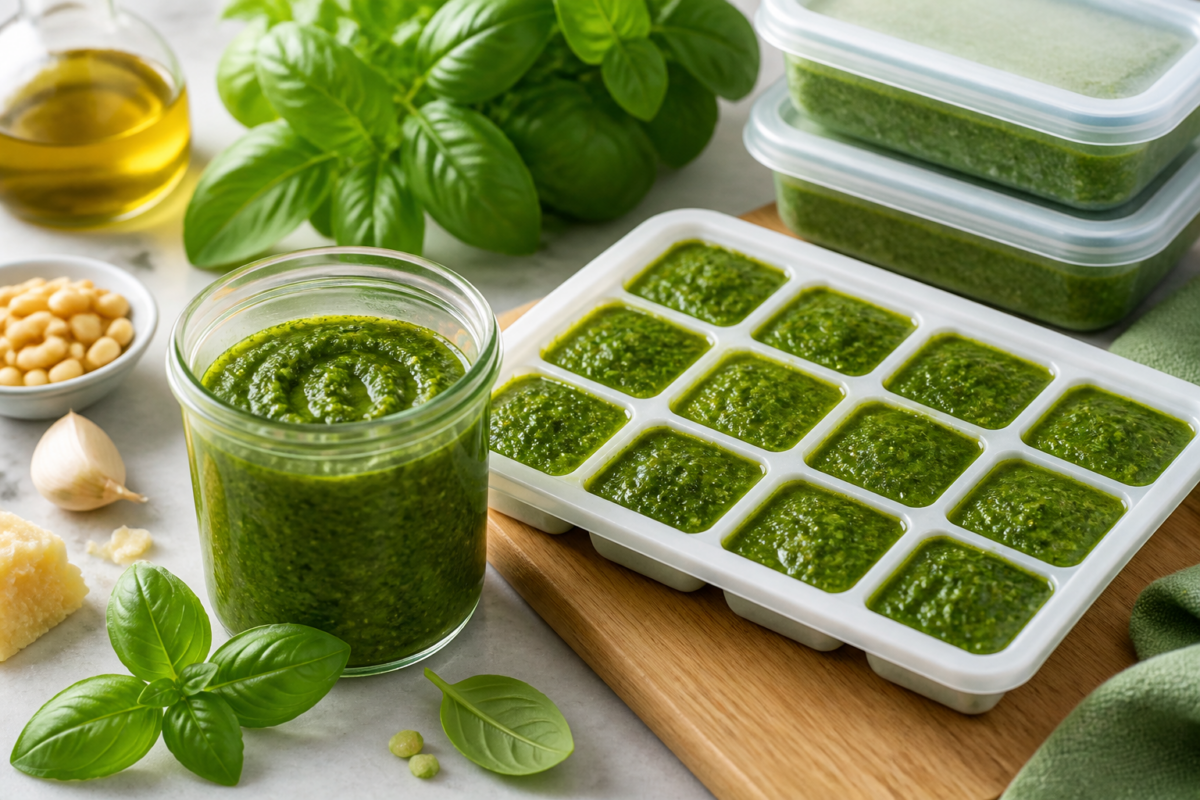
The ice cube tray method is perhaps the most popular and practical approach to freezing pesto. This technique creates pre-portioned servings that thaw quickly and eliminate waste. Here’s how to execute it properly:
Spoon freshly made pesto into clean ice cube trays, filling each compartment about three-quarters full to allow for slight expansion during freezing. Standard ice cube compartments hold approximately one to two tablespoons of pesto, which is often the perfect amount for a single serving of pasta or to flavor a soup.
Place the filled trays in the freezer uncovered for two to three hours until the pesto is completely solid. This initial freezing step is crucial. Once frozen solid, pop the pesto cubes out of the trays and immediately transfer them to a freezer-safe bag or container. Label the container with the date and contents.
This method offers tremendous flexibility. You can pull out exactly one cube for a personal lunch or grab several for a family dinner. The individual cubes thaw in about 10-15 minutes at room temperature, or you can drop them directly into a hot pan where they’ll melt almost instantly.
A helpful tip: lightly coat the ice cube tray with olive oil before filling with pesto. This makes removing the frozen cubes much easier and adds a protective layer against freezer burn.
Freezing Pesto in Bags: The Space-Saving Solution
When freezer space is at a premium, flat-freezing pesto in resealable bags offers a compact alternative. This method works particularly well when you’re preserving large quantities or want flexibility in portion sizes.
Start with high-quality freezer bags in the size that matches your typical usage—sandwich bags for small amounts, quart bags for family portions. Spoon the pesto into the bag, removing as much air as possible before sealing. A useful trick is to submerge the bag up to the seal in a bowl of water, which uses water pressure to push air out before you close the zipper.
Lay the filled bags flat on a baking sheet and freeze them in this position for several hours. Once frozen solid, these flat packets stack beautifully in the freezer, taking up minimal space. You can stand them upright like files in a drawer or layer them horizontally.
The flat-freeze method also facilitates faster thawing. A thin, flat packet defrosts more evenly and quickly than a thick block. You can break off pieces while still partially frozen if you only need a portion, or thaw the entire packet by running the sealed bag under cool water for a few minutes.
Always label your bags clearly with the date, contents, and quantity. After a few months in the freezer, all green sauces start looking similar, and you’ll appreciate knowing exactly what you’re retrieving.
Muffin Tins and Silicone Molds: Larger Portion Control
For those who regularly cook for families or like to add pesto to larger dishes, muffin tins and silicone molds provide the perfect middle ground between ice cubes and full bags. A standard muffin cup holds approximately one-quarter cup of pesto, typically enough for two servings of pasta.
Line your muffin tin with paper liners or use silicone muffin cups for easier removal. Fill each cup with your desired amount of pesto, leaving a small gap at the top for expansion. Freeze for three to four hours until completely solid.
If using paper liners, you can peel them away after freezing and store the pesto portions in a larger freezer container or bag. Silicone molds make removal even simpler—just press from the bottom and the frozen pesto pops right out.
This method is especially convenient when you know you’ll be using pesto in specific recipes. For example, if you frequently make pesto chicken that requires one-quarter cup of pesto, having pre-measured portions ready to grab makes meal preparation effortless.
Silicone molds come in various shapes and sizes, from mini portions to large rounds. They’re reusable, easy to clean, and don’t impart any flavors to your pesto. Consider investing in a set specifically for freezing sauces and pestos.
Protecting Pesto from Freezer Burn and Oxidation
Even in the freezer, pesto can deteriorate if not properly protected. Freezer burn and oxidation are the two main enemies of frozen pesto quality. Understanding how to prevent both ensures your pesto tastes fresh when you’re ready to use it.
Freezer burn occurs when air reaches the food’s surface, causing dehydration and flavor loss. Combat this by minimizing air exposure. When using containers, press plastic wrap directly onto the surface of the pesto before sealing the lid. When using bags, squeeze out every possible air pocket.
A thin layer of olive oil on top of pesto before freezing creates an additional protective barrier against both air exposure and oxidation. This technique works whether you’re freezing in cubes, bags, or containers. Simply drizzle about a teaspoon of olive oil over the surface and spread it gently to cover completely.
Oxidation causes pesto to darken and develop off-flavors. While some darkening is normal even with the best methods, you can minimize it by working quickly when preparing pesto for freezing. The less time pesto sits exposed to air before freezing, the better it will maintain its bright color.
Store frozen pesto in the coldest part of your freezer, typically the back, rather than in the door where temperature fluctuates. Use airtight containers or heavy-duty freezer bags rather than regular storage bags, which are more permeable to air and moisture.
Thawing and Using Frozen Pesto
How you thaw pesto affects its final texture and flavor. The good news is that pesto is forgiving and can be successfully thawed using several methods depending on your timeline and intended use.
For planned meals, the refrigerator thaw is gentlest and most reliable. Transfer your frozen pesto to the refrigerator the night before you need it. By morning, it will be completely thawed and ready to use. This method preserves texture best and works well when you plan to use pesto as a spread or dip.
When you need pesto quickly, room temperature thawing works well for small portions like ice cubes or thin bags. Set the frozen pesto on the counter for 15-30 minutes. Small cubes thaw in as little as 10 minutes, while larger portions may need up to an hour.
The fastest method is direct addition to hot food. Frozen pesto cubes can go straight into hot pasta, soups, or sauces where they’ll melt almost instantly. This approach is perfect for weeknight cooking when you want maximum convenience. Simply toss frozen pesto with hot, drained pasta and a splash of pasta cooking water, and the residual heat will melt the pesto into a silky sauce.
Avoid microwaving pesto if possible, as it can heat unevenly and may cook the garlic, altering the fresh flavor profile. If you must use a microwave, use the defrost setting in short 10-15 second bursts, stirring between each.
Once thawed, use pesto within three to four days. Do not refreeze previously frozen pesto, as this degrades quality significantly and can pose food safety concerns.
Creative Uses for Frozen Pesto Throughout the Year
Having frozen pesto on hand opens up countless quick meal possibilities beyond the traditional pesto pasta. Understanding the versatility of your frozen reserves helps you make the most of your preservation efforts.
Stir a cube of frozen pesto into vegetable soups, minestrone, or white bean soup just before serving for an instant flavor boost. The herb brightness cuts through rich, hearty soups beautifully. Similarly, whisk thawed pesto into scrambled eggs or fold it into an omelet with cherry tomatoes and mozzarella for an elevated breakfast.
Use frozen pesto as a marinade for chicken, fish, or shrimp. Thaw a portion, combine with a little lemon juice and olive oil, and marinate your protein for 30 minutes before grilling or roasting. The herb and garlic flavors permeate the meat wonderfully.
Spread thawed pesto on sandwich bread instead of mayonnaise or mustard. It pairs exceptionally well with turkey, fresh mozzarella, roasted vegetables, or grilled chicken. You can also blend a spoonful into mayonnaise or Greek yogurt to create a pesto aioli for dipping fries or topping burgers.
Thin thawed pesto with extra olive oil and red wine vinegar to create a quick salad dressing. Toss it with mixed greens, cherry tomatoes, and pine nuts for a simple but impressive salad. Or use it as a finishing sauce for roasted vegetables like potatoes, cauliflower, or green beans.
Frozen pesto also works beautifully in compound butter. Mix thawed pesto with softened butter, roll it into a log using parchment paper, and refreeze. Slice off rounds to melt over grilled steak, fish, or warm bread.
Troubleshooting Common Freezing Problems and Their Solutions
Even with careful preparation, you may encounter challenges when freezing pesto. Understanding these common issues and their fixes will help you achieve consistently excellent results. One frequent problem is separation, where oil pools separately from the other ingredients after thawing. This happens because freezing can break down the emulsion that holds pesto together. The solution is simple: stir vigorously or blend briefly after thawing to reincorporate the oil. Adding a splash of warm water or pasta cooking liquid while stirring helps create a smooth consistency again.
Another issue some cooks face is crystallization or graininess in the texture, particularly noticeable when pesto contains cheese. This occurs because ice crystals form during freezing and can damage the protein structure in dairy. To minimize this, freeze pesto as quickly as possible by spreading it thin or using small portions that freeze faster. A blast chiller or setting your freezer to its coldest setting temporarily can help. If you’ve already frozen pesto and notice graininess, warming it gently while whisking in a tablespoon of fresh cream or additional olive oil can improve the mouthfeel considerably.
Some people notice their frozen pesto tastes slightly bitter after thawing, especially if it contains walnuts or other nuts. This bitterness develops when nut oils oxidize during storage. Prevent this by toasting nuts lightly before making pesto, which stabilizes their oils, or by making pesto without nuts and adding freshly toasted nuts after thawing. If bitterness has already developed, balance it by stirring in a small amount of honey, a pinch of sugar, or additional Parmesan, which adds umami that masks bitter notes.
Freezer odor absorption is another concern, particularly if pesto isn’t sealed properly. Garlic and basil are aromatic compounds that can both absorb and transmit odors. Double-bagging pesto or storing it in glass containers with tight-sealing lids prevents cross-contamination with other freezer items. If your pesto has picked up off-flavors, there’s unfortunately no fix—prevention through proper storage is essential.
Lastly, if your pesto becomes watery upon thawing, it likely contained excess moisture from inadequately dried basil leaves. Always dry basil thoroughly after washing, using a salad spinner or patting leaves with paper towels. If you’re working with already-watery thawed pesto, drain off excess liquid and stir in a tablespoon of tomato paste or sun-dried tomato to thicken the consistency and add complementary flavor.
Optimizing Pesto Recipes Specifically for Freezing
While you can freeze any pesto recipe, making small adjustments to your formula specifically for freezing yields superior results. These modifications enhance stability, preserve color, and maintain flavor integrity throughout frozen storage. Consider these recipe optimizations as investments in the quality of your future meals.
First, increase the oil ratio slightly when making pesto intended for the freezer. A higher oil content creates better protection against oxidation and freezer burn. Where you might normally use three-quarters cup of olive oil for two cups of basil, increase it to one full cup for freezer-bound pesto. The extra oil acts as a preservative barrier and helps maintain a silky texture after thawing. You can always drain excess oil after thawing if the consistency seems too loose.
Add a small amount of ascorbic acid (vitamin C) to preserve the vivid green color. Crush one 500mg vitamin C tablet or use one-quarter teaspoon of ascorbic acid powder per two cups of basil. This is a technique professional food producers use to prevent enzymatic browning. The amount is so small it won’t affect flavor, but it significantly reduces the darkening that naturally occurs during frozen storage. Alternatively, add an extra tablespoon of lemon juice, though this will affect flavor more noticeably.
Consider using a combination of basil and heartier greens like spinach or kale when making pesto specifically for freezing. A ratio of three parts basil to one part spinach maintains the characteristic basil flavor while adding chlorophyll that’s more stable during freezing. The spinach also contains less of the enzyme that causes browning. This blend keeps its bright color longer and offers added nutritional benefits without significantly altering the taste profile.
Blanching basil briefly before making pesto destined for the freezer is a technique borrowed from professional kitchens. Dip basil leaves in boiling water for just five seconds, then immediately plunge into ice water and dry thoroughly. This blanching deactivates the enzymes responsible for browning while setting the bright green color. The flavor becomes slightly milder, so you may want to increase the garlic or add fresh basil to the thawed pesto later. While this extra step requires more effort, the color preservation is remarkable—pesto can maintain its vibrant green for up to a year.
Reduce or omit salt in pesto you plan to freeze, as freezing can concentrate salty flavors and you cannot remove excess salt later. Season conservatively, then adjust to taste after thawing and when incorporating into your final dish. This approach also makes frozen pesto more versatile, allowing you to customize saltiness based on whether you’re using it in a soup that’s already seasoned or tossing it with unsalted pasta.
Batch Processing: Preserving Large Basil Harvests Efficiently
When faced with abundant basil from your garden or a farmers market haul, efficient batch processing makes freezing dozens of pesto portions manageable rather than overwhelming. Strategic planning and assembly-line techniques borrowed from restaurant prep kitchens will save you hours while producing consistent, high-quality results.
Start by setting up stations: one for washing and drying basil, one for ingredient preparation, one for blending, and one for portioning and freezing. This production line approach is far more efficient than making one small batch at a time. Recruit family members or friends to help—processing several pounds of basil goes quickly with multiple hands, and you can share the finished pesto.
Wash all basil at once in a clean sink or large basin filled with cold water. Swish gently to remove dirt, then lift leaves out rather than draining (which can bruise them). Spin dry in batches using a salad spinner, then spread on clean kitchen towels. While basil dries, prepare all your other ingredients: peel whole heads of garlic at once, measure out all your pine nuts, and grate all the Parmesan if you’re including cheese. Having everything prepped before blending begins keeps the process moving smoothly.
Make pesto in consistent batches that match your food processor’s capacity—usually about two to three cups of packed basil per batch. Blending the same amount each time ensures consistent texture and makes portioning predictable. Keep a written log of how many batches you make; it’s easy to lose count during a long processing session.
For freezing large quantities, consider using a combination of methods. Fill several ice cube trays for small portions, use muffin tins for medium portions, and flat-freeze quart bags for times when you need larger amounts. This variety gives you maximum flexibility later. As you fill containers, work in stages—fill all ice cube trays first, get them into the freezer, then move to the next method while those freeze.
Create a labeling system that includes not just the date and contents, but also batch numbers or notes about variations. For example, “Pesto Batch 3 – no cheese” or “Pesto #5 – extra garlic.” Months later, these notes help you remember which version you preferred and what adjustments to make next season. Consider keeping a simple spreadsheet or notebook with details about each preservation session, including what worked well and what you’d change.
Clean as you go to prevent the process from becoming overwhelming. Rinse the food processor bowl between batches and have a container ready for stems and other compost. Keep your work surfaces wiped down and containers organized. The goal is to end your processing session with all your pesto safely frozen and your kitchen in reasonable order, not facing a massive cleanup that makes you dread preserving next year’s harvest.
Understanding Quality Changes During Frozen Storage
While properly frozen pesto maintains excellent quality for months, understanding the gradual changes that occur during storage helps you manage expectations and use your oldest portions appropriately. Freezing slows deterioration but doesn’t stop it entirely, and being aware of these shifts allows you to deploy your frozen pesto strategically.
During the first month of freezing, pesto remains virtually identical to fresh, with minimal color or flavor changes. This is the ideal window for uses where pesto is the star ingredient—simple pasta dishes, spreading on fresh bread, or stirring into mild soups where you’ll really taste every nuance. The bright, peppery basil notes are fully preserved, and the texture after thawing is closest to the original.
Between months two and four, subtle changes begin. The color may shift slightly from bright grass-green toward a deeper, more olive tone, particularly at surfaces that had any air exposure despite your best efforts. Flavor remains robust, but the sharpest garlic notes may mellow somewhat, which some people actually prefer. This pesto works beautifully in cooked applications—tossed with hot pasta, swirled into risotto, spread on pizza before baking, or mixed into meatballs. The slight mellowing is imperceptible in these contexts.
From months four to six, pesto is still perfectly usable but best suited for applications where it’s combined with other strong flavors. The basil’s brightness diminishes further, and color darkening becomes more pronounced. This is excellent pesto for hearty vegetable soups, robust meat sauces, marinating chicken thighs for grilling, or mixing into casseroles. The fundamental flavor profile remains, but it won’t taste garden-fresh. Think of it as shifting from “bright summer basil” to “mellow herbed oil,” both delicious but different.
Beyond six months, pesto remains safe but quality degrades more noticeably. The nuts may develop slight rancidity, though this depends heavily on storage temperature consistency. Use these oldest portions in applications where pesto is thoroughly cooked and combined with acidic ingredients that mask any off-notes—baked into bread, stirred into tomato-based sauces, or used as a seasoning component rather than a primary sauce. The wisdom of “first frozen, first used” applies here; rotating your stock prevents having year-old pesto lingering in the back of the freezer.
Temperature fluctuations dramatically accelerate quality loss. Pesto stored in a chest freezer that’s opened infrequently maintains quality longer than pesto in a refrigerator-freezer that’s accessed constantly. If you experience a power outage, pesto that remains frozen solid throughout is fine, but if it thaws even partially, use it within a few days or discard it—never refreeze.
Alternative Preservation Formats: Pesto Butter, Oil, and Paste
Beyond freezing standard pesto, you can transform it into specialized frozen formats that serve specific culinary purposes. These variations offer unique advantages for particular applications and can diversify how you use your basil harvest throughout the year.
Pesto butter combines equal parts softened butter and pesto, creating a compound butter that’s spectacular on grilled meats, steamed vegetables, or fresh bread. Mix thoroughly, then roll into logs using parchment paper, twisting the ends like a candy wrapper. Freeze these logs, then slice off rounds as needed. Each medallion melts into a rich, herb-infused sauce. This format is particularly useful for quick weeknight cooking—top a grilled steak or piece of fish with a frozen pesto butter round and let residual heat melt it into an instant sauce. The butter stabilizes during freezing better than straight pesto, minimizing separation, and adds luxurious richness. These logs store beautifully for up to four months.
Pesto oil is a brilliant way to preserve basil flavor in a format perfect for drizzling and finishing dishes. Make pesto with a much higher oil-to-basil ratio—about two cups of olive oil to one cup of basil, with minimal nuts and no cheese. Blend until the basil is finely minced but the mixture remains quite liquid. Freeze in ice cube trays or small jars. Use these intensely flavored oil cubes to finish soups, drizzle over roasted vegetables, toss with warm potatoes, or add to vinaigrettes. Because it’s primarily oil, it stays pourable even when frozen, and you can often scrape out just the amount you need without fully thawing. This format is also excellent for cooking—toss a cube into a hot pan when sautéing chicken or shrimp for instant flavor infusion.
Pesto paste is a concentrated, thick version made with minimal oil—just enough to help it blend. The ratio is roughly four cups of basil to one-quarter cup of oil, plus nuts and garlic. The resulting thick paste can be frozen in small portions and reconstituted with fresh oil after thawing, giving you more control over final consistency and allowing you to add your best olive oil at serving time rather than freezing it. This concentrated format takes up less freezer space and offers maximum flexibility. Thin a spoonful with olive oil for pasta, mix it with cream cheese for a spread, or whisk it with vinegar for salad dressing. The paste format also works exceptionally well in cooking applications where excess oil would be unwanted, like mixing into ground meat for burgers or folding into mashed potatoes.
Pesto ice pops might sound unconventional, but freezing pesto in ice pop molds with added liquid creates instant soup or sauce bases. Combine pesto with vegetable or chicken stock in a 1:3 ratio, pour into ice pop molds, and freeze. Pop one into simmering water for instant soup, or melt several to create a flavorful braising liquid for chicken or white beans. This format is particularly clever for meal prep—you can create multiple varieties (pesto-stock, pesto-cream, pesto-tomato) and have components for different dishes ready to go. The molds are reusable and the portions are perfectly sized for single servings.
Freezing Pesto for Specific Dietary Needs and Preferences
Customizing your frozen pesto to accommodate various dietary requirements ensures everyone can enjoy these preserved flavors. Understanding how to modify recipes while maintaining freezer stability makes your preservation efforts more inclusive and versatile.
For dairy-free or vegan pesto, simply omit the cheese and increase nutritional yeast, which adds umami depth without dairy. Use about three tablespoons of nutritional yeast per two cups of basil. This version freezes exceptionally well because there’s no cheese to become grainy. Some recipes add white miso paste for additional savory complexity—about one tablespoon per batch provides richness that mimics the umami Parmesan contributes. Vegan pesto often maintains its color better during freezing since the proteins in cheese can contribute to browning. After thawing, you can stir in vegan parmesan alternatives if desired, but many people find the nutritional yeast version perfectly satisfying on its own.
Nut-free pesto accommodates allergies while freezing beautifully. Substitute sunflower seeds, pepitas (pumpkin seeds), or hemp hearts for traditional pine nuts or walnuts. These alternatives provide similar fat content and texture without tree nuts. Sunflower seeds create a mild, slightly sweet pesto, while pepitas add earthy richness and a beautiful green color that complements the basil. Hemp hearts produce a creamier, more delicate texture. Toast your chosen seeds lightly before blending to develop flavor and improve stability during freezing. Seed-based pestos may actually have a longer freezer life than nut-based versions since seeds are less prone to rancidity. Label these clearly so those with allergies can identify safe portions immediately.
Low-sodium pesto for those monitoring salt intake simply omits added salt entirely, relying on the natural flavors of basil, garlic, and cheese (if using). Without added salt, seasonings taste less intense after freezing, so compensate by slightly increasing garlic and adding extra lemon juice for brightness. Consider using Pecorino Romano instead of Parmesan if including cheese—it has a sharper flavor that remains noticeable without heavy salting. After thawing, users can adjust salt to their dietary requirements and taste preferences. This approach makes frozen pesto suitable for those with heart conditions or hypertension while maintaining versatility.
Keto or low-carb dieters appreciate that pesto is naturally very low in carbohydrates, making it an ideal frozen sauce. Emphasize this by using extra olive oil and full-fat Parmesan, avoiding any additions that might increase carbs. Freeze in portions sized for their typical use—often smaller amounts since keto portions are more concentrated in fat and calories. Pair thawed pesto with zucchini noodles, cauliflower rice, or simply use as a fat-rich topping for proteins. The high fat content in keto-optimized pesto actually improves freeze-thaw stability.
For those avoiding alliums due to IBS or FODMAPs sensitivity, make pesto substituting garlic-infused olive oil for raw garlic. Gently heat olive oil with smashed garlic cloves, strain out the solids, then use this flavored oil in your pesto. The oil captures garlic flavor without the problematic fructans. Alternatively, use the green tops of scallions or a small amount of asafoetida powder, which provides a garlic-like flavor without FODMAPs. These modifications freeze just as well as traditional pesto, though the flavor profile is somewhat lighter. Mark these specially prepared batches clearly so they’re easily identified when needed.
Frequently Asked Questions About Freezing Pesto
How long does frozen pesto last, and how can I tell if it’s still good?
Properly stored frozen pesto maintains its best quality for four to six months, though it remains safe to eat indefinitely at 0°F. After six months, you may notice some flavor degradation and color darkening, but it won’t pose safety concerns. Signs that frozen pesto has deteriorated include significant browning or graying, ice crystals throughout (indicating freezer burn), or separation of oil that won’t reincorporate when thawed. If thawed pesto smells rancid or off, discard it. Always label containers with freezing dates so you can rotate your stock and use older portions first.
Can I freeze store-bought pesto, or does this only work with homemade?
Store-bought pesto freezes successfully using the same methods as homemade versions. If you find a favorite brand on sale or bought too much, freezing is an excellent way to extend its life. Transfer it from the original jar into ice cube trays or freezer bags, as the glass jar may crack in the freezer and likely contains more pesto than you’ll use at once. Store-bought pesto already contains preservatives, so it may maintain its color slightly better than homemade versions. The same six-month guideline applies, though check the original expiration date—if the pesto was already close to expiring when frozen, use it more quickly after thawing.
Should I freeze pesto with or without cheese, and does it matter?
This is largely a matter of personal preference and intended use. Freezing pesto without cheese and adding freshly grated Parmesan after thawing produces the best texture, as hard cheeses can become slightly grainy when frozen. This method also offers more flexibility—you can add different cheeses for different dishes or omit cheese entirely for dairy-free meals. However, freezing pesto with cheese included is perfectly acceptable and the texture change is minimal when mixed into hot dishes. Many people choose convenience over the subtle texture difference. If you’re unsure, try both methods with your next batch and see which you prefer for your typical uses.
My pesto turned brown in the freezer—is it still safe to eat?
Yes, brown pesto is typically safe to eat; the color change is oxidation, not spoilage. Basil contains enzymes that cause browning when exposed to air, similar to how a cut apple darkens. While the vibrant green color fades, the flavor remains largely intact, especially if the browning is only surface-level. You can minimize browning by ensuring airtight storage, adding a protective layer of olive oil before freezing, and using pesto within four months. Some cooks add a squeeze of lemon juice to their pesto before freezing, as the acidity helps preserve color. If the pesto is brown but smells fresh and herbaceous when thawed, it’s fine to use. Trust your nose—off smells indicate spoilage, while color change alone does not.
What’s the best way to freeze different types of pesto, like sun-dried tomato or kale pesto?
All pesto varieties freeze well using the same methods described for traditional basil pesto. Sun-dried tomato pesto, arugula pesto, kale pesto, and cilantro-based pestos all benefit from the ice cube tray or flat-bag method. Some variations actually freeze even better than basil pesto—kale and other heartier greens are less prone to browning, while sun-dried tomato pesto maintains its color beautifully. Nut-free pestos (using sunflower seeds or pepitas instead of pine nuts) also freeze excellently and may have a slightly longer freezer life since nuts can eventually go rancid. The same preparation tips apply: work quickly to minimize air exposure, use airtight containers, and add a protective layer of olive oil. Label each variety clearly since they can look similar when frozen, and enjoy experimenting with different pestos throughout the seasons.