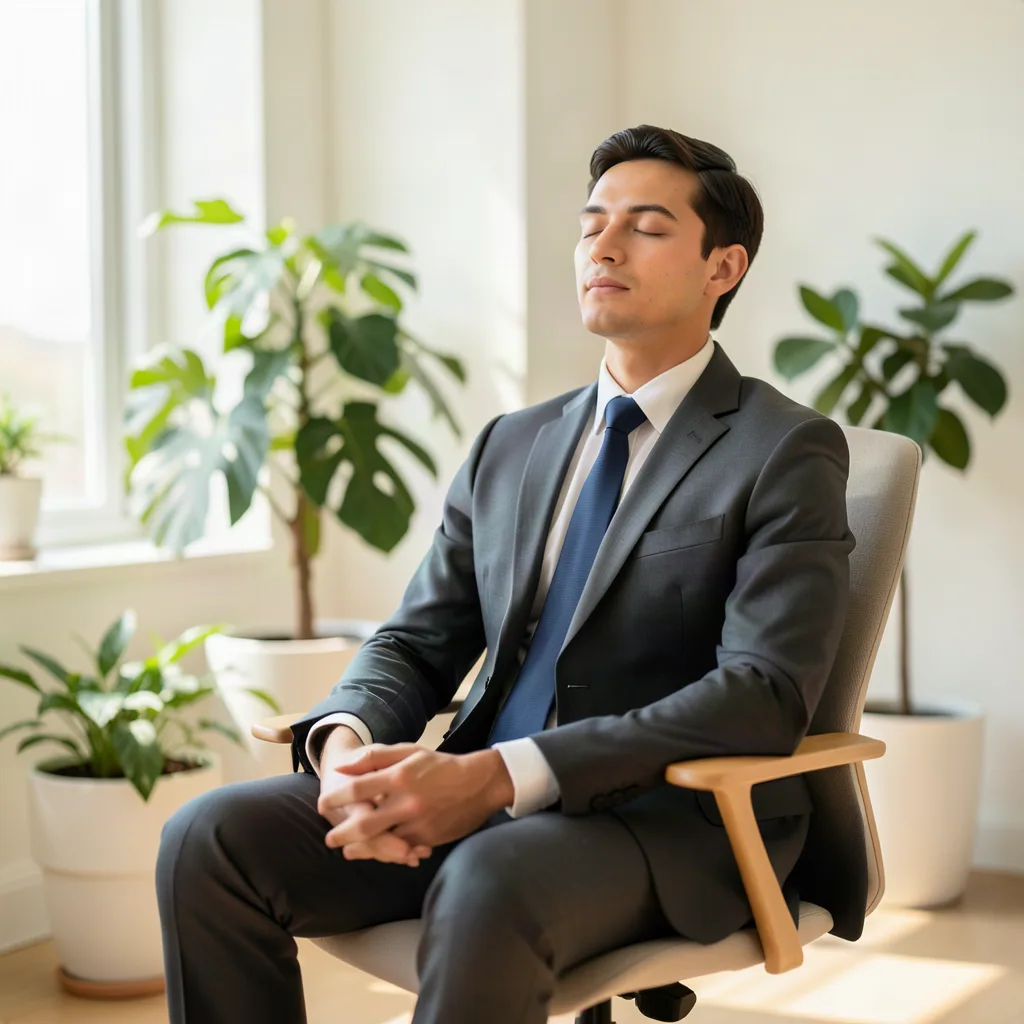
In the modern era, the sensation of being perpetually behind is a common human experience. Between professional obligations, household management, and the constant digital influx, finding a moment of stillness often feels like an impossible luxury. However, meditation is not a practice reserved for those with hours of free time; it is a tool for mental clarity that can be integrated into the most chaotic of schedules. By reframing meditation as a functional habit rather than a meditative retreat, you can cultivate inner calm amidst the noise.
Key takeaways
- Practice micro-meditations lasting 30 to 180 seconds to reset your nervous system throughout the day.
- Use transition rituals, like deep breathing, to clear lingering stress when moving between different tasks.
- Transform routine moments, such as commutes or eating, into sensory mindfulness exercises to stay grounded.
- Employ cognitive offloading by writing down distracting thoughts before starting a quick breathing session.
Understanding Micro-Meditation
The misconception that meditation requires twenty minutes of silent sitting in a dedicated space is the greatest barrier to entry. Micro-meditation involves brief, intentional periods of mindfulness that last anywhere from thirty seconds to three minutes. These moments act as a circuit breaker for the nervous system, preventing the accumulation of stress throughout the day. By focusing on your breath or the sensation of your feet on the ground during a transition—such as waiting for a meeting to start or a file to download—you build the neural pathways associated with presence. The goal is frequency, not duration. Multiple short bursts of mindfulness throughout the day often yield more consistent emotional regulation than a single long session that feels like another task on a to-do list.
Integrating Mindfulness into Morning Routines
The morning is often a frantic race against the clock, but it is also the most effective time to set an emotional baseline. Instead of reaching for your phone immediately upon waking, commit to a “transition breath” practice. Before you step out of bed, take five slow, deep breaths. Place one hand on your chest and one on your abdomen, feeling the physical rise and fall of your body. This grounding exercise anchors you in the physical reality of the present moment before the demands of the day begin to pull your attention outward. Even if your morning is focused on getting children ready or preparing for a commute, these few moments of conscious breathing can shift your perspective from reactive to proactive.
Utilizing Commutes and Transit Time
For many, the commute is a source of high stress, yet it is also a captive period where you have limited agency over your immediate environment. Rather than filling this time with podcasts or news, use the commute as a sensory awareness practice. If you are on public transit, practice “open monitoring,” where you acknowledge the sounds and movements around you without attaching a narrative or judgment to them. If you are driving, use the time to perform a body scan. At each red light, check in with your shoulders, jaw, and hands. Consciously release any tension you are holding. By transforming your commute into a moving meditation, you arrive at your destination feeling energized rather than depleted.
Mindful Eating as a Daily Practice
We often consume meals while multitasking, which disconnects us from our body’s hunger signals and prevents us from enjoying the sensory experience of nourishment. Mindful eating is one of the most practical ways to incorporate meditation into a busy schedule because you have to eat regardless of how busy you are. Commit to eating the first three bites of your meal in total silence. Notice the texture, the temperature, and the flavor profile of the food. By slowing down the start of your meal, you signal to your digestive system that it is time to shift into a parasympathetic (rest and digest) state. This brief ritual provides a necessary pause in a hectic workday and helps you cultivate gratitude for the sustenance you are receiving.
The Power of Transition Rituals
Our days are defined by transitions—moving from a work task to a family obligation, or from a stressful meeting to a phone call. We often carry the residual stress of one event into the next, creating a cumulative effect of anxiety. A transition ritual is a physical action that signals to your brain that the previous activity is complete. This might involve washing your hands, closing your laptop with intention, or taking three deep breaths before opening your car door at home. By creating these “bookends” around your daily activities, you prevent the bleed-over of stress and allow yourself to show up fully for each new segment of your day.
Leveraging Technology Mindfully
While digital distractions are a primary cause of stress, technology can also serve as a support for your meditation practice. Use alarms or calendar reminders to prompt a 60-second mindfulness check-in. Instead of labeling these as “meditation,” label them as “reset” or “breathe.” There are numerous applications that offer short, guided meditations specifically designed for busy professionals. The key is to keep the barrier to entry low. If you have an earbud in for work, it takes only two taps to start a guided breathing exercise. Use technology to automate your mindfulness habit until it becomes an automatic response to your environment.
Evening Decompression and Reflection
Ending the day with intentionality is just as important as starting it well. As you prepare for sleep, the mind often races with unfinished business or tomorrow’s anxieties. A brief evening meditation can act as a bridge between the activity of the day and the recovery of sleep. Try a simple “brain dump” followed by a short meditation. Write down the three things that are weighing on your mind, then close your journal and sit in silence for two minutes. Visualize the day as a book you are closing. This practice helps to offload the mental clutter, allowing your nervous system to transition into the restorative state required for deep, high-quality sleep.
Optimizing Your Workspace for Micro-Mindfulness
Your physical environment acts as a silent architect of your mental state. If your desk is a chaotic sprawl of documents, digital clutter, and unfinished projects, your brain will subconsciously process that friction throughout the day. To foster a space conducive to micro-meditation, introduce a “visual anchor.” This could be a small stone, a plant, or a specific piece of artwork placed within your peripheral vision. When your eyes land on this object during a high-stress moment, treat it as a trigger to perform one “reset breath.” By associating a specific item in your immediate environment with the act of pausing, you externalize the habit, making it easier for your brain to bypass the need for conscious willpower. Additionally, consider the auditory landscape of your workspace; if you cannot achieve silence, use noise-canceling headphones to play ambient “brown noise” or binaural beats for two minutes. This creates a sonic boundary that signals to your coworkers and your own nervous system that you are intentionally stepping back from the fray.
The “Wait-Time” Protocol: Turning Dead Time into Growth Time
We often view waiting as “lost time,” which triggers impatience and cortisol spikes. Whether you are waiting for a Zoom call to load, a grocery checkout line, or an elevator, these segments of dead time are actually prime opportunities for cognitive restoration. Instead of checking your email—which forces your brain to switch contexts and increases cognitive load—adopt a “waiting-room meditation.” During these intervals, practice a technique called “Five-Sense Grounding.” Without moving your body, identify five things you can see, four things you can hear, three things you can feel (the weight of your shoes, the fabric of your clothes, the temperature of the air), two things you can smell, and one thing you can taste. This exercise forcibly pulls your consciousness out of the abstract future or past and anchors it firmly in the physical reality of the present. By reclaiming these moments, you transform the most frustrating parts of a busy day into a series of small, restorative retreats.
Navigating Emotional Turbulence with “Labeling”
Sometimes, the pressure of a busy schedule is not just about time management, but about the emotional intensity of the tasks themselves. When you are in the middle of a high-stakes project, your brain may become hijacked by anxiety or frustration. A powerful tool for these moments is the practice of “mental labeling.” When a strong emotion arises, silently name it: “this is anxiety,” “this is irritation,” or “this is impatience.” Research suggests that the act of labeling an emotion activates the prefrontal cortex, which can dampen the reactivity of the amygdala, the brain’s fear center. You don’t need to stop what you are doing to perform this; simply acknowledge the feeling, label it, and return your focus to the task at hand. This creates a microscopic space between your identity and your current emotional state, preventing you from becoming overwhelmed by the “story” of your stress.
The Art of “Open-Loop” Completion
Many of us feel perpetually exhausted because we leave “open loops” in our minds—unfinished thoughts, lingering worries about tomorrow, or unaddressed emails that we keep re-loading into our working memory. To meditate effectively while busy, you must practice “cognitive offloading.” Before you begin any brief meditation, take thirty seconds to write down any distracting thoughts on a “distraction pad.” By externalizing these thoughts, you give your brain permission to stop holding them in active memory. Once the thought is on paper, you can transition into your breathing exercise with a significantly lighter mental load. This practice prevents the common meditation pitfall where you spend your entire session ruminating on the very tasks you are trying to escape. By closing these cognitive loops, you ensure that your meditation time is truly devoted to recovery, not just another form of planning.
Cultivating “Micro-Gratitude” During Transitions
Gratitude is often treated as a grand, evening-journaling activity, but it is highly effective when woven into the fabric of a busy day as a form of active meditation. When you are moving from one location to another, or shifting from one task to the next, spend ten seconds mentally acknowledging one thing that is currently working in your favor. It could be as simple as the fact that your internet connection is stable, that you have a comfortable chair, or that a colleague helped you with a minor request. This practice of “micro-gratitude” functions as a cognitive recalibration tool. It shifts your brain’s focus from the scarcity of time and resources to the abundance of support and functionality already present. This subtle shift in perspective reduces the feeling of being “under siege” by your schedule, replacing it with a sense of agency and competence.
Adapting Practice for High-Pressure Environments
For those in high-stakes environments—such as healthcare, emergency services, or high-finance—the luxury of closing one’s eyes for three minutes is often non-existent. In these scenarios, you must utilize “hidden” meditation techniques that do not require physical isolation. Practice “tactile grounding” by pressing your thumb against your index finger with firm, controlled pressure, or by focusing your attention on the feeling of your feet firmly planted on the floor. These physical sensations provide a steady anchor that is invisible to others. You can also utilize “rhythmic breathing,” where you inhale for a count of four and exhale for a count of six. The lengthened exhale is a physiological hack that directly stimulates the vagus nerve, which helps shift the body from a sympathetic “fight or flight” state to a parasympathetic “rest and digest” state. These techniques allow you to remain present and composed in the middle of a chaotic environment without ever stepping away from your responsibilities.
FAQ
Q: How do I know if I am meditating correctly if I only have a few minutes? A: There is no “correct” way to meditate. If your mind wanders, simply noticing that it has wandered and gently bringing your attention back to your breath is the meditation. The act of returning is the workout for your brain, not the state of perfect silence.
Q: Should I meditate if I feel like I am too stressed to sit still? A: Yes, these are exactly the moments when meditation is most beneficial. When you feel agitated, choose a physical anchor like your feet on the floor or the sensation of your hands touching a desk. Focusing on a physical sensation can help ground your nervous system when the mind is racing.
Q: Can I meditate while doing chores like washing dishes? A: Absolutely. This is known as informal practice. By focusing entirely on the temperature of the water, the texture of the soap, and the movement of your hands, you turn a mundane task into a mindfulness exercise. It is about bringing full awareness to the present moment.
Q: Does it matter if I fall asleep during a short meditation? A: If you are exhausted, your body may be signaling that rest is more important than meditation. If you fall asleep, do not judge yourself. Simply acknowledge that you needed the rest and try again when you are more alert. If you tend to fall asleep, try meditating in a seated position rather than lying down.
Q: How long does it take to see the benefits of these micro-meditations? A: Many people report feeling a subtle shift in their stress levels within a week of consistent practice. While you may not experience a total transformation overnight, the cumulative effect of hundreds of small resets throughout the month will significantly improve your ability to handle daily stressors.
Related posts:
 The Art of Relaxation Time That Everyone Needs to Master
 Amazon’s New Meditation Podcast
 60 Meditation Exercises and Activities to Relieve Stress & Anxiety
 Breathing Exercise for Better Sleep
 Ways to Improve Your Breathing Technique
 Brain-Boosting Foods
 Inside Busy Philipps’ Energizing Morning Routine and LekFit Obsession
 Mindfulness Meditation Videos, Exercises, Books and Courses