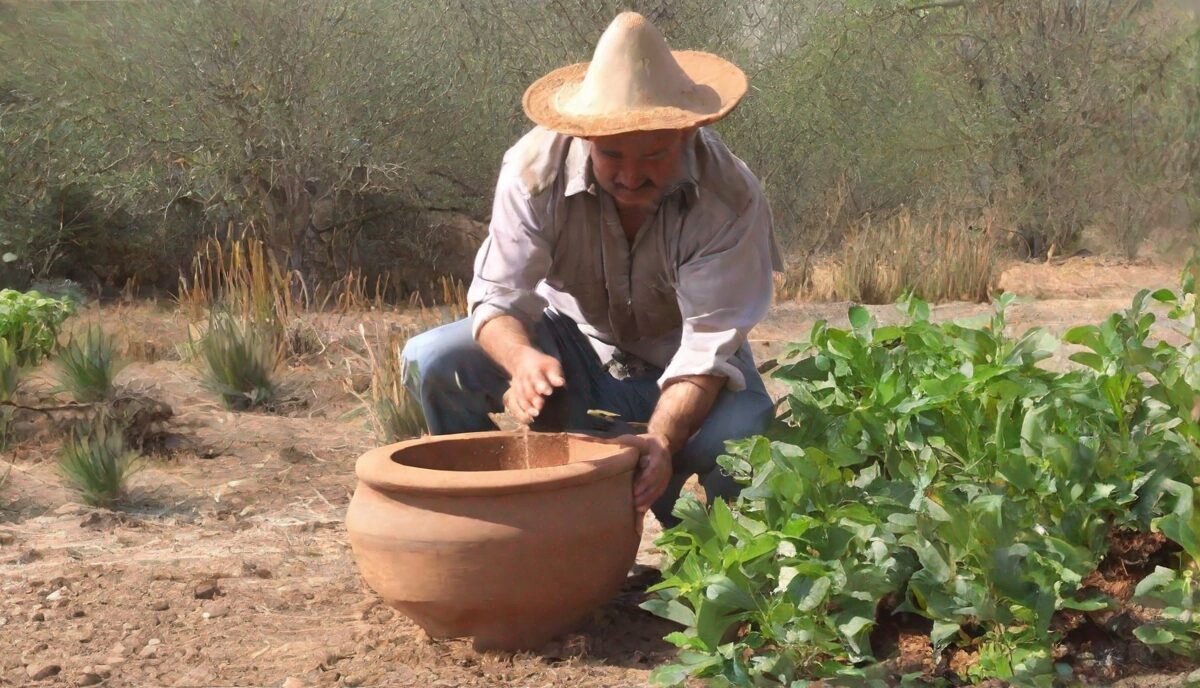
Discover the ancient irrigation technique of using an olla. This time-tested method can help you conserve water and improve your garden’s efficiency. In this article, we will show you how to make an olla and explain its benefits.
What is an Olla?
An olla is a porous clay pot used for irrigation. Burying an olla in the ground allows water to seep slowly into the soil, providing consistent moisture directly to plant roots. This technique reduces water waste and promotes healthier plant growth.
Benefits of Using an Olla
- Water Conservation: Ollas reduce water evaporation and runoff, making them an efficient way to water your garden.
- Healthier Plants: Consistent moisture levels encourage deeper root growth and more resilient plants.
- Time-Saving: Once set up, ollas require less frequent watering, freeing up your time for other gardening tasks.
- Eco-Friendly: Using an olla minimizes water usage and supports sustainable gardening practices.
Materials Needed to Make an Olla
- Terracotta pots (two pots of the same size)
- Waterproof sealant
- Sandpaper
- Clay saucer (optional)
Step-by-Step Guide to Making an Olla
Step 1: Prepare the Pots
Clean the terracotta pots to remove any dust or debris. Use sandpaper to smooth out any rough edges, especially around the rims.
Step 2: Seal the Bottom Pot
Apply waterproof sealant to the drainage hole of one pot to prevent water from escaping. Allow the sealant to dry completely.
Step 3: Join the Pots
Place the sealed pot upside down and position the other pot on top, aligning their rims. Use the waterproof sealant to join the two pots together, creating a sealed chamber. Ensure there are no gaps where water could leak out.
Step 4: Optional Saucer
If desired, place a clay saucer on top of the olla to prevent debris from entering and to reduce evaporation.
How to Use an Olla in Your Garden
Bury the olla in your garden bed, leaving the top of the olla exposed above the soil surface. Fill the olla with water and cover the top with a saucer or lid to prevent evaporation. The olla will slowly release water to the surrounding soil, keeping your plants hydrated.
Optimizing Soil-to-Porosity Ratios for Targeted Hydration
The efficiency of an olla is fundamentally tied to the rate of osmosis and soil suction. While standard terracotta is porous, not all clay is created equal. The firing temperature of your chosen vessel significantly dictates the seepage rate. If you are using terracotta pots from a nursery, look for “soft” or low-fired clay; high-fired, glazed, or vitrified clay will be too dense to allow water passage. To test your vessel before sealing, submerge it in a bucket of water for an hour. If the exterior darkens consistently and feels damp to the touch, it is ideal. For heavy clay soils that retain moisture naturally, you may need to amend the area immediately surrounding the buried olla with a blend of coarse sand or perlite. This creates a “wicking zone” that prevents the pores from clogging with fine silt, ensuring that the water release remains consistent even after heavy rainfall events.
Strategic Placement and Root Zone Dynamics
Placing an olla is not merely about burying it in the center of a bed; it is about mapping the root architecture of your specific crops. For high-demand plants like tomatoes, peppers, or squash, the olla should be placed at the time of planting to avoid root damage later in the season. Position your seedlings in a radial pattern around the olla, roughly 6 to 12 inches away from the rim. This proximity encourages the roots to grow toward the moisture source, effectively “training” the plant to develop a deep, centralized root system. In larger garden beds, calculate the radius of influence by observing the soil moisture gradient: usually, a 1-gallon olla will effectively hydrate a circular zone with a 24-inch diameter. Overlapping these zones creates a continuous “moisture ribbon” that supports intensive planting methods like square-foot gardening.
Advanced Sealing and Structural Integrity
While basic waterproof silicone is functional, it can break down under constant subterranean pressure or temperature fluctuations. For a more permanent, food-safe seal that withstands the soil environment, consider using a marine-grade epoxy or a specialized waterproof hydraulic cement. When joining the rims, ensure the surfaces are thoroughly roughened with coarse sandpaper to create a mechanical bond. If you encounter a hairline crack in a pot during assembly, do not discard it; instead, use a non-toxic, waterproof concrete patch. For the top opening, avoid simple saucers if you live in an area with high pest activity. A heavy, porous terracotta lid can be supplemented with a fine mesh screen secured by an elastic band or a heavy rubber ring to keep out mosquitoes, earwigs, and debris that might contaminate the water supply over time.
Managing Seasonal Transitions and Winterization
The primary enemy of an olla in temperate climates is freezing. Because the vessel is filled with water, expansion during a freeze-thaw cycle will inevitably shatter the terracotta. At the end of the growing season, you must remove the ollas from the ground. Lift them carefully, drain them completely, and allow them to air-dry in a shaded, ventilated area for several days. Once dry, brush off any mineral buildup or calcification that has formed on the exterior. This buildup, often caused by hard water, can block the pores and render the olla ineffective by the following spring. Soaking the pots in a solution of white vinegar and water for 24 hours before storage will dissolve these mineral deposits, effectively “resetting” the porosity for the next season.
Integrated Fertility: Feeding Through the Olla
The olla serves as an excellent delivery mechanism for liquid fertilizers, often referred to as “fertigation.” However, this requires careful management to prevent salt buildup within the clay pores. Avoid using synthetic chemical fertilizers, which can crystallize and permanently clog the ceramic surface. Instead, opt for highly diluted, organic liquid feeds such as compost tea, seaweed extract, or fish emulsion. By adding these directly into the olla, you deliver nutrients directly to the root zone, significantly reducing the risk of nitrogen volatilization and surface runoff. Always follow the liquid feed with a pint of plain water to flush any remaining nutrients through the clay walls, ensuring the pores remain clear and the concentration stays within a range that avoids root burn.
Troubleshooting Percolation and Flow Rates
If you find that your olla is emptying too quickly—or not at all—you are likely dealing with a soil-moisture tension mismatch. If the soil is excessively dry and compacted, it will aggressively pull water from the olla, causing it to empty in under 24 hours. In this scenario, mulch the soil surface heavily with straw or wood chips to slow the surface evaporation and allow the soil to regain its natural moisture equilibrium. Conversely, if the olla remains full for weeks, the soil may be too dense or the pot was fired at too high a temperature. In this case, lightly scoring the exterior of the pot with a diamond-tipped masonry bit or a sturdy metal file can manually increase the surface area for water release. Always perform these modifications gradually, testing the seepage rate over a 48-hour period before re-burying the vessel.
The Olla as a Climate-Resilience Tool
In regions prone to extreme heat and drought, the olla functions as a thermal buffer for the root zone. During peak summer heat, the evaporation occurring on the exterior of the olla provides a “swamp cooler” effect, subtly lowering the temperature of the surrounding soil. This is critical for cool-season crops like lettuce, spinach, or peas, which typically struggle to survive in high temperatures. By maintaining a cooler root environment, you can extend the harvest window of sensitive crops by several weeks. To maximize this thermal benefit, pair your olla irrigation with a thick layer of organic mulch. This combination creates a microclimate that is not only water-efficient but also thermally stable, allowing your garden to thrive even when ambient temperatures exceed the physiological comfort zone of your plants.
FAQ
1. How often should I refill the olla?
Refill the olla as needed, typically every 3-5 days, depending on your climate and soil type.
2. Can I use ollas in container gardening?
Yes, ollas can be used in large containers or raised beds to provide consistent moisture to your plants.
3. What types of plants benefit most from using an olla?
Most garden plants, including vegetables, herbs, and flowers, benefit from the consistent moisture provided by an olla.
4. How deep should I bury the olla?
Bury the olla so that the top remains 1-2 inches above the soil surface. This ensures easy access for refilling and minimizes evaporation.
5. Can I use an olla in sandy or clay soil?
Ollas work well in various soil types, including sandy and clay soils. The key is to ensure proper placement and consistent refilling.
Related posts:
 The Best Potting Soil for Houseplants, According to Plant Parents
 Rose Crystal Garden in NYC
 DIY Plant Pot Recycling Ideas
 Australian Pink Clay Benefits
 Practical Tips for Growing Herbs on a Balcony
 Preventing Terracotta Pot Damage
 The Best Full-Sun Plants for a Thriving Garden
 Essential Tips for Better Garden Health