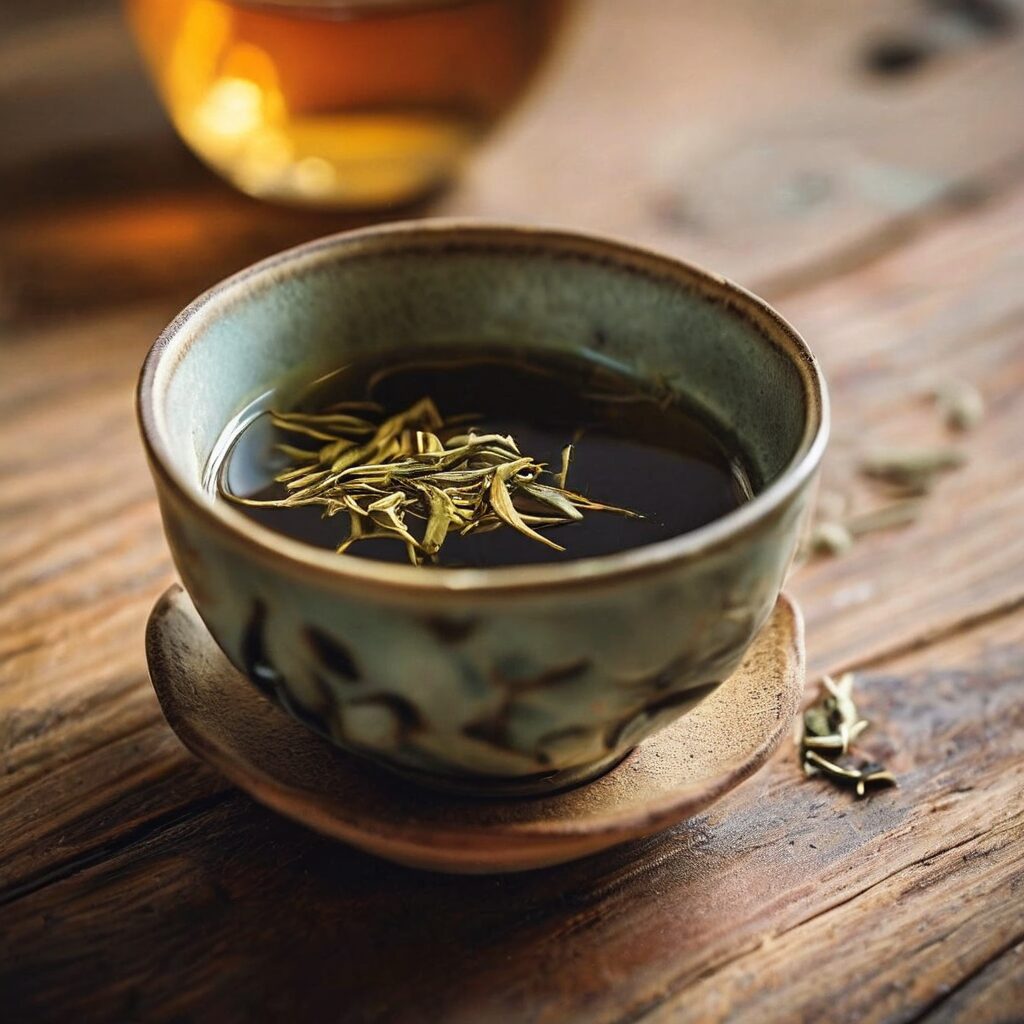
Tea is one of the most beloved beverages worldwide, enjoyed for its soothing properties and rich flavors. But did you know that science can help us perfect our tea-making technique? In this article, we’ll delve into the scientific principles behind making the perfect cup of tea.
The Science of Tea Chemistry
Tea leaves contain a variety of compounds, including catechins, theaflavins, and thearubigins, which contribute to the flavor and health benefits of tea. Understanding these compounds can help us optimize our brewing process.
- Catechins: These are antioxidants found in green tea. They are sensitive to high temperatures, which can cause them to degrade.
- Theaflavins and Thearubigins: These compounds are more prominent in black tea and contribute to its robust flavor. They require higher temperatures for optimal extraction.
Choosing the Right Tea
The type of tea you choose significantly affects the brewing process. Different types of tea—green, black, white, oolong, and herbal—have unique characteristics and require specific brewing conditions.
Green Tea: Best brewed at 160-180°F (70-80°C) for 2-3 minutes.
Black Tea: Requires boiling water at 212°F (100°C) and a longer steeping time of 3-5 minutes.
White Tea: Delicate and should be brewed at 160-185°F (70-85°C) for 4-5 minutes.
Oolong Tea: Needs water at 185-205°F (85-96°C) and a steeping time of 3-5 minutes.
Herbal Tea: Can be brewed with boiling water and requires a longer steeping time of 5-7 minutes.
The Perfect Water Temperature
Water temperature is critical when brewing tea. Too hot, and you risk burning the leaves and creating a bitter flavor; too cold, and you won’t extract enough flavor.
Using a thermometer or a kettle with temperature control can help you achieve the perfect water temperature for your specific type of tea.
The Importance of Water Quality
Water quality is often overlooked but is crucial for making great tea. Tap water with a high mineral content can alter the flavor of your tea. For the best results, use filtered or bottled water.
Steeping Time Matters
The length of time you steep your tea also plays a significant role in the final flavor. Over-steeping can make your tea bitter, while under-steeping can result in a weak and flavorless brew.
Here are some general guidelines for steeping times:
- Green Tea: 2-3 minutes
- Black Tea: 3-5 minutes
- White Tea: 4-5 minutes
- Oolong Tea: 3-5 minutes
- Herbal Tea: 5-7 minutes
Enhancing Your Tea Experience
Once you’ve mastered the basics of brewing, you can enhance your tea experience with various additions. Consider adding a slice of lemon, a touch of honey, or a splash of milk to complement the flavors of your tea.
Experiment with different combinations to find what works best for you.
The Physics of Thermal Dynamics and Vessel Material Selection
While water temperature is a cornerstone of the brewing process, the vessel in which you steep your tea acts as a thermal regulator that can either enhance or sabotage the extraction. The science of thermodynamics tells us that different materials have varying specific heat capacities and thermal conductivities. For instance, a heavy ceramic pot has a high thermal mass; if it is not pre-warmed, it will immediately absorb a significant amount of energy from the water, dropping the temperature by as much as 10-15°F (5-8°C) the moment the water hits the leaves. This is particularly detrimental for black teas that require a sustained high temperature to break down complex thearubigins.
Conversely, borosilicate glass has a lower thermal mass but high transparency to infrared radiation, meaning it loses heat more rapidly to the surrounding environment. For delicate white and green teas, this can be an advantage, as it prevents the leaves from “stewing” in excessive heat. However, for those seeking the perfect cup, the choice of material should align with the tea’s chemical requirements. Yixing clay, a porous stoneware from China, is prized for its ability to retain heat and absorb tea oils over time, creating a seasoned vessel that contributes to the tea’s body. On a molecular level, the unglazed surface provides a catalytic environment for the oxidation of remaining tannins, smoothing out the flavor profile of aged Pu-erhs and heavy Oolongs. When selecting a vessel, consider the surface-area-to-volume ratio as well; a wide, shallow bowl (like a matcha chawan) encourages rapid cooling, while a tall, narrow teapot preserves the thermal energy necessary for deep extraction.
Water Chemistry Beyond Filtration: The Role of pH and Mineral Balance
The existing article notes the importance of water quality, but the specific chemistry of mineral interaction is what truly defines the clarity and brightness of the brew. Tea is essentially a solvent-based extraction where water acts as the solvent. The presence of calcium and magnesium ions (water hardness) significantly interferes with the solubility of tea polyphenols. When water is too hard, these minerals bind with the tea’s poylphenols and bicarbonate to form an iridescent film on the surface known as “tea scum.” This is not just an aesthetic issue; the formation of this film indicates that the essential flavor compounds are being precipitated out of the liquid rather than staying in solution for you to taste.
However, the solution is not necessarily to use pure distilled water. Pure H2O lacks the necessary ions to “pull” certain flavors from the leaf, often resulting in a flat, overly acidic, or thin-bodied cup. The ideal water for tea is slightly soft, with a Total Dissolved Solids (TDS) count of approximately 50-150 parts per million (ppm). Furthermore, the pH level of the water acts as a chemical toggle for the tea’s color and astringency. Acidic water (pH below 7) tends to result in a lighter-colored infusion and can suppress the bitterness of green tea, while alkaline water (pH above 7) darkens the liquor and accelerates the extraction of tannins. If you find your black tea lacks its characteristic “zing,” a water source with a slightly lower bicarbonate level may be the scientific solution to unlocking those brighter, more astringent notes.
The Kinetics of Extraction: Surface Area and Leaf Geometry
The rate at which tea flavors enter the water is governed by Fick’s Laws of Diffusion, which state that the flux of molecules is proportional to the concentration gradient and the surface area available for diffusion. This explains why tea “dust” or fannings found in standard commercial tea bags brew almost instantly compared to whole-leaf teas. With whole leaves, the water must penetrate the cellular structure of the leaf, hydrate the dried tissues, and then transport the large molecules (like catechins) out into the surrounding liquid. This process, often called “the agony of the leaf,” is a beautiful display of rehydration kinetics.
Because whole leaves have a much lower surface-area-to-volume ratio, the extraction is slower and more controlled, allowing the drinker to stop the process before the more bitter, larger-molecule tannins dominate the flavor. This is also why agitation—the act of stirring the tea or moving the tea bag—matters. Agitation breaks the “boundary layer” of saturated liquid immediately surrounding the leaf, replacing it with fresh, unsaturated water and maintaining a high concentration gradient. However, excessive agitation can lead to a mechanical breakdown of the leaves, releasing unwanted chlorophyll and bitter alkaloids into the cup. For the perfect scientific brew, a gentle initial stir to ensure all leaves are submerged is usually sufficient, followed by a period of stillness to allow for a gradient-driven, nuanced extraction.
Advanced Infusion Techniques: The Science of Gongfu Cha
While Western brewing typically uses a small amount of tea and a large amount of water for a long duration, the Gongfu Cha (meaning “making tea with skill”) method uses a high leaf-to-water ratio with very short, multiple infusions. This method is a practical application of fractional extraction. By using, for example, 7 grams of tea in 100ml of water for only 15-30 seconds, you are selectively extracting the most volatile and soluble compounds first—primarily the aromatic esters and light amino acids like L-theanine.
As you perform subsequent infusions (steeps 2, 3, 4, and beyond), the chemical composition of the liquor changes. The second steep often reveals the heart of the tea’s flavor as the leaves fully unfurl and the caffeine and catechins begin to migrate. By the fifth or sixth steep, the more complex sugars and heavier minerals are extracted. This method allows the drinker to experience the “narrative” of the tea leaf, observing how the chemical profile evolves. Scientifically, this prevents the “over-extraction” of the entire leaf’s contents into a single, muddy-flavored cup, instead providing a series of clean, focused snapshots of the tea’s potential. It also allows for the management of caffeine intake, as a significant portion of the caffeine is released in the first two short rinses.
The Impact of Altitude and Atmospheric Pressure on Boiling Points
A frequently overlooked variable in the science of tea is the local atmospheric pressure. The standard advice of “boiling water at 212°F (100°C)” is only true at sea level. As altitude increases, atmospheric pressure decreases, which in turn lowers the boiling point of water. For a tea enthusiast in Denver, Colorado (elevation ~5,280 feet), water boils at approximately 202°F (94°C). In higher mountain regions, such as the Himalayas or the Andes, the boiling point can drop as low as 185°F (85°C).
This physical limitation creates a significant challenge for brewing black teas or dark oolongs, which require high thermal energy to extract the heavier, more robust polyphenols. If the water cannot reach the necessary temperature to facilitate these chemical reactions, the resulting tea will taste “thin” or “under-developed,” despite the water being at a rolling boil. To compensate for this at high altitudes, one must extend the steeping time to allow for a slower, kinetic extraction to make up for the lack of thermal intensity. Conversely, for green teas, high-altitude brewers may find they don’t need to wait as long for their water to cool down, as their “boiling” water is already closer to the ideal 175°F range. Understanding your local boiling point is essential for calibrating your technique to the laws of physics.
Molecular Pairing and the Chemistry of Milk Proteins
The addition of milk to tea is a subject of both cultural tradition and significant chemical interest. When milk is added to black tea, the proteins (specifically caseins) undergo a process of complexation with the tea’s tannins (polyphenols). Tannins are naturally astringent and can cause a “puckering” sensation in the mouth by binding to the proteins in your saliva. When milk is introduced, the tannins bind to the milk proteins instead, effectively neutralizing the bitterness and creating a smoother, creamier mouthfeel. This is a molecular sacrificial reaction where the milk proteins protect the palate from the harshness of the tea’s polyphenols.
The debate over “Milk in First” (Mif) versus “Tea in First” (Tif) also has a scientific basis. If milk is added to hot tea (Tif), the small volume of milk is rapidly heated to near-boiling temperatures, which can cause the milk proteins to denature and lose their ability to bind effectively with tannins, sometimes resulting in a “cooked” or “cardboard” flavor. However, if tea is added to a larger volume of cool milk (Mif), the milk warms up more gradually, preserving the structure of the proteins and resulting in a superior flavor profile. Furthermore, the fat content in the milk acts as a carrier for fat-soluble aromatic compounds in the tea, lingering on the tongue and extending the finish of the beverage. This is why whole milk often provides a more satisfying tea experience than skim or non-dairy alternatives, which lack the lipid structure to trap these volatile flavor molecules.
Post-Brewing Molecular Changes: The Role of Cooling and Oxidation
The perfect cup of tea is not a static entity; it is a living chemical solution that changes as it cools. As the temperature of the tea liquor drops, the solubility of certain compounds decreases. This is most evident in the phenomenon known as “creaming,” where high-quality black teas become cloudy as they cool. This cloudiness is actually a precipitate of caffeine and theaflavins. While some see it as a flaw, it is actually a scientific indicator of a high concentration of beneficial compounds.
FAQ
What is the best type of water to use for tea?
Filtered or bottled water is recommended for the best flavor. Tap water with high mineral content can affect the taste of your tea.
How long should I steep my tea?
The steeping time varies depending on the type of tea. Refer to the guidelines in this article for specific steeping times.
Can I re-use tea leaves?
Yes, you can re-use tea leaves, especially for high-quality teas like oolong and some green teas. The flavor may be lighter on the second brew.
Should I cover my tea while it steeps?
Covering your tea while it steeps can help retain heat and ensure even extraction of flavors.
Is it okay to add milk to my tea?
Adding milk to tea is a matter of personal preference. It is commonly added to black tea, but less so to green or white teas.
Related posts:
 How to Propagate Succulents
 DIY Extraction Facial Tips
 Polyphenol Power: The Antioxidant-Rich Foods Your Body Is Craving
 New Tool Detects Melanoma Through Temperature
 Stinging Nettles as Tea and Hair Treatment
 The Best Cold Brew Coffee Makers for a Refreshing Drink
 Creamy Homemade Macadamia Milk in Under 10 Minutes
 All-Black Birth Team Experience