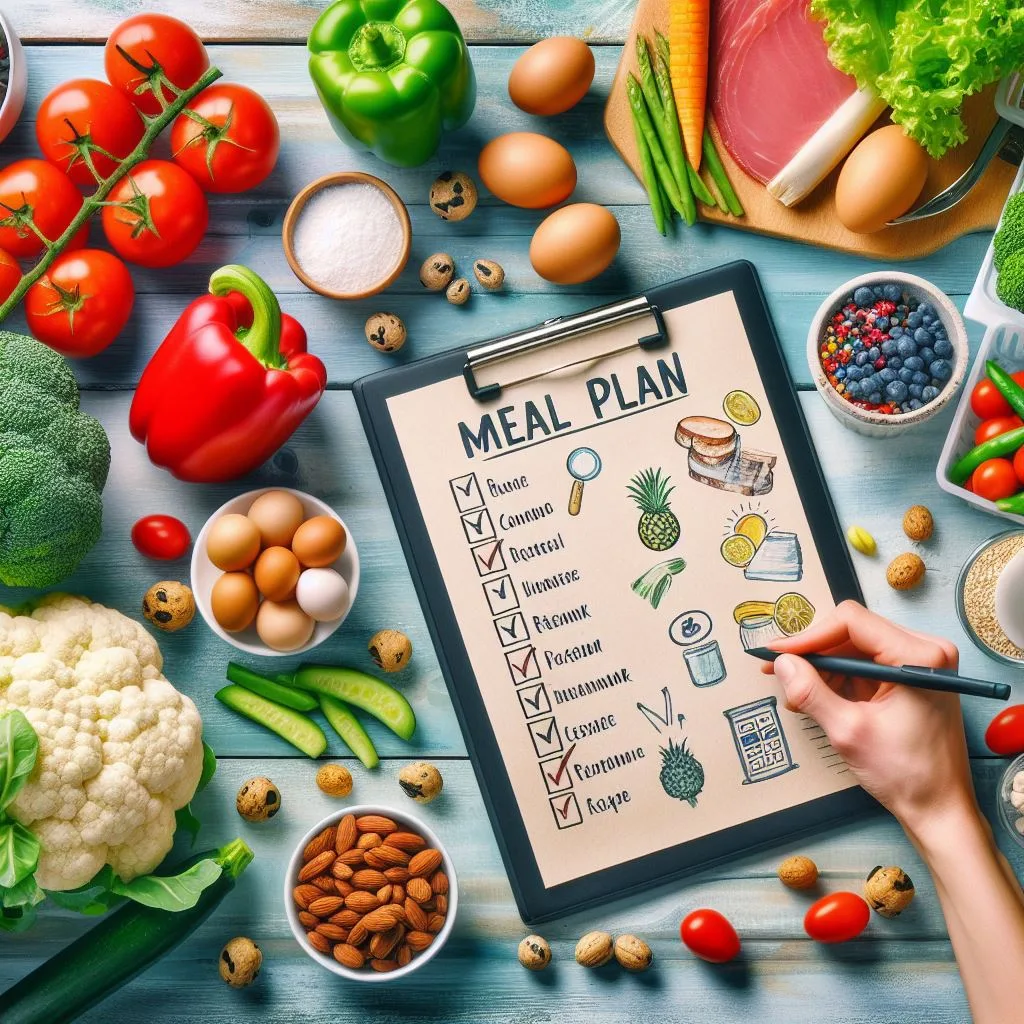
The Benefits of Meal Planning
Meal planning can provide many helpful benefits. It saves time and reduces stress around what to cook each day. Planning out meals in advance also leads to less food waste since you only buy what you need. And it helps keep grocery costs low by allowing you to take advantage of sales and bulk pricing.
Key takeaways
- Inventory your pantry and fridge before shopping to avoid buying items you already have in stock.
- Focus on affordable proteins like beans, eggs, and lentils to keep your grocery bill low.
- Organize your shopping list by grocery store aisle to improve efficiency and avoid missing necessary items.
- Plan meals around weekly store sales and choose store-brand products to maximize your budget.
- Start small by planning only dinners before expanding to breakfast, lunch, and snacks as the habit develops.
How to Get Started
If you’ve never meal planned before, it can feel overwhelming to start. But just follow these steps to get into the habit.
- Take inventory of what’s already in your pantry and fridge. This will help inform what you need to add to your grocery list.
- Browse cookbooks, websites and social media for recipe inspiration and ideas.
- Decide how many meals to plan for. Many people start with dinners only.
- Use a meal planning template to map out the week ahead.
- Make your grocery list based on the meal plan.
Sticking to Your Budget
When meal planning with a budget in mind, be sure to:
- Plan meals around what’s on sale at the grocery store that week.
- Incorporate less expensive proteins like beans, eggs and ground meat.
- Buy store brand items when possible.
- Purchase ingredients for leftovers that can be repurposed into future meals.
Organizing Your Grocery List
An organized grocery list will make shopping efficient and help you stick to your budget. Try these tips:
- Group items by the grocery store section/aisle.
- Mark staple items you always want to have in stock.
- Indicate quantities needed.
- Sort produce by type for faster picking.
- Distinguish between needs and wants.
Mastering the Inventory Audit and FIFO Systems
While basic inventory checks are a starting point, maintaining a high-functioning kitchen requires a deeper dive into inventory management systems. One of the most effective methods borrowed from the professional culinary world is the “First-In, First-Out” (FIFO) system. This involves organizing your pantry, fridge, and freezer so that the oldest items are always at the front and used first. When you return from a grocery trip with new cans of beans or boxes of pasta, resist the urge to simply shove them in the front of the shelf. Instead, move the older stock forward and place the new items behind them. This simple habit prevents the common budget-killer of finding an expired, half-used jar of sauce hidden in the dark recesses of your cabinet six months too late.
To take this further, consider implementing a “Zone Management” strategy. Divide your pantry into specific zones: baking, grains, canned proteins, and snacks. Within these zones, use clear bins or open-top baskets to group like items. This visual organization allows you to see at a glance when you are running low on a staple, preventing the “double-buy” error where you purchase a third bottle of soy sauce because you couldn’t find the first two. For freezer management, which is often the graveyard of forgotten meals, keep a dry-erase board on the door. List every item inside with the date it was frozen. As you use an item, wipe it off. This eliminates the need to dig through sub-zero temperatures to figure out what’s for dinner, saving both energy and money.
An often-overlooked aspect of inventory is the “Hidden Stock” audit. This includes spices, oils, and condiments. These items have high unit costs but long shelf lives. Before planning your meals, check if you have the specific spices required for a new recipe. Substituting dried oregano for marjoram or using a dash of lemon juice instead of expensive rice vinegar can save you five dollars per meal without significantly altering the flavor profile. By knowing exactly what is in your “flavor arsenal,” you can choose recipes that utilize what you have rather than buying a $7 jar of smoked paprika for a single teaspoon use.
The Math of Unit Pricing and the “Price Book” Strategy
To truly master a budget, you must look past the large-font price tag on the shelf and focus on the unit price. Most grocery stores include this in small print on the corner of the shelf tag, usually calculated by ounce, pound, or count. This is the only way to accurately compare the value of a name-brand item on sale versus a store-brand item at regular price. For example, a large “family size” box of cereal might seem like a better deal, but often the mid-sized box has a lower price per ounce when a manufacturer coupon is applied. Training your eyes to find the unit price is the fastest way to stop overspending on perceived bulk savings.
For those looking to optimize their budget further, creating a “Price Book” is a transformative tool. A price book is a personal record of the lowest prices you’ve seen for your most-purchased items at different stores. Over a period of six to eight weeks, track the price of staples like milk, eggs, chicken breast, and coffee. You will begin to notice a “Sales Cycle.” Most grocery stores rotate their deep discounts every 6 to 12 weeks. If you know that chicken breast hits its lowest price of $1.99/lb every six weeks, you can buy enough to last those six weeks and freeze it, effectively never paying the $4.99/lb “regular” price again.
Edge cases in unit pricing often involve “loss leaders.” These are items stores sell at a loss to get you in the door, such as $0.99/lb turkeys during the holidays or $5 rotisserie chickens. While these are incredible values, the store counts on you making up the difference by purchasing high-margin items like pre-cut fruit or branded snacks nearby. Stick to your list and use the loss leaders as the anchor for your meal plan, but avoid the surrounding “trap” items that negate the savings you gained on the meat.
Strategic Meal Repurposing: The Component Cooking Method
Moving beyond simple leftovers, “Component Cooking” is a strategy where you prepare large batches of individual ingredients rather than finished recipes. This provides maximum flexibility and prevents the “leftover fatigue” that often leads to expensive takeout orders. Instead of cooking a specific casserole on Monday, you might roast three pounds of seasoned chicken, boil a large pot of quinoa, and roast two trays of seasonal vegetables. On Monday, these become a Mediterranean bowl; on Tuesday, they are tossed with pesto and pasta; and on Wednesday, the chicken is shredded into tacos with a quick cabbage slaw.
This method is particularly effective for budget planning because it allows you to buy in bulk. Purchasing a five-pound bag of potatoes is significantly cheaper than buying individual baking potatoes. With component cooking, you can boil some for mash, cube others for a breakfast hash, and slice the rest for oven fries. Each meal feels distinct, yet they all draw from the same low-cost bulk purchase. It also reduces food waste because you aren’t stuck with a half-pan of a specific recipe that no one wants to eat for the third night in a row.
Consider the “Mother Ingredient” approach for your weekly plan. Choose one versatile, inexpensive protein or starch as your anchor. If ground beef is on sale, it becomes the “Mother Ingredient.” Night one: Chili. Night two: The chili is thickened and served over baked potatoes. Night three: The remaining chili is used as a base for sloppy joes or taco filling. By transforming the texture and flavor profile through small additions—like different spices or a side of cornbread—you stretch a single bulk purchase across multiple days without the monotony of identical meals.
Navigating the Store’s Psychological Architecture
Grocery stores are meticulously designed to encourage impulse spending. The most essential, low-margin items—like milk, eggs, and meat—are almost always located at the very back of the store, forcing you to walk past thousands of other products to reach them. To combat this, adopt the “Perimeter-First” shopping rule. The outer edges of the store typically house the whole foods: produce, meat, and dairy. The inner aisles are where the processed, high-margin, and branded goods reside. By filling 80% of your cart from the perimeter, you naturally gravitate toward healthier, more cost-effective whole ingredients.
Be wary of “Eye-Level Marketing.” Manufacturers pay “slotting fees” to grocery stores to ensure their products are placed at eye level, where you are most likely to grab them. These are rarely the best deals. Always look at the bottom and top shelves for the store-brand equivalents or bulk packaging, which are tucked away because they offer lower profit margins for the retailer. Similarly, end-caps (the displays at the end of aisles) are often mistaken for sales sections. In reality, these are often promotional spots for new products at full price. Always cross-reference an end-cap “deal” with the regular aisle price before adding it to your cart.
Another psychological hurdle is the “Convenience Tax.” This is the extra cost added to items that have been pre-washed, pre-cut, or pre-portioned. A head of lettuce might cost $1.50, while a bag of pre-washed salad mix costs $4.00 for half the volume. While time is a factor, if the goal is budget optimization, doing the prep work yourself is one of the highest-return activities you can perform. If you find yourself tempted by convenience, remind yourself that you are essentially paying someone else $20 or $30 an hour to chop your onions and wash your greens.
Digital Coupon Stacking and Rebate Optimization
In the modern grocery landscape, paper coupons have largely been replaced by digital loyalty programs and rebate apps. To maximize savings, you should engage in “Coupon Stacking.” This involves identifying a store sale, applying a digital store coupon through the store’s app, and then submitting your receipt to a third-party rebate app like Ibotta or Fetch Rewards. When these three layers align, you can often get products for pennies or even for a “profit” (where the rebates exceed the cost of the item).
To do this efficiently without spending hours on your phone, integrate the digital search into your list-making process. Once your list is drafted based on your meal plan, open your store’s app and search for each item. Clip the digital coupons that match. If you see a high-value coupon for a brand you don’t usually buy, check the unit price; sometimes the coupon makes the name-brand cheaper than the store-brand. However, be disciplined: never clip a coupon for something you weren’t already planning to buy, as that is a net loss for your budget.
Another digital strategy is the “Pickup Order” tactic. Many stores offer free grocery pickup for orders over a certain amount. This is a powerful tool for budget-conscious shoppers because it completely removes the temptation of impulse buys. You can see your running total in real-time as you add items to your virtual cart. If you see your total hitting $110 and your budget is $100, it is much easier to click “remove” on a bag of cookies in a digital cart than it is to awkwardly hand them back to a cashier in a crowded line. This “friction” between you and the physical store can save the average family 10-15% on their total bill simply by eliminating unplanned purchases.
Managing High-Cost Dietary Needs on a Budget
Planning for specialized diets—such as gluten-free, keto, or vegan—presents unique budget challenges, as specialty replacement products often carry a “health tax.” To keep costs low, avoid the “Specialty Aisle” whenever possible. Instead of buying expensive gluten-free crackers or keto-branded snack bars, focus on whole foods that are naturally compliant with your diet. Potatoes, rice, beans, and corn are naturally gluten-free and significantly cheaper than processed GF bread. For those on high-protein or keto diets, eggs and canned sardines offer high-quality fats and proteins at a fraction of the cost of steak or branded protein shakes.
If you must use specialty ingredients, such as almond flour or xantham gum, buy them in the bulk bins of natural food stores. You can buy exactly the amount you need for a specific recipe, preventing you from spending $12 on a large bag of a specialty flour that might go rancid before you use it again. Additionally, consider making your own staples. Oat milk can be made for pennies by blending oats and water, whereas a carton at the store can cost $5. Making your own salad dressings with basic oil and vinegar avoids the high cost and inflammatory oils found in many budget-brand bottled dressings.
When planning for a household with mixed dietary needs, use a “Deconstructed Meal” approach. Rather than making two separate dinners, prepare a base that everyone can eat, then offer “add-ons” that cater to specific requirements. For example, a large pot of taco-seasoned lentils and beef can be served as a salad for the keto eater, in corn tortillas for the gluten-free eater, and with extra beans for the vegetarian. This streamlines the shopping list and ensures that expensive specialty items are used sparingly as toppers rather than the bulk of the meal.
Building a Zero-Waste Kitchen and Emergency Reserves
The final pillar of budget meal planning is ensuring that every cent of the food you buy actually ends up in your stomach. Food waste is effectively throwing cash into the trash. To prevent this, implement a “Use It Up” night at the end of your weekly cycle—typically the night before your next grocery trip. This is the time for “Kitchen Sink” meals: frittatas, fried rice, or soups that can absorb whatever bits of vegetables, meats, and cheeses are left in the crisper drawer. A slightly wilted bell pepper is perfect for a stir-fry, and the ends of a loaf of bread can be toasted into croutons.
Furthermore, learn the art of “Root-to-Stem” cooking. Broccoli stalks, often tossed away, can be peeled and sliced into coins that are as sweet and crunchy as water chestnuts. Onion skins, carrot peels, and celery ends should be kept in a gallon bag in the freezer; once the bag is full, boil them with water to create a rich vegetable stock for free. This eliminates the need to buy boxed broth, which is mostly water and salt sold at a high markup. Similarly, leftover herbs can be blended with oil and frozen in ice cube trays to preserve their flavor for future sautéing.
Finally, use your budget savings to slowly build an “Emergency Pantry.” This isn’t for a global disaster, but for a personal financial one, such as an unexpected car repair or a gap between paychecks. By picking up one extra bag of rice or one extra can of tuna each week when they are at their lowest price point, you create a buffer. A well-stocked emergency pantry allows you to go through a “Zero-Dollar Week,” where you challenge yourself to buy absolutely nothing and live entirely off your reserves. This can provide a significant boost to your savings goals and proves the efficacy of your long-term planning and organization efforts.
FAQ
What are the main benefits of meal planning?
The main benefits are saving time, reducing stress about what to cook, preventing food waste, and saving money on the grocery budget.
How many meals should a beginner plan for?
Most people recommend starting small with just planning out dinners. As you get into the habit, you can expand to breakfast, lunch and snacks.
What are some good low-budget proteins?
Great inexpensive proteins include beans, lentils, eggs, canned fish like tuna, and less expensive cuts of meat like chicken thighs and ground turkey.
Should my grocery list be organized by food type or store aisle?
Organizing by grocery store aisle makes shopping much more efficient since you’re only traversing each section once. It also makes it less likely you’ll forget items.
Should I include staple items I always want to have on hand?
Definitely. Keeping a running list of staples you want to replenish like olive oil, rice, spices, etc. helps ensure you don’t run out between shopping trips.
Related posts:
 Essential Healthy Grocery List
 NYC’s Healthiest Meal Delivery Services That Actually Taste Amazing
 Tips for Planning a Budget Friendly Vacation
 The Meal Prep Master Class That Will Save You Hundreds Every Month
 Victoria’s Secret Activewear Deals
 5 Healthy Lunch Recipes Under $3 for Your Work Week
 Bubble Vegan Snacks Sale Guide
 Samsung Tech Deals