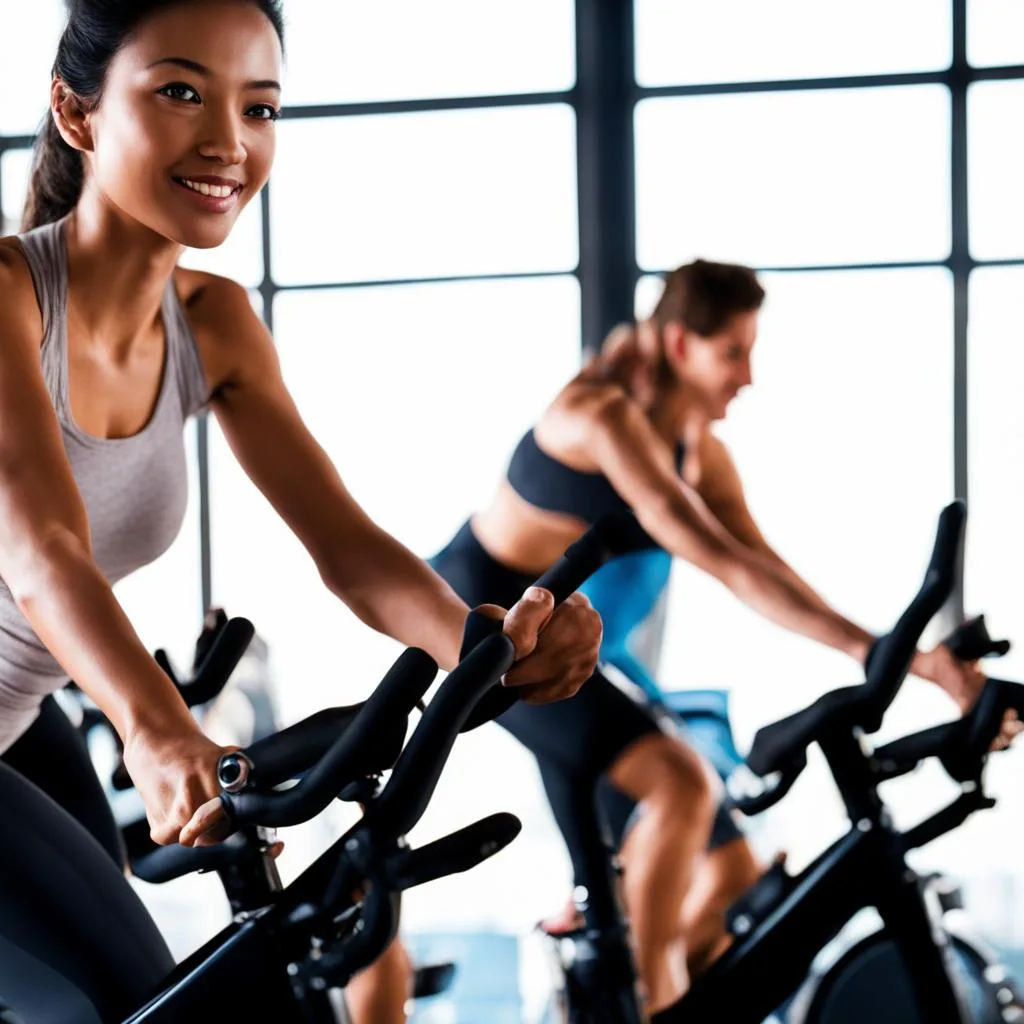
Indoor cycling classes like SoulCycle and Peloton have become hugely popular workouts. The high energy instructors and music create an exciting atmosphere, but the unique lingo used in these spin classes can be intimidating for newcomers.
Key takeaways
- Target a cadence between 60-80 RPM as a beginner and increase resistance by turning the adjustment knob clockwise.
- Engage your core during climbing intervals to protect your lower back while standing out of the saddle.
- Wear moisture-wicking clothing and cycling shorts to prevent chafing during high-intensity 45-minute sessions.
- Start with one to two classes per week to allow for proper muscle recovery as your conditioning improves.
- Adjust your seat height correctly to ensure the workout remains low-impact and protects your knee joints.
This beginner’s guide breaks down common indoor cycling terms, so you can walk into your first cycling class with confidence.
The indoor bike
Indoor cycles used in spinning classes are stationary bikes specially designed for studio cycling. The bikes have weighted flywheels for added resistance and adjustable seats and handlebars to fit your body.
Cadence
Your cadence refers to the revolutions per minute (RPM) that you are pedaling. Instructors will call out target cadences to hit during class. For beginners, a reasonable cadence is between 60-80 RPM.
Resistance
Resistance controls how difficult it is to pedal the indoor cycle. To increase resistance, turn the resistance knob clockwise. This adds more tension to the flywheel, making it harder to pedal. Beginners should keep resistance lower as you build cycling strength.
Climb
A climbing interval simulates cycling uphill by increasing your resistance and standing up out of the saddle. Be sure to engage your core during climbs to protect your lower back.
Jog
A jog cues you to stay seated with light resistance at a quicker cadence between 100-120 RPM. Jogs increase your heart rate and warm up your legs.
Sprint
Sprints are intense, short bursts of max effort pedaling around 120 RPM or faster. Sprints are done at high resistance and recruit fast-twitch muscle fibers.
Decoding Choreography: Tap-Backs and Push-ups
Beyond the mechanical metrics of resistance and RPM, modern spin studios incorporate rhythmic choreography that turns a workout into a choreographed dance on a bike. A common move you will hear is the “tap-back.” This involves shifting your hips slightly behind the saddle while maintaining a steady cadence, effectively engaging your glutes and hamstrings. It is not a full squat, but rather a subtle weight shift that requires control. Similarly, “handlebars push-ups” involve lowering your upper body toward the handlebars while keeping your core rigid and your legs spinning. The key here is not to let your hips bounce or your knees cave inward. If you find yourself losing your rhythm, prioritize your pedal stroke over the choreography; it is better to have perfect form and skip the arm movements than to compromise your stability.
Understanding Zones and Power Output
Advanced studios often use power-based training, which introduces terms like “FTP” (Functional Threshold Power) and “Zones.” Your FTP represents the highest average power you can maintain for an hour. Studios use this to categorize effort into zones, usually ranging from Zone 1 (easy recovery) to Zone 5 (anaerobic maximum). When an instructor says, “get into your Zone 3,” they are asking for a sustainable, challenging effort—typically a pace where you can speak in short sentences but not hold a full conversation. Monitoring your power output in watts provides a more accurate measurement of your progress than cadence alone, as it accounts for both speed and the intensity of the resistance applied.
The Art of the Iso-Hold
An “Iso-Hold” or “Isometric Hold” is a test of pure endurance and mental fortitude. During these intervals, the instructor will ask you to stand out of the saddle, increase the resistance to a heavy, slow grind, and hold a perfectly still upper body. The goal is to eliminate all extraneous movement, including rocking side-to-side. By keeping your torso quiet and your core braced, you force your legs to handle the entire load. This is often where beginners struggle most; if you feel your body swaying like a pendulum, you are likely compensating for a lack of core engagement or too much weight on the handlebars. Lighten your grip—you should be able to wiggle your fingers—to ensure your legs, not your arms, are doing the work.
Recovery and Active Rest Intervals
Not every minute of a 45-minute class is meant to be at max effort. Understanding “Active Recovery” is crucial for longevity in the sport. During these segments, instructors will cue you to “spin it out” or “take it to a recovery pace.” This is your opportunity to lower your resistance significantly, slow your breathing, and flush lactic acid from your muscles. Ignoring recovery intervals by keeping the resistance too high can lead to premature burnout. Treat these moments as a strategic pause: hydrate, reset your posture, and prepare your nervous system for the next high-intensity push. If you find your heart rate remains elevated into the red zone during these periods, you are likely pushing too hard too early.
The Weight Room on the Bike
Many boutique cycling studios incorporate a “weight track,” where you use small hand weights while sitting on the bike. This is designed to create a total-body conditioning experience. Common exercises include overhead presses, lateral raises, and tricep extensions. The trick is to keep your legs moving at a consistent, moderate pace while performing the movements. If your pedaling stops every time you perform a bicep curl, you are missing the point of the endurance challenge. Focus on maintaining a steady, slow cadence (around 60-70 RPM) so you can maintain balance and focus on your form. Avoid heavy weights; the goal is muscular endurance and blood flow, not hypertrophy.
Managing the “Bounce” and Saddle Stability
One of the most common technical errors for newcomers is the dreaded “bounce.” This occurs when your resistance is too light while standing, causing your hips to oscillate up and down with every pedal stroke. This not only puts significant stress on your knee joints but also makes the movement inefficient and exhausting. To fix this, increase your resistance until you feel a solid, stable platform under your feet. You should feel like you are pushing through thick mud or climbing a steep hill. If you still feel unstable, check your bike setup; if your seat is too high or too far back, you will naturally lose your center of gravity when you stand. Remember: resistance is your friend when out of the saddle.
The Mental Game: Riding to the Beat vs. Riding to the Metrics
You will often hear instructors talk about “finding the beat” or “riding to the music.” This is the heart of the rhythmic cycling experience. Some riders prefer to sync every pedal stroke with the bassline, which creates a trance-like, motivating effect. Others prefer to ignore the beat and focus strictly on their digital performance metrics (watts, RPM, and heart rate). Neither approach is wrong, but understanding the difference helps you choose the right class. If you are a data-driven athlete, look for “Power” or “Performance” classes. If you are there for the energy and the experience, choose a “Rhythm” or “Beats-based” class. Knowing which style you prefer will drastically improve your satisfaction with the workout.
FAQs
What clothes should I wear for indoor cycling?
Wear moisture-wicking clothes that allow your skin to breathe. Cycling shorts help prevent chafing. Clip-in cycling shoes increase pedaling efficiency but are not required for beginners.
Will I burn calories in a spin class?
Yes! A 45 minute cycling class can burn around 400-600 calories. The more resistance and faster your cadence, the more calories burned.
What muscles does indoor cycling work?
Cycling primarily targets your glutes, quads, hamstrings and calf muscles. Your core and upper body are also engaged during climbs and push-ups off the handlebars.
Is indoor cycling hard on your knees?
Cycling is considered a low-impact exercise if done properly. Adjust your seat height correctly and don’t force heavy resistance that causes pain. This protects knee joints from injury.
How often should a beginner do spin class?
For beginners, aim for 1-2 spin classes per week. Allow your body to rest and recover between sessions as your fitness builds. Increase frequency gradually as your conditioning improves.
Related posts:
 The Brutal Assault Bike Workout That Torches Calories in Minutes
 MYX Bike Review: A Comprehensive Look
 IMAX Indoor Cycling Is the Immersive Fitness Trend Taking Over Gyms
 The At-Home Spinning Revolution Is Changing Everything
 Inside Lucy Hale’s Soul-Crushing SoulCycle Sessions That Keep Her Camera-Ready
 7 things you’re definitely doing wrong in spin class, according to the pros
 Cyclist’s Guide to Preventing Saddle Sores
 Avoiding Crotch Pain While Biking: Tips for a More Comfortable Ride