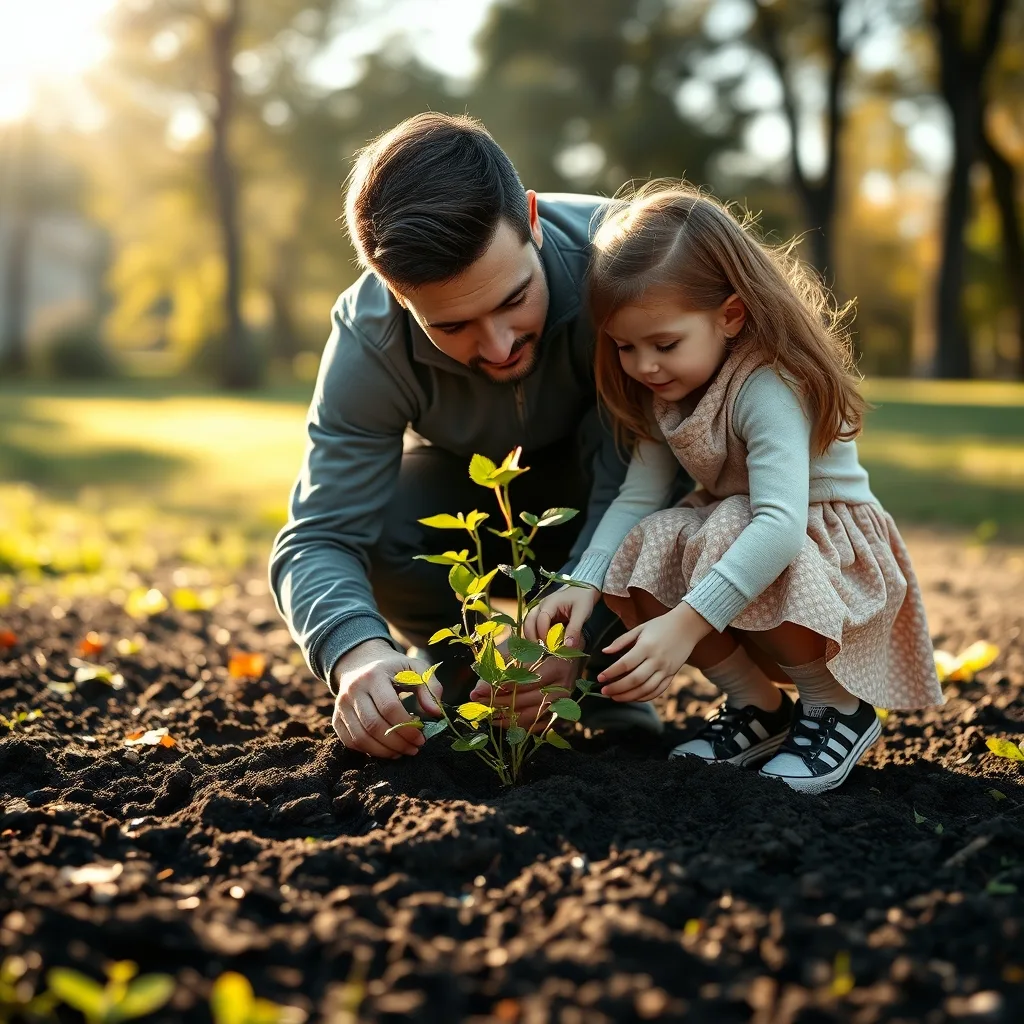
Teaching children about environmental care is not merely about sharing facts regarding climate change or pollution; it is about fostering a lifelong relationship of respect, empathy, and stewardship toward the natural world. When children develop an emotional connection to the Earth, sustainable habits become intuitive rather than chores. The goal is to move from a place of “eco-anxiety”—the fear of environmental collapse—to a place of “eco-empowerment,” where children feel they have the tools and agency to make a positive difference.
Key takeaways
- Foster a love for nature through sensory exploration, nature journaling, and unstructured outdoor time.
- Teach the Four Rs—Refuse, Reduce, Reuse, and Recycle—using waste audits and upcycling projects.
- Use gardening to explain food sources, the importance of pollinators, and resource efficiency.
- Promote ethical consumption by thrifting and discussing the life cycle of products before buying.
- Reduce the family carbon footprint through Meatless Mondays, active transport, and digital decluttering.
The most effective approach is an integrated one, where environmental consciousness is woven into the fabric of daily life. Rather than treating “going green” as a separate subject or a weekend project, it should be presented as a natural way of interacting with the world. By combining hands-on experiences, mindful consumption, and a spirit of curiosity, parents and educators can help children grow into adults who prioritize the health of the planet alongside their own well-being.
Starting with Curiosity: The Power of Nature Exploration
Before a child can be expected to protect nature, they must first love it. Environmental care begins with exploration. In an era of digital screens and urban living, many children experience what researchers call “nature deficit disorder,” a disconnect from the outdoors that can lead to a lack of interest in conservation. To combat this, the first step is to facilitate unstructured time in natural settings.
Encourage your children to engage their senses. Instead of simply walking through a park, challenge them to find five different shades of green, listen for three distinct bird calls, or feel the difference between a smooth river stone and a piece of rough bark. These sensory experiences build a visceral connection to the environment. You might introduce a “Nature Journal,” where children can sketch the insects they find or press fallen leaves. This practice teaches them to observe closely and appreciate the intricate details of biodiversity.
Practical activities for exploration include:
- Backyard Bio-Blitzes: Use a magnifying glass to explore a single square foot of soil or grass, documenting every living thing found within that space.
- Seasonal Tracking: Create a calendar to track when the first buds appear in spring or when the leaves change color in autumn, helping them understand the rhythms of the Earth.
- Night Sky Observation: Teaching children about the cosmos helps them realize the Earth’s place in a larger system, fostering a sense of awe and fragility.
Making Waste Management a Family Game
Waste management is often the most visible way children can participate in environmental care. However, simply telling a child to “put it in the recycling bin” is rarely enough to create a deep understanding of why it matters. To make a lasting impact, transform waste reduction from a rule into a family-wide mission.
Start by introducing the “Four Rs”: Refuse, Reduce, Reuse, and Recycle. Many people focus solely on recycling, but teaching children to refuse unnecessary items (like plastic straws or promotional toys) and reduce their overall consumption is far more impactful. Explain the journey of a piece of plastic—from the factory to the store, then to the home, and potentially to the ocean—to provide context for why reducing waste is critical.
To make this actionable, try these strategies:
- The Waste Audit: Once a month, empty the trash bin onto a tarp (wearing gloves) and sort through it together. Ask, “Which of these things could have been composted?” or “Could we have avoided buying this packaging?” This visual representation of waste is a powerful teacher.
- The Upcycling Challenge: Instead of throwing away cardboard boxes or plastic bottles, designate a “Creation Station” where these materials become art projects, bird feeders, or storage organizers.
- Composting Magic: Set up a small compost bin. Show children how a banana peel or an apple core transforms back into rich, dark soil. This demonstrates the beautiful cycle of decomposition and regeneration.
The Magic of Growing Food: Gardening for Kids
Gardening is perhaps the most comprehensive tool for teaching environmental care. It combines biology, patience, and responsibility while directly connecting the child to their food source. When a child grows a carrot from a seed, they are far more likely to eat their vegetables and understand the resources—water, sunlight, and healthy soil—required to sustain life.
You don’t need a vast backyard to start. A few pots on a windowsill or a community garden plot are sufficient. Let children have their own “special patch” where they are the primary decision-makers. Allow them to choose what to plant, whether it’s giant sunflowers or cherry tomatoes. This ownership fosters a sense of stewardship.
Key gardening lessons to integrate:
- The Role of Pollinators: Plant native flowers to attract bees and butterflies. Explain that without these tiny workers, many of our favorite foods wouldn’t exist. This teaches the concept of interdependence.
- Water Wisdom: Teach them to water the base of the plant rather than the leaves and to do so in the early morning or evening to prevent evaporation. This introduces the concept of resource efficiency.
- Patience and Resilience: Not every seed will sprout, and some plants will be eaten by pests. Use these moments to discuss the challenges of nature and the importance of trying again.
Conserving Resources in the Home
Teaching children to conserve energy and water helps them understand that resources are finite. The key is to avoid framing conservation as a sacrifice or a way to save money on bills, but rather as a way to “be kind to the Earth.” When children see conservation as an act of compassion, they are more likely to maintain the habit.
Create simple, visual reminders around the house. A small sticker of a water drop near the faucet or a “lights off” sign by the door can prompt a child to think before they act. Implement a “Resource Detective” role, where the child is responsible for checking that taps are fully closed and unused electronics are unplugged.
Practical habits to cultivate:
- The Shower Timer: Use a sand timer or a fun song to encourage shorter showers. Challenge them to finish before the song ends, making water conservation a game.
- Energy Awareness: Discuss where electricity comes from. Explain the difference between fossil fuels and renewable energy like wind or solar. If you have a smart meter, show them how the usage spikes when certain appliances are turned on.
- Mindful Heating and Cooling: Encourage the use of sweaters in the winter and opening windows for a breeze in the summer before reaching for the thermostat.
Ethical Consumption and Mindful Shopping
In a consumer-driven society, teaching children to be mindful of what they buy is a radical and necessary act of environmental care. Children are often bombarded with advertisements for the latest toys or trends, which fuels a culture of disposability. Shifting the focus from “having more” to “valuing what we have” is essential.
Introduce the concept of the “Life Cycle of a Product.” When buying a new toy, ask together: “What is this made of?” “Where was it made?” and “Where will it go when we are done with it?” This encourages critical thinking and prevents mindless consumption.
Actionable guidance for ethical shopping:
- Thrifting Adventures: Take children to second-hand stores or clothing swaps. Explain that buying pre-loved items saves them from landfills and reduces the need for new factories to produce more goods.
- Quality Over Quantity: When a child wants a new item, discuss the benefit of buying one high-quality, durable product that lasts for years rather than several cheap versions that break quickly.
- Reading Labels: Teach them to look for certifications like Fair Trade or Organic. Explain that these labels mean the product was made in a way that is fairer to people and kinder to the planet.
Teaching Compassion for Wildlife and Biodiversity
Environmental care extends beyond human needs to the protection of all living creatures. Teaching children to respect wildlife—even the “creepy crawlies”—builds a foundation of empathy. When a child realizes that a spider is an important predator that keeps pests in check, they move from fear to respect.
Encourage a “look but don’t touch” policy with wild animals to teach boundaries and respect for nature’s autonomy. Create habitats that welcome wildlife into your living space, which allows children to observe animals in their natural behavior without disturbing them.
Ways to promote biodiversity awareness:
- Build an Insect Hotel: Use hollow reeds, pinecones, and drilled wood to create a shelter for solitary bees and other beneficial insects.
- Bird Feeding Stations: Set up a bird feeder and a birdbath. Use a field guide to identify the different species that visit, teaching them about migration and local avian populations.
- The “Wild Corner”: If you have a lawn, leave a small area unmowed. Let the wildflowers grow and observe how this “messy” patch attracts more life than the manicured grass.
Integrating Eco-Education into Daily Learning
Formal education is important, but the most impactful learning happens through integration. You can weave environmental themes into reading, art, and science experiments, making the concept of “care” a multidisciplinary pursuit. The goal is to provide a variety of perspectives so the child can find the aspect of environmentalism that resonates most with them.
Literature is a powerful tool. Read stories that feature protagonists who protect nature or books that explain complex ecological concepts through narrative. Following a story about a sea turtle struggling with plastic pollution is often more impactful for a child than a lecture on ocean acidification.
Creative activities to integrate:
- Eco-Art: Use “found objects” from nature—fallen twigs, pebbles, dried petals—to create art. This teaches them to find beauty in the natural world without needing to buy plastic craft supplies.
- Science Experiments: Create a miniature “biosphere” in a jar to show how plants and soil interact to create a self-sustaining environment.
- Documentary Nights: Watch nature documentaries together. Follow up with a discussion about the beauty of the landscapes shown and what we can do to ensure they remain that way.
The Environmental Impact of Food Choices
While gardening introduces children to the origin of food, discussing the broader impact of dietary choices helps them understand the global food system. Food production is one of the most significant drivers of environmental change, and teaching children to think critically about what goes on their plate empowers them to make sustainable choices every day.
Start by introducing the concept of “Food Miles”—the distance food travels from where it is grown to where it is eaten. You can turn this into a scavenger hunt in the kitchen; take a few items from the pantry and look at the labels to see where they originated. Compare a local apple to a tropical fruit flown in from thousands of miles away. This visual exercise makes the abstract concept of carbon emissions tangible, as children realize that some foods require airplanes or ships to reach their table.
To deepen this understanding, integrate these practical habits:
- Meatless Mondays: Introduce the idea that producing plant-based proteins generally requires less land and water than animal proteins. Frame this not as a restriction, but as an “Earth-Friendly Feast” where the family experiments with lentils, chickpeas, or tofu.
- Seasonal Eating Calendars: Create a colorful chart showing which fruits and vegetables are in season during each month in your region. Explain that eating seasonally reduces the need for energy-intensive greenhouses and long-distance transport.
- The “Ugly Fruit” Campaign: Teach children about food waste by intentionally buying the bruised apple or the curved carrot. Explain that many perfectly edible vegetables are thrown away by stores simply because they don’t look “perfect,” contributing to landfill waste and wasted resources.
Sustainable Travel and Low-Carbon Mobility
Transportation is a primary source of greenhouse gas emissions, yet for many children, the car is the default mode of travel. Shifting the perspective from the car as a convenience to the car as a resource-heavy tool helps children appreciate slower, more sustainable ways of moving through their world.
Begin by mapping out “Green Routes” for common trips, such as going to school, the library, or a friend’s house. Use a map to identify paths that avoid main roads and instead follow parks, bike lanes, or walking trails. This not only reduces the carbon footprint but also increases the child’s exposure to nature, reinforcing the connection established during nature exploration.
Consider these strategies to promote sustainable mobility:
- The Transit Adventure: If you live in an area with public transportation, make the bus or train ride an event. Discuss how one bus can replace twenty cars on the road, reducing traffic and pollution. This introduces the concept of collective efficiency.
- Active Transport Challenges: Implement a family “Pedal Power” chart. For every trip taken by bike or on foot instead of by car, add a sticker. Once the chart is full, reward the effort with a nature-based outing, linking the habit of sustainable travel to the reward of enjoying the environment.
- Discussing “Slow Travel”: When planning vacations, talk about the trade-offs between flying and taking a train or driving a shorter distance. Explain the concept of a “staycation,” where the family explores local hidden gems, teaching children that adventure is about curiosity, not distance.
Understanding the Invisible Digital Footprint
In a digital age, children often perceive the internet as a weightless, invisible entity. However, the infrastructure supporting our digital lives—massive data centers, undersea cables, and the mining of rare earth minerals for hardware—has a profound environmental cost. Teaching children about their “digital footprint” helps them develop a more holistic understanding of sustainability.
Explain the “Cloud” in physical terms. Describe it not as a fluffy white object in the sky, but as giant warehouses filled with humming computers that require immense amounts of electricity to run and water to cool. This removes the abstraction and helps children realize that every email sent and every video streamed has a real-world energy cost.
Practical ways to manage a digital footprint include:
- Digital Decluttering: Set aside time once a month to delete old emails, duplicate photos, and unused apps. Explain that storing this unnecessary data requires energy from those distant data centers.
- The Hardware Life Cycle: When a tablet or phone becomes slow, resist the urge to upgrade immediately. Discuss the environmental impact of mining cobalt and lithium for batteries. Teach them about “Right to Repair” by attempting to fix a device together or taking it to a repair shop instead of replacing it.
- Mindful Streaming: Discuss the difference between streaming a high-definition video multiple times versus downloading it once or reading a physical book. This encourages a more intentional relationship with technology.
The Art of Mending: Fighting Fast Fashion
While thrifting is a great start, the culture of “fast fashion”—where clothes are produced cheaply and discarded quickly—is a major pollutant. Teaching children the skill of mending transforms their relationship with their belongings from one of consumption to one of care and stewardship.
Introduce a “Family Mending Kit” containing needles, colorful threads, buttons, and patches. Instead of discarding a pair of jeans with a hole in the knee or a shirt with a missing button, treat the repair as a creative project. Introduce the concept of “Visible Mending,” a trend where repairs are made with bright, contrasting colors to celebrate the history and longevity of the garment rather than hiding the flaw.
Actionable lessons in textile care:
- The Fabric Detective: Look at the tags on clothing to identify materials. Explain the difference between natural fibers (like organic cotton or wool) and synthetic fibers (like polyester, which is essentially plastic). Discuss how synthetic clothes release microplastics into the water when washed.
- Clothing Swaps: Organize a swap with friends or cousins. This teaches children that a garment doesn’t have to be “new” to be exciting and that sharing resources is a powerful way to reduce the demand for new production.
- Care Instructions Education: Teach children how to wash clothes less frequently and use cold water or air-drying. Explain that this saves energy and helps the clothes last longer, reducing the need for replacements.
Navigating Eco-Anxiety and Climate Grief
As children become more aware of environmental challenges, they may experience “eco-anxiety”—a chronic fear of environmental doom. If left unaddressed, this can lead to paralysis or avoidance. The goal is to provide them with emotional tools to process these feelings and convert anxiety into “active hope.”
Validate their emotions without amplifying the fear. When a child expresses worry about the planet, avoid dismissing it with “don’t worry, it’ll be fine.” Instead, acknowledge the feeling: “It is scary to think about the ice caps melting, and it’s okay to feel sad about that.” By validating the emotion, you create a safe space for them to move through the grief toward action.
Implement these psychological supports:
- The “Hope Journal”: Alongside their nature journal, encourage a hope journal. Here, they can record positive environmental news—such as the recovery of a certain species or a new invention that cleans the ocean. This trains the brain to look for solutions as well as problems.
- Grounding Exercises: When a child feels overwhelmed, use the “5-4-3-2-1” grounding technique: identify five things they can see, four they can touch, three they can hear, two they can smell, and one they can taste. This brings them back to the present moment and the immediate beauty of the natural world.
- Focusing on the “Circle of Influence”: Help children distinguish between what they can control (their own waste, their kindness to animals) and what they cannot (global policy). By focusing their energy on their “circle of influence,” they regain a sense of agency and purpose.
From Individual Action to Systemic Thinking
The final stage of environmental education is moving from “I should recycle” to “Why is this product packaged in plastic in the first place?” Teaching children to think systemically helps them understand that while individual choices matter, larger systemic changes are required to truly protect the planet.
Encourage a habit of “Critical Questioning” during everyday activities. When shopping at a supermarket, ask, “Why is this cucumber wrapped in plastic? Is there a way the store could sell this without the wrap?” This shifts the burden of responsibility from the consumer alone to the producer and the system, preventing the child from feeling that the entire weight of the planet’s health rests on their shoulders.
Ways to introduce systemic thinking:
- Analyzing Greenwashing: Show children examples of “greenwashing”—when a company uses green colors or images of leaves on a package to look eco-friendly while still using harmful chemicals. Teach them to look for concrete evidence of sustainability rather than just marketing.
- The “Chain of Production” Map: Pick a common object, like a chocolate bar, and draw a map of its journey. Include the cocoa farm, the shipping port, the factory, the distributor, and the store. Discuss where in this chain the most waste is created and where the system could be improved.
- Participating in Local Governance: If your town has a community board or a city council meeting, take your child along. Let them see how decisions are made about local parks, waste management, and zoning. This teaches them that they can be citizens who influence the systems they live within.
Empowering Kids through Community Action
The final step in teaching environmental care is moving from the home to the community. When children see that their actions can affect a larger group, their sense of self-efficacy grows. Community action transforms environmental care from a personal habit into a social value.
Start small. A neighborhood walk to pick up litter is a tangible way for a child to see an immediate improvement in their surroundings. As they grow older, they can participate in more organized efforts, such as planting trees with a local organization or visiting a farmer’s market to support local agriculture.
Strategies for community engagement:
- Organize a Toy Swap: Coordinate with other parents to have a “swap meet” where children can trade toys they no longer use. This teaches them the value of circular economies.
- Write Letters: Encourage children to write letters to local government officials or companies, asking them to reduce plastic packaging or create more green spaces in the city.
- Support Local Farmers: Visit a farm and talk to the growers. Understanding the hard work that goes into sustainable farming creates a deeper respect for the land and the people who tend it.
By consistently modeling these behaviors and providing opportunities for hands-on engagement, you are doing more than just teaching a set of rules; you are cultivating a mindset. When children are empowered to be part of the solution, they develop a resilient, positive outlook on the future. Environmental care becomes not a burden of responsibility, but a joyful expression of their connection to the living world.
Frequently Asked Questions
How do I talk about environmental problems without scaring my children?
The key is to balance the “problem” with a “solution.” Whenever you discuss a challenge, such as pollution or habitat loss, immediately follow it with an example of how people are fixing it. Focus on “hope in action.” Instead of saying “the oceans are full of plastic,” say “many people are working hard to clean the oceans, and we can help by using reusable bottles.” This shifts the narrative from despair to agency.
What is the best age to start teaching kids about the environment?
You can start from birth. For toddlers, it’s about sensory exploration—feeling the grass, watching a bug, or splashing in a puddle. For elementary-aged children, you can introduce concepts like recycling and gardening. For pre-teens, you can dive into more complex topics like ethical consumption and systemic change. The approach evolves, but the core value of respect for nature can be modeled from day one.
What if my child isn’t interested in “going green”?
Avoid forcing the issue, as this can create resistance. Instead, find an entry point that matches their interests. If they love animals, focus on wildlife conservation. If they love art, focus on upcycling and natural dyes. If they love technology, talk about renewable energy and electric cars. When the environmental aspect is a byproduct of something they already love, they will engage more authentically.
How can I handle the frustration when I can’t be “perfectly” sustainable?
Be honest with your children. Explain that sustainability is a journey, not a destination. If you have to buy something in plastic packaging, say, “I wish this didn’t come in plastic, but we’ll make sure to recycle it properly.” By modeling a “progress over perfection” mindset, you teach your children that they don’t have to be perfect to make a difference, which prevents them from feeling overwhelmed or giving up.
Are there simple ways to teach environmental care in a city apartment?
Absolutely. Urban environments offer unique opportunities. You can start a window-box herb garden, use a countertop compost bin, or explore local city parks as “urban forests.” Teaching children to appreciate the resilience of nature—like a dandelion growing through a sidewalk crack—can be a powerful lesson in biodiversity and strength. Community gardens and recycling centers also provide great educational excursions in a city setting.
Related posts:
 How to Introduce a New Pet to Your Children
 How to Teach Children About Digital Citizenship
 How to Help Children Grieve and Deal with Loss
 Effective Ways to Reduce Plastic in Your Bathroom
 Creating a Plastic-Free Home
 How to Talk to Kids About Emotional Regulation
 How to Teach Kids About Digital Safety Online
 Simple Ways to Teach Kids About Environmental Care