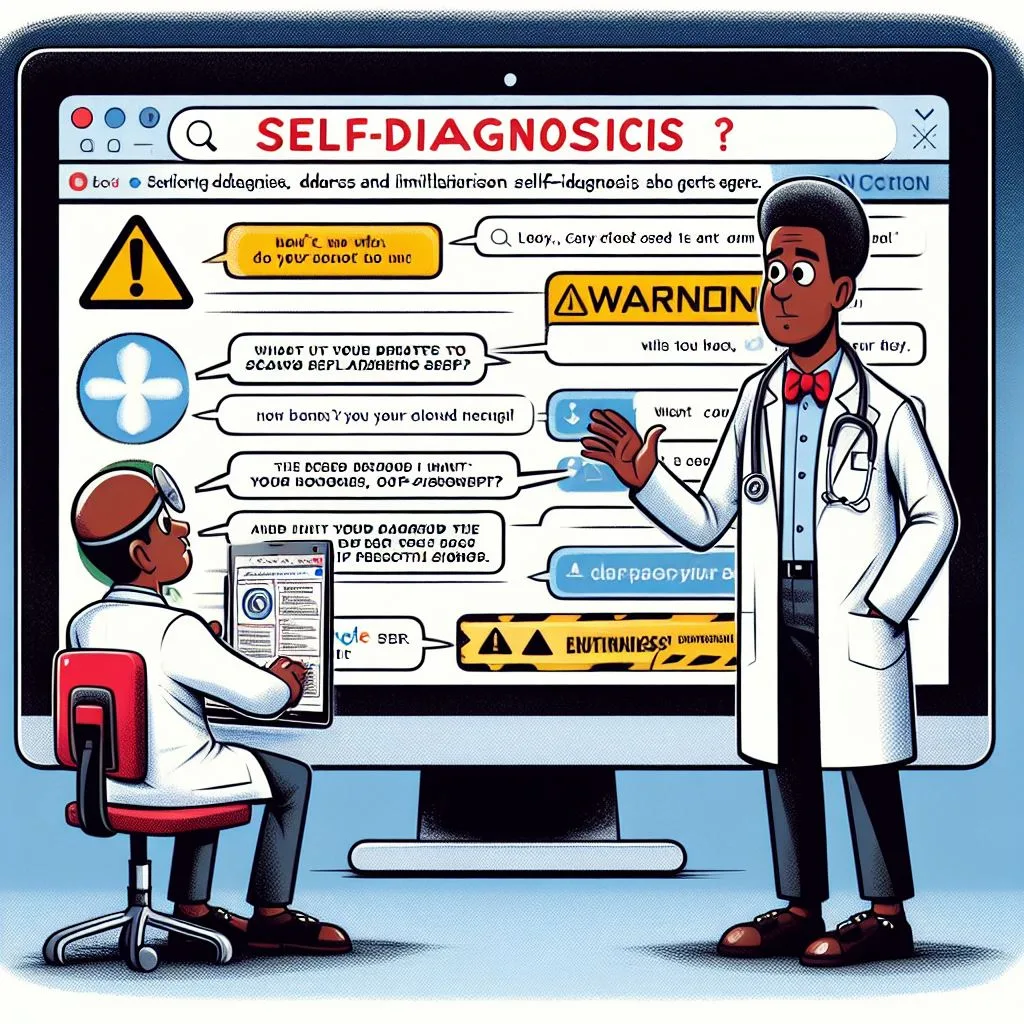
The Allure of Self-Diagnosis
In an age of easily accessible medical information, it’s tempting to turn to sites like WebMD when mysterious symptoms arise. A quick search can provide possible explanations that either reassure or heighten our worries.
The Risks of Inaccurate Self-Diagnosis
While researching symptoms online can be informative, it has risks. We may misdiagnose ourselves or develop health anxiety over conditions we don’t actually have. It’s best to seek professional advice rather than rely solely on ‘Dr. Google’.
When to Seek Medical Care
If symptoms are severe, persistent, or affecting your daily life, schedule an appointment with your doctor. They can properly assess your symptoms, order tests if needed, and provide an accurate diagnosis and treatment plan.
Getting Support
If you find yourself preoccupied or distressed about possible medical conditions you’ve researched online, talk to your doctor. Consulting reputable health sites can also help put your concerns in perspective.
Living Your Best Life
While it’s wise to listen to your body and understand new symptoms, don’t let health worries overwhelm you. Focus on eating well, staying active, reducing stress, and finding joy each day.
The Algorithmic Bias of Search Engines
It is crucial to understand that the results appearing at the top of your search are not necessarily the most medically probable; they are the most optimized for search engine algorithms. Search engines prioritize content that matches high-volume search queries and utilizes effective keywords, rather than content prioritized by clinical prevalence. For instance, a rare, terrifying condition might have a massive amount of high-ranking, click-heavy content written about it, while a common, benign ailment may be buried under less-optimized pages. When you search for a headache, the algorithm does not calculate the statistical likelihood of dehydration versus a rare neurological disorder; it presents the content that has the highest engagement metrics. Recognizing that your search results are a product of SEO rather than an objective diagnostic triage is the first step in de-escalating the panic that often follows a search.
The Psychology of Cyberchondria
Cyberchondria is more than just excessive Googling; it is a feedback loop where the act of searching for health information increases anxiety, which in turn leads to more searching. This phenomenon relies on the ‘confirmation bias’ trap: once you identify a potential disease that fits one of your symptoms, your brain begins to selectively filter for subsequent symptoms that support that diagnosis while ignoring evidence to the contrary. Over time, the amygdala—the brain’s fear center—becomes sensitized to health-related stimuli. To break this cycle, practice “symptom labeling” rather than “symptom searching.” Instead of typing your symptoms into a search bar, write them down in a neutral log. Tracking the duration, intensity, and triggers of a symptom over 48 hours often reveals a pattern that is far less alarming than the catastrophic outcomes suggested by a search engine.
Evaluating the Credibility of Digital Health Sources
Not all health information on the web is created equal, and the ability to discern source quality is a vital skill. When conducting preliminary research, prioritize “.gov,” “.edu,” and established medical association domains (such as the American Heart Association or the Mayo Clinic) over commercial lifestyle blogs or forum-based advice sites. Look for the HONcode (Health On the Net) certification, which indicates that the site adheres to strict ethical standards regarding the accuracy and transparency of its medical information. Furthermore, check the date of the article. Medical science evolves rapidly; a study from 2012 may have been debunked or superseded by newer clinical guidelines. If a site lacks a clear editorial board, fails to cite peer-reviewed studies, or uses inflammatory, “clickbait” language, treat the information as anecdotal and potentially unreliable.
The Hidden Dangers of Online Health Communities
Social media groups and medical forums can provide a sense of community, but they are notorious breeding grounds for medical misinformation. In these spaces, personal anecdotes are often presented as universal truths. If you read a post from someone claiming a specific supplement cured their chronic pain, you may be tempted to try it without considering your own unique medical history, drug interactions, or contraindications. These communities often focus on the “outlier” stories—the one-in-a-million cases—which can distort your perception of how common certain diseases actually are. Use these groups for emotional support if you must, but never use them as a source of clinical advice. Remember that the person providing the advice is not subject to the same liability, training, or ethical oversight as a licensed physician.
Preparing for a Productive Clinical Consultation
If your research has led you to a doctor’s office, the goal is to shift from a role of “self-diagnoser” to “collaborative patient.” Doctors often feel discouraged when patients arrive with a printout of a self-diagnosis, as it can feel like a challenge to their expertise. Instead of presenting your research as a conclusion, frame it as a question. Say, “I noticed these symptoms and was concerned about X, Y, and Z. Could you help me understand why those might or might not be relevant?” This approach invites the doctor to explain their reasoning process, which is far more educational and reassuring. Bring a concise, bulleted list of your symptoms and any patterns you have observed. By focusing on the data rather than the diagnosis, you help the physician perform their role more effectively and reduce the likelihood of miscommunication.
Recognizing the Role of Somatization
Sometimes, the symptoms we feel are real, but their origin is psychological rather than physiological. This is known as somatization, where emotional distress—such as high stress, trauma, or anxiety—manifests as physical pain, gastrointestinal issues, or fatigue. When you Google these symptoms, the search engine will inevitably point you toward rare diseases, ignoring the fact that stress is a primary driver of physical ailments. If you find that your symptoms worsen during stressful periods at work or in your personal life, it is worth discussing the mind-body connection with your healthcare provider. Acknowledging that your physical symptoms might be a manifestation of psychological strain is not the same as saying the symptoms are “all in your head.” It is a recognition that your body is a unified system where mental and physical health are inextricably linked.
Developing Digital Hygiene for Health
To maintain a healthy relationship with medical information, you must set strict boundaries. Consider implementing a “48-hour rule”: if you notice a new, non-emergency symptom, wait 48 hours before searching for it online. In many cases, the symptom will resolve on its own, rendering the search unnecessary. When you do search, set a timer for 15 minutes. Use that time to find one reputable source, write down your findings, and then close the browser. Avoid searching at night, when fatigue and darkness can exacerbate anxiety. By treating your interaction with online medical information as a controlled, limited activity rather than an impulsive, late-night habit, you reclaim your agency and reduce the psychological toll of living in an era of constant health data access.
FAQ
Is it bad to Google my symptoms?
It’s generally not harmful to research your symptoms online, but it shouldn’t replace talking to your doctor. Web searches can prompt unnecessary worry or lead to inaccurate self-diagnosis.
Can you trust medical diagnosis sites?
It’s best not to solely rely on online symptom checkers for a diagnosis. While they can provide general information, only medical professionals can accurately diagnose and treat health conditions.
What are the risks of misdiagnosing yourself?
You may experience more worry over a serious condition you don’t actually have. Or you may mistakenly self-treat a condition, causing a delay in proper diagnosis and treatment.
When should you go to the doctor?
See your doctor promptly if symptoms are severe, persistent, worsening, or interfering with your daily activities. Let them assess whether further tests or treatment is needed.
How can I stop worrying about my health?
If health anxiety is overwhelming you, talk to your doctor. Consider limiting time spent researching symptoms online. Stay grounded in self-care basics like healthy eating, exercise, sleep, and stress reduction techniques.