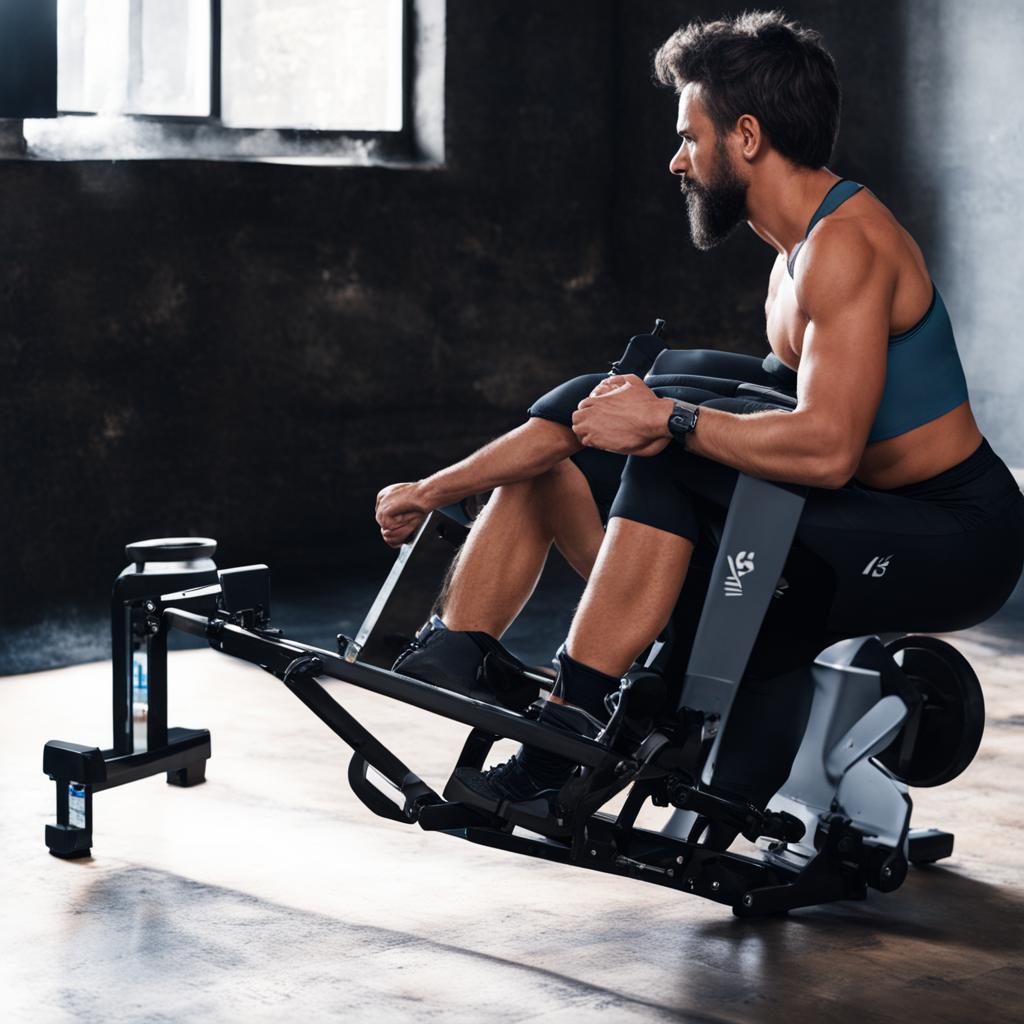
The Joy of Rowing
I recently started using a rowing machine for my home workouts, and I have to say I’m loving it! As someone who has struggled to stay active and fit, rowing has been an enjoyable way to get my body moving.
Low Impact but High Intensity
One of the things I appreciate most about rowing is that it provides an intense cardio workout but without too much strain on my joints. As we age, impact activities like running can take a toll. But with rowing, the smooth gliding motion is easy on the joints while still elevating my heart rate.
Full-Body Exercise
Rowing also incorporates muscles throughout the arms, legs, abs, and back. I feel myself getting stronger through the full range of motion required to push and pull the handle. It’s an efficient way to build muscle tone too!
Easy to Track Progress
Modern rowing machines have consoles that track important metrics like distance covered, strokes per minute, calories burned, and more. I love quantifying my workouts and challenging myself to incrementally improve over time.
Mastering the Mechanics: The Four Phases of the Stroke
To truly unlock the potential of your rowing machine, you must move beyond simply pulling the handle. The rowing stroke is a rhythmic, four-phase movement that, when performed correctly, maximizes power output while minimizing the risk of injury. First is the Catch: your shins should be vertical, your core engaged, and your arms extended straight. Avoid reaching too far forward, which can strain your lower back. Second is the Drive: initiate the movement by pushing through your heels, keeping your back straight and your core locked. Only after your legs are nearly fully extended do you swing your torso backward and pull the handle toward your lower ribcage. Third is the Finish: your legs are flat, your core is slightly reclined, and the handle is pulled into your body. Finally, the Recovery: reverse the motion, extending your arms first, then pivoting your torso forward, and finally sliding the seat toward the front. Mastering this sequence turns a chaotic pull into a fluid, efficient engine of caloric burn.
Key takeaways
- Master the four-phase rowing stroke—catch, drive, finish, and recovery—to maximize power and prevent injury.
- Choose a rowing machine based on resistance type, such as air for responsiveness or magnetic for quiet operation.
- Follow a polarized training plan, dedicating 80% of sessions to steady-state pace and 20% to high-intensity intervals.
- Focus on proper form, including leg-driven movement and controlled recovery, to avoid common technique pitfalls.
- Supplement rowing with core stability exercises and post-session stretching to maintain mobility and prevent overuse injuries.
Choosing Your Resistance: Air, Water, Magnetic, or Hydraulic?
The “feel” of your workout varies significantly depending on the resistance mechanism of your machine. Air rowers, often found in professional gyms, use a flywheel that increases resistance as you pull harder, mimicking the physics of an actual boat. These are incredibly responsive but can be somewhat noisy. Water rowers offer a unique, meditative experience, with paddles spinning in a tank of water; the sound is soothing, and the resistance feels very natural. Magnetic rowers are prized for their near-silent operation, making them perfect for apartments or shared living spaces, though they often lack the dynamic “catch” feel of air or water models. Hydraulic rowers are generally the most affordable and compact, using pistons to create resistance; while they are great for beginners, they lack the smooth, continuous motion of the other types, making them less ideal for long-distance endurance training.
Optimizing Your Setup for Longevity and Comfort
Your rowing experience is only as good as your posture and setup. Many beginners make the mistake of sitting too far back or failing to adjust the footplate. Your feet should be strapped in so that the strap crosses the widest part of your foot, allowing for a comfortable bend without restricting your ankles. If you find your lower back aching, check your drag factor or resistance setting; it is a common misconception that a higher resistance setting is better. In reality, a lower resistance setting often forces you to focus on speed and technique, which leads to a more effective cardiovascular workout. Furthermore, ensure your screen is at eye level to prevent neck strain. If you are training for extended periods, consider adding a gel seat cushion to your rower, as the standard plastic seats can become uncomfortable during sessions exceeding 30 minutes.
Structuring Your Weekly Training Cycles
To see consistent progress, you need a balanced training plan that mixes intensity with recovery. I recommend a “Polarized Training” approach: 80% of your sessions should be at a steady, conversational pace, while 20% should be high-intensity interval training (HIIT). For your steady-state days, aim for a consistent stroke rate (often referred to as “spm” or strokes per minute) between 20 and 24. This builds aerobic capacity without burning you out. On your HIIT days, try a “Pyramid Workout”: row 1 minute hard, 1 minute easy, 2 minutes hard, 2 minutes easy, 3 minutes hard, 3 minutes easy, then work your way back down the pyramid. This variety keeps your muscles guessing and prevents the plateau that often occurs when you perform the exact same distance at the exact same speed every single day.
Common Pitfalls and How to Correct Them
Even seasoned rowers fall into bad habits that sap efficiency. The most common error is the “shooting slide,” where your seat moves backward before your handle moves, essentially turning the row into a back-only exercise. To fix this, visualize your legs as the primary pistons; your seat should only move when your legs push. Another common issue is “rushing the slide,” where you move too quickly during the recovery phase. Remember: the drive should be explosive, but the recovery should be slow and controlled—a ratio of 1:2 is ideal. Lastly, avoid “chicken winging,” where your elbows flare out to the sides during the pull. Keep your elbows tucked close to your ribcage to engage your lats effectively and protect your shoulder joints from unnecessary torque.
Integrating Strength Training and Flexibility
While rowing is a full-body workout, it is heavily focused on the posterior chain (hamstrings, glutes, and back). To maintain a balanced physique and prevent overuse injuries, supplement your rowing with targeted strength and mobility work. Incorporate core stability exercises like planks and dead bugs to support your spine during long rows. Additionally, prioritize hip flexor and hamstring stretches after every session; because rowing involves constant hip flexion, these muscles can tighten over time, leading to lower back discomfort. A simple routine of pigeon pose and cat-cow stretches post-rowing can pay massive dividends in your mobility and comfort, ensuring you can keep rowing pain-free for years to come.
Advanced Performance Metrics: Beyond Calories
If you want to take your rowing to the next level, stop looking at calories and start looking at your 500-meter split time. This metric—how long it takes you to row 500 meters at your current pace—is the gold standard for measuring improvement. When you see your split time drop from 2:30 to 2:15, you know you are becoming more powerful and efficient. Another metric to track is your Stroke Power (measured in Watts). Monitoring your average watts over a 20-minute session will give you a clearer picture of your endurance gains than heart rate alone, as heart rate can be influenced by caffeine, sleep, and stress. By keeping a simple logbook or using a connected app, you can map your progress and celebrate the gradual, steady increase in your raw power output over the months and years of your rowing journey.
FAQ
What are the benefits of rowing?
Rowing provides an intense low-impact cardio workout that works muscles throughout the arms, legs, back, and core. It can elevate heart rate without high impact on the joints.
Is rowing good for weight loss?
Yes! The combination of cardio and full-body resistance in rowing burns calories efficiently. Tracking metrics like distance and calories keeps you motivated to push your limits.
How often should you row?
Aim for 30-60 minutes of rowing 3 times per week. Consistency is key, even starting with 10-15 minutes until you build endurance.
What muscles does rowing work?
Rowing works muscles throughout the body including arms, back, legs, glutes, core, and more! It provides strengthening as well as flexibility.
Is rowing hard to learn?
The basic rowing technique can be learned quickly, especially with guidance on proper form. But don’t worry if it feels awkward at first – it will start to feel more natural with regular practice!
An Accessible At-Home Workout
I don’t need to leave home to get an effective full-body workout anymore thanks to my rowing machine. It’s compact enough to fit in my home gym area while still giving me that feel of gliding on water. Investing in this small piece of equipment has elevated my fitness routine, and I’m excited to continue challenging myself.
Have You Tried Rowing?
If you’re looking for a joint-friendly cardio and strength workout, I highly recommend giving rowing a try. The metrics keep me motivated to push myself little by little. Now if you’ll excuse me, I have a new 500-meter distance PR to set!
Related posts:
 Savannah Guthrie’s Olympic Tennis Workout
 Understanding Gym Equipment
 This Full-Body Resistance Band Workout Will Transform Your Home Gym
 This Rowing App Promises to Replace Your Gym Membership
 Why Pull-Ups Are the Ultimate Strength Builder
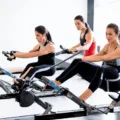 Indoor Rowing Classes Are About to Take Over NYC
 Why the Rowing Machine Is Great for Total Body Fitness
 PHA Bodyweight Workout: Efficient Fitness Anywhere, Anytime