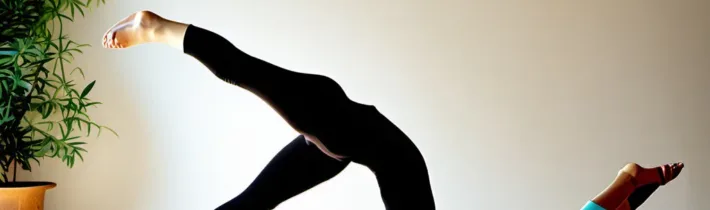
Balance is a foundational element of physical health that often goes unnoticed until it begins to decline. Whether you are an athlete looking to refine your agility or an older adult aiming to maintain independence, the ability to stabilize your body is essential. Yoga offers a structured, accessible, and highly effective pathway to enhancing proprioception—the body’s awareness of its position in space—and strengthening the stabilizer muscles that keep you upright.
The Science of Balance and Proprioception
Balance is not merely a matter of standing still; it is a complex neurological process involving the integration of sensory inputs from your eyes, your inner ear (the vestibular system), and your muscles and joints (proprioception). As we age or lead sedentary lives, these systems can become less responsive. Yoga challenges these systems by placing the body in unconventional positions, forcing the brain to recalibrate its sense of equilibrium. By engaging in consistent practice, you are essentially training your nervous system to respond more quickly to shifts in your center of gravity, which significantly reduces the risk of falls and injuries.
Building Core Strength for Stability
The core is the command center for balance. It encompasses not just the abdominal muscles, but the pelvic floor, the diaphragm, and the deep muscles of the back. Yoga poses like Plank, Boat (Navasana), and various balancing postures require constant core engagement to remain steady. When you hold a pose like Tree (Vrksasana), your deep core muscles must work to counteract the natural sway of your body. This active engagement strengthens the “corset” of muscles that supports your spine and keeps your center of gravity stable, providing a solid foundation for every movement you make throughout the day.
The Role of Ankle and Foot Strength
We often overlook the importance of our feet, yet they are the first point of contact with the ground. Yoga is typically practiced barefoot, which allows for greater sensory feedback from the floor. Strengthening the intrinsic muscles of the feet and the stabilizers around the ankles is critical for balance. Poses such as Mountain Pose (Tadasana) teach you how to distribute your weight evenly across the four corners of your feet. By learning to spread your toes and engage your arches, you create a more stable base, which prevents the wobbling that often leads to a loss of equilibrium.
Developing Focus and the Dristi Technique
Balance is as much a mental game as it is a physical one. In yoga, the concept of Dristi, or focused gaze, is a primary tool for stability. When you fix your eyes on a single, non-moving point, you provide your brain with a stable visual anchor. This reduces the sensory noise that can cause dizziness or distraction. Integrating Dristi into your balancing practice helps you cultivate a calm, concentrated state of mind. When your mind is steady, your body follows. This practice of singular focus can be translated into daily life, helping you maintain composure and physical control during stressful or challenging situations.
Essential Yoga Poses for Beginners
If you are new to yoga, start with poses that provide ample support. Mountain Pose (Tadasana) is the starting point for all standing postures; focus on rooting your feet and lengthening your spine. Transition into Tree Pose (Vrksasana) by placing one foot on your calf or inner thigh, ensuring you keep your hips level. Warrior I and II are also excellent for building lower body strength and grounding. Use a wall for support if you feel unsteady. The goal is to build confidence and strength incrementally rather than pushing into poses that cause you to lose control.
Progressing Your Practice with Advanced Variations
Once you have established a solid foundation, you can introduce more complex balance challenges. Half Moon Pose (Ardha Chandrasana) tests your balance while rotating your torso, which engages different planes of motion. Eagle Pose (Garudasana) requires wrapping the limbs, which challenges your balance while simultaneously stretching the shoulders and hips. By incorporating movement into your balance poses—such as transitioning from Warrior III to a standing knee-to-chest position—you train your body to maintain stability while in motion, which is far more applicable to real-world scenarios like walking on uneven terrain.
Integrating Balance Training into Daily Life
You do not need to be on a yoga mat to practice balance. Incorporate micro-practices into your daily routine. Stand on one leg while you brush your teeth, or perform calf raises while waiting for the coffee to brew. These small, consistent efforts keep your stabilizer muscles active and your proprioceptive system alert. Treat your daily activities as an extension of your yoga practice, staying mindful of your posture and weight distribution. Over time, these small adjustments create significant improvements in your overall physical coordination and confidence.
Creating a Sustainable Routine
Consistency is more important than duration. Practicing balance-focused yoga for 15 minutes, four times a week, is far more effective than a single hour-long session once a week. Create a dedicated space where you can practice safely, free from clutter. Listen to your body; if you are feeling fatigued, focus on restorative poses rather than challenging balances. Remember that balance fluctuates day to day based on sleep, stress, and hydration. Approach your practice with compassion and patience, viewing each wobble as an opportunity to learn and recalibrate.
The Biomechanics of Pelvic Alignment and Balance
While the core is often discussed as a singular unit, the pelvis acts as the true mechanical anchor for all balance-related movements. If the pelvis is tilted anteriorly or posteriorly, the entire kinetic chain—from the lumbar spine to the knees—becomes misaligned, forcing stabilizer muscles to overcompensate. In yoga, mastering the ‘neutral pelvis’ is a prerequisite for advanced balancing. By practicing Cat-Cow variations with an emphasis on isolating pelvic movement from spinal movement, you train your brain to find a centered position even when your limbs are moving. When you engage in standing balances like Dancer’s Pose (Natarajasana), maintaining a neutral pelvis prevents the lower back from pinching, allowing the gluteal muscles to provide the necessary support for your standing leg. This structural integrity ensures that balance is achieved through muscular engagement rather than skeletal locking, which is a common and dangerous pitfall for beginners.
Utilizing Proprioceptive Tools: Blocks, Straps, and Walls
Many practitioners treat props as signs of weakness, but in the context of balance, they are precision instruments. Using a block under the hand in Half Moon Pose (Ardha Chandrasana) does not just provide support; it brings the floor closer to you, allowing you to maintain a long, neutral spine that facilitates better equilibrium. Similarly, using a wall isn’t just about safety—it is about ‘biofeedback.’ By standing a few inches away from a wall during Tree Pose, you can feel when your body begins to sway, training your subconscious to correct its alignment before you actually lose your balance. Straps can also be used to create resistance; by looping a strap around your foot in a standing hand-to-big-toe pose, you can press against the strap to engage the muscles of the hip and thigh more intensely than you could through gravity alone. These tools allow you to isolate the specific stabilizer muscles that are currently lagging, turning every practice session into a targeted neuromuscular workout.
The Impact of Breath Control on Vestibular Stability
The vestibular system, located in the inner ear, is deeply connected to the autonomic nervous system. When you hold your breath—a common reaction to the fear of falling—you trigger a stress response that increases muscle tension and narrows your focus, making you less adaptable to physical shifts. Conversely, ‘Ujjayi’ or ocean-sounding breath creates a steady rhythm that signals safety to the nervous system. This rhythmic breathing acts as a metronome for your body. When you synchronize your movement with your breath, you create a physiological ‘flow state’ where the vestibular system receives consistent sensory input. If you find yourself wobbling, the first step is not to grip your muscles harder, but to soften your jaw and deepen your exhalation. This simple shift in breath can lower your center of gravity and provide an immediate, calming effect on your inner ear, allowing for smoother transitions between poses.
Addressing Asymmetry: Unilateral Training for Even Stability
We are all naturally asymmetrical due to handedness, occupational habits, and previous injuries. If you rely on your ‘dominant’ side for balance, your non-dominant side will continue to lose strength and coordination. Yoga provides the perfect environment for unilateral training. Always begin your balancing sequences on your weaker or less stable side. By front-loading the challenging work, you ensure that your nervous system is fresh and capable of making the fine-tuned adjustments needed for growth. Furthermore, consider adding ‘eye-closed’ variations to basic poses like Mountain or Tree. When you remove visual input, your body is forced to rely entirely on proprioception and the vestibular system. This is an advanced technique that should be done near a wall, but it is one of the fastest ways to reveal and correct the subtle imbalances between your left and right sides.
The Role of Fascial Tension in Positional Awareness
Balance is not just about bones and muscles; it is about the fascial network—the connective tissue that wraps your muscles and organs. Tight fascia in the calves, hamstrings, or even the chest can pull the body out of alignment, creating a constant ‘tug’ that forces you to expend energy just to stay upright. Yoga styles that emphasize long-held poses, such as Yin Yoga, are excellent for releasing these fascial adhesions. When the fascia is supple, your body can make micro-adjustments with much less effort. If your ankles feel rigid or your hips feel ‘stuck,’ you are likely losing balance because your body cannot respond fluidly to the ground. By incorporating myofascial release—such as rolling the soles of your feet on a tennis ball before your practice—you can wake up the sensory receptors in your feet, providing your brain with a clearer map of your contact with the earth, which is essential for maintaining stability.
Dynamic Transitions and the ‘Fall-Recovery’ Reflex
Real-world balance is not about holding a pose; it is about the ability to recover from a stumble. Many people practice yoga as a series of static snapshots, but you can increase your functional balance by focusing on the transition between poses. Instead of stepping directly from Warrior II into a standing balance, move slowly and deliberately, noticing every micro-adjustment your ankles and core make as you shift your weight. You can even practice intentional ‘controlled wobbles.’ By intentionally leaning slightly off-center and then using your core to pull yourself back to neutral, you are training your ‘righting reflex.’ This is the exact mechanism that prevents a trip from turning into a fall in everyday life. By turning your yoga practice into a dynamic, moving meditation rather than a series of static poses, you prepare your body for the unpredictable nature of the physical world.
Frequently Asked Questions
Q: How long does it take to see improvements in balance through yoga? A: Many practitioners notice improved core engagement and stability within 4-6 weeks of consistent practice. However, neurological adaptations that enhance overall coordination are cumulative and continue to improve the longer you maintain your routine.
Q: Can I practice yoga for balance if I have existing joint issues? A: Yes, but it is essential to consult with a healthcare provider first. Yoga is highly modifiable; you can use blocks, straps, and wall support to reduce strain on joints while still reaping the benefits of balance training. Always prioritize comfort over depth of pose.
Q: Does age affect how quickly I can improve my balance? A: While the rate of adaptation can vary, the brain remains plastic at any age. Older adults often see profound benefits from yoga, as it directly addresses the muscle atrophy and sensory decline that contribute to fall risk. It is never too late to start.
Q: What should I do if I feel dizzy while practicing balance poses? A: Dizziness can occur when shifting positions quickly or holding your breath. Ensure you are breathing deeply and evenly through your nose. If you feel lightheaded, immediately lower yourself to a seated or child’s pose, keep your head above your heart, and focus on your breath until the sensation passes.
Q: Is it better to practice yoga for balance in the morning or evening? A: There is no “best” time. Morning practice can help wake up your nervous system and set a focused tone for the day, while evening practice can help release tension accumulated throughout the day. Choose the time that allows you to be most consistent and free from distractions.