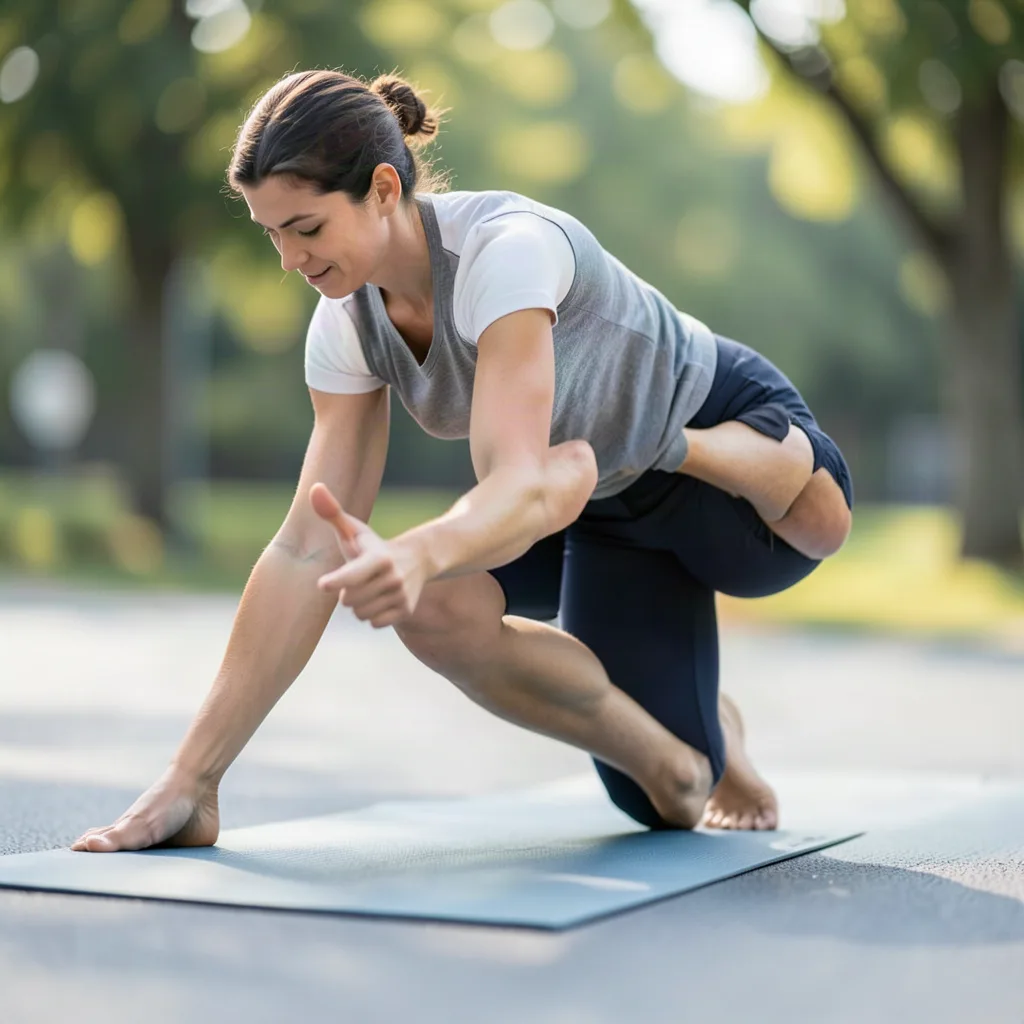
Straddle flexibility is a cornerstone of many movement disciplines, from gymnastics and dance to martial arts and yoga. Developing a wide, comfortable straddle not only expands your range of motion but also improves hip health, lowers injury risk, and enhances overall athletic performance. This guide walks you through a systematic, evidence‑based approach that blends mobility work, strength training, and smart programming so you can progress safely and sustainably.
Understanding the Straddle Position
The straddle, also called a middle split, requires simultaneous abduction and external rotation of both hips while the spine remains neutral. The primary movers are the adductors, hamstrings, and hip flexors, but the gluteus medius, piriformis, and deep core muscles stabilize the pelvis. When any of these groups are tight or weak, the body compensates by rounding the lower back or collapsing the knees, which limits depth and raises injury potential. Recognizing the anatomical demands helps you target the right tissues rather than simply forcing the legs apart.
Assessing Your Current Range of Motion
Before you begin a program, establish a baseline. Sit on the floor with legs extended to the sides, toes pointed, and knees straight. Gently lean forward from the hips, keeping the spine long, and note the distance from your chest to the floor or the angle between your thighs. A simple goniometer or a smartphone app can give you a numeric value. Record the measurement weekly; small, consistent gains are more reliable than occasional large jumps. If you feel sharp pain in the groin, knee, or lower back, stop and consult a qualified professional before continuing.
Warm‑Up Strategies for Hip Opening
A thorough warm‑up raises tissue temperature, improves neural drive, and prepares the nervous system for deeper stretching. Start with five minutes of low‑impact cardio such as brisk walking, cycling, or jumping rope. Follow with dynamic movements that mimic the straddle pattern: leg swings front‑to‑back and side‑to‑side, walking lunges with a torso twist, and controlled Cossack squats. Perform each drill for 30 seconds per side, focusing on smooth motion rather than speed. Finish the warm‑up with a few rounds of cat‑cow and thread‑the‑needle to mobilize the thoracic spine, which indirectly supports a neutral pelvis during the straddle.
Progressive Static Stretching Routine
Static holds are the backbone of flexibility gains. After the warm‑up, move into a sequence of three to four stretches, holding each for 45 to 60 seconds, repeating two to three rounds. Begin with a supported straddle: sit against a wall, legs wide, and let gravity gently pull the torso forward. Next, practice a seated forward fold with a strap around the feet to keep the knees straight while you hinge at the hips. Add a prone frog stretch to target the adductors from a different angle, and finish with a pigeon variation to address the external rotators. Breathe deeply, exhaling as you ease a fraction deeper, never forcing a stretch that produces sharp discomfort.
Dynamic Mobility Drills for the Inner Thighs
Dynamic work bridges the gap between passive flexibility and active control. Incorporate controlled leg circles, standing gate opens, and sliding side‑lunges on a smooth surface. Perform each drill for 10 to 12 repetitions per side, moving through the full available range without momentum. These drills teach the nervous system to fire the adductors and abductors in coordination, which translates to a more stable straddle when you are upright or moving. Schedule dynamic drills at the start of a training session or as a standalone mobility circuit on recovery days.
Strengthening the Supporting Muscles
Flexibility without strength can lead to instability. Target the gluteus medius, hip external rotators, and core with exercises such as side‑lying clamshells, banded monster walks, single‑leg Romanian deadlifts, and Copenhagen planks. Aim for three sets of 12 to 15 repetitions, two to three times per week. Progressive overload — adding resistance, increasing range, or reducing rest — ensures the muscles can control the newly acquired range. Strong, responsive musculature also protects the knee and lower back during deep straddle work.
Programming Frequency and Recovery
Consistency beats intensity. A practical schedule might include a dedicated flexibility session three times per week, each lasting 30 to 45 minutes, plus brief mobility drills on two additional days. Allow at least 48 hours between intense static sessions to let connective tissue adapt. Sleep, hydration, and nutrition — especially adequate protein and omega‑3 fatty acids — support tissue repair. If you notice persistent soreness, reduce volume or insert an active recovery day with light walking and foam rolling.
Common Mistakes and How to Avoid Them
One frequent error is rounding the lumbar spine to reach further; this shifts load to the vertebrae instead of the hips. Keep the pelvis neutral by engaging the deep core and imagining a string pulling the crown of the head upward. Another mistake is holding the breath, which raises intra‑abdominal pressure and limits relaxation. Practice diaphragmatic breathing throughout each stretch. Overstretching cold muscles is a third pitfall; always complete the warm‑up before any static hold. Finally, neglecting strength work creates a flexibility‑strength imbalance that often results in groin strains. Pair every stretching block with at least one strengthening exercise for the same muscle groups.
Frequently Asked Questions
How long does it take to see noticeable improvement in straddle depth?
Most practitioners observe measurable gains within four to six weeks of consistent practice, though individual timelines vary based on age, training history, and genetics.
Can I work on straddle flexibility if I have a previous groin injury?
Yes, but you should obtain clearance from a healthcare provider and start with very gentle, pain‑free range‑of‑motion drills before progressing to deeper static holds.
Is it better to stretch before or after a strength workout?
Dynamic mobility drills are ideal before strength work to prepare the hips, while longer static holds are more effective after training when muscles are warm and pliable.
What role does breathing play in achieving a deeper straddle?
Slow, controlled exhalations activate the parasympathetic nervous system, reducing muscle guarding and allowing a safer, deeper stretch.
Should I use props such as blocks or straps?
Props are valuable tools for maintaining alignment and reducing load on sensitive joints. Use them to support the torso or keep the knees straight while you build confidence and control.
Related posts:
 How to Stretch Safely Without Going Too Far
 Simple Stretches to Relieve Back Pain
 Dangers of Over-Stretching
 Laurie Hernandez Swears By These Flexibility Tips To Stay Injury-Free
 Managing Hip Pain from Sitting
 Savannah Guthrie’s Olympic Tennis Workout
 Practical Exercises for Better Wrist Mobility
 Perfect Your Glute Bridge