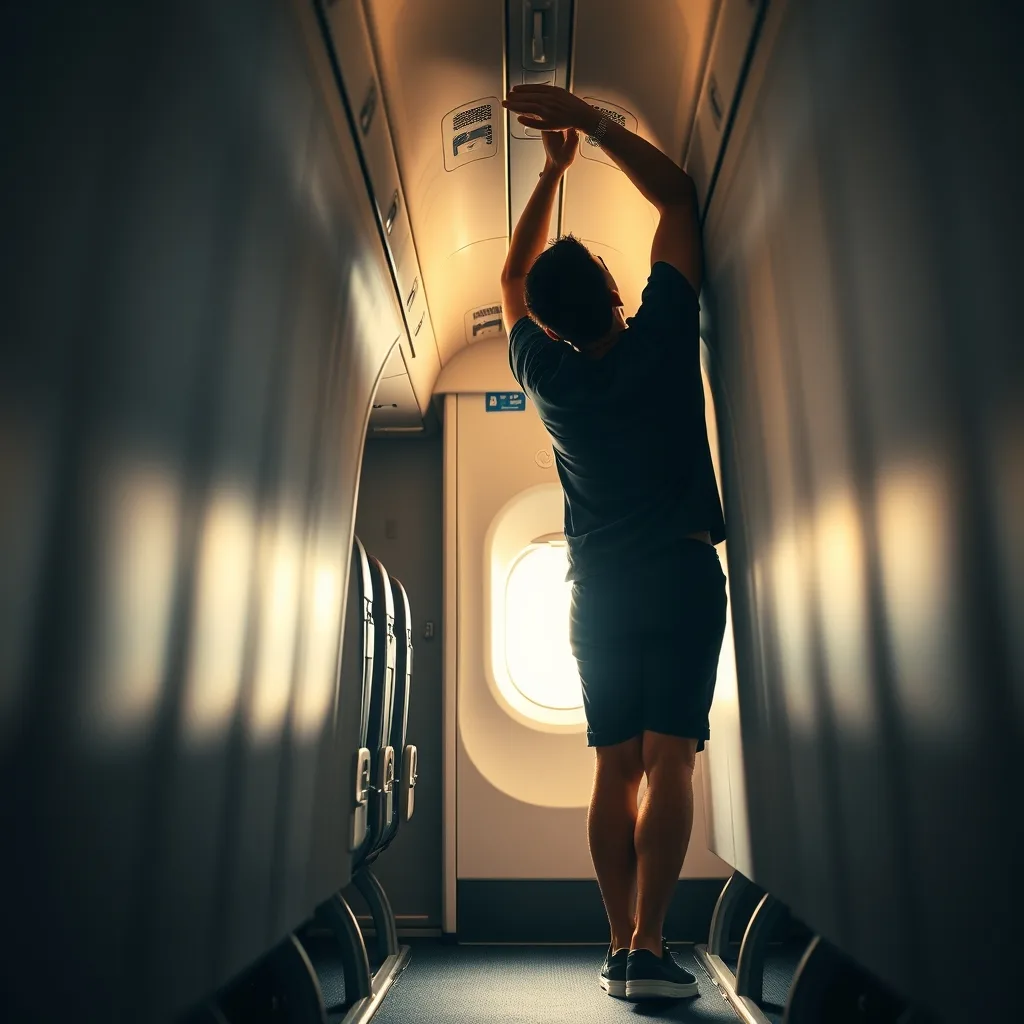
Air travel, while a marvel of modern engineering, places significant physiological stress on the human body. Sitting in a confined space for extended periods often leads to discomfort, stiffness, and the potential for circulation-related issues. Understanding how to integrate movement into your flight routine is essential for arriving at your destination feeling refreshed rather than depleted. By prioritizing in-flight movement, you can mitigate the negative effects of prolonged immobility.
Key takeaways
- Perform seated ankle circles and pumps every 30 to 45 minutes to encourage blood flow and reduce lower-extremity swelling.
- Walk the cabin aisle at least every two hours to reset posture and stimulate circulation throughout your entire body.
- Prioritize hydration by drinking water consistently while avoiding excessive caffeine and alcohol to prevent muscle tension and cramping.
- Use deep, diaphragmatic breathing to support your circulatory system and help move fluids away from the legs during the flight.
- Engage in post-flight recovery stretches, such as standing quadriceps stretches, to transition your body out of travel mode.
The Physiological Impact of Prolonged Sitting
The human body is designed for movement, not for remaining static in a pressurized metal tube for hours at a time. When we sit in an airline seat, our muscles, particularly the hip flexors and hamstrings, remain in a shortened state. This positioning can lead to postural strain and reduced blood flow in the lower extremities. Gravity, combined with the lack of calf muscle activation, makes it difficult for the body to return blood from the legs to the heart. This is the primary reason why many travelers experience swelling in their feet and ankles, commonly referred to as edema. Furthermore, the lack of movement can lead to stiffness in the joints and a general feeling of lethargy, which can persist long after landing.
Preparation Before You Board
Your journey toward physical comfort begins well before you reach your seat. Choosing the right clothing is the first step; opt for breathable, loose-fitting garments that do not restrict circulation. Compression socks are a highly recommended tool for long-haul flights, as they provide gentle pressure to help maintain blood flow and reduce swelling. Before boarding, try to walk around the terminal rather than sitting at the gate. If you have time, perform a few dynamic stretches like gentle lunges or calf raises near your gate. Keeping your hydration levels consistent is equally important, as dehydration can exacerbate muscle cramping and fatigue during the flight.
Seated Ankle Exercises for Circulation
You do not need to stand up to get your blood moving. Ankle circles are one of the most effective and discreet exercises you can perform while seated. Simply lift one foot off the floor and rotate your ankle in a circular motion, performing ten repetitions in one direction before switching to the other. Follow this with ankle pumps: extend your foot forward and then pull your toes back toward your shin. These movements engage the calf muscle, which acts as a pump for your circulatory system, helping to move blood back up through the body. Repeat these exercises every hour to maintain consistent circulation throughout your flight.
Seated Leg Extensions and Knee Lifts
To combat the tightening of the hamstrings and quadriceps, seated leg extensions are a practical solution. While seated, slowly straighten one leg until it is parallel to the floor, hold for a few seconds while flexing your quadriceps, and then slowly lower it back down. This movement helps to activate the front of the thigh and prevents the muscles from becoming overly stiff. If you have enough space, you can also perform seated knee lifts. Grasp the underside of your thigh and gently pull your knee toward your chest, holding for a few seconds to provide a light stretch through the glutes and lower back. Always ensure you are performing these movements with control, avoiding any sudden jerking motions.
Utilizing the Aisle for Dynamic Movement
When the seatbelt sign is off and it is safe to move about the cabin, take advantage of the opportunity to walk the aisle. Walking is the most effective way to reset your posture and encourage blood flow throughout the entire body. While walking, take the time to roll your shoulders back and lengthen your spine. If you find a quiet area near the galley, you can perform a standing calf stretch by placing your hands against a wall or bulkhead, stepping one foot back, and pressing your heel into the floor. This provides a deep stretch to the calf and Achilles tendon, which are often the first areas to feel the impact of long-term sitting.
Gentle Seated Torso Twists
While leg stretches are the priority for circulation, the spine and hips also suffer during air travel. Seated torso twists can help alleviate the tension that builds up in the lower back. Sit tall in your seat, place your right hand on the outside of your left thigh, and gently twist your torso toward the left while holding onto the armrest or the back of the seat. Hold this position for a few deep breaths, then repeat on the opposite side. This movement encourages mobility in the thoracic spine and helps to counteract the slumped posture that often occurs when leaning against the window or using a tray table.
The Importance of Hydration and Nutrition
Physical movement is only one piece of the puzzle; what you put into your body significantly impacts how your muscles respond to the flight. The cabin environment is notoriously dry, which can lead to muscle tightness and headaches. Aim to drink water regularly throughout the flight, even if you do not feel thirsty. Avoid excessive caffeine and alcohol, as both act as diuretics and can contribute to dehydration and increased muscle tension. Opt for light, easily digestible snacks rather than heavy, sodium-rich meals. High sodium intake can cause your body to retain water, which exacerbates the swelling in your legs and feet caused by prolonged sitting.
Establishing a Flight Routine
Consistency is key to arriving at your destination in good physical condition. Create a simple routine that you can stick to regardless of the length of your flight. For example, set an alarm on your watch or phone to remind yourself to perform seated ankle pumps every 30 to 45 minutes. Commit to walking the length of the plane at least once every two hours. By integrating these small, manageable actions into your flight experience, you transform a period of forced immobility into an opportunity for gentle, intentional movement. This routine not only helps with physical comfort but also provides a mental break from screens and reading, helping you feel more alert upon arrival.
Deep Tissue Self-Massage Techniques for Travel
When you are confined to a middle or window seat where standing up is not an option, you can still manage muscle tension through targeted self-massage. Using your own hands or a small, travel-friendly massage ball, you can release trigger points in the calves, quadriceps, and glutes. For the calves, place your knuckles or a tennis ball against the back of your lower leg and apply firm, steady pressure while slowly flexing your ankle. This “myofascial release” technique helps break up the tightness that accumulates from sitting. For the glutes, sit on the edge of your seat and place a massage ball under one hip, leaning slightly into it to target the piriformis muscle. This is particularly effective for preventing the sciatic nerve irritation that often presents as a “pins and needles” sensation after long periods of sitting.
The Role of Diaphragmatic Breathing in Circulation
Many travelers overlook the power of breathwork in supporting circulatory health during flight. Shallow, chest-based breathing, often triggered by the stress of travel or anxiety, limits the efficiency of your venous return. By practicing deep, diaphragmatic breathing—where you consciously expand your abdomen on the inhale and contract it on the exhale—you create a pressure gradient in the thoracic and abdominal cavities. This rhythmic expansion and contraction act as a secondary pump for the lymphatic system and blood flow, assisting the heart in moving fluids away from the legs. Aim for a 4-7-8 breathing pattern: inhale for four seconds, hold for seven, and exhale for eight. This not only calms the nervous system but also ensures that your body is oxygenated, which is vital when cabin air quality is compromised.
Managing Proprioception and Joint Mobility in Tight Spaces
Proprioception, or your body’s ability to sense its position in space, often degrades during long flights as joints become stiff and sensory feedback from the feet is minimized by shoes and upholstery. To counteract this, perform “seated proprioceptive taps.” While seated, lift your heels and tap your toes rhythmically, then reverse the motion by lifting your toes and tapping your heels. This simple neurological engagement helps keep the neuromuscular pathways active. Furthermore, practice “seated hip circles” by shifting your weight from one sit-bone to the other in a slow, controlled clockwise and counter-clockwise motion. This engages the pelvic floor and keeps the hip joints lubricated, preventing the “locking” sensation that makes standing up after a long flight feel physically jarring.
Advanced Isometric Holds for Muscle Activation
If you cannot move your limbs through a full range of motion due to limited space, isometric holds are an excellent alternative. Isometrics involve contracting a muscle without changing its length, which is perfect for a crowded cabin. For example, press your knees together against a small pillow or your carry-on bag and hold for ten seconds to engage the adductor muscles. Alternatively, press your feet firmly into the floor as if you are trying to stand up, but remain seated; this activates the entire kinetic chain of the legs and glutes. These holds increase blood flow to the targeted muscle groups without requiring extra space, effectively “waking up” the legs and preventing the fluid pooling associated with total inactivity.
Navigating the “Economy Class Syndrome” and Lymphatic Drainage
The term “economy class syndrome” refers to the risk of deep vein thrombosis (DVT) caused by restricted blood flow. Beyond simple movement, you can encourage lymphatic drainage—the body’s natural waste-removal system—through gentle skin brushing or light rhythmic tapping. Using your fingertips, lightly tap your thighs, shins, and arms in a rhythmic fashion. This stimulating, percussive motion helps encourage the movement of lymph fluid toward the lymph nodes, which is crucial since the lymphatic system lacks its own pump and relies entirely on physical movement and muscle contraction to function. When you combine this with the act of sitting on the edge of the seat to open the hip angle to 90 degrees or more, you significantly reduce the mechanical blockage of blood vessels behind the knees.
Adapting Your Strategy for Different Seat Classes
Your movement strategy should be modular based on your seat configuration. In a bulkhead seat, you have significantly more legroom, allowing for “straight-leg raises”—a powerful exercise for the hip flexors. Lie back slightly if the seat reclines, lift the entire leg with a straight knee, and hold for five seconds. In contrast, if you are in a seat with limited pitch, focus entirely on “internal” movements. This includes “toe scrunches,” where you curl your toes tightly as if gripping the carpet, followed by a wide “toe splay.” By customizing your routine to your specific spatial limitations, you ensure that you are never relying on the environment as an excuse for inactivity. Always assess your legroom the moment you sit down to identify the maximum range of motion available to you.
Post-Flight Recovery: The “Landing Sequence”
The moment the aircraft doors open is not the end of your movement routine; it is the beginning of your recovery phase. Upon landing, resist the urge to immediately rush toward baggage claim. If the terminal is crowded, find a corner for thirty seconds to perform “dynamic standing stretches.” Focus on a standing quadriceps stretch: hold onto a wall or stationary object, grab your ankle, and pull your heel toward your glute. This is essential because your quads have been in a shortened state for hours and will be prone to cramping if you start walking briskly immediately. Follow this with a few deep, overhead reaches to decompress the spine. By dedicating just two minutes to these post-flight movements, you transition your body from “travel mode” to “activity mode,” significantly reducing the likelihood of residual stiffness that can linger for days after arrival.
Frequently Asked Questions
Q: Why do my feet swell so much during flights? A: Swelling, or edema, occurs because the lack of movement prevents the calf muscles from pumping blood back to the heart against gravity. This is combined with the effects of cabin pressure and staying in a seated position for long durations, which can cause fluid to pool in the lower extremities.
Q: Are compression socks really necessary for everyone? A: While not strictly necessary for everyone, they are highly recommended for long-haul flights. They apply gentle pressure to the legs, which helps improve circulation and reduces the risk of swelling and discomfort. If you have pre-existing circulatory issues, it is best to consult your healthcare provider before use.
Q: How often should I get up to walk during a flight? A: Ideally, you should aim to stand and move at least once every two hours. If you are on a very long flight, try to incorporate a walk every 90 minutes. If you are unable to leave your seat, continue to perform seated exercises like ankle pumps and leg extensions to keep the blood moving.
Q: What should I do if I feel a cramp in my leg? A: If you experience a cramp, immediately stop what you are doing and gently massage the affected area. Try to slowly straighten the leg and flex your foot to stretch the muscle. Avoid sudden movements, and ensure you are hydrated, as electrolyte imbalances can sometimes contribute to cramping.
Q: Can these stretches help with back pain during travel? A: Yes, many of the stretches mentioned, particularly the seated torso twists and the act of standing and walking, help to decompress the spine and alleviate the muscular tension that causes back pain during flights. Maintaining good posture while seated is also crucial for preventing back discomfort.
Related posts:
 Stretches to Relieve Foot Pain
 Lindsay Ellingson’s Stress-Relieving Yoga Move
 PHA Bodyweight Workout: Efficient Fitness Anywhere, Anytime
 Desk Yoga for Back Pain Relief
 The Simple Ankle Fix That Will Transform Your Entire Workout
 How to Fly Safely After Lifted Mask Mandate
 The Genius Travel Workout You Can Do With Just Your Luggage
 Essential Bedtime Stretches