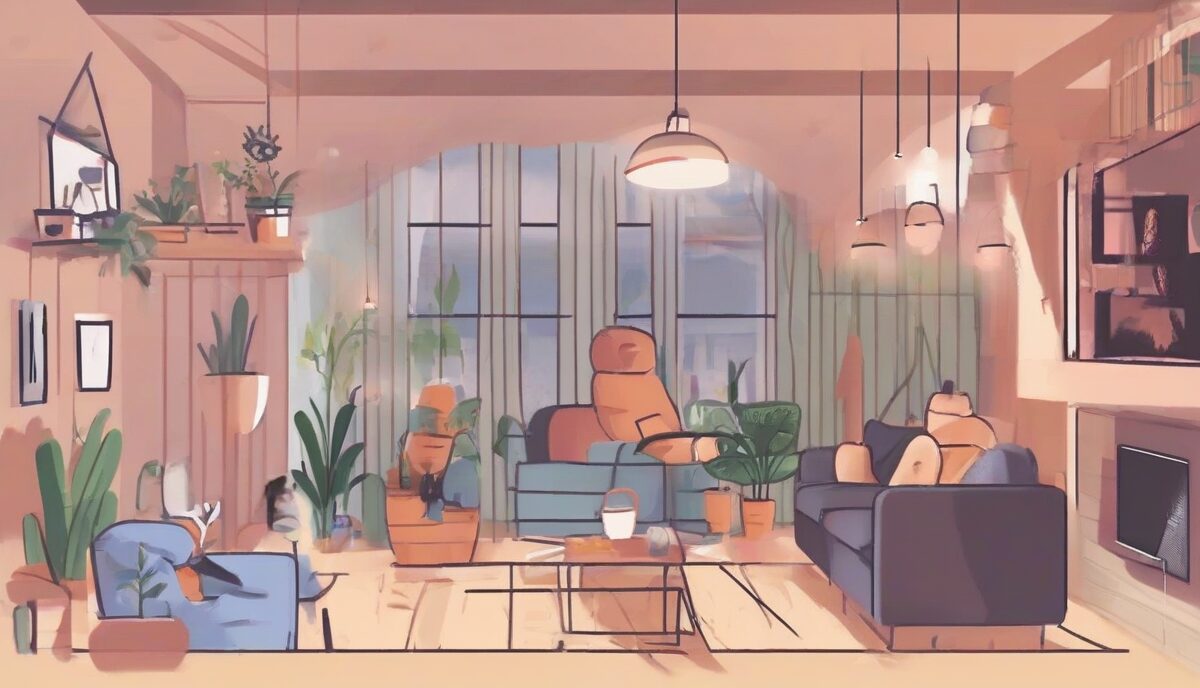
When the weather doesn’t cooperate or you’re looking for fun ways to stay active inside, an indoor activities guide can be a lifesaver. Whether you’re seeking activities for kids, adults, or the entire family, this comprehensive guide offers a variety of options to keep everyone entertained and engaged.
Why Indoor Activities are Important
Indoor activities are crucial for maintaining physical and mental well-being, especially during times when outdoor activities are not feasible. They provide an opportunity to stay fit, reduce stress, and enjoy quality time with family and friends. Moreover, engaging in indoor activities can foster creativity and improve cognitive skills.
Physical Activities to Do Indoors
Staying physically active is important, even when you’re indoors. Here are some fun and effective indoor exercises:
- Home Workouts: Use online workout videos or apps to follow along with guided exercises. Whether it’s yoga, HIIT, or strength training, there’s something for everyone.
- Dancing: Turn up the music and dance around your living room. It’s a great way to get your heart pumping and have fun.
- Indoor Sports: Activities like table tennis, badminton, or even a mini basketball hoop can keep you active and entertained.
- Stretching and Flexibility: Incorporate stretching routines or try Pilates to improve flexibility and reduce muscle tension.
Creative Indoor Activities
Stimulate your creativity with these indoor activities:
- Art and Craft Projects: From painting and drawing to DIY crafts, let your imagination run wild.
- Cooking and Baking: Try new recipes or bake your favorite treats. It’s a delicious way to spend your time indoors.
- Writing: Start a journal, write short stories, or even try your hand at poetry.
- DIY Home Decor: Get creative with home improvement projects or make your own decorations.
Fun Indoor Activities for Kids
Keeping kids entertained indoors can be challenging, but these activities can help:
- Indoor Treasure Hunt: Create a scavenger hunt with clues and hidden treasures around the house.
- Board Games and Puzzles: Classic board games and puzzles are great for family bonding and keeping kids engaged.
- Building Forts: Use pillows, blankets, and furniture to build creative forts for imaginative play.
- Interactive Storytime: Read books together or create your own stories and act them out.
Relaxing Indoor Activities
Sometimes, you just need to unwind and relax. Here are some calming indoor activities:
- Reading: Dive into a good book or listen to audiobooks for a relaxing escape.
- Meditation and Mindfulness: Practice mindfulness techniques or guided meditation to reduce stress and improve mental clarity.
- Watching Movies or TV Shows: Binge-watch your favorite series or have a movie marathon.
- Listening to Music or Podcasts: Enjoy your favorite tunes or explore new podcasts.
Deepening Intellectual Horizons Through Targeted Skill Acquisition
While the previous sections touched upon general creativity, there is a profound satisfaction to be found in the structured pursuit of new, complex skills that can be mastered entirely within the home. This goes beyond casual reading; it involves transforming a corner of your living space into a dedicated learning lab. One of the most effective ways to engage the mind is through the study of linguistics. Language acquisition apps are a starting point, but true indoor mastery involves immersion techniques: labeling every object in your kitchen with its foreign name, switching your phone’s operating system to your target language, and engaging in “shadowing,” a technique where you repeat audio from native speakers in real-time to perfect your prosody and accent.
Beyond languages, the digital age has democratized high-level technical training. You can engage in “computational thinking” by learning to code in Python or JavaScript using interactive platforms. This is not merely a professional asset but a cognitive exercise that improves logic and problem-solving abilities. For those with a more tactile inclination, consider the art of lockpicking (as a hobbyist puzzle-solver) or advanced calligraphy. These activities require intense focus and fine motor control, providing a form of “flow state” that is often missing from our high-speed digital lives. An edge case to consider is the “Feynman Technique”: choose a complex topic you’ve always wanted to understand—such as quantum entanglement or the history of the Silk Road—and spend your afternoon researching it with the goal of being able to explain it simply to a child. This active synthesis of information ensures that your time spent indoors is an investment in your intellectual capital.
The Science of the Home: Advanced STEM Projects and Kitchen Chemistry
Transitioning from pure intellectual study to applied science, the home environment serves as an excellent laboratory for STEM (Science, Technology, Engineering, and Mathematics) activities that go far beyond simple school projects. Indoor gardening, for instance, can be elevated into a study of hydroponics or aeroponics. Instead of using soil, you can build a small-scale system using PVC pipes, a water pump, and nutrient solutions to grow lettuce or herbs in a closet or on a windowsill. This requires monitoring pH levels and understanding the nitrogen cycle, turning a hobby into a living biology experiment. For those interested in physics and engineering, the construction of a Rube Goldberg machine offers endless hours of entertainment. These complex, chain-reaction devices use everyday household items—books, marbles, spoons, and string—to perform a simple task, like turning off a light switch. The process involves constant iteration, troubleshooting, and an understanding of momentum and energy transfer.
Kitchen chemistry is another vast field to explore. While basic cooking was mentioned previously, advanced culinary science involves processes like spherification (creating juice-filled pearls) or using transglutaminase (meat glue) to create unique textures. Even the simple act of fermentation is a lesson in microbiology. Starting a sourdough culture or brewing your own kombucha requires you to manage a living ecosystem of yeast and bacteria. You must control variables like temperature, light exposure, and sugar concentration. For a more tech-centric approach, explore “citizen science” projects. Websites like Zooniverse allow you to contribute to real scientific research from your laptop, such as classifying galaxies from telescope images or transcribing historical ship logs to help climate scientists. This allows you to participate in global discovery without ever stepping out your front door.
Strategic and Analytical Gaming: Moving Beyond the Basics
While classic board games are a staple of indoor life, there is an entire world of “heavy” tabletop gaming and digital strategy that offers deep mental engagement. Strategy games, often referred to as “Eurogames,” focus on resource management and long-term planning rather than luck. Titles like *Terraforming Mars* or *Brass: Birmingham* require players to balance complex economic systems and anticipate opponents’ moves several turns in advance. For those who prefer a solo experience, the rise of “Legacy” games or solo-mode RPGs (Role-Playing Games) provides a narrative depth similar to reading a novel but with the added agency of decision-making. In a solo RPG like *Ironsworn*, you use a system of prompts and dice rolls to build a world and navigate a character through it, effectively co-authoring a story as you play.
Chess remains the ultimate indoor mental sport, and with modern technology, you can analyze your games using powerful AI engines to understand your tactical errors. This analytical approach transforms a simple game into a rigorous study of patterns and possibilities. If you have a group but are physically separated, “virtual tabletop” software like Roll20 or Tabletop Simulator allows you to play almost any game in a 3D digital space, maintaining the social connection of game night. An interesting edge case is the pursuit of “escape room in a box” experiences. These are one-time-use puzzles that challenge your lateral thinking and deductive reasoning. They often involve physical components, hidden compartments, and digital interfaces, providing a high-intensity cognitive workout that can last several hours. These activities move the needle from simple “entertainment” to genuine cognitive development and social bonding.
The Art of Domestic Preservation and Artisanal Craft
Building on the idea of creative projects, there is a specific category of indoor activity focused on the “artisanal domestic,” which involves creating high-quality, functional items from scratch. This is a step above general DIY decor; it is about mastering a craft. Consider bookbinding, for example. You can learn to sew signatures together, create hard covers from book cloth or leather, and produce custom journals or sketchbooks. This requires precision, patience, and an eye for aesthetics. Similarly, the world of textile arts offers more than just basic knitting. You might explore “visible mending,” a Japanese technique known as Sashiko, which turns the repair of clothing into a decorative art form. This not only keeps you busy but also promotes a sustainable lifestyle by extending the life of your wardrobe.
Another area of focus is the production of home apothecary items. This involves learning the properties of essential oils, carrier oils, and botanicals to create your own soaps, candles, or skincare products. This activity combines the chemistry mentioned earlier with a strong creative element. You can experiment with scent profiles, layering notes of sandalwood, bergamot, and lavender to create a signature home fragrance. For those who enjoy a more technical challenge, woodworking with hand tools (which can be done in a small space with a portable workbench) allows for the creation of small furniture, spoons, or bowls. The focus here is on the meditative quality of the work—the sound of a plane smoothing wood or the feel of a chisel carving a groove. These activities result in tangible products that provide a sense of accomplishment and can even be given as thoughtful, handmade gifts.
Advanced Home Organization and Digital Decluttering
While the existing guide mentions DIY home decor, there is a more systematic approach to the indoor environment that can be both an activity and a mental reset: advanced home organization and digital hygiene. This is not just “cleaning”; it is the architectural redesign of your living and digital spaces. Start with the “KonMari” method or the “Swedish Death Cleaning” philosophy to evaluate every item in your home. This involves a deep psychological dive into your relationship with your possessions. You might spend an entire afternoon cataloging a collection, whether it’s books, vinyl records, or spices, using a professional database app. This creates a sense of order and control that significantly reduces environmental stress.
Digital decluttering is perhaps even more relevant in our modern lives. Spend time indoors auditing your digital footprint. This includes organizing thousands of photos into tagged albums, clearing out “ghost” subscriptions, and setting up a robust password management system. You can even delve into “digital archiving,” which involves scanning old physical photographs and documents to preserve them for future generations. This requires learning how to use high-resolution scanners and basic photo restoration software to remove scratches or color-correct faded images. Another productive indoor project is the optimization of your home network and smart devices. Configuring a “smart home” hub to automate lighting, temperature, and security requires a mix of technical setup and logical planning. These tasks are immensely satisfying because they result in a more efficient, peaceful, and functional living environment, making all other indoor activities more enjoyable.
Performative Arts and Digital Content Creation
The home is also a stage for the performative arts, providing a private space to develop skills that usually require an audience. If you’ve ever wanted to try your hand at voice acting, you can set up a makeshift “vocal booth” in a closet using blankets for sound dampening. There are numerous scripts available online, and recording yourself allows you to analyze your tone, pacing, and characterization. Similarly, learning the art of “cardistry” (the non-magical manipulation of playing cards) or sleight-of-hand magic requires hundreds of hours of practice that are perfectly suited for a quiet afternoon. These skills develop incredible manual dexterity and provide a unique way to entertain others in the future.
For those interested in the digital realm, the home is the perfect place to start a podcast or a YouTube channel. This involves a suite of sub-skills: scriptwriting, audio engineering, video editing, and graphic design for thumbnails. You don’t need expensive equipment to start; most modern smartphones are capable of high-quality recording. The activity lies in the *process* of creation—learning how to tell a story through jump cuts, B-roll, and sound effects. If you prefer a more solitary performative art, consider “Foley art.” This is the reproduction of everyday sound effects that are added to films. You can take a silent video clip and try to recreate the sounds using household objects: crinkling cellophane for a fire, or hitting a leather glove against your thigh for a horse’s gallop. It’s a fascinating way to engage with media and understand the mechanics of storytelling.
Holistic Wellness and Sensory Indoor Environments
Finally, we must expand on the concept of relaxation by looking at holistic wellness and the creation of sensory experiences. Beyond simple meditation, you can practice “biohacking” basics at home to optimize your physical state. This might include contrast hydrotherapy—alternating between hot and cold water in your shower to improve circulation and alertness—or practicing specific breathwork techniques like the Wim Hof Method or Box Breathing. These practices have immediate physiological effects and can be done in any room of the house. You can also focus on “circadian lighting”: adjusting the light levels in your home throughout the day to match the natural sun cycle, which helps regulate your sleep-wake rhythm. This involves using warm, dim lights in the evening and bright, cool-toned lights in the morning.
FAQ
1. What are some benefits of indoor activities?
Indoor activities provide physical exercise, mental stimulation, stress relief, and opportunities for creativity and family bonding.
2. How can I stay active indoors without equipment?
You can stay active indoors by doing bodyweight exercises, dancing, practicing yoga, or following online workout videos.
3. What are some fun indoor activities for adults?
Adults can enjoy home workouts, cooking, crafting, reading, or watching movies. Board games and puzzles are also great options.
4. How can I keep my kids entertained indoors?
Engage kids with indoor treasure hunts, board games, building forts, and interactive storytime. Art and craft projects are also a hit with children.
5. What are some relaxing indoor activities?
Relaxing indoor activities include reading, meditation, listening to music, and watching movies or TV shows.
Related posts:
 Understanding Type 2 Fun
 Emotional Intelligence for Kids: 21 Activities to Try
 Fun Games for Christmas Party That Everyone Can Enjoy
 Therapy Games
 CDC Releases Updated Holiday Guidelines for Safe Celebrations
 Family Board Game Bonding
 Art and Emotional Connection
 50 Fun Leadership Activities, Games, and Ideas for Kids and Teens