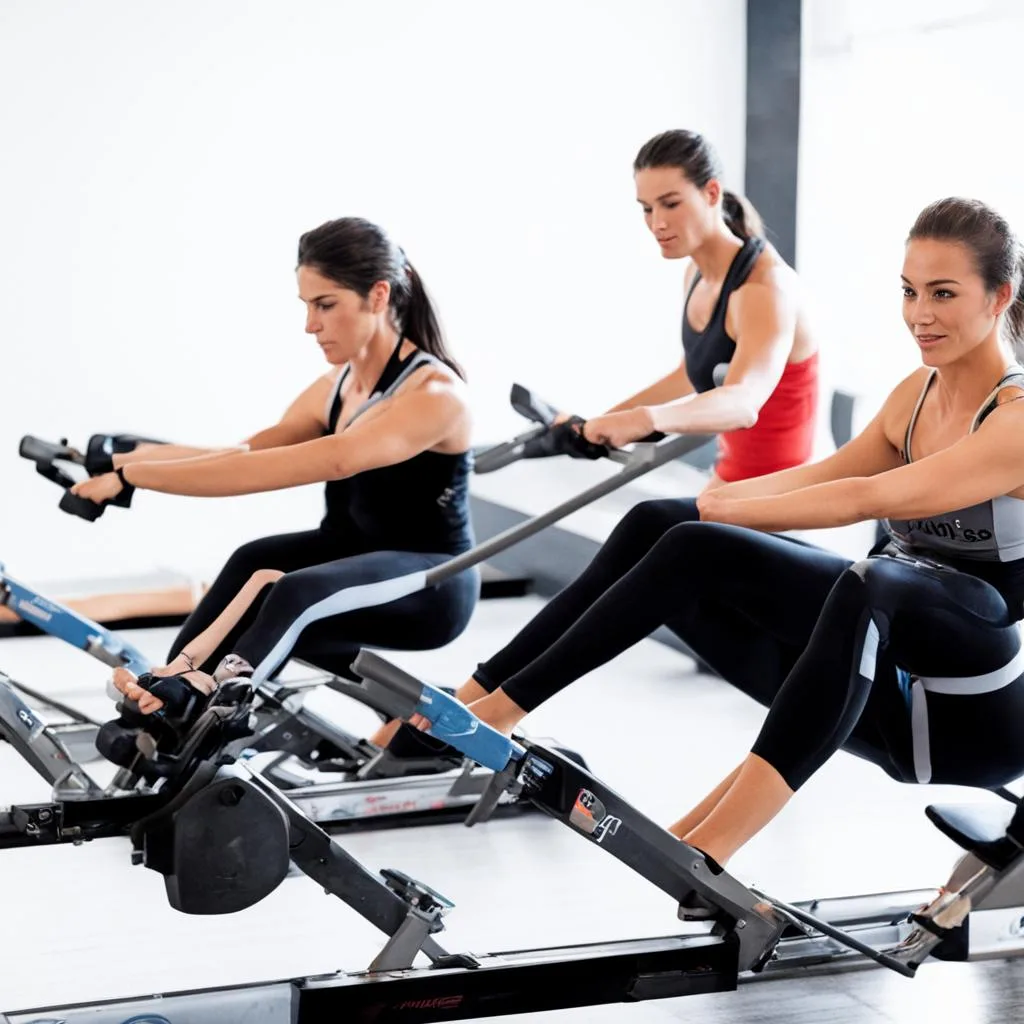
There’s a new fitness trend emerging in New York City (NYC) – indoor rowing classes! Rowing studios are popping up all over, filled with sleek rowing machines and enthusiastic athletes. What’s driving this trend and why are rowing workouts becoming so popular?
The Benefits of Indoor Rowing
Indoor rowing, often called erging, offers many benefits:
- It’s a low-impact, full body workout that burns calories and builds muscle without stressing your joints
- It works your legs, core, arms, and back in one fluid motion
- The rowing stroke is natural and intuitive yet technical enough to be mentally engaging
- It provides both cardio and strength training in one efficient workout
- Most rowing studios focus on community, support, and healthy competition rather than cutthroat performance
Rowing Studiosprioritize Wellness
While rowing offers an effective workout, the growing popularity of rowing studios is about more than physical fitness. Many people are attracted to the mind-body connection and sense of community inherent in indoor rowing classes.
Studios like CityRow and Row House emphasize personal progress, mindfulness, and community over racing. With upbeat music and encouraging coaching, classes aim to make rowing accessible for everyone. The focus is on the experience just as much as the workout.
Rowing: An Egalitarian Sport
Rowing has an inherently egalitarian ethos. Men and women train and compete together. Rowing emphasizes teamwork, trust, and community in addition to individual excellence.
As rowing breaks into mainstream fitness, these inclusive and cooperative values persist. Rowing classes bring together people of all ages, fitness levels, and backgrounds. Anyone can hop on a rowing machine and pull – it’s the ultimate democratic sport.
Decoding the Ergometer: Understanding Equipment Variations
Not all rowing machines are created equal, and understanding the nuances of the equipment used in NYC studios can significantly impact your training experience. The industry standard remains the air-resistance rower, such as the Concept2, which uses a flywheel to create resistance; the harder you pull, the greater the drag. This “real-feel” dynamic is preferred by competitive rowers because it mimics the physics of moving a boat through water.
However, newer “boutique” studios often opt for water-resistance rowers like the WaterRower. These units feature a tank of water with internal paddles, providing a soothing, rhythmic sound and a variable resistance curve that feels more consistent throughout the stroke. For those recovering from injury or prioritizing joint health, magnetic resistance machines are sometimes utilized in hybrid classes. These are virtually silent and allow for precise, incremental adjustments to the resistance levels, making them ideal for high-intensity interval training (HIIT) circuits where you need to switch between “sprints” and “recovery” modes instantly.
The Anatomy of the Stroke: Technical Precision for Longevity
To avoid common pitfalls like lower back strain, mastering the four phases of the stroke is essential: the Catch, the Drive, the Finish, and the Recovery. Beginners frequently make the mistake of pulling with their arms too early. Effective rowing is actually a sequence: legs first, then core, then arms. The “drive” should be initiated entirely through the legs, with the glutes and quads providing 60 percent of the power.
In NYC’s fast-paced studio environment, instructors often use the “1-2-3” count to help rowers synchronize their movement. The “1” is the explosive drive, the “2” is the controlled lean back, and the “3” is the patient recovery. If you find yourself rushing the return to the catch position, you are sacrificing power and increasing the risk of fatigue. Focus on the ratio: your recovery should take twice as long as your drive. This patience allows your heart rate to modulate and ensures you have the necessary “pop” for the next stroke.
Integrating Strength Circuits and Mobility Work
Many NYC rowing classes have evolved into hybrid formats that combine time on the erg with floor-based strength conditioning. This is a strategic design choice. By incorporating movements like kettlebell swings, weighted lunges, or TRX rows, studios address the potential for muscle imbalances that can occur if one only rows. Because rowing is a pulling-dominant exercise, these hybrid classes often include “push” movements like push-ups or overhead presses to maintain structural balance in the shoulders and chest.
Furthermore, mobility work has become a hallmark of top-tier studios. Coaches now dedicate the final ten minutes of class to hip openers and thoracic spine stretches. Because the rowing stroke involves constant flexion and extension of the hips, tightness in the psoas and hamstrings is a common complaint among office-dwelling New Yorkers. Utilizing foam rollers or lacrosse balls post-row is a practice increasingly encouraged by instructors to prevent the “rower’s hunch” and promote better posture throughout the workday.
Strategic Pacing: Understanding Splits and Watts
One of the most intimidating aspects for newcomers is the performance monitor. You will see numbers like “Split” (/500m) and “Watts.” The split represents how long it would take you to row 500 meters at your current intensity; a lower number means you are faster. Unlike running, where you might track miles per hour, rowing is measured by time per distance. This is the ultimate equalizer.
In a group setting, coaches will often call out “target splits” based on your fitness level. Learning to hold a consistent split—rather than fluctuating wildly—is the mark of a skilled rower. If a coach asks for a “2:15 split,” they are asking for a steady rhythm that you can sustain for the duration of the set. Understanding these metrics transforms the workout from a mindless sweat session into a data-driven pursuit of efficiency. Over time, you will notice that your ability to hold a lower split at a lower stroke rate (SPM) indicates significant gains in cardiovascular and muscular efficiency.
Navigating the NYC Studio Landscape: Membership vs. Drop-ins
The NYC fitness market is notoriously expensive, and rowing is no exception. However, savvy residents know how to navigate the ecosystem. Many studios offer “First Timer” specials, which are essential for testing the vibe of a specific brand. Some studios lean heavily into the nightclub aesthetic—with dim lighting, heavy bass, and synchronized strobe lights—while others focus on a “rowing-as-meditation” approach with natural light and minimalist decor.
If you plan on rowing more than twice a week, look for monthly unlimited memberships or “class packs” that do not expire. Because rowing is a high-skill sport, there is a distinct advantage to staying with one studio; you will get to know the instructors’ coaching cues, which vary slightly from brand to brand. Additionally, many NYC studios now offer virtual classes that allow you to use your home equipment (if you have it) while still feeling connected to the instructor’s energy through a live-streamed platform.
The “Rowing-Specific” Gear You Actually Need
While rowing is accessible, the right gear can prevent common discomforts. The most frequent complaint from beginners is not muscle soreness, but skin irritation. Because you are sitting on a sliding seat, wearing seamless leggings or high-quality cycling shorts is highly recommended. Cotton fabrics tend to bunch up, which can lead to chafing during a 45-minute endurance row.
Additionally, pay attention to your footwear. You want a shoe with a relatively thin, flexible sole. Thick-soled running shoes can make it difficult to feel the connection to the foot stretchers and can interfere with the drive of your ankles. Many seasoned NYC rowers keep a pair of minimalist trainers or even dedicated lifting shoes in their gym bags specifically for rowing days. Finally, consider investing in a pair of lightweight, fingerless gloves if you struggle with grip fatigue. While you want to develop natural calluses over time, gloves can be a lifesaver during high-volume sessions where your hands give out before your legs do.
Recovery Protocols for the Urban Athlete
Rowing is deceptively taxing on the central nervous system. Because it is a full-body engagement, it can be more exhausting than a localized weightlifting session. If you are rowing in NYC, you are likely also walking miles to the subway or navigating stairs, which places additional stress on the legs. Incorporating “Active Recovery” days is crucial.
FAQ
What muscles does rowing work?
Rowing works all the major muscle groups in both the upper and lower body. It engages your legs, glutes, core, back, arms, and shoulders in one fluid movement.
Is rowing high or low impact?
Rowing is low-impact because there is no harsh pounding like with running. The rowing stroke is smooth, and done properly, the movement is fluid. This makes rowing a lower stress exercise for your joints.
Is rowing good cardio?
Yes, rowing gets your heart rate up and is an excellent cardiorespiratory exercise. Done at higher intensities, rowing can be highly demanding cardio training.
Is rowing hard to learn?
The basics of the rowing stroke are quite intuitive, especially on specialized erg machines in rowing studios. Learning good rowing technique does take some practice but group fitness classes provide coaching so beginners can learn efficiently.
Who is indoor rowing for?
One of the great things about indoor rowing is that it’s suitable for almost everyone. Rowing works for young and old, fit and deconditioned, athletic and novice exercisers. The smooth, low impact motion is gentle on joints which makes rowing very inclusive.
Related posts:
 Understanding Stroke and Emotions
 Top Boutique Fitness Studios of 2016
 Why the Rowing Machine Is Great for Total Body Fitness
 Understanding Gym Equipment
 Inside Lucy Hale’s Soul-Crushing SoulCycle Sessions That Keep Her Camera-Ready
 I’m Obsessed With My New Rowing Machine—Here’s Why You Should Get One, Too
 This Rowing App Promises to Replace Your Gym Membership
 NYC’s Healthiest Meal Delivery Services That Actually Taste Amazing