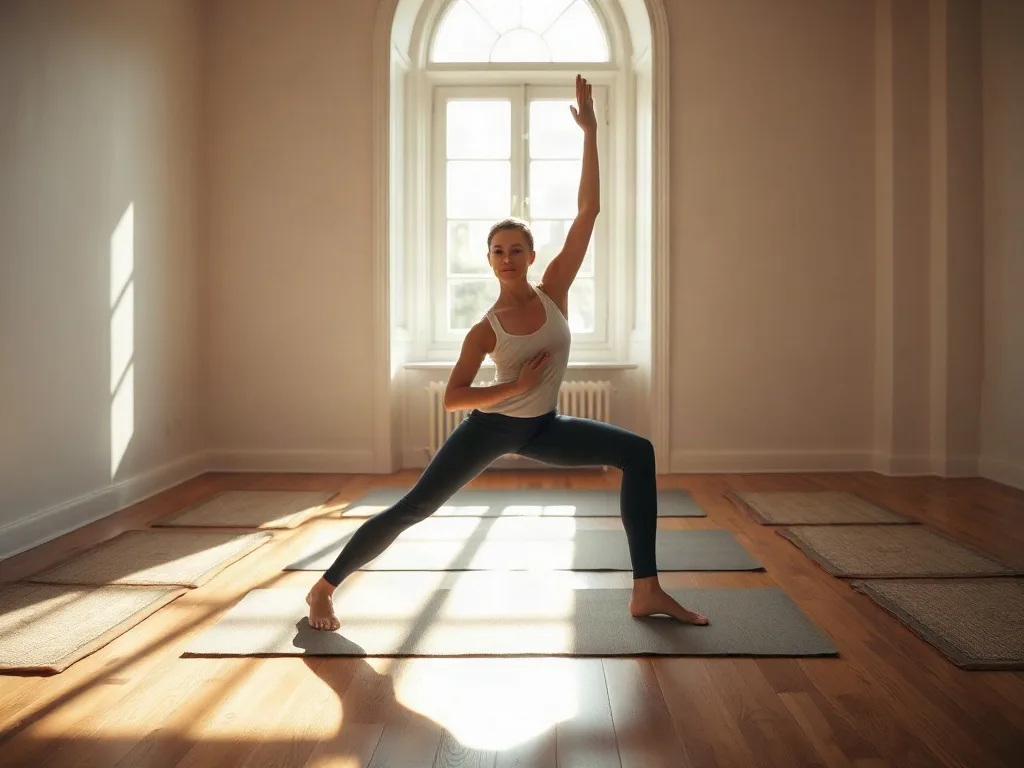
In the quiet corners of yoga studios worldwide, a specialized, self-paced practice known as Mysore-style Ashtanga yoga continues to draw dedicated practitioners. Unlike the instructor-led classes where students move in unison, the Mysore method places the responsibility of the practice directly into the hands of the individual. This ancient approach, originating from the teachings of Sri K. Pattabhi Jois in Mysore, India, offers a unique blend of structure and freedom. But is this disciplined, tradition-steeped practice the right fit for your modern lifestyle?
Understanding the Roots of the Mysore Method
The Mysore style is the traditional way of learning Ashtanga Vinyasa Yoga. At its core, the practice is a sequence of postures that are learned systematically. In a traditional Mysore room, students arrive during a set window of time, roll out their mats, and begin their practice at their own pace. The teacher does not call out instructions to the entire room; instead, they move from student to student, offering individual adjustments, verbal cues, and guidance on when to advance to the next posture. This lineage-based method ensures that the practice is tailored to the individual’s physical capabilities and mental state, rather than forcing every body into a rigid, one-size-fits-all mold.
The Anatomy of a Self-Paced Practice
One of the most significant aspects of Mysore yoga is the autonomy it grants the student. Because you are not following a teacher’s cadence, you are forced to internalize the sequence. This requires immense focus and presence. You learn to connect your breath to your movement without external prompts, which eventually leads to a meditative state often described as moving meditation. By memorizing the sequence, you shift from performing a task to experiencing a flow. This self-reliance builds confidence, helping you develop a practice that you can eventually take off the mat and into your daily life.
Why Discipline Matters in Modern Yoga
In a world of instant gratification and rapid-fire workouts, the slow, methodical nature of Mysore yoga can feel counter-intuitive. However, this is precisely where its power lies. Establishing a consistent Mysore practice requires showing up even when you don’t feel like it. This discipline acts as a mirror for your life outside the studio. When you learn to navigate the challenges of a difficult posture with patience and equanimity, you develop the psychological tools to handle the stressors of your professional and personal life. The practice is not about achieving the perfect pose, but about the commitment to the process itself.
The Role of the Teacher: Mentorship Over Instruction
In a led class, the teacher is a choreographer. In a Mysore room, the teacher is a mentor. Because the instructor is not busy counting breaths or demonstrating poses for the masses, they have the bandwidth to observe your unique alignment and suggest modifications that prevent injury. This one-on-one attention is invaluable for beginners who may be unsure of their form. Over time, the relationship between student and teacher deepens, moving beyond simple physical correction to a broader understanding of how yoga fits into your personal journey, health goals, and mental well-being.
Addressing the Physical Demands
Ashtanga yoga is physically rigorous. It involves repetitive movements, core engagement, and significant flexibility. For those who enjoy a challenge, Mysore provides a clear roadmap for progress. You do not move to a more advanced posture until you have mastered the foundational ones. This prevents the ego from driving your practice, which is a common cause of yoga-related injuries. If you are someone who enjoys structured progression and seeing tangible evidence of your hard work over months and years, the Mysore method provides a clear, measurable path forward.
Is the Mysore Style Right for Your Personality?
Not every yoga style suits every personality type. Mysore practice is best suited for individuals who thrive on routine and are comfortable with silence. If you are someone who needs high-energy music, a booming voice, or constant variation to stay engaged, you might find the quiet, repetitive nature of the Mysore room challenging. Conversely, if you feel overwhelmed by the fast pace of modern life and crave a sanctuary where you can turn inward and develop a deep sense of internal rhythm, this method could become the most important part of your week.
Overcoming the Intimidation Factor
Many people avoid Mysore classes because they feel they aren’t “advanced” enough or that they don’t know the poses well enough to participate. This is a common misconception. The Mysore room is actually the best place for a beginner because you are taught at your own pace, one pose at a time. You do not need to memorize the entire series before walking through the door. In fact, most teachers prefer that you come with a “beginner’s mind,” ready to learn the sequence incrementally. The only requirement is a willingness to show up consistently and a desire to learn.
Integrating the Practice into Your Daily Life
The ultimate goal of any yoga practice is integration. How do you take the peace you find on the mat into your kitchen, your office, and your relationships? Mysore yoga excels at this because the practice itself is a microcosm of life. You face discomfort, you find your breath, you learn to let go of expectations, and you move forward. By practicing this cycle daily, you build a resilient mindset. As you become more attuned to your body’s needs through this self-paced practice, you will likely find that you make more mindful choices regarding your nutrition, rest, and stress management, leading to a more holistic lifestyle.
Navigating the Plateau: Mental Resilience in Repetition
One of the most persistent hurdles in the Mysore method is the psychological barrier of repetition. While the sequence acts as a steady anchor, there are weeks—or even months—where the practice feels stagnant. In a modern fitness landscape obsessed with novelty, returning to the same postures daily can trigger feelings of boredom or impatience. However, this is precisely when the practice shifts from a physical workout to a study in mindfulness. When you feel the urge to “skip ahead” or add variations, you are observing the ego’s desire for distraction. Learning to stay present within the repetition allows you to notice subtle nuances in your breath and alignment that you would otherwise miss in a faster-paced environment. This mental training translates directly to professional environments where long-term projects require sustained focus despite the absence of immediate external rewards.
The Physiological Benefits of Sustained Sequencing
Beyond the meditative aspects, the Mysore method offers a unique physiological advantage: the development of functional intelligence in the body. Because you follow the same sequence, your nervous system eventually learns to anticipate the transitions, allowing your muscles to move with greater efficiency and less compensatory strain. Unlike varied “flow” classes where the body is constantly guessing, the consistency of Mysore allows the practitioner to refine their engagement of the bandhas (internal energy locks) and the ujjayi breath. Over time, this leads to a safer, more sustainable practice where the joints are supported by balanced muscular effort rather than momentum. This is particularly beneficial for individuals with sedentary jobs, as the systematic opening of the hips and shoulders acts as a daily corrective for the postural imbalances caused by prolonged desk work.
Adapting to Seasonal and Circadian Cycles
A sophisticated aspect of the Mysore method is its inherent flexibility regarding your internal state. On days when you are feeling fatigued, recovering from illness, or experiencing high stress, the practice naturally adjusts. You do not have to perform at 100% capacity; instead, you learn to “practice at your level,” which might mean moving through a shortened sequence or focusing more on restorative postures. This teaches the practitioner to listen to the body’s biorhythms rather than imposing a rigid, external demand on their physiology. By learning to modulate your intensity, you develop a form of body literacy that informs your decisions about sleep, nutrition, and recovery, ultimately preventing the burnout so common in high-intensity, instructor-led fitness regimes.
The “Mysore Room” as a Social Ecosystem
While Mysore is an individual practice, it occurs within a unique communal atmosphere. There is a distinct, quiet energy in a room where everyone is working on different stages of the same sequence. This environment fosters a sense of shared dedication without the distraction of social interaction or comparison. You are surrounded by peers who are all navigating their own challenges, which creates a subtle, supportive accountability. For those who find the competitive nature of some modern fitness spaces off-putting, the Mysore room serves as a sanctuary of “solitude in community.” You are essentially practicing in parallel with others, creating a collective focus that can be deeply grounding, especially for people living in isolating urban environments.
Managing Expectations for the “Advanced” Practitioner
A common pitfall for those transitioning from led or “flow” classes to the Mysore method is the “progression trap.” Many students arrive expecting to master complex arm balances or deep backbends quickly. In the traditional Mysore framework, advancement is not a reward for effort but a reflection of stability. A teacher may hold a student back from a “fancy” pose if their foundation is shaky, not to be restrictive, but to prevent long-term injury. This serves as a vital lesson in humility and patience. Understanding that your progress is measured by the quality of your breath and the steadiness of your mind, rather than the difficulty of the posture, shifts the entire paradigm of what it means to be an “advanced” yogi. It is an exercise in deconstructing the need for validation through physical achievement.
Practical Considerations: Equipment and Hygiene
Because you are responsible for your own practice, there is a certain level of ownership required regarding your gear. In the Mysore tradition, it is common to use a specific type of mat or towel that provides traction even when you are sweating profusely. Since you are practicing in a shared space, hygiene is a vital component of the practice culture. Maintaining your mat and keeping your practice area clean is part of the discipline of showing respect for the space and your fellow practitioners. Furthermore, because you are often practicing in the early morning, you will need to establish a routine that balances your hydration and caloric intake. Learning to practice on an empty stomach—a hallmark of the tradition—requires some experimentation to find what works for your blood sugar levels, helping you understand your body’s unique metabolic needs before you even step onto the mat.
Frequently Asked Questions
Do I need to be flexible to start Mysore yoga? Not at all. Flexibility is a byproduct of the practice, not a prerequisite. You will start with the postures your body can handle, and the teacher will help you modify them to suit your current range of motion. The focus is on the breath and the effort, not the aesthetic result.
How many days a week should I practice? Traditionally, Ashtanga yoga is practiced six days a week, but that is a goal for long-term practitioners. If you are just starting, aim for two or three days a week. The most important factor is consistency, so choose a frequency that you can realistically maintain without burning out.
What if I forget the sequence? It is perfectly normal to forget the sequence in the beginning. Your teacher is there to help you. They will guide you through the next posture until you have it memorized. Over time, the sequence becomes ingrained in your muscle memory, allowing you to focus entirely on your breath.
Is Mysore yoga too intense for someone with chronic pain? If you have chronic pain or a history of injury, it is essential to consult with a medical professional before starting. Once cleared, be sure to inform your Mysore teacher of your condition. Because the instruction is one-on-one, the teacher can provide specific modifications to ensure your practice supports healing rather than causing harm.
Can I do Mysore yoga if I have a busy schedule? Yes, that is one of the main advantages of the Mysore method. Because you start your practice whenever you arrive during the designated window, you can fit it into your schedule in a way that works for you. You don’t have to worry about missing the start of a class; you simply arrive, practice, and complete your sequence at your own pace.
Related posts:
 Lindsay Ellingson’s Stress-Relieving Yoga Move
 PHA Bodyweight Workout: Efficient Fitness Anywhere, Anytime
 Army Method for Quick Sleep
 Balencyoga: Luxury Yoga Wear
 Yoga Tips for Beginners
 Wake Up Zen: The Gentle Yoga Alarm That’s Replacing Jarring Morning Buzzers
 Instagram’s Period Yoga Phenomenon
 Desk Yoga for Back Pain Relief