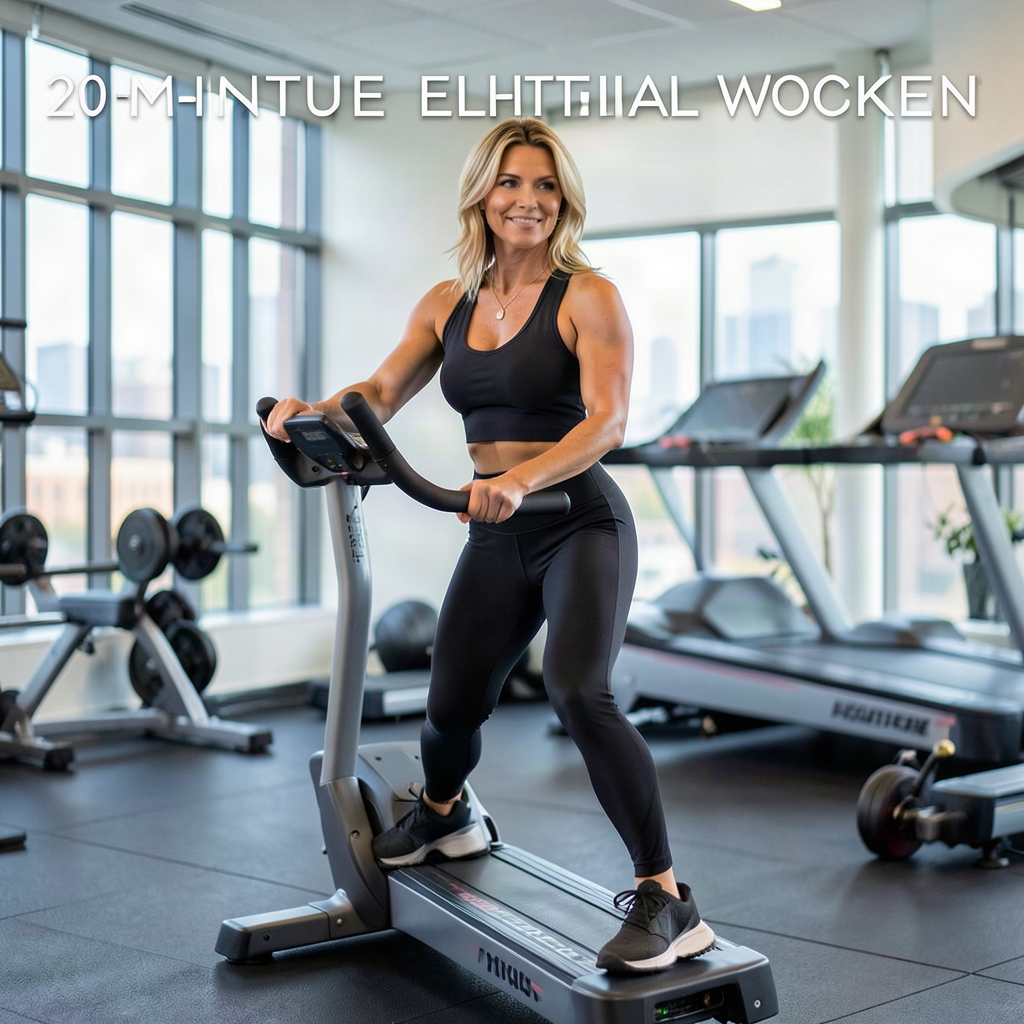
When it comes to longevity and functional fitness, few celebrities command as much respect as Jennifer Aniston. Her approach to movement has evolved from grueling, high-impact routines to a philosophy centered on sustainability, joint health, and efficiency. At the heart of her current fitness repertoire is the 20-minute elliptical workout—a strategic, time-efficient method that prioritizes heart rate management and low-impact cardiovascular health.
The Philosophy of Low-Impact Efficiency
The core appeal of the elliptical for a busy lifestyle lies in its ability to mimic the movement patterns of running while removing the jarring impact on the knees, hips, and ankles. Aniston has frequently spoken about the importance of listening to her body, noting that overtraining often leads to burnout and injury. By utilizing the elliptical, she achieves a high-intensity cardiovascular stimulus without the cumulative wear and tear associated with pavement pounding. This approach aligns with modern exercise science, which suggests that consistency and longevity are far more important than the intensity of a single session.
Understanding the 20-Minute Window
Twenty minutes may seem brief, but when executed with intention, it is more than enough time to improve aerobic capacity. The key is the transition from “steady-state” cardio to interval-based training. Rather than maintaining a single speed for the duration, this workout utilizes a pyramid structure. This forces the body to adapt to fluctuating demands, which keeps the metabolism engaged and prevents the “plateau effect” that often occurs when the body becomes too efficient at a single, monotonous movement.
Setting Up Your Elliptical for Success
Before beginning the workout, proper machine setup is essential. Ensure your feet are positioned comfortably on the pedals, maintaining a slight bend in your knees throughout the rotation. Many users make the mistake of locking their knees, which can lead to joint stress. Additionally, gripping the moving handles is optional; using them engages the upper body, increasing the total caloric expenditure and heart rate, while letting go forces your core to work harder to maintain balance and posture.
The Warm-Up Phase (Minutes 0-5)
The first five minutes are dedicated to priming the cardiovascular system. Start at a moderate resistance level—typically a 3 or 4 on a scale of 10. Focus on your breathing, ensuring you are inhaling deeply through your nose and exhaling through your mouth. This phase should feel like a brisk walk. The goal here is not to break a heavy sweat but to increase blood flow to the muscles and prepare your heart for the upcoming intervals.
The High-Intensity Interval Structure (Minutes 5-15)
This is the engine of the workout. Divide these ten minutes into five cycles of two minutes each. For the first minute of each cycle, increase your resistance by two levels and pick up your pace significantly. You should reach a point where you can only speak in short sentences, not full paragraphs. For the second minute, drop back to your warm-up resistance and slow your pace to recover. This “work-rest” ratio is the gold standard for improving VO2 max and metabolic flexibility.
The Cool-Down and Recovery (Minutes 15-20)
Never abruptly stop an elliptical session. Abruptly stopping can cause blood to pool in your legs, leading to lightheadedness. Spend the final five minutes gradually decreasing both resistance and speed. During the last two minutes, you should be moving at a very slow, gentle pace, allowing your heart rate to return to near-resting levels. Use this time to perform light shoulder rolls and neck stretches while your feet are still moving.
Incorporating Resistance and Incline
If your machine allows for incline adjustments, use them to target different muscle groups. Increasing the incline shifts the focus toward the glutes and hamstrings, mimicking the feeling of climbing a hill. Conversely, keeping the machine flat emphasizes the quadriceps. Aniston’s routine often involves subtle shifts in posture—such as slightly leaning forward to engage the glutes—which adds a layer of functional engagement to an otherwise repetitive movement.
Consistency and Frequency
The effectiveness of this 20-minute workout relies on frequency. Rather than treating this as a once-a-week challenge, it is designed to be a staple in a weekly routine, performed 3 to 4 times alongside strength training or yoga. By integrating this into a balanced life, you reduce the barrier to entry for exercise. It is much easier to commit to 20 minutes than an hour, which significantly increases the likelihood of long-term adherence.
Optimizing Biomechanics for Maximum Gluteal Activation
While the elliptical is often viewed as a general cardiovascular tool, you can transform it into a targeted lower-body shaper by adjusting your foot placement. Many users stand exclusively on the balls of their feet, which shifts the workload primarily to the quadriceps and can exacerbate shin splints. To mimic Aniston’s focus on longevity and functional glute strength, try shifting your weight toward your heels. By driving through the heel, you recruit the posterior chain—specifically the glutes and hamstrings—much more effectively. Additionally, experiment with a slightly wider stance if your machine’s pedal design allows. This lateral shift encourages hip stability and engages the gluteus medius, a crucial muscle for pelvic alignment that is often neglected in standard forward-moving cardio.
The Role of Cadence and RPM Management
Beyond resistance levels, the cadence—or Revolutions Per Minute (RPM)—is the secret variable in your 20-minute window. A common mistake is using excessive resistance to compensate for a slow, sluggish pace. To maximize metabolic output, aim to keep your RPM between 70 and 85 during high-intensity bursts. If you find yourself “mashing” the pedals—meaning you are using your body weight to force the pedals down rather than engaging your muscles in a smooth, continuous fluid motion—your resistance is likely too high for your current conditioning level. A smooth, rhythmic cadence ensures that the muscles are under constant tension throughout the entire elliptical arc, preventing the momentum-based “coasting” that renders many 20-minute sessions ineffective.
Mind-Body Synchronization and Breath Control
Aniston’s fitness longevity is largely attributed to her integration of mindful movement, a philosophy borrowed from her extensive background in yoga. During the high-intensity minutes of this workout, the tendency is to hold your breath or engage in shallow, rapid chest breathing. This triggers a sympathetic nervous system response, leading to premature fatigue. Instead, practice rhythmic breathing: inhale for two revolutions and exhale for two. This conscious regulation of oxygen helps delay the onset of lactic acid buildup in the muscles. By keeping your gaze forward and your shoulders relaxed—rather than hunched over the console—you maintain an open chest cavity, allowing for deeper diaphragmatic breathing which sustains your energy levels through the final, most demanding intervals.
Advanced Interval Variations for Plateaus
Once your body adapts to the standard pyramid structure, you can introduce “Tabata-style” bursts within your 20-minute timeframe to shock the system. Instead of two-minute work intervals, try 30 seconds of all-out effort followed by 30 seconds of near-total rest. This high-intensity approach forces the heart rate to spike rapidly, creating an “afterburn” effect known as Excess Post-exercise Oxygen Consumption (EPOC). This keeps your metabolic rate elevated for hours after you step off the machine. Another variation is the “Reverse Pedal” interval, where you pedal backward for 30 seconds at a moderate pace. This targets the hamstrings and calves from a different angle, providing a welcome change of pace that prevents repetitive stress and keeps the workout mentally engaging.
Managing Peripheral Fatigue and Core Stability
If you choose to use the elliptical without holding the handlebars, you are effectively performing a 20-minute unstable-surface core workout. To maximize this, you must consciously avoid “swaying” your torso side-to-side. Imagine a string pulling the crown of your head toward the ceiling, keeping your spine in a neutral, elongated position. If you feel your lower back beginning to arch, engage your transverse abdominis by drawing your navel toward your spine. This internal bracing protects the lumbar region and ensures that the core, rather than the lower back, is doing the work of stabilizing your body against the rhythmic motion of the machine. If you find this too challenging, start by using one hand on the stationary center rail to maintain balance while keeping the other arm free to swing naturally.
Strategic Integration with Strength Training
To mirror the balanced physique Aniston maintains, the timing of this elliptical workout is as important as the execution. If your goal is muscle hypertrophy, avoid performing this high-intensity cardio immediately before your weight training, as it will deplete the glycogen stores necessary for lifting heavy. Instead, perform this 20-minute session either on a separate day or as a “finisher” at the very end of your strength routine. Using it as a finisher is particularly effective; your muscles are already pre-fatigued, meaning you don’t need high resistance to reach a high heart rate, which reduces the risk of injury while still providing a potent cardiovascular stimulus to round out your training session.
Mastering the Elliptical Ergonomics for Long-Term Joint Health
The longevity of Jennifer Aniston’s fitness routine is not an accident; it is the result of meticulous attention to ergonomic alignment. Many casual users approach the elliptical with a “set it and forget it” mentality, but to truly protect your joints, you must audit your body position every few minutes. Focus specifically on your wrist alignment when using the moving handlebars. If you find yourself death-gripping the handles, you are likely creating unnecessary tension in your neck and trapezius muscles. Instead, maintain a loose, neutral grip, allowing your wrists to stay straight. If you notice shoulder fatigue, it is often a sign that you are pushing and pulling from the elbows rather than driving the movement from your lats and back. By shifting the focus to your back muscles, you reduce the strain on your smaller rotator cuff muscles, ensuring that you can sustain this 20-minute intensity for years without developing overuse injuries.
The Science of “Active Recovery” and Metabolic Flexibility
Integrating this elliptical session into your week requires an understanding of metabolic flexibility—the body’s ability to switch efficiently between burning carbohydrates and fats. By utilizing the 20-minute interval structure, you are training your mitochondria to be more efficient at energy production. On days where you feel particularly drained, consider modifying the “work” intervals to be less about resistance and more about fluid, high-RPM movement. This “light” version of the routine still promotes blood flow to the muscles and clears metabolic waste products, facilitating faster recovery from your heavier strength training days. Think of these sessions not just as a calorie-burning tool, but as a “flush” for your system, keeping your joints lubricated and your lymphatic system active without adding significant systemic stress to your central nervous system.
Navigating the “Plateau” with Variable Resistance Profiling
If you find that your 20-minute session has started to feel “easy,” the most common mistake is to simply increase the resistance level. While this works for a short time, it often leads to a breakdown in form where you start “stomp-pedaling” to overcome the tension. Instead, try variable resistance profiling. Keep your resistance in a moderate, manageable range, but manipulate the incline if your machine allows. If your machine is fixed-incline, focus on the “push-pull” ratio. Spend the first 10 minutes of your workout focusing exclusively on the push phase—driving through the heels and engaging the quads—and the second 10 minutes on the pull phase, where you focus on dragging the pedals back as if you were scraping mud off your shoes. This mental focus on specific muscle recruitment will challenge your nervous system in new ways, breaking through plateaus without needing to resort to grinding, high-resistance settings that can lead to joint inflammation.
The Importance of Footwear and Proprioceptive Feedback
Your connection to the machine begins at your feet, yet many people wear overly cushioned running shoes that lack the lateral stability required for the elliptical’s unique motion. For a 20-minute session, opt for a cross-training shoe with a flatter, firmer sole. This allows for better proprioceptive feedback—you can actually feel the surface of the pedal, which helps you maintain that essential heel-to-toe weight distribution. If you wear shoes with high “stack height” or excessive heel cushioning, you lose the ability to feel if your heels are lifting off the pedal, which is a common precursor to Achilles tendon strain. By choosing a lower-profile shoe, you gain a more stable base, allowing you to recruit your glutes more effectively and reducing the internal micro-adjustments your ankles have to make to keep you balanced.
Synchronizing Music and Movement for Psychological Endurance
The 20-minute elliptical window is a prime opportunity for “flow state” training, where your rhythm matches the external environment. Creating a playlist with a specific BPM (beats per minute) that matches your desired cadence can significantly reduce the perceived exertion of the workout. For the warm-up, aim for tracks around 110-120 BPM. When you transition into your high-intensity intervals, switch to tracks in the 130-140 BPM range. This auditory pacing acts as a metronome, preventing you from subconsciously slowing down when the work gets difficult. This psychological trick is one of the most effective ways to ensure you maintain the intensity required for real physiological change, as it removes the need to constantly check the console clock and allows you to stay “in the zone,” mirroring the focused, professional approach Aniston brings to her own training.
Adapting the Routine for Travel and Hotel Gym Constraints
One of the greatest challenges to fitness consistency is travel, where machines vary wildly in quality and settings. When you encounter a “mystery” elliptical in a hotel gym, don’t be discouraged if it feels different from your home machine. Instead, use a “Relative Intensity” scale. If the resistance levels are numbered 1-20, treat them as arbitrary. Your guide should be your breath and your heart rate. If you can’t find a resistance that feels “hard,” increase your RPM. If the machine feels “loose” or unstable, reduce your speed to focus on perfect, slow-motion control. By focusing on the *internal* feeling of effort rather than the *external* numbers on the screen, you can replicate the effectiveness of Aniston’s 20-minute workout on almost any piece of equipment, ensuring that your travel schedule never becomes an excuse to skip your cardiovascular foundation.
Frequently Asked Questions
Is 20 minutes enough time to see real fitness results? Yes, provided you are working at an intensity that challenges your heart rate. Short, intense intervals are scientifically proven to improve cardiovascular health and fat metabolism as effectively as longer, lower-intensity sessions.
Should I grip the handlebars or let them go? Both options are valid. Gripping the handles engages your chest, back, and arms, which increases your total energy expenditure. Letting go forces your core muscles to stabilize your torso, which is excellent for balance and abdominal engagement.
How can I prevent knee pain on the elliptical? Knee pain usually stems from poor form, such as leaning too far forward or locking the knee joint at the bottom of the stride. Keep your back straight, your core engaged, and maintain a soft bend in your knees throughout the entire rotation.
Can I do this workout if I am a beginner? Absolutely. The beauty of this routine is its scalability. If you are a beginner, simply reduce the resistance levels during the “work” intervals and focus on maintaining a steady rhythm before attempting higher resistance or faster speeds.
How does this workout complement other training? This elliptical routine is low-impact, making it the perfect “active recovery” or cardiovascular complement to heavy strength training or high-impact sports. It allows you to maintain your aerobic fitness without placing additional stress on your joints during recovery days.
Related posts:
 Quick Cardio Fix: Tracy Anderson’s 7-Minute Heart-Pumping Workout Video
 Jennifer Aniston’s Wellness Journey
 Understanding Gym Equipment
 Unlocking Fitness: Exploring the Benefits of Elliptical Machines
 Jennifer Aniston’s Self-Care Sunday Routine Is Surprisingly Simple
 Jennifer Aniston on Being a Late Bloomer
 This Full-Body Resistance Band Workout Will Transform Your Home Gym
 Jennifer Aniston’s Coffee Secrets