
Jordan Marie Daniel is a name synonymous with running and activism. As an advocate for Indigenous rights and environmental justice, she has combined her passion for running with her commitment to social change. This article explores her journey, achievements, and the significant impact she has made through her activism.
Early Life and Introduction to Running
Born into the Kul Wicasa Oyate, the Lower Brule Sioux Tribe, Jordan Marie Daniel grew up with a strong connection to her cultural heritage. Her love for running began at an early age, inspired by her grandfather, who was also a runner. This early passion for running laid the foundation for her future as an athlete and activist.
The Intersection of Running and Activism
Jordan Marie Daniel has masterfully intertwined her running with her activism. She uses her platform to raise awareness about critical issues affecting Indigenous communities, such as missing and murdered Indigenous women (MMIW), environmental degradation, and cultural preservation. Her runs often become powerful acts of protest and advocacy.
Raising Awareness for Missing and Murdered Indigenous Women (MMIW)
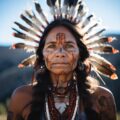
One of the most impactful aspects of Daniel’s activism is her dedication to the MMIW movement. She often runs with a red handprint painted across her face, symbolizing the violence faced by Indigenous women. Through her runs and public speaking, she brings much-needed attention to this crisis, advocating for justice and systemic change.
Environmental Advocacy
Daniel’s commitment to environmental justice is evident in her activism. She has participated in numerous protests and campaigns to protect sacred lands and natural resources. Her advocacy emphasizes the importance of preserving the environment for future generations and respecting Indigenous sovereignty.
Achievements and Recognition
Jordan Marie Daniel’s contributions to running and activism have not gone unnoticed. She has received several awards and recognitions for her work, including being named a Champion for Change by the Center for Native American Youth. Her efforts continue to inspire many, both within and outside the Indigenous community.
Future Goals and Vision
Looking ahead, Daniel aims to further amplify Indigenous voices and expand her advocacy efforts. She plans to continue using her platform to address critical issues and inspire others to take action. Her vision includes a future where Indigenous rights are respected, and the environment is protected.
The Philosophy of Movement as Ceremony
For Jordan Marie Daniel, running transcends the metrics of pace, heart rate, or mileage. It is rooted in the ancestral concept of running as ceremony—a practice used by Indigenous nations for communication, prayer, and resilience. By reclaiming the act of running, she challenges the Westernized, commodified sports industry that often ignores the history of the lands upon which marathons and ultra-races occur. Daniel emphasizes that every stride taken on stolen land must be an act of acknowledgement. Runners are encouraged to research the tribal nations whose territories they traverse, turning a Saturday morning jog into a conscious exercise in decolonization. This shift in perspective requires athletes to move with humility, recognizing that the trail or road is not merely a training ground but a living, breathing entity that requires protection and respect.
Strategic Use of Symbolic Visuals in Digital Activism
Daniel’s mastery of visual storytelling has been pivotal in scaling her message beyond the running community. The red handprint, while deeply rooted in the MMIW movement, serves as a powerful visual anchor that translates across social media platforms like Instagram and TikTok. By documenting her runs with intentional imagery—often featuring traditional regalia, Jingle Dress elements, or specific landscapes—she creates a bridge between digital awareness and physical presence. This strategy serves as an educational tool; she provides followers with resources to understand why she wears specific colors or honors specific ancestors. For aspiring activists, Daniel’s approach demonstrates that social media is not just for amplification, but for the creation of an archive of resistance that ensures Indigenous stories are documented by Indigenous voices rather than filtered through mainstream media biases.
Navigating the Corporate Landscape of Sports Marketing
As Daniel has collaborated with major athletic brands, she has faced the complex challenge of maintaining authenticity within the corporate world. She often pushes these entities to move beyond performative “land acknowledgments” toward tangible systemic change, such as investing in Indigenous youth programs, sponsoring tribal athletes, and ensuring that marketing campaigns are not extractive. This work involves high-level advocacy behind the scenes, where she pushes for internal policy changes regarding diversity, equity, and inclusion. Her career provides a blueprint for other athletes on how to leverage partnerships to force corporate accountability. By refusing to be just a “face” for a campaign, she forces brands to confront their own histories of exclusion and encourages them to use their logistical and financial might to support Indigenous sovereignty in practical, long-term ways.
The Intersection of Mental Health and Cultural Resilience
The emotional toll of constantly advocating for MMIW and environmental justice is significant, and Daniel has been transparent about the necessity of self-care as an act of survival. She views her mental health as a prerequisite for her activism, emphasizing that Indigenous people cannot effectively fight for their communities if they are burned out or disconnected from their own healing practices. She incorporates traditional wellness, such as prayer, smudging, and community gathering, into her routine. This holistic approach serves as a counter-narrative to the “hustle culture” often found in athletic circles. For Daniel, the strength required to run long distances is directly tied to the spiritual strength required to face the heavy realities of injustice. She teaches that resilience is not about enduring pain, but about knowing when to rest, reflect, and reconnect with the land to sustain one’s spirit for the long haul.
Building Grassroots Coalitions Through Running Collectives
Beyond her individual efforts, Daniel has been instrumental in fostering communities where Indigenous runners can find solidarity. These collectives are essential for creating safe spaces where the specific cultural needs of Indigenous athletes are prioritized. These groups often function as hubs for political organizing, where runners discuss local tribal issues, organize supply drives, and coordinate protest efforts. By decentralizing the leadership and empowering local runners to take ownership of their own “Running for Change” initiatives, Daniel has created a modular model of activism. This ensures that the movement is not dependent on one person but is instead a network of interconnected, localized efforts that can respond rapidly to issues as they arise in different regions, from pipeline protests in the Midwest to land rights disputes in the Pacific Northwest.
Addressing the Data Gap in Indigenous Health and Safety
A critical, often overlooked dimension of Daniel’s work is her support for data sovereignty. She recognizes that the lack of accurate data regarding Indigenous health outcomes and MMIW statistics is a weaponized form of erasure. By aligning her platform with academic and grassroots research initiatives, she helps bridge the gap between anecdotal experiences and the hard data needed to influence legislative policy. She encourages her followers to engage with tribal-led research institutions that prioritize privacy and cultural sensitivity. This is an essential evolution of her advocacy: recognizing that while visibility via running brings the issue to the public consciousness, the legislative “win” requires the cold, hard numbers that prove systemic failure. She acts as a translator, turning complex reports into accessible content that helps the average person understand the structural barriers to justice in Indian Country.
FAQ
1. Who is Jordan Marie Daniel?
Jordan Marie Daniel is an Indigenous runner and activist known for her advocacy for Indigenous rights and environmental justice. She is a member of the Kul Wicasa Oyate, the Lower Brule Sioux Tribe.
2. What is the MMIW movement?
The MMIW (Missing and Murdered Indigenous Women) movement seeks to raise awareness about and address the crisis of violence against Indigenous women, who face disproportionate rates of violence and homicide.
3. How does Jordan Marie Daniel use running for activism?
Jordan Marie Daniel uses her runs to raise awareness about critical issues affecting Indigenous communities. She often incorporates symbolic acts, such as painting a red handprint on her face, to draw attention to these causes.
4. What awards has Jordan Marie Daniel received?
Jordan Marie Daniel has been recognized as a Champion for Change by the Center for Native American Youth and has received several other accolades for her contributions to running and activism.
5. What are Jordan Marie Daniel’s future goals?
Daniel aims to amplify Indigenous voices further and expand her advocacy efforts, focusing on Indigenous rights and environmental protection.
Related posts:
 Indigenous Healing Practices for Overcoming Historic Trauma
 Self-Advocacy Guide
 Halloweentown Stars’ Romance
 Chante Davis: Leading the Charge for Inclusive Climate Activism
 Rosalie Fish: Indigenous College Athlete’s Story
 How to Protect Roe v. Wade
 Understanding Intersectional Feminism
 Justice Tarot Card Interpretation